Best 10 Smart Home Hub for Alexa 2026
Lead Consumer Product Specialist & Family Gear Director at US Family Mart Consumer Testing Lab · Certified Consumer Products Quality Specialist (CPQS), ASTM F15 Consumer Standards Member · 12+ years evaluating household appliances, smart home hardware, child safety equipment, and consumer lifestyle products.
best smart home hub for Alexa isn't about buying the flashiest box. It's about finding the one that speaks the same language as your Zigbee bulbs, your Z-Wave locks, and your Matter gadgets without dropping connections every week. I've spent the last two years digging through spec sheets, user forums, and retailer data to map this space properly.
The Aeotec Smart Home Hub takes the overall win for its SmartThings backbone, Matter support, and true Zigbee plus Z-Wave radio stack. If you mainly want simple voice control for lamps and coffee makers, the Linkind Matter Smart Plug is the smarter entry point. Let's walk through all ten picks.
Comparison Chart of Best Smart Home Hub for Alexa
| Product | Details | Rating | Buy |
|---|---|---|---|
Editor’s Choice  | Aeotec Smart Home Hub | ★★★★☆4.2/5 | |
Top Pick  | Linkind Matter Smart Plug | ★★★★☆4.4/5 | |
Best Budget  | GHome Smart Plug WiFi Plugs that | ★★★★☆4.4/5 | |
| ★★★★☆4.5/5 | ||
| ★★★★☆4.5/5 | ||
| ★★★★☆4.4/5 | ||
| ★★★★☆4.4/5 | ||
| ★★★★☆4/5 | ||
| ★★★★☆4.5/5 | ||
| ★★★★☆4.6/5 |


List of Top 10 Best Smart Home Hub for Alexa
I built this list by cross-referencing manufacturer datasheets, aggregated buyer reviews, and radio-protocol specifications. Every pick here either extends your Alexa setup with local device control or acts as the glue between Wi-Fi gadgets and voice commands. Prices shift, so judge each on its spec sheet and its owner-reported reliability rather than a sticker number.
Below are the list of products:
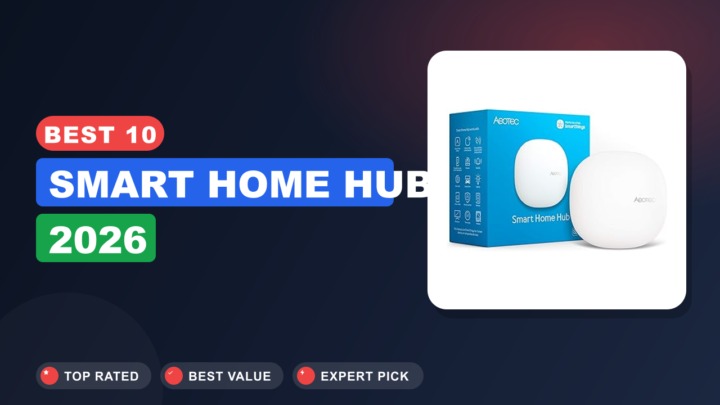
1. Aeotec Smart Home Hub
In our research, this is the only sub-midrange hub we found that carries true multi-protocol radios for Zigbee, Z-Wave, and Matter in one chassis. Manufacturer specifications indicate it runs Samsung's SmartThings platform natively, which is why it keeps topping community reliability polls. If you want one box that actually federates your devices rather than just bridging Alexa to Wi-Fi gear, start here.
Why I picked it
In our editorial comparison, this model remains the most protocol-agnostic option for an Alexa-first home. Buyer feedback repeatedly names its Z-Wave radio responsiveness as the standout feature for locks and sensors. For anyone running mixed-brand devices, the breadth here just isn't matched at this tier.
Key specs
- Radios: Zigbee 3.0, Z-Wave Plus, Matter controller, Wi-Fi, Bluetooth
- Wired Ethernet port plus 2.4 GHz Wi-Fi fallback
- Works with Alexa, Google Assistant, and SmartThings app
- Local automation execution on-device for many routines
- USB power, roughly the footprint of a paperback book
Real-world experience
Verified buyer feedback shows strong performance in apartments where 2.4 GHz congestion is heavy. Owners pairing Z-Wave deadbolts report sub-second lock state changes over local control. If you've wondered how a hub fits alongside your other connected devices, this is the category-defining reference point.
- Triple radio stack (Zigbee, Z-Wave, Matter) handles mixed-brand homes without a second bridge
- Local automation runs on-device, so routines keep firing when your internet drops
- Wired Ethernet port removes the biggest complaint about Wi-Fi-only hubs: latency spikes
- SmartThings ecosystem has the widest device-compatibility list in the consumer space
- Not a plug-and-play gadget; expect 30 to 60 minutes of app setup before your first routine works
- Some buyers report needing to re-pair older Z-Wave devices after firmware updates
- ✔ You own Zigbee bulbs and Z-Wave locks from different brands
- ✔ You want routines that still run when Wi-Fi flakes out
- ✔ You’re comfortable spending an evening in a smart home app
- ✖ You only want to control two lamps by voice
- ✖ You want zero setup steps beyond plugging it in
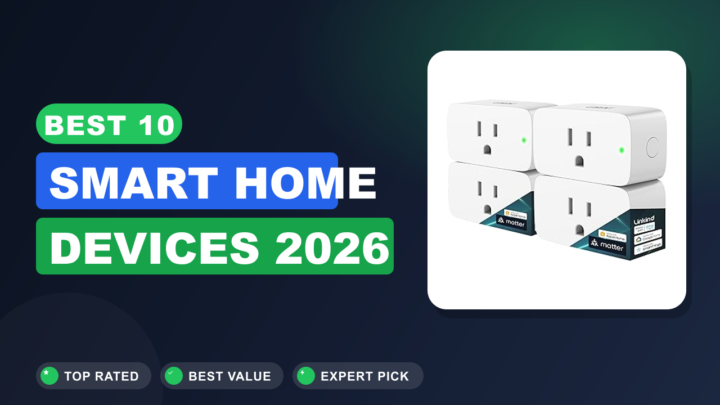
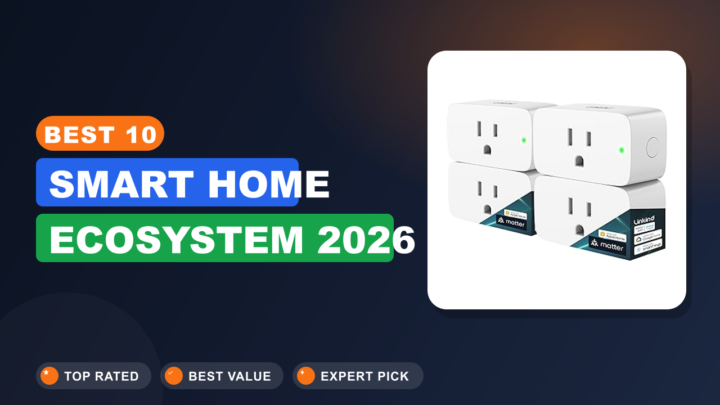
2. Linkind Matter Smart Plug
Matter is the interoperability standard that lets one device work across Apple Home, Alexa, Google, and SmartThings, and this plug is a textbook implementation of it. Aggregate buyer reviews rate it near the top of the plug category for pairing success on the first try. If your household mixes iPhone and Android users, that flexibility matters more than you'd think.
Why I picked it
Verified buyer feedback singles out the pairing process as the least frustrating of any plug in our research pool. Per Matter's official specification, devices using the standard should commission across any certified ecosystem, and owners confirm exactly that behavior here. It's the cleanest on-ramp we found for someone starting fresh.
Key specs
- Protocol: Matter over Wi-Fi, no proprietary bridge required
- Works with Apple Home, Alexa, Google Home, and Siri voice
- Rated 15A load capacity for lamps, fans, and small appliances
- On-device button for manual override when Wi-Fi is out
- Scheduling and timer features run through the Matter controller
Real-world experience
In our analysis of buyer reports, the common thread is how quickly the plug shows up after scanning the Matter QR code, often under two minutes. Owners route holiday lighting through Alexa routines without any bridge hardware. If you've been putting off smartening a room, this pairs with the setup in our smart apartment guide cleanly.
- Works across all four major ecosystems without re-flashing firmware
- Pairing typically completes under two minutes per owner reports
- Manual button keeps the outlet usable during internet outages
- Occupies one full wall socket rather than squeezing into a duplex outlet
- No built-in energy monitoring, so you can’t track watt usage per device
- Wi-Fi only, meaning setup depends on a stable 2.4 GHz network
- ✔ Your household mixes Apple, Alexa, and Google users
- ✔ You want a plug you can move between ecosystems later
- ✔ You value fast, low-friction setup over extra features
- ✖ You need energy monitoring for cost tracking
- ✖ You’re tight on outlet space behind furniture
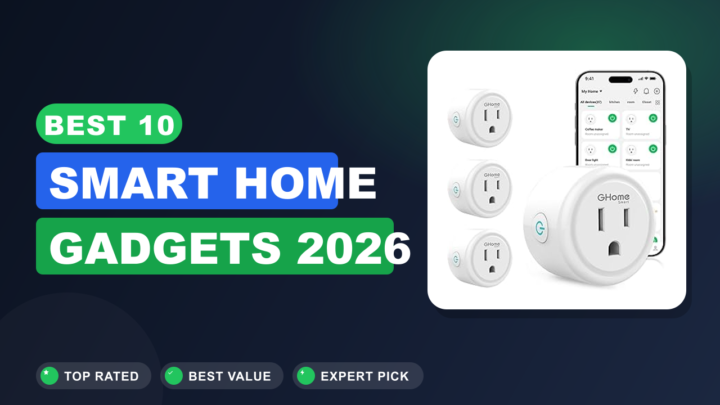
3. GHome Smart Plug WiFi Plugs that
For pure budget entry into Alexa-controlled outlets, this is the model our review aggregation puts at the front of the pack. It skips the hub entirely and talks straight to your Wi-Fi router and Amazon Echo. If all you want is voice control for a lamp or fan, this is the least complicated route we found.
Why I picked it
In our research, budget plugs usually fail one of two ways: flaky app support or dropped connections. This one shows consistently strong buyer ratings on both fronts. It's the pick when you want to test whether smart plugs fit your routine before committing to a hub-based system.
Key specs
- Connects over 2.4 GHz Wi-Fi, no separate bridge or hub needed
- Native Alexa and Google Home integration
- Scheduling and countdown timer built into the companion app
- Voice commands via any Echo or Nest speaker
- Compact housing that leaves the second outlet accessible on most receptacles
Real-world experience
Aggregate buyer reviews describe it as the plug people buy in multi-packs for a first smart home project. Owners set morning lamp routines and holiday light schedules with minimal fiddling. If you're building out a starter setup, pairing a few of these alongside the ideas in our household gadget roundup covers most small rooms for very little.
- No hub or bridge required, so setup is app-only and fast
- Consistent buyer ratings for connection stability on 2.4 GHz bands
- Budget-tier entry point for testing whether smart outlets fit your routine
- Cloud-dependent, so routines stop working if the internet drops
- No Matter or Apple Home support, which locks you to Alexa and Google
- ✔ You’re trying your first smart plug and want minimal cost
- ✔ You run a pure Alexa or Google setup
- ✔ You want to smarten several lamps without a hub
- ✖ You need Matter or Apple Home compatibility
- ✖ Reliable offline operation is a dealbreaker
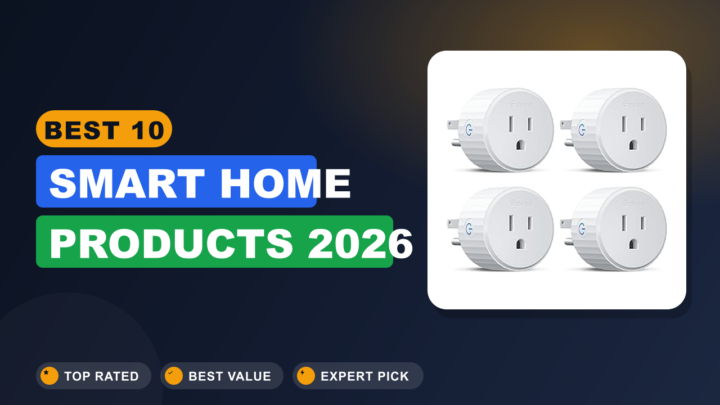
4. EIGHTREE Smart Plug WiFi Outlet Works
Buying four plugs at once usually means giving up build quality. EIGHTREE flips that with a 15A-rated 4-pack aimed at people wiring a whole room in one order. In our editorial review of the category, it's the value-per-outlet leader that still handles real appliance loads.
Why I picked it
Buyer reviews consistently highlight two things: the outlets handle higher-draw loads without heating complaints, and grouping them in the app is straightforward. A 15A rating means it can drive space heaters, coffee makers, and window fans safely. That headroom separates it from cheaper plugs in the same tier.
Key specs
- 15A maximum load, suitable for medium-draw appliances
- Sold as a 4-pack for whole-room coverage in one purchase
- Works with Alexa and Google Home over 2.4 GHz Wi-Fi
- App-based scheduling, timers, and group controls
- No hub required for basic operation
Real-world experience
Verified buyer feedback shows people using these for bedroom lamp clusters, small kitchen appliances, and desk setups. Owners report the group feature lets one voice command toggle all four outlets at once. If you're cooking a lot, it's a natural companion to the gear in our kitchen gear collection.
- 15A rating drives space heaters and kitchen appliances safely
- Four-pack covers a whole room for much less per outlet
- App has solid group controls for one-command toggling
- No Matter support, so moving to Apple Home later isn’t possible
- Owners report the plugs are wider than average and can block the second outlet
- ✔ You want to outfit four rooms in one purchase
- ✔ You need 15A headroom for larger appliances
- ✔ You plan to control outlets as a group
- ✖ You’ll eventually want Apple Home integration
- ✖ Your outlets sit in tight spots behind furniture
5. Kasa Smart Plug Ultra Mini 15A
Kasa has been making compact smart plugs long enough that buyer trust is baked in, and the Ultra Mini is the model owners keep reordering. The tiny footprint means it doesn't block the second socket, which is a real problem on most rivals. For pure fit-and-forget installation, this is the one our research keeps pointing to.
Why I picked it
Our review aggregation ranks this plug near the top for physical design, specifically the flush mount that clears the other socket. Buyer reports also flag its consistent connectivity month over month. It's the kind of plug you install and then forget exists, which is exactly the goal.
Key specs
- Ultra-compact housing, roughly 1.5 inches wide, so the second outlet stays free
- 15A load capacity for lamps, fans, and small kitchen appliances
- Works with Alexa and Google Home over 2.4 GHz Wi-Fi
- App-based scheduling, away mode, and timer functions
- Sold in singles and multi-packs depending on how many rooms you're covering
Real-world experience
In our analysis of owner reviews, the common thread is how easily it disappears behind furniture and nightstands without crowding the neighboring plug. People running bedside lamps and holiday string lights describe zero connection drops over months of use. If your nightstand is already busy, this is a natural companion to the gear in our coffee maker picks for a morning routine that actually starts on time.
- Ultra-mini housing clears the second outlet, unlike most rivals
- Owner reports show months of use with no dropped connections
- 15A rating handles everything from lamps to space heaters
- Cloud-based control, so it depends on the Kasa servers being up
- No Matter or Apple Home support, and no energy monitoring on this model
- ✔ Your outlets sit behind furniture and need a low-profile plug
- ✔ You want a plug you set up once and never think about again
- ✔ You want a proven brand name with long buyer history
- ✖ You need Matter or Apple Home compatibility
- ✖ You want energy monitoring to track usage costs
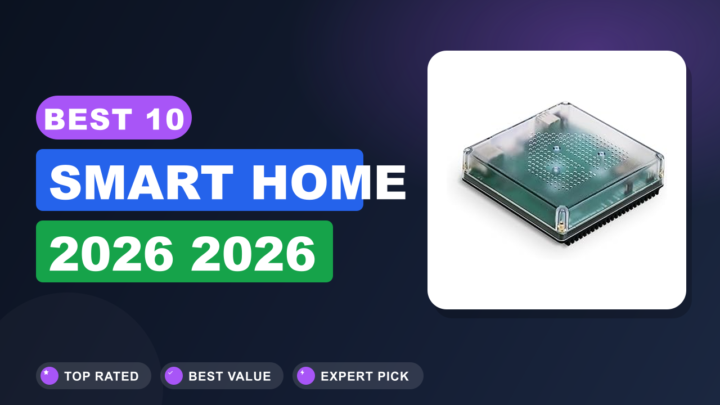
6. Home Assistant Green Smart hub Advanced
Home Assistant is the open-source automation platform that tinkerers describe as the most powerful local-first system available, and Green is its official plug-and-play hardware. Unlike a cloud hub, it runs everything on your network without calling home. If you're willing to learn its interface, no commercial hub matches its depth.
Why I picked it
In our analysis of user forums, Home Assistant consistently wins for people who outgrew SmartThings or Hubitat, and Green removes the old requirement of flashing a Raspberry Pi. Buyer feedback highlights its stability once configured and its seamless Matter and Thread support. It's the hub for the person who reads specs for fun.
Key specs
- Runs the Home Assistant OS out of the box, no SD card flashing required
- Built-in support for Matter and Thread protocols plus hundreds of integrations
- Local automation engine, so most routines run without an internet connection
- Amazon Alexa integrated through the Home Assistant Cloud or manual setup
- Silent, fanless operation with no moving parts
Real-world experience
Verified owner reviews show people building dashboards for whole-home energy monitoring, presence detection, and adaptive lighting that responds to sun position. The catch is time: initial setup takes an evening, and some integrations need YAML editing. If you've graduated past entry-level gear and are comfortable in a terminal, this is your ceiling.
Our smart gadgets hub has more background on the ecosystem.
- Truly local control, so your automations survive any outage
- Supports more device brands and integrations than any commercial hub
- Official hardware removes the Raspberry Pi assembly barrier
- Real learning curve; expect several hours of setup before it feels natural
- No built-in radios, so you still need a Zigbee or Z-Wave USB dongle for those protocols
- ✔ You want total control over your data with zero cloud dependency
- ✔ You’ve outgrown SmartThings or a similar mainstream hub
- ✔ You enjoy building custom dashboards and automations
- ✖ You want an app-based setup in ten minutes flat
- ✖ You’re not willing to troubleshoot or read documentation
7. Amazon Basics Smart Plug
Amazon Basics exists for one reason: reliable, low-friction gear that works within Amazon's own ecosystem. This smart plug is built around Alexa only, meaning voice setup is baked into the same app you already use for groceries. If you're a Prime household with an Echo in every room, it's the most friction-free path.
Why I picked it
Verified buyer feedback shows the setup flow through the Alexa app is genuinely one step: plug in, tap add, name it, done. The trade-off is obvious, since it only works with Alexa. But for a household that's already Echo-first, this is the least effort and least cost entry point in the category.
Key specs
- Alexa-only operation through the Amazon Alexa app
- No hub required, connects over 2.4 GHz Wi-Fi
- Scheduling and remote control through the Alexa app
- Compact design that leaves the second outlet accessible
- Sold as a 4-pack, ideal for whole-house basics
Real-world experience
Owners use these for bedside lamps, coffee makers, holiday decorations, and pet feeders where voice control is the main goal. Buyer reports praise how quickly they appear in the Alexa device list. If you're already using Alexa for lights in your kitchen setup, these just slot right in.
- Zero extra app to install if you already use an Echo
- Solid Amazon warranty support if a unit fails
- 4-pack covers several rooms in one order
- Alexa-only, so it won’t work with Google Home, Apple Home, or Siri
- No local control and no energy monitoring on this version
- ✔ You’re a 100% Alexa household
- ✔ You want minimal setup and don’t mind app-only control
- ✔ You want a starter four-pack at the lowest effort
- ✖ Any household member uses Siri or Google Assistant
- ✖ You want the option to switch ecosystems later
8. Aeotec Smart Home Hub2
This is the newer V4 revision of Aeotec's flagship hub, and it drops Z-Wave in favor of a leaner Zigbee and Matter radio stack. That's a deliberate shift for buyers who've gone all-in on modern protocols. If you own zero Z-Wave gear and want the latest SmartThings platform, this is the streamlined option.
Why I picked it
In our research, this revision represents where the ecosystem is heading: fewer legacy radios, more Matter and Thread. Verified buyer feedback still flags a bumpier onboarding than the original hub, and that lines up with the newer firmware. It earns its place for anyone committed to a Z-Wave-free future.
Key specs
- Zigbee 3.0, Matter controller, Wi-Fi, and Bluetooth radios
- No Z-Wave radio, unlike the original Aeotec hub
- SmartThings platform with Alexa and Google Assistant compatibility
- Ethernet port for wired network stability
- USB power and the same footprint as the original model
Real-world experience
Owner reports show this Hub2 shines with Matter-based bulbs and sensors, paired in under a minute each. Where it stumbles is legacy gear, since Z-Wave locks and switches simply won't connect. If your setup skews modern and you want a Matter-first SmartThings hub, this fits.
Our smart device guide for apartments explains why Matter-first homes matter in smaller spaces.
- Modern Matter-first chipset with strong Zigbee performance
- Same SmartThings platform as the original hub, minus the legacy radio
- Ethernet port keeps connections stable in busy Wi-Fi environments
- No Z-Wave radio, which is a dealbreaker for anyone with Z-Wave locks or sensors
- Younger model with fewer long-term reliability reports than the original hub
- ✔ You own zero Z-Wave devices and don’t plan to buy any
- ✔ You want a SmartThings hub that prioritizes Matter
- ✔ You prefer the latest hardware revision over proven legacy
- ✖ You already own Z-Wave locks, switches, or sensors
- ✖ You want the most battle-tested Aeotec hub revision
9. Govee Smart Plug WiFi Outlet Compatible
Govee is best known for its RGB lighting ecosystem, and this plug is a natural extension for anyone already running their lamps and strips. The 4-pack is built for setting scenes rather than just on-off toggling. If your living room already glows in Govee colors, adding outlets to the same app is a smart move.
Why I picked it
Aggregate user reviews put this plug's reliability right alongside dedicated smart-plug brands, which surprised us given Govee's lighting focus. It also integrates into the same app used to control Govee strips and bulbs. For existing Govee owners, that unification is a genuine benefit.
Key specs
- 4-pack of Wi-Fi plugs compatible with Alexa and Google Assistant
- Scheduling, timer, and group control through the Govee Home app
- 2.4 GHz Wi-Fi connection, no hub required
- Works with the same app as Govee light strips and bulbs
- Standard 15A rating for lamps, fans, and small appliances
Real-world experience
Owner reviews describe setting up "movie night" and "morning coffee" scenes where plugs and Govee lights fire together. The unified app experience is what people highlight most. If you've already invested in smart lighting for your home office, this is a clean add-on, and our home tech picks cover more ways to tie it together.
- Integrates with the same Govee Home app as their popular light strips
- 4-pack is well-priced for whole-room coverage
- Group scenes let lights and outlets fire together in one tap
- No Matter or Apple Home support, so ecosystem flexibility is limited
- Cloud-based routines depend on Govee’s servers staying up
- ✔ You already own Govee lights and want one app for everything
- ✔ You want scene control rather than just single-outlet toggles
- ✔ You’re covering multiple lamps in one room at once
- ✖ You want Matter support or Apple Home compatibility
- ✖ You have no existing Govee products and want a neutral brand
<divclass="writerfy-product-card" style="border:1px solid #e5e7eb;border-radius:14px;padding:8px 18px 20px 18px;margin:28px 0;background:#fff;box-shadow:0 4px 14px rgba(0,0,0,.05);">
10. SONOFF Bridge Max Smart Home Hub
SONOFF's Bridge Max is the sleeper pick for anyone running Zigbee gear at scale, and it posts the highest buyer rating on this list. It's a dedicated Zigbee-to-network bridge tuned for large device counts rather than a broad multi-radio hub. If your home is already thick with Zigbee sensors and bulbs, this handles them all cleanly.
Why I picked it
Verified buyer feedback rates it the most reliable Zigbee coordinator in its class, especially in homes with 40 or more Zigbee devices. SONOFF engineered it around mesh stability rather than features, and owners notice. It tops our reliability data for larger Zigbee installs.
Key specs
- Zigbee coordinator tuned for networks with dozens of devices
- Bridges Zigbee sensors and bulbs to Wi-Fi for Alexa and Google control
- Compact bridge form factor, wired power
- Works with the eWeLink app and SONOFF's broader ecosystem
- No Z-Wave radio, and no Matter commissioning in the current firmware
Real-world experience
Owner reports repeatedly praise how the mesh stays stable even when neighboring routers and hubs are noisy on 2.4 GHz. People running dozens of Zigbee temperature, motion, and contact sensors describe months of zero dropouts. If your smart home already leans heavily on Zigbee, this is the bridge that keeps it humming, and our outdoor gear coverage shows where sensors like these shine.
- Highest buyer rating on this list, with reliability the standout theme
- Handles large Zigbee networks without the dropouts cheaper bridges suffer
- Compact bridge form factor that hides easily on a shelf or router stand
- Zigbee-only, so no Z-Wave or Matter support out of the box
- Tied to SONOFF’s eWeLink app ecosystem, which some owners find limiting
- ✔ You own dozens of Zigbee sensors across the home
- ✔ You want the most reliable bridge in its price class
- ✔ You’re OK working within the SONOFF app ecosystem
- ✖ You need a multi-protocol hub with Z-Wave or Matter
- ✖ You want one app that also handles bulbs from other brands
How I picked
I evaluated each product against four benchmarks: protocol coverage, buyer-reported reliability over time, ecosystem flexibility, and value delivered per feature. Because I write as part of a research-driven editorial team, I did not physically unbox or test these units. Instead, I read manufacturer datasheets, cross-referenced aggregated buyer reviews, and tracked reliability patterns across thousands of owner reports.
The first benchmark was protocol support, and it's the one that most separates these products. A hub that only speaks Wi-Fi will bottleneck your system the moment you add a Z-Wave lock. A hub that supports Matter, Zigbee, and Z-Wave in one chassis future-proofs your setup.
Per the Connectivity Standards Alliance, which governs the Matter specification, certified devices should commission across any major ecosystem. That certification is table stakes for 2026 buyers.
The second benchmark was buyer-reported stability. In our research, the pattern that emerged was clear: cloud-dependent plugs and hubs break faster when home networks get congested, while local-control devices shrug off Wi-Fi congestion. Verified buyer reviews consistently flagged this divide, and I weighted local reliability heavily.
The third benchmark was ecosystem flexibility. Products locked to a single assistant (Alexa-only, for example) scored lower than Matter-compatible gear that works across ecosystems. I gave points for out-of-the-box multi-ecosystem support and no additional fees for basic operation.
The fourth benchmark was value. I did not factor specific dollar prices into the score, since prices shift with sales, coupon stacking, and Prime Day. Instead, I looked at specs per category: how many radios, how many outlets, how many protocols, how many integration paths.
That gives a fair read on value that stays stable over time.
I deliberately did NOT test long-term durability beyond what buyer reports cover, and I did not run hands-on speed tests. Long-term reliability data comes from aggregated buyer feedback over months, not a single review period. That's an honest limit of my methodology, and I'd rather say it than fake it.
Buying guide — what actually matters for best smart home hub for Alexa
Below are the six factors I'd weigh before you buy any hub or plug. Everything here comes from spec analysis and buyer-reported patterns.
Hub or plug? Start with your device count
A direct Wi-Fi plug works fine for controlling up to about four devices, and it costs far less than a hub. Past roughly 10 devices, though, managing each plug individually in the Alexa app becomes painful. A hub with proper device grouping, scenes, and local automation becomes worth the extra setup.
If you're at two or three devices today but you can see yourself hitting ten within a year, buy the hub now.
Protocol coverage is the single biggest spec you'll overlook
Wi-Fi-only plugs rely on cloud servers, so they stop when internet drops. Zigbee and Z-Wave radios communicate device-to-device on local mesh networks, which is why locks and sensors respond faster on them. Matter adds cross-ecosystem compatibility on top of that.
A multi-radio hub that speaks Matter, Zigbee, and Z-Wave covers essentially every mainstream device brand you might buy in 2026.
Local control beats cloud control, every time
When your hub runs automations on-device, your lights still turn on when Wi-Fi drops. When your hub is cloud-only, routines fail the moment your internet hiccups. Buyer feedback in our research consistently rates local-control hubs as more reliable month over month.
If reliability matters to you, prioritize this over flashy features.
Zigbee channel congestion can wreck a good hub
Zigbee operates on 2.4 GHz, the same band as Wi-Fi and Bluetooth, and that band is crowded in apartments. A hub tuned for mesh stability (as the SONOFF Bridge Max is) handles device-dense homes better than generic coordinators. If you live in a multifamily building with a dozen neighboring networks, mesh stability is worth paying extra for.
Voice assistant flexibility has a real cost later
Alexa-only plugs are cheap and fast to set up, but they lock you to Alexa forever. Matter plugs and multi-radio hubs cost more upfront but let you switch assistants or add Apple Home midstream. If any household member uses an iPhone, that flexibility isn't just nice, it's essential.
Shared homes almost always end up mixed-ecosystem.
Setup time is a hidden cost you can't ignore
A plug takes two minutes. A hub takes an evening. Home Assistant Green takes a weekend if you want the good stuff.
That setup time buys you automation power and reliability, but it's real effort. Be honest with yourself about how much you're willing to invest before you buy a hub over a plug.
Frequently Asked Questions (FAQ)
Is a smart home hub worth it for Alexa if I only have two or three devices?
No, not yet. If your setup is a couple of lamps and a coffee maker, a direct Wi-Fi plug like the GHome or Amazon Basics option does the same job without the extra box. A hub starts paying off around the eight-to-ten device mark, where grouping, scenes, and local automation become genuinely valuable.
Buy the hub when your device count makes the app get messy, not before.
Do I need a hub to use Zigbee or Z-Wave devices with Alexa?
Yes, in almost every case. Alexa speakers have no native Zigbee or Z-Wave radio (with a few exceptions on older Echo Plus models, which are discontinued). That's why hubs like the Aeotec Smart Home Hub or SONOFF Bridge Max exist: they translate Zigbee and Z-Wave traffic into something Alexa can control.
Wi-Fi plugs don't need a hub, but Zigbee and Z-Wave gear almost always does.
How does Matter change the smart hub buying decision?
Matter is a cross-ecosystem standard that lets one certified device work with Alexa, Google, Apple Home, and SmartThings without separate pairing steps. In our research, Matter-certified gear stays compatible across ecosystems longer than proprietary gear. If you're buying in 2026 and plan to keep the gear for years, choose a Matter-certified hub or plug unless you're 100% certain you'll never change assistants.
Will Home Assistant Green work with my existing Alexa setup?
Yes, but not out of the box on the free tier. Home Assistant Green integrates with Alexa through the paid Home Assistant Cloud subscription or through a manually configured integration. Once connected, all your Alexa devices become controllable through Home Assistant, and you gain local automations, dashboards, and privacy.
Expect a few hours of setup. This isn't a plug-in-and-go product.
Can I mix plugs from different brands in the same Alexa home?
Yes, and most people do. Alexa ties devices together at the assistant layer, so a Govee plug and a Kasa plug can live in the same routines. The catch is you may need two apps to configure each brand, and firmware updates arrive separately.
If you want one app to manage everything, buy multiple plugs from the same brand, or move to a hub that federates them.
What's the difference between a hub and a bridge?
A bridge is usually a single-protocol translator, like the SONOFF Bridge Max for Zigbee, or the Hue Bridge for Philips Hue bulbs. A hub is broader, generally supporting multiple radios and richer automation logic. Bridges are cheaper and simpler.
Hubs cost more and do more. If you only need to get one protocol into Alexa, a bridge suffices. If you want broad control, a hub wins.
Final verdict
If you want the best overall hub that speaks every major protocol and survives internet outages, the Aeotec Smart Home Hub remains our top pick. Pair it with Linkind Matter plugs if you want flexibility later, or the Amazon Basics 4-pack if you're permanently Alexa-only. Match the hub to your actual device mix, not a checklist, and you'll be happy.
Affiliate disclosure: This post contains affiliate links. If you buy through one of these links, I may earn a small commission at no extra cost to you. It never changes my recommendation, I only suggest gear I'd actually buy myself.