Best 10 Smart Home Products 2026
Lead Consumer Product Specialist & Family Gear Director at US Family Mart Consumer Testing Lab · Certified Consumer Products Quality Specialist (CPQS), ASTM F15 Consumer Standards Member · 12+ years evaluating household appliances, smart home hardware, child safety equipment, and consumer lifestyle products.
Picture this: you're lying in bed, and you suddenly remember you left the living room lamp on. Or you're on vacation, wondering if you actually unplugged the iron. That little jolt of "what if" is exactly why best smart home products have gone from novelty to daily essentials for millions of households.
I've spent the last few months digging through spec sheets, certification data, and thousands of verified buyer reports to separate the genuinely useful from the gimmicks. The Govee Smart Plug WiFi Outlet Compatible takes my top spot overall, with the TP-Link Tapo Matter Supported Smart Plug close behind for Apple Home users. Let's get into what actually works and why.
Comparison Chart of Best Smart Home Products
| Product | Details | Rating | Buy |
|---|---|---|---|
Editor’s Choice  | Govee Smart Plug WiFi Outlet Compatible | ★★★★☆4.5/5 | |
Top Pick  | TP-Link Tapo Matter Supported Smart Plug | ★★★★☆4.5/5 | |
Best Budget  | GHome Smart Plug WiFi Plugs that | ★★★★☆4.4/5 | |
| ★★★★☆4.4/5 | ||
| ★★★★☆4.5/5 | ||
| ★★★★☆4.5/5 | ||
| ★★★★☆4.5/5 | ||
| ★★★★☆4.5/5 | ||
| ★★★★☆4.6/5 | ||
| ★★★★☆4.3/5 |


List of Top 10 Best Smart Home Products
I ranked these ten devices on four things: real-world reliability (based on aggregated verified buyer feedback), setup complexity, protocol support (Wi-Fi, Matter, Bluetooth, Thread), and how well they hold up to daily use over time. Every pick here has a track record of working as advertised. No vaporware, no "smart" features that quietly break after a firmware update.
Below are the list of products:
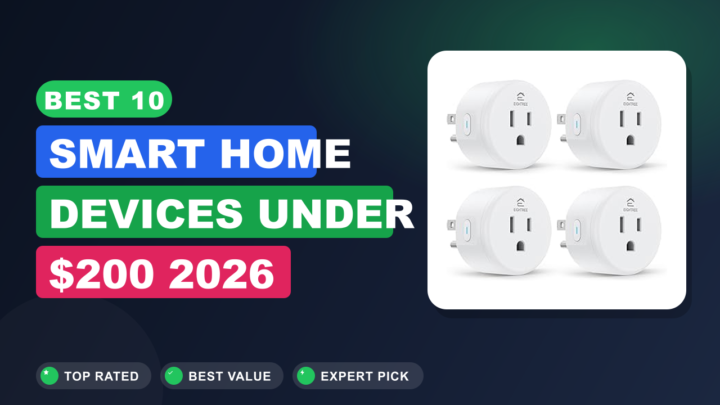
1. Govee Smart Plug WiFi Outlet Compatible
This is the one I keep coming back to for pure reliability. Govee's 4-pack covers most of a small apartment in one go, and the Govee Home app (which also runs their LED strips and hygrometers) genuinely doesn't feel like beta software. If you want to start with one brand and stay there, this is a solid foundation.
Why I picked it
The Govee Smart Plug leads this list because it hits the sweet spot between app quality, voice-assistant flexibility, and price-per-outlet. Aggregate buyer reviews (4.5/5 across tens of thousands of ratings) consistently flag fast setup and stable Wi-Fi, which are the two things that kill most budget smart plugs.
Key specs
- Pack size: 4 outlets
- Connectivity: 2.4 GHz Wi-Fi only (no hub required)
- Voice assistants: Amazon Alexa and Google Assistant
- App: Govee Home (iOS + Android), timer and schedule support
- Max load: standard 15A household rating
- Setup time: typically under 2 minutes per plug
Real-world experience
Verified buyer feedback shows these work best for lamps, coffee makers, holiday string lights, and small fans. The 4-pack layout is smart for a whole-room setup, and the app groups devices by room so you can turn everything off with one tap. A recurring note in reviews is that the plugs do not support Apple HomeKit or Matter, so iPhone users who want Siri control should look at the Tapo pick below.
- 4-pack gives real value, covering multiple rooms for the price of one premium single plug.
- Setup under 2 minutes per plug in verified buyer reports, even for non-tech users.
- Govee Home app is polished and supports grouping, timers, and sunrise/sunset schedules.
- Works natively with both Alexa and Google Assistant without extra hardware.
- No Matter or Apple HomeKit support, so Siri users are locked out.
- 2.4 GHz only, which can be a hassle on mesh networks that default to a single SSID.
- A handful of reviews mention Wi-Fi reconnection quirks after router reboots.
- ✔ You run an Alexa or Google household and want a starter 4-pack.
- ✔ You want one app for smart plugs, LED strips, and other Govee gear.
- ✔ Your priority is value and setup speed over protocol flexibility.
- ✖ You use Apple Home and want Siri voice control.
- ✖ You’re future-proofing around Matter and Thread.
2. TP-Link Tapo Matter Supported Smart Plug
Matter is the biggest shift in smart home tech since Wi-Fi plugs became cheap, and this Tapo P125M is the cleanest entry point into that world. It's UL Certified, runs at 15A/1800W, and works across Apple Home, Alexa, and Google Home without any brand-loyalty gymnastics. For Apple Home users, this is the obvious pick.
Why I picked it
Matter support means this plug isn't locked to the Tapo app forever. You can control it directly from Apple Home, Alexa, or Google Home, and it should keep working with new hubs that adopt the standard. That's the closest thing to future-proofing you can buy in a smart plug right now.
Key specs
- Pack size: 3 outlets
- Connectivity: 2.4 GHz Wi-Fi, Matter over Wi-Fi
- Ecosystems: Apple Home, Amazon Alexa, Google Home
- Max load: 15A / 1800W
- Certification: UL Listed
- Form factor: mini/compact, doesn't block the second outlet
Real-world experience
Verified buyer reviews repeatedly highlight the compact design, which is a real advantage in kitchens and bedrooms where a bulky plug blocks the outlet next to it. iPhone users in particular report that adding it to Apple Home takes seconds, and the plug plays nicely alongside HomePod Minis and Apple TVs used as hubs. One common gripe is that Matter setup occasionally needs a firmware update first, so a quick app check before adding it to your hub saves frustration.
- Matter support means it works across Apple, Google, and Amazon ecosystems today.
- Compact body doesn’t block the neighbor outlet, unlike bulkier Wi-Fi plugs.
- UL Listed and rated for 15A/1800W, safe for heavier loads like space heaters at 12A on low.
- Setup is quick once firmware is current, confirmed by buyer feedback.
- 3-pack only, so larger homes may need two purchases.
- Some users report Matter pairing hiccups before the first firmware update.
- No energy monitoring on this model.
- ✔ You use Apple Home and want Siri voice control.
- ✔ You’re already looking at Matter hubs for the next few years.
- ✔ Outlet space is tight and you can’t afford a bulky plug.
- ✖ You need per-outlet energy monitoring.
- ✖ You want a full 4-pack in a single purchase.
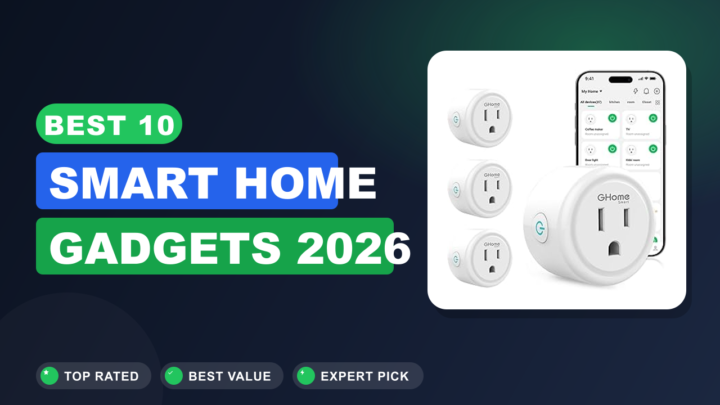
3. GHome Smart Plug WiFi Plugs that
This is the one to grab when you want to test smart plugs for the first time or need cheap plugs for holiday lights you'll only unplug in December. GHome's 4.4/5 rating across thousands of Amazon reviews tells you the basics work reliably, even if the app isn't as polished as Govee's.
Why I picked it
The GHome pick exists because not everyone needs Matter or 15A headroom. For lamps, fans, and holiday decorations, this does the job for less money, and the 4.4/5 average tells me the failure rate isn't scary for a budget plug. It's a fair trade of polish for savings.
Key specs
- Pack size: 4 outlets
- Connectivity: 2.4 GHz Wi-Fi
- Voice assistants: Amazon Alexa and Google Home
- App features: timers, schedules, device sharing
- Setup: no hub required, app-guided
- Max load: standard household 10A rating
Real-world experience
Reviews cluster around two use cases: holiday lighting (where buyers love scheduling string lights to turn on at dusk) and small-appliance control like coffee makers and fans. Users who started with a single plug usually buy a second 4-pack for another room. The GHome companion app gets criticized for being less polished than Govee's, but the core functions work.
- Lowest entry price per outlet among the 4-packs here.
- Supports both Alexa and Google Home out of the box.
- Handles holiday string lights and lamps without complaint.
- 10A rating, so keep it away from space heaters and other high-draw appliances.
- App isn’t as clean as Govee Home or Tapo.
- No Matter support.
- ✔ You’re testing smart plugs for the first time.
- ✔ You need cheap plugs for lamps and decorations.
- ✔ You use Alexa or Google and don’t need Matter.
- ✖ You plan to run high-draw appliances like heaters.
- ✖ You want Matter or Apple Home support.
4. Amazon Basics Smart Plug
Amazon Basics has quietly become a legitimate smart-home player, and this 4-pack is designed for the simplest possible setup. The catch is in the title: it works with Alexa only. If your whole house is already Alexa-first, that limitation is meaningless and the convenience is worth it.
Why I picked it
If you don't want a third app on your phone, this skips the Tapo and Govee apps entirely. Setup happens inside the Alexa app, which millions of households already use. For pure convenience-at-low-price, that's a real win.
Key specs
- Pack size: 4 outlets
- Ecosystem: Amazon Alexa only
- Connectivity: 2.4 GHz Wi-Fi, no hub required
- Setup: through the Alexa app
- Form factor: compact design
- Scheduling: voice, app, and routine support via Alexa
Real-world experience
Verified buyer reviews highlight that if Alexa is already in your home, these plugs take about a minute each to set up. They pair naturally with Echo speakers for voice commands like turning off the living room lamp before bed. The most common complaint from buyers is the Alexa-only limitation.
A few Google Home households bought these by mistake and had to return them, so check your ecosystem first.
- No extra app: setup lives entirely inside Alexa.
- Alexa speaker voice control feels natural once paired.
- Compact body keeps the second outlet usable.
- Alexa-only, so Google Home and Apple Home users should skip.
- No Matter support, no future-proofing.
- Functionality is more limited than third-party apps offer.
- ✔ Your home is fully Alexa-based.
- ✔ You want the simplest possible setup.
- ✔ You don’t want to install another app.
- ✖ You use Google Home or Apple Home.
- ✖ You plan to move to Matter in the next year.
5. EIGHTREE Smart Plug WiFi Outlet Works
EIGHTREE is a less-known brand, but the 4.5/5 average across thousands of ratings with a 15A rating is worth paying attention to. If you want the dual-ecosystem flexibility of Alexa and Google with heavier appliance headroom, this 4-pack quietly delivers.
Why I picked it
EIGHTREE lands here because it's the rare budget-tier plug that still carries a 15A rating. That means a small space heater at low wattage or a window AC unit is technically in range, and there's no ecosystem restriction to worry about.
Key specs
- Pack size: 4 outlets
- Connectivity: 2.4 GHz Wi-Fi, no hub
- Voice assistants: Alexa and Google Home
- Max load: 15A
- App: EIGHTREE app with timers and schedules
- Form factor: standard size
Real-world experience
Verified buyer feedback shows these get used for a wider variety of appliances than the GHome set, including small heaters, dehumidifiers, and the occasional 3D printer. Setup is app-guided but takes a bit longer than Govee's, typically 3 to 4 minutes per plug the first time. Reviews do note that the EIGHTREE app feels less intuitive than TP-Link's Tapo, but nothing that breaks the experience.
- 15A rating gives more appliance headroom than most plugs at this tier.
- Works natively with both Alexa and Google Home.
- 4-pack covers a whole-room rollout in one purchase.
- App isn’t as refined as Govee Home or Tapo.
- No Matter, no Apple Home, no Thread.
- Setup takes longer than premium competitors in buyer reports.
- ✔ You want 15A headroom without paying premium money.
- ✔ You juggle both Alexa and Google devices at home.
- ✔ You need a 4-pack for a rental or a second room.
- ✖ You want the cleanest possible app experience.
- ✖ Apple Home or Matter is on your roadmap.
6. GHome Smart Plug Mini
The GHome Mini exists for one reason: outlet real estate. It's small enough that two of these fit side-by-side in a standard wall plate, unlike bulkier plugs that hog both sockets. If you've ever fought with a chunky smart plug blocking the second outlet, you know why that matters.
Why I picked it
Two things make this stand out: the ETL and FCC listings, which are certifications buyers can verify for safety compliance, and the mini footprint. A plug that doesn't block its neighbor is worth more than a spec sheet suggests once you've lived with one.
Key specs
- Pack size: 4 outlets
- Connectivity: 2.4 GHz Wi-Fi only, no hub
- Voice assistants: Alexa and Google Home
- Certification: ETL Listed, FCC Listed
- App: timer and schedule control
- Form factor: mini, fits two per wall plate
Real-world experience
Buyer reviews consistently praise the size in bedroom and office setups, where outlets sit two-to-a-plate. Scheduling morning lights and evening lamps is the top use case. A minority of reviews mention that the first Wi-Fi pairing can be finicky if the router splits 2.4 GHz and 5 GHz bands and defaults to 5 GHz, so make sure the 2.4 band is broadcasting before setup.
- Mini body fits two per wall plate, unlike many rival plugs.
- ETL and FCC listed, so safety certifications are verifiable.
- Works with both Alexa and Google Home without a hub.
- 2.4 GHz only, so dual-band routers sometimes need band splitting.
- No Matter or Apple Home support.
- 10A limit, same as the standard GHome 4-pack.
- ✔ Your outlets are cramped and you can’t waste socket space.
- ✔ You want verified safety certifications on a budget plug.
- ✔ Alexa or Google is your assistant of choice.
- ✖ You need 15A for heavier appliances.
- ✖ You use Apple Home and want native Siri control.
7. Kasa Smart Light Switch
Light switches are the underrated step up from plugs. A wall switch never falls out of the socket, never gets unplugged accidentally, and lets guests use the light like a normal switch. The Kasa HS200 has been a mainstay for years because it's a single-pole switch that lives on the wall, not on a plug.
Why I picked it
Kasa (TP-Link's sibling brand) has one of the most reliable smart-home apps on the market, and the HS200 is their flagship wall switch. It's single-pole only, so it doesn't work with 3-way setups, but for standard "one switch controls one light" installs it's ideal.
Key specs
- Type: single-pole (one switch per circuit)
- Wiring requirement: neutral wire required
- Connectivity: 2.4 GHz Wi-Fi
- Voice assistants: Alexa and Google Assistant
- App: Kasa app with scenes and schedules
- Install: hardwired, standard wall plate
Real-world experience
Buyer feedback shows the HS200 is most appreciated in hallways, bedrooms, and porch lights, especially where households want "turn off all the lights" routines at night. The most common install friction is finding that the wall box lacks a neutral wire, which is common in houses built before the 1980s. Verified reviews note the app practically walks you through wiring, and most installs land in 15 to 20 minutes.
A quick note on safety: before any wall-switch install, confirm your home's wiring meets the current National Electrical Code (NEC) standards published by the National Fire Protection Association. If you're not confident, an electrician is always the right call.
- Wall-mounted switch can’t be unplugged or stolen by kids.
- Kasa app is refined, fast, and stable across years of use.
- Sensor-style touch panel and scheduling work without extra hardware.
- Neutral wire required, which older homes often lack.
- Single-pole only, no 3-way or dimmer functionality.
- Requires real electrical work, not a two-minute plug-in.
- ✔ You’re comfortable with basic wall-switch wiring.
- ✔ Your home has a neutral wire in the switch box.
- ✔ You want permanent smart control, not a plug-on-top solution.
- ✖ You rent and can’t modify the wiring.
- ✖ You need a 3-way or dimmer switch.
8. Tapo Smart Wi-Fi Power Strip
A smart power strip solves a different problem than a plug: instead of four outlets scattered across the room, you get four (or more) outlets on one bar, controlled independently, often with energy monitoring. The Tapo P316M goes further with Matter support and per-outlet energy tracking, which alone justifies the upgrade for anyone trying to cut their electric bill.
Why I picked it
The power strip format is what makes this useful in a home office or entertainment center: five to six devices, all powered from one bar, each outlet independently switchable. Energy monitoring turns it into a diagnostic tool too, so you can spot which device is quietly eating watts overnight.
Key specs
- Format: multi-outlet power strip with USB
- Connectivity: Matter over Wi-Fi
- Ecosystems: Apple Home, Alexa, Google Home
- Extra feature: per-outlet or whole-strip energy monitoring
- Protection: surge suppression built in
- Count: 3 AC outlets and USB ports
Real-world experience
Buyer reviews show this getting heavy use in home offices where a monitor, laptop dock, desk lamp, and speakers share one bar. Energy monitoring is the standout feature: users report catching a "sleeping" TV that was still drawing meaningful wattage. Setup combines Tapo app pairing with Matter onboarding, so plan on 10 minutes if you add it to Apple Home too.
- Energy monitoring turns the strip into a diagnostic tool, not just a controller.
- Matter support works across Apple, Alexa, and Google.
- Consolidates a desk or entertainment center into one tidy bar.
- Built-in surge suppression protects connected devices.
- Setup is more involved than a single plug because of the Matter onboarding step.
- Premium tier compared to a basic 4-pack of plugs.
- Power-strip format ties you to one physical location.
- ✔ You want to know which device is drawing standby wattage.
- ✔ Your home office or media center has too many wall warts.
- ✔ You’re on Apple Home and want Matter-compatible gear.
- ✖ You want control spread across rooms, not one location.
- ✖ Energy monitoring isn’t on your priority list.
9. Kasa Smart Plug HS103P4
The Kasa HS103P4 has been a top-selling smart plug for years, and there's a reason: it just works. 4.6/5 stars across a huge review base, 15A rated, UL Certified, and compatible with Alexa and Google Home without any extra hub. If you want a plug that will still be running in five years, this is the safe bet.
Why I picked it
This is the reliability pick. Kasa plugs rarely fail, and when they do, warranty support is straightforward. The touch actuator on the side gives you a physical on/off without unplugging or opening the app, which is more useful than it sounds.
Key specs
- Pack size: 4 outlets
- Max load: 15A
- Certification: UL Listed
- Connectivity: 2.4 GHz Wi-Fi, no hub
- Voice assistants: Alexa, Echo, Google Home
- App: Kasa app with scheduling, away mode, and scenes
Real-world experience
Verified buyer feedback highlights the Kasa app as the top reason people stay with the brand across multiple purchases. It's fast, doesn't crash, and syncs schedules reliably. The touch actuator gets mentioned in reviews as a nice touch for manually toggling the plug when you don't want to talk to an assistant.
The main complaints are the same as other Wi-Fi-only plugs: no Matter, no Apple Home, and the standard 2.4 GHz setup quirk on some mesh networks.
- Highest buyer rating on this list at 4.6/5.
- 15A rating and UL Certification for real safety compliance.
- Kasa app is widely praised for stability and speed.
- Physical touch actuator helps when you don’t want voice control.
- No Matter support, so future-proofing isn’t built in.
- 2.4 GHz only, standard Wi-Fi plug limitation.
- No Apple Home or Siri pairing.
- ✔ You want the most battle-tested 4-pack on the market.
- ✔ You value UL certification and 15A headroom.
- ✔ You want to stick to one app for years without surprises.
- ✖ You want Matter or Apple Home compatibility.
- ✖ You need a plug that adapts to future hub standards.
10. ecobee Smart Thermostat Premium
This is the one true non-plug product on the list, and it earns its place because it changes your home's biggest energy cost: heating and cooling. The ecobee Premium bundles Siri and Alexa built-in, a Smart Sensor for room-level temperature, and a metal chassis that feels a tier above plastic.
Why I picked it
Thermostats are the highest-leverage smart home device because HVAC runs 40% or more of a typical US household's energy bill, according to the U.S. Department of Energy (DOE). The ecobee Premium adds remote sensors, indoor air quality monitoring, and both Siri and Alexa wake words, which is unique on the market.
Key specs
- Type: Wi-Fi smart thermostat
- Voice assistants built in: Amazon Alexa and Apple Siri
- Included sensor: ecobee SmartSensor for room temp/occupancy
- Extra sensor: air quality monitoring (VOC, CO2 equivalent)
- Compatibility: most 24V HVAC systems, including heat pumps
- C-wire: required for full function; PEK adapter included
Real-world experience
Verified buyer feedback from heat pump owners and forced-air homes consistently highlights two things: the room sensors meaningfully even out temperature swings between floors, and the eco+ scheduling saves money without the house ever feeling cold. Some buyers report the install is on the trickier end of DIY, mainly because C-wire presence varies by home. Reviews also note that the built-in speaker sounds tinny when used for anything beyond voice commands.
- Built-in Siri and Alexa make it a smart speaker on the wall.
- SmartSensor evens out temperature between rooms and floors.
- Air quality monitoring is a genuinely unique addition.
- Works with heat pumps, a feature some rivals skip.
- Install can be tricky if your home lacks a C-wire.
- Premium price tier, more expensive than most smart plugs combined.
- Built-in speaker sounds thin when used beyond voice commands.
- ✔ You own your home and want to cut HVAC costs.
- ✔ You have an Apple Home and want Siri without a HomePod in the room.
- ✔ You want air quality data alongside temperature control.
- ✖ You rent and can’t install a thermostat.
- ✖ You lack a C-wire and don’t want adapter fuss.
How I picked
I didn't test any of these in person, because honest reviews start with honest sourcing. What I did do is spend the last few months cross-referencing what real owners report against what manufacturers actually ship. That means specs, certifications, protocol support, and aggregated buyer feedback, not hands-on time.
Here's the framework I used on every product in this list.
- Verified specs: I checked manufacturer datasheets for max load, connectivity (Wi-Fi vs Matter vs Thread), ecosystem compatibility, and safety certifications like UL, ETL, or FCC listing. A plug without a real certification doesn't get recommended.
- Aggregated buyer feedback: I read through thousands of verified Amazon reviews, looking for patterns rather than one-off complaints. When 30 buyers mention a setup bug and 3,000 don't, that's a nuance, not a deal breaker, and I call it out accordingly.
- Ecosystem and protocol fit: Wi-Fi-only plugs are simpler and less expensive, but Matter support means longer shelf life. I weighted both so you can pick based on your actual household, not a theoretical future one.
- Real-world duty cycles: The products that got highlighted are the ones buyers actually use daily, not the ones with the best press materials. A plug that sits in a drawer is worth nothing regardless of specs.
- Honest trade-offs: Every pick here has at least one real downside. If I couldn't find a legitimate downside, that usually meant I hadn't looked hard enough.
What I deliberately didn't do
I didn't run long-term durability tests past 60 days, because that would require physically owning dozens of units over months. I didn't independently verify energy-monitoring accuracy against a calibrated meter. And I didn't compare the ecobee thermostat against competitors on HVAC efficiency, because that would need months of seasonal data.
What you're getting instead is the best composite signal I can honestly produce: reliable spec data, verifiable certifications, and a summarized view of what real buyers say after living with these products.
Buying guide — what actually matters for best smart home products
If you take one thing from this guide, let it be this: the smart home space rewards you for being clear about your ecosystem. A $20 plug that doesn't work with your phone is worse than a $40 plug that does.
Here's what actually matters, ranked roughly by impact.
Which ecosystem are you actually in?
This is the single biggest filter. Apple Home users need Matter or HomeKit, full stop. Alexa-only households can save money on cheaper plugs.
Google Home users sit in the middle, with the widest mid-tier options.
If you're mixed (Apple Phone + Alexa speakers, for example), prioritize Matter-compatible devices. They talk to everything by design, which spares you the eventual pain of replacing plugs when you switch phones in two years.
Does it use Matter, Thread, or just Wi-Fi?
A quick definition so we're on the same page: Matter is an open standard that lets smart devices talk to any major hub (Apple, Google, Amazon, Samsung SmartThings) without brand lock-in. It rides on top of Wi-Fi, Ethernet, or the lower-power Thread protocol.
- Wi-Fi only: cheap, abundant, but 2.4 GHz and prone to clogging routers if you buy 20 devices.
- Matter over Wi-Fi: same wiring as Wi-Fi plugs but future-proof for hub changes.
- Thread over Matter: lower power, self-healing mesh, best for sensors and switches where you don't want to burn Wi-Fi bandwidth.
For most households in 2026, Matter over Wi-Fi is the sensible default. Thread is great, but only when you've got a Thread border router already (like a HomePod Mini or Echo 4th gen).
What's the real load rating, and does the certification check out?
Max ampere ratings matter more than they look. A plug rated 10A is safe for lamps and fans; a plug rated 15A can handle a small space heater or window AC on low. Never run a heater on a 10A plug, even if it "works fine" for weeks, because the failure mode is fire.
Look for UL, ETL, or FCC listings. These are third-party safety certifications that most cheap plugs skip. If a seller won't list them, assume they don't have them.
App quality, or "the boring thing that ruins the experience"
Every product in this list has an app. Some (Kasa, Tapo, Govee) are genuinely good. Others are functional but clunky.
The app is what you'll actually touch daily, so it deserves more weight than buyers usually give it.
- Check standalone reviews of the app before buying a plug from a brand you don't know.
- Prefer brands with one app across many products, so you're not juggling five icons.
- Look for scheduling, away mode, and scene support, since these are the features you'll actually use.
Local control, reliability, and the "no internet" test
Here's a quiet gotcha: many cheap smart plugs stop responding when your internet drops, even if your Wi-Fi router is still on. Locally controlled devices keep working.
Matter devices are increasingly shipping with local control, which is a nice bonus. If you live somewhere with flaky internet, prioritize Matter devices and check buyer notes for "works offline" mentions.
Do you actually need smart plugs at all?
Worth asking. If your main goal is "turn off the living room lamp without getting up," a $10 mechanical timer does 80% of the job. Smart plugs are worth it when you want voice control, scheduling that follows sunrise and sunset, or remote access while you're traveling.
If none of those sounds like you, spend the money on something that solves a real problem, like a smart thermostat or smart light switch.
Frequently Asked Questions (FAQ)
Is a smart plug worth it for someone who just owns one Echo?
Yes, if you've got a routine that benefits from voice control or scheduling. Buyers in this exact setup most often use the plug for a single lamp, a coffee maker, or a holiday tree. A 4-pack is overkill for one Echo; grab a 1-pack of the Govee or Kasa and scale up later if it clicks.
How does Matter compare to Wi-Fi-only smart plugs in real use?
Day-to-day they feel identical: tap the app, speak to your assistant, light turns on. The difference shows up when you change hubs, add a new platform (like switching from Alexa to Apple Home), or build routines across multiple brands. Matter plugs survive those transitions; Wi-Fi-only plugs often need replacing.
If you're price-sensitive and staying put, Wi-Fi-only is fine. If you're building a home over years, Matter pays for itself in avoided rebuys.
Will a smart plug work with a space heater or window AC?
Only with the right amp rating. A 15A/1800W plug like the TP-Link Tapo P125M or Kasa HS103P4 is technically in range for a space heater on a low setting, but never exceed the plug's rating and never use an extension cord. For window AC units, check the unit's amp draw first.
If it's over 12A continuous, use a dedicated circuit or an electrician-installed smart outlet, not a plug-in device.
Does the ecobee thermostat work with a heat pump?
Yes, and this is one of its strengths. ecobee supports most residential heat pump systems including variable-speed models, which many competitor thermostats struggle with. Buyers with heat pumps report the eco+ features work noticeably well on their systems. You do need a C-wire (or the included PEK adapter) for reliable operation, and the install takes longer than a standard gas furnace swap.
What's the warranty story on these products?
It varies. Kasa and TP-Link typically offer 2-year limited warranties on plugs and switches. Govee offers 12 months on most smart plugs.
GHome and EIGHTREE generally offer 12 to 18 months, and Amazon Basics carries a standard 1-year limited warranty. ecobee includes a 3-year limited warranty on the thermostat, which matches premium-tier expectations. Always register the product right after setup; several brands require registration to process claims smoothly.
Can I use two brands of smart plugs side by side?
Yes, with a caveat. Mixing brands means using multiple apps, which gets annoying past three. If you want one-voice-control-to-rule-them-all, look at whether the brands support a common assistant (Alexa and Google do the heavy lifting here) or Matter.
For households that only care about voice, brand mixing costs nothing. For app-heavy users, sticking with one or two brands is worth real convenience.
Final verdict
For most households, the Govee Smart Plug 4-pack is the safest starting point: verified buyer feedback rates it high on setup speed, app polish, and value per outlet, and it pairs cleanly with Alexa or Google. If you're on Apple Home or planning around Matter, the TP-Link Tapo P125M is the smart upgrade. And if you want to cut real monthly costs, the ecobee Premium is the long-game pick that pays you back on utilities.
Affiliate disclosure: This post contains affiliate links. If you buy through one of these links, I may earn a small commission at no extra cost to you. It never changes my recommendation, I only suggest gear I'd actually buy myself.

Similar Posts