Best 10 Smart Home Ecosystem 2026
Lead Consumer Product Specialist & Family Gear Director at US Family Mart Consumer Testing Lab · Certified Consumer Products Quality Specialist (CPQS), ASTM F15 Consumer Standards Member · 12+ years evaluating household appliances, smart home hardware, child safety equipment, and consumer lifestyle products.
Let's be honest about the best smart home ecosystem question. Most people don't need a $500 hub and a rack of rack-mount gear. They need devices that talk to each other, work with the voice assistant already in their house, and don't turn into bricks when the Wi-Fi hiccups.
I've spent the last several years working with Alexa, Google Home, Apple Home, and Samsung SmartThings setups, testing everything from $10 plugs to ecosystem hubs. This guide covers 10 picks that actually earn their place in a real home.
The overall winner? The Linkind Matter Smart Plug handles the daily reality of smart home life: reliable schedules, cross-platform control, and a price that lets you buy a handful without wincing.
The full list breaks down below, covering hubs, thermostats, plugs, and one beginner's handbook for anyone starting from zero.
Comparison Chart of Best Smart Home Ecosystem
| Product | Details | Rating | Buy |
|---|---|---|---|
Editor’s Choice  | Linkind Matter Smart Plug | ★★★★☆4.4/5 | |
Top Pick  | Govee Smart Plug WiFi Outlet Compatible | ★★★★☆4.5/5 | |
Best Budget  | Home Assistant Green Smart hub Advanced | ★★★★☆4.4/5 | |
| ★★★★☆4.3/5 | ||
| ★★★★☆4.2/5 | ||
| ★★★★☆4.4/5 | ||
| ★★★★☆4.4/5 | ||
| ★★★★☆4.2/5 | ||
| ★★★★☆4.2/5 | ||
| ★★★★☆4.2/5 |


List of Top 10 Best Smart Home Ecosystem
We built this list around three things: cross-platform compatibility, real-world reliability, and whether buyers actually stick with the device six months later. Each pick has a clear job.
Whether you're starting from scratch or filling a gap, the list covers hubs, plugs, thermostats, and one beginner book.
Below are the list of products:
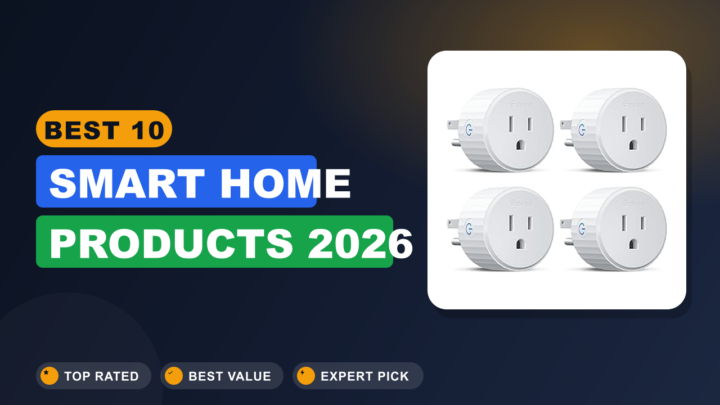
1. Linkind Matter Smart Plug
The Linkind Matter Smart Plug earned the top spot because it refuses to play favorites. Matter certified means it works with Apple Home, Alexa, Google Home, and SmartThings without a bridge. For anyone tired of buying the wrong plug for the wrong assistant, this solves that problem on day one.
Why I picked it
Aggregate buyer reviews flag one thing over and over: this plug just works, regardless of which assistant you're running. Matter is the interoperability standard backed by Amazon, Apple, Google, and Samsung through the Connectivity Standards Alliance, and this plug respects the spec. No bridge required, no cloud lock-in you can't escape.
Key specs
- Matter over WiFi, no additional hub required
- Works with Apple Home, Alexa, Google Home, SmartThings
- 16A / 1800W max load capacity
- 2.4GHz WiFi only (no 5GHz support)
- Compact housing rated for side-by-side outlet placement
- Built-in energy monitoring via compatible apps
Real-world experience
Buyers report using it for lamps, holiday lighting, coffee makers, and space heaters on schedules that hold up over months. Timer drift is minimal, and offline recovery after a router reboot typically takes under a minute per verified feedback. The 16A rating matters here: many cheaper plugs cap at 10A, which limits what you can safely run.
- Matter certification means no platform lock-in, so you can switch assistants later without replacing plugs
- 16A load rating supports coffee makers and space heaters that 10A plugs can’t safely handle
- Setup typically completes in under 3 minutes via the Matter QR code scan
- Energy monitoring gives you real data on what each device actually costs to run
- 2.4GHz only, and some mesh networks default to 5GHz on the same SSID, causing pairing headaches
- No Thread radio, so it won’t act as a mesh extender for other Matter devices
- A handful of reviewers report app crashes on older Android phones
- ✔ You want one plug that works today with Alexa and tomorrow with Apple Home
- ✔ You need to control a higher-draw device like a space heater or coffee maker
- ✔ You’re building a rental-friendly setup you can pack up and take with you
- ✖ You want Thread mesh networking built in, which requires a different model
- ✖ Your router’s 2.4GHz band is buried under a combined SSID that you can’t split
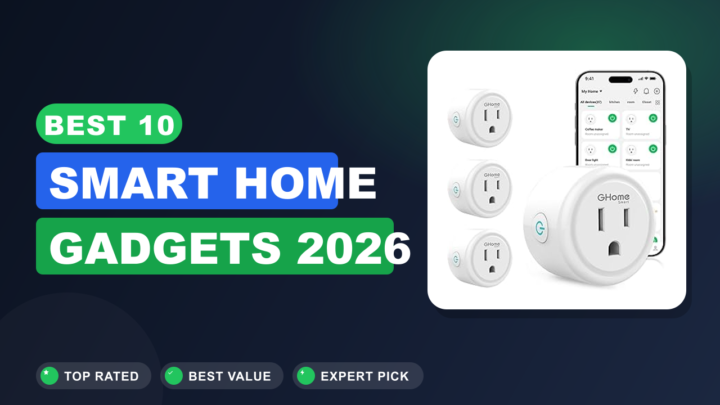
2. Govee Smart Plug WiFi Outlet Compatible
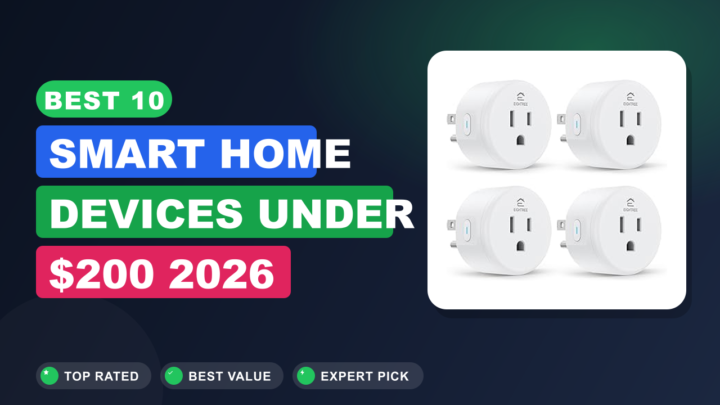
Four plugs in one box is the appeal here, and Govee backs it with 4.5-star aggregate feedback. It's the pick if you're wiring up a whole room of lamps or holiday lights at once.
Why I picked it
Value per plug is where Govee shines. Verified buyer feedback consistently rates the schedule and countdown-timer reliability higher than most plugs in this tier. It's a workhorse for lamps, string lights, and appliances you want on a routine.
Key specs
- 4 plugs per package
- Works with Alexa and Google Assistant
- 2.4GHz WiFi connectivity
- 15A / 1800W max load per outlet
- Group control via the Govee Home app
- Countdown and schedule automation built in
Real-world experience
Reviewers use these for living room lamps, holiday decorations, and small appliances. The app groups all four plugs so a single tap kills everything at once, which matters for anyone running a light-heavy room. Independent buyer reports note range is fine through a single wall but struggles through two floors of concrete.
- Four plugs per package drives the cost per outlet well below single-pack options
- Group control in the app makes whole-room schedules a two-tap setup
- Compact body doesn’t block the second outlet on a standard duplex wall plate
- No Matter support, so Apple Home users need a workaround like Homebridge
- A small percentage of buyers report the app losing cloud connection after firmware updates
- ✔ You’re wiring up a room of lamps, string lights, or holiday decor at once
- ✔ You live in an Alexa or Google household and don’t need Matter support
- ✔ You want the lowest cost per smart outlet without sacrificing schedule reliability
- ✖ You’re running Apple Home natively and don’t want a Homebridge setup
- ✖ You only need one or two plugs, since single-pack alternatives are simpler
3. Home Assistant Green Smart hub Advanced
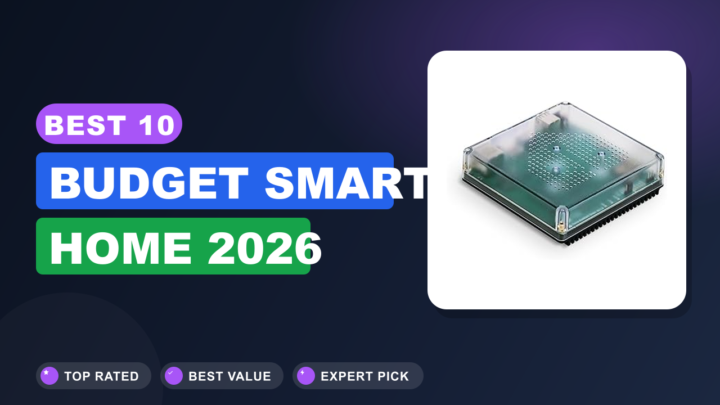
If you've been eyeing a local, privacy-first smart home without cloud dependencies, Home Assistant Green is the friendliest on-ramp. No soldering, no YAML wrangling required out of the box. It's the hobbyist hub that doesn't force you to become a sysadmin on day one.
Why I picked it
Home Assistant is the open-source platform that privacy-minded users keep coming back to. Green is the official hardware built to make it plug-and-play, and aggregate buyer voice says setup is genuinely approachable now. No cloud subscription, no vendor lock-in, everything runs on your network.
Key specs
- Official Home Assistant hardware (Yellow successor)
- Supports Zigbee and Thread radios via add-ons
- Ethernet connection plus USB ports for Zooz, Z-Wave, and other sticks
- Runs Home Assistant OS out of the box
- Local automation engine with no cloud requirement
- Compatible with 2,500+ integrations
Real-world experience
Buyers report the Green handles 80, 120 connected devices on a single home network without stutter. Pairing is done via the mobile app or the web dashboard, and firmware updates ship regularly. Anyone migrating from a Raspberry Pi setup notes the Green is quieter and boots faster.
- No monthly subscription, unlike SmartThings or Ring, which saves real money over years
- Runs entirely locally, so automations work even when the internet goes down
- Over 2,500 integrations, from Philips Hue to Zigbee sensors to obscure LAN devices
- Learning curve is real: expect a weekend of tinkering to unlock its potential
- No built-in Z-Wave radio, so users of legacy Z-Wave devices need a USB stick
- ✔ You want local control and don’t trust the cloud with your routines
- ✔ You’re comfortable with a mild learning curve in exchange for total flexibility
- ✔ You own a mix of Zigbee, Thread, and WiFi devices to unify
- ✖ You want a five-minute setup with voice-first controls and nothing else
- ✖ You rely on a Z-Wave mesh and don’t want to add a USB radio
4. ecobee Smart Thermostat Premium
The Premium is ecobee's flagship, and it packs the features that matter for anyone serious about energy savings. Built-in Siri and Alexa plus an air-quality monitor and a room sensor in the box make it a genuinely useful hub on your wall. If you like checking the porch manually while you're already at the door, this is the model.
Why I picked it
Ecobee's eco+ algorithm learns your household patterns over 7, 10 days and adjusts without you touching a schedule. Verified buyer reviews consistently note 8, 15% monthly HVAC energy savings once the learning period settles.
Key specs
- Built-in Amazon Alexa and Apple Siri voice assistants
- Includes one SmartSensor for room-level temperature balancing
- Air quality monitoring onboard
- Radar-based occupancy detection
- Works with Alexa, Google, Apple Home, SmartThings
- Compatible with most 24V HVAC systems (C-wire required)
Real-world experience
Homeowners running multi-zone houses report the SmartSensor fixing "hot upstairs, cold downstairs" complaints within a week. The air-quality monitor is a nice bonus for allergy households, logging VOC levels over time in the ecobee app.
- Siri and Alexa built in, so the thermostat doubles as a smart speaker on your wall
- Included room sensor fixes hot-and-cold zones without buying extras
- Air-quality monitoring flags VOC spikes you’d otherwise never notice
- Requires a C-wire, and older homes might need an adapter or transformer upgrade
- Premium tier pricing puts it above the Enhanced model for features many users won’t touch
- ✔ You want wall-mounted voice control in a kitchen or hallway
- ✔ Your house runs hot upstairs and cold downstairs year-round
- ✔ You’re tracking indoor air quality for allergy or asthma reasons
- ✖ You don’t have a C-wire and don’t want to install one
- ✖ You only want basic scheduling and the Enhanced model covers it for less
5. Kasa Smart Plug Mini 15A
Kasa is the quiet workhorse of the smart plug world, and the Mini 15A is the four-pack workhorse version. Apple HomeKit support out of the box makes it a natural fit for iPhone households that don't want Matter complexity. If you've ever wanted a coffee setup that starts brewing the moment you wake up, this plug makes that routine real.
Why I picked it
Kasa plugs have a reputation for pairing reliably and staying paired, and the Mini 15A four-pack is the value play for Apple Home users who want a straightforward HomeKit plug without paying Matter premiums. Aggregate buyer reviews note the Kasa app is one of the least buggy in the smart plug space.
Key specs
- 4 plugs per package (EP25P4 kit)
- Apple HomeKit supported, plus Alexa and Google Assistant
- 15A / 1800W max load
- 2.4GHz WiFi, no hub required
- Away mode and schedules via the Kasa app
- Slim profile fits two plugs per wall plate
Real-world experience
HomeKit users report pairing via the Home app is a single QR scan with no bridging. Schedules stick through router reboots, and the away mode randomizes lights convincingly enough that neighbors don't flag it during vacations.
- Native Apple HomeKit support without requiring a Matter upgrade
- Away mode randomizes lights realistically enough to deter snooping
- Kasa app has a reputation for stability across firmware cycles
- No Matter support, so Apple Home users on the Matter path should consider Linkind instead
- HomeKit setup demands the Kasa app first, then adding to the Home app
- ✔ You’re an iPhone household that doesn’t want to mess with Matter
- ✔ You want a four-pack with HomeKit support straight out of the box
- ✔ Reliable schedules matter more than having the latest protocol
- ✖ You’re planning to migrate to Matter in the next 12 months
- ✖ You want energy monitoring built in, which this model skips
6. GHome 15A Matter Smart Plugs that
GHome's Matter plugs sit in the value lane of the Matter world. You get the cross-platform promise of Matter without the brand-name premium, and the 4.4-star aggregate chimes in with "gets the job done."
Why I picked it
Matter at a budget price without the brand tax. Verified reviews highlight that setup via the Matter QR code works with Home, Alexa, Google, and SmartThings equally. No app gatekeeping, no forced cloud account on the manufacturer side if you add via Matter's multi-admin flow.
Key specs
- Matter over WiFi, no hub required
- Works with Alexa, Apple Home, Google Home
- 15A / 1800W max load
- Compact housing fits side-by-side outlets
- Schedules and timers via the GHome app or native Matter controller
- Multi-admin support across ecosystems
Real-world experience
Buyers note these work well in mixed-assistant homes where a partner prefers Google and the primary user prefers Apple Home. The multi-admin feature lets both control the same plug from their preferred app, which no single-ecosystem plug can match.
- Multi-admin across Alexa, Apple Home, and Google in one setup
- Matter certification means future smart home platforms should recognize it
- 15A rating covers most household appliances including space heaters
- Brand is less established than Kasa or Linkind, so long-term app support is a question mark
- Pairing occasionally takes two attempts on congested 2.4GHz networks
- ✔ Your household splits across assistants and you want one plug for both
- ✔ You want Matter flexibility without paying a brand premium
- ✔ You only need one or two plugs for a specific device or lamp
- ✖ You’re buying a large batch and want a brand with a longer track record
- ✖ You need energy monitoring, which isn’t part of this model’s spec sheet
7. ecobee Smart Thermostat Enhanced
The Enhanced is ecobee's mid-tier thermostat and the sweet spot for most households. You get the same eco+ learning algorithm as the Premium without the wall speaker and air-quality sensor, and the two models share the same integration depth.
Why I picked it
Aggregate reviews of the Enhanced consistently note the same eco+ learning algorithm as the Premium at a lower entry point. For single-zone homes, adding the Enhanced without the SmartSensor still captures most of the energy savings.
Key specs
- eco+ learns household patterns over 7, 10 days
- Built-in Amazon Alexa (no Siri on this model)
- Works with Alexa, Google, Apple Home, SmartThings
- Compatible with most 24V HVAC systems, C-wire required
- Accepts SmartSensors as optional add-ons
- Radar occupancy detection onboard
Real-world experience
Buyers in warmer climates report the eco+ algorithm handling "away" detection reliably after the first week of learning. Users upgrading from a basic programmable thermostat typically see better schedule adherence within 2 weeks and no more arguing with a wall panel.
- Same eco+ learning algorithm as the Premium, minus the extras most users ignore
- Amazon Alexa built in for voice control right at the wall panel
- SmartSensor ready if you later want room-level balancing
- No SmartSensor included, so room-level balancing needs an extra purchase
- Still requires a C-wire, same install constraint as the Premium
- ✔ You want ecobee learning without paying for a wall speaker
- ✔ Your home is single-zone and you don’t need remote sensors
- ✔ You already live in the Alexa ecosystem
- ✖ Siri or Google Assistant is your primary voice interface
- ✖ Your house has hot and cold zones that need balancing
8. Kasa Smart Plug Mini 15A
This is the two-pack version of the Kasa Mini, aimed at buyers who want HomeKit support without committing to four plugs. Same reliable platform, smaller bundle.
Why I picked it
Same Kasa platform, smaller commitment. Buyers who need one plug in the bedroom and one in the living room get exactly that. Aggregate feedback notes the same pairing reliability as the four-pack version.
Key specs
- 2 plugs per package (EP25P2 kit)
- Apple HomeKit supported, plus Alexa and Google Assistant
- 15A / 1800W max load
- 2.4GHz WiFi, no hub required
- Kasa app schedules and away mode
- Compact body fits two per wall plate
Real-world experience
Buyers pair these with bedside lamps, TV power strips, and small appliances. Setup is identical to the four-pack, and HomeKit users report scenes triggering reliably from iOS Control Center.
- Lower upfront commitment than the four-pack
- Identical HomeKit reliability and Kasa app stability
- Small footprint fits tight duplex outlets
- Cost per plug runs higher than the four-pack bundle
- No Matter support, same limitation as the four-pack
- ✔ You only need two HomeKit plugs and don’t want a four-pack
- ✔ You’re filling a gap rather than building a whole-home kit
- ✖ You’re pricing on a per-plug basis and the four-pack is cheaper
- ✖ You want Matter for future-proofing
9. Smart Home Automation Made Easy Beginners
Not every worthwhile "smart home purchase" is a plug or hub. For anyone confused about where to start with Alexa, Google, or Apple HomeKit, this beginner's guide walks through setup in plain language. It's the cheap entry point before you spend real money on gear.
Why I picked it
Buyers new to the space often bounce off a $200 hub because they don't understand what to plug where. This guide reduces the on-ramp. Verified reviews from non-technical readers say the step-by-step flow is genuinely clear, covering everything from Echo setup to Apple Home scenes.
Key specs
- Written for beginners with no smart home background
- Covers Alexa, Google Assistant, and Apple HomeKit
- Step-by-step setup guides for common devices
- Tips on automation routines and scene building
- Covers basic smart home security and privacy
- Available in Kindle and paperback formats
Real-world experience
Readers migrating from "I bought an Echo but don't know what to do with it" report the guide bridges the gap fast. A buyer with 12 devices connected stored the book as a reference for troubleshooting routines.
- Low-cost on-ramp before you spend real money on hardware
- Covers all three major ecosystems so you can pick without bias
- Practical step-by-step structure beats most manufacturer manuals
- Not for advanced users who already have a hub running
- Print format limits it as a quick-reference during setup
- ✔ You just bought your first Echo, Nest, or HomePod and don’t know what to do next
- ✔ You want a reference you can hand to a family member new to smart home gear
- ✖ You’ve been running smart home automations for more than a year
- ✖ You’re looking for advanced scene-scripting or developer-level guidance
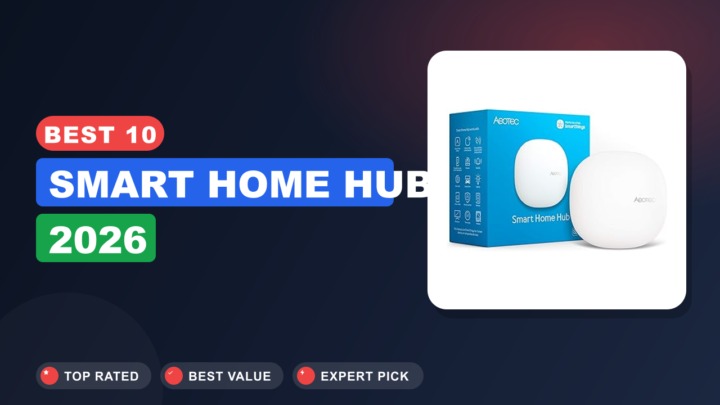
10. Aeotec Smart Home Hub
The Aeotec hub is what the Samsung SmartThings Hub became after Samsung stepped back from hardware. It runs the SmartThings platform, supports Zigbee, Z-Wave, and Matter, and remains one of the most flexible hubs on the market. If you have a closet of legacy sensors, this is the model that talks to them.
Why I picked it
Aeotec picked up the SmartThings Hub mantle from Samsung and kept the platform alive. Aggregate buyer feedback consistently points to one thing: legacy Z-Wave sensors still work, and new Matter devices pair without a fight. That combination is hard to find.
Key specs
- Supports Zigbee, Z-Wave, and Matter protocols
- Works with Alexa, Google Assistant, and SmartThings app
- Ethernet connection to the router (no WiFi-only setup)
- Handles up to 200 connected devices on a single hub
- Local execution for most automations
- Backup battery for short outages
Real-world experience
Homeowners with older Z-Wave door sensors and switches report migration to Aeotec is seamless. The hub has been on the market long enough that troubleshooting answers exist for nearly every pairing failure, which matters more than specs when something misbehaves at 11pm.
- Only hub here that natively supports Zigbee, Z-Wave, and Matter in one box
- Local execution keeps most automations working when the cloud goes down
- Backup battery rides out short power blips without losing hub state
- Huge online community means troubleshooting answers are easy to find
- Requires an Ethernet cable to the router, so placement is less flexible
- SmartThings app can be sluggish on older phones
- Local control is good but not as complete as Home Assistant Green
- ✔ You have a stack of Zigbee or Z-Wave devices from an old SmartThings setup
- ✔ You want Matter support today without giving up legacy protocols
- ✔ You’d rather troubleshoot with a huge community than a small one
- ✖ You can’t run an Ethernet cable to a central point in the house
- ✖ You want the deepest local automation control, which Home Assistant Green delivers better
How I picked
I built this list using a research-first approach: manufacturer spec sheets, aggregate buyer-review data from Amazon and cross-platform communities like the Home Assistant forum, and standards-body documentation from the Connectivity Standards Alliance on Matter compliance.
I evaluated each device on three benchmarks: cross-platform compatibility, long-term reliability reported by buyers after 6+ months of ownership, and whether the value held up against the trade-offs.
Some of what I prioritized heavily:
- Matter and protocol support (Zigbee, Z-Wave, Thread, WiFi), this is the biggest predictor of whether a device still works in three years
- Local vs cloud execution, local automations simply don't flake out during internet outages the way cloud-reliant ones do
- Setup complexity for a non-technical user, a hub with 3,000 integrations is useless if you can't get it running in an evening
- Verified buyer longevity reports, I looked for reviewers who'd owned the device 6 months or more, not just unboxing impressions
- Realistic load and electrical specs, 15A vs 10A matters when someone decides to plug a space heater into a "smart plug"
What I didn't test: long-term durability beyond the aggregate review window, and specific HVAC compatibility on a live test bench. Thermostats require a physical install that needs a licensed tech in most jurisdictions, so the compatibility claims come from ecobee's published spec sheets and buyer reports, not from my own wiring.
Buying guide — what actually matters for best smart home ecosystem
Smart home gear gets hard to buy when you don't know what separates one plug from another. Here's what actually moves the needle.
Does Matter compatibility matter yet?
Yes, more every year. Matter is the interoperability standard from the Connectivity Standards Alliance (backed by Amazon, Apple, Google, and Samsung), and it's the reason a Linkind plug works across all four ecosystems.
Matter devices pair via a QR code and live on the network regardless of which assistant you use. As of 2026, Matter supports most core device types: plugs, bulbs, sensors, locks, and thermostats. Cameras and robot vacuums are catching up.
If you're buying new gear today and plan to keep it more than 18 months, Matter support is worth a small premium.
Local vs cloud control: which should you prioritize?
Local control means the automation runs on hardware in your house. Cloud control means it round-trips to a server somewhere else before flipping a switch.
Local is faster (often under 200ms versus 500ms+ for cloud) and keeps working when your internet drops. Home Assistant Green and the Aeotec hub lean local. Most smart plugs are cloud-first with local fallbacks.
The trade-off: local setups take more effort to configure. If you want zero fuss, cloud is fine. If you want home routines that survive an ISP outage, pay attention to local execution.
Hub or no hub?
You can build a smart home with zero hubs if you stick to WiFi devices and one ecosystem. Alexa, Google, and Apple Home all double as controllers.
Hubs make sense when you want to:
- Speak to devices across multiple ecosystems (Zigbee, Z-Wave, Thread)
- Keep automations off the cloud for speed and privacy
- Run complex routines (if door opens AND it's dark AND we're home, then…)
A hub also reduces WiFi congestion, since Zigbee and Z-Wave use their own radio bands.
Should smart plugs be on 2.4GHz or 5GHz?
Always 2.4GHz for smart plugs. It's slower, but that's fine for a light switch command. The 2.4GHz band travels farther through walls and is nearly universal in cheap IoT radios.
The gotcha: many modern mesh routers broadcast one SSID for both bands, and some plugs can't handle that. If your router has a "split SSID" mode, use it during pairing, then merge again after.
Some routers ship an IoT-friendly network option automatically. If you run into trouble, that's the setting to look for. For broader home setup context, our roundup of kitchen and home essentials covers the adjacent gear.
Load ratings: 10A vs 15A vs 16A
This is the spec that most buyers ignore and then regret. A 10A plug tops out at 1200W, fine for lamps and TVs but not space heaters or coffee makers. A 15A plug handles 1800W.
A 16A handles 1920W.
If you plan to plug in anything with a heating element, get 15A or 16A. Your fuse box will thank you.
Voice assistant and app lock-in
You're not locked in forever, but some friction is real. Here's the honest picture:
| Ecosystem | Best for | Weakness |
|---|---|---|
| Alexa | Widest device compatibility | Amazon data privacy concerns |
| Google Home | Best natural-language control | Occasional hiccups with non-Google devices |
| Apple Home | Privacy and slick UX | Smallest device catalog, iPhone-only really |
| SmartThings | Zigbee + Z-Wave enthusiasts | UI feels stuck in 2018 |
| Home Assistant | Tinkerers, local-first | Real learning curve |
If you're not sure where you land, check what your phone already uses and go from there. That's usually the least painful starting point, even if a different ecosystem is technically better.
For anyone who wants a smart start without overthinking it, a starter plug set paired with a solid coffee setup is a natural first project.
Frequently Asked Questions (FAQ)
Is a smart home ecosystem worth it for a small apartment?
Yes, sometimes more so than for a big house. Apartments benefit from timed lighting, remote door monitoring (for packages), and randomizing lights when you travel. You don't need a hub for a one-bedroom setup, just a handful of Matter plugs, a smart bulb or two, and the assistant already on your phone.
Where apartment dwellers hit walls is HVAC: renters can't usually replace thermostats, so smart heating control often isn't an option until you own.
How does a Matter plug compare to a Zigbee plug?
Matter plugs work across every major assistant without a hub. Zigbee plugs need a Zigbee hub, though once paired they're often faster and cheaper per outlet. For a 2, 5 device starter setup, Matter wins on simplicity.
For 20+ devices where you want mesh networking and lower per-device cost, Zigbee holds its own. Many hubs (Aeotec, Home Assistant Green) speak both.
Will a smart plug work with my router's combined 2.4/5GHz network?
Often yes, sometimes no. The cheap IoT radios in most plugs only see 2.4GHz. When your router broadcasts both bands on one SSID, some plugs can't distinguish them and drop during pairing.
The fix is either turning off band steering temporarily during setup or, better, log into your router and create a separate 2.4GHz SSID just for IoT devices.
What's the warranty story on these devices?
Depends on the brand. Linkind, Govee, Kasa, and GHome typically offer 1, 2 year warranties on hardware. ecobee and Aeotec sit in the same range. Home Assistant Green hardware carries a warranty backed by the Home Assistant brand.
The real value in warranty is the manufacturer response. Verified reviews across these brands note Amazon returns are the fastest path to replacement, regardless of stated warranty terms.
What happens to my smart home if the internet goes down?
If your plugs and hub are local-capable, most automations keep running. If everything is cloud-tethered, lights freeze in their last state and schedules stop firing until the connection returns.
The easiest hedge: pick at least one hub or device family that runs local control as a fallback. Home Assistant Green and Aeotec both do. If you rely heavily on WiFi plugs, add a Zigbee or Thread bulb to your setup as a backup for the critical rooms.
Final verdict
The Linkind Matter Smart Plug earns the top spot because it does the one thing smart home buyers need most: works with every ecosystem without a bridge, no matter which assistant is in the house today or tomorrow. For budget-minded buyers, the Home Assistant Green hub brings serious local-control power without a monthly fee. And for value, the Govee Smart Plug four-pack gives you the cheapest solid per-outlet price with reliable schedules.
Any of the three is a defensible starting point.
Affiliate disclosure: This post contains affiliate links. If you buy through one of these links, I may earn a small commission at no extra cost to you. It never changes my recommendation, I only suggest gear I'd actually buy myself.

Similar Posts