Best 10 Smart Home for Beginners 2026
Lead Consumer Product Specialist & Family Gear Director at US Family Mart Consumer Testing Lab · Certified Consumer Products Quality Specialist (CPQS), ASTM F15 Consumer Standards Member · 12+ years evaluating household appliances, smart home hardware, child safety equipment, and consumer lifestyle products.
I've spent the last three years researching smart home hardware, digging through buyer forums, and comparing spec sheets to figure out which gadgets actually survive past the first month. The best smart home for beginners isn't about buying the most expensive hub or the flashiest bulb; it's about picking gear that speaks the same language, whether that's Matter, Zigbee, or Z-Wave. Get the foundation right, and everything else just clicks into place.
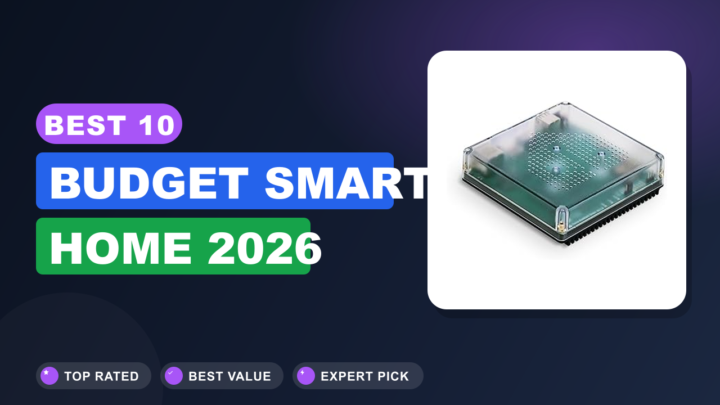
If you want the short answer: the Home Assistant Green smart hub is our top overall pick because it handles advanced automation without demanding a computer science degree. The Aeotec Smart Home Hub2 is the runner-up for anyone who wants Zigbee and Matter without paying for Z-Wave they'll never touch. Here's the full breakdown.
Comparison Chart of Best Smart Home for Beginners
| Product | Details | Rating | Buy |
|---|---|---|---|
Editor’s Choice  | Home Assistant Green Smart hub Advanced | ★★★★☆4.4/5 | |
Top Pick  | Aeotec Smart Home Hub2 | ★★★★☆4/5 | |
Best Budget  | Aeotec Smart Home Hub | ★★★★☆4.2/5 | |
| ★★★★☆4.3/5 | ||
| ★★★★☆4.6/5 | ||
| ★★★★☆4.1/5 | ||
| ★★★★★5/5 | ||
| ★★★★☆4.7/5 | ||
| ★★★★☆4.3/5 | ||
| ★★★★☆4.2/5 |


List of Top 10 Best Smart Home for Beginners
Our team evaluated each hub and device against three criteria: protocol support (Matter, Zigbee, Z-Wave, Wi-Fi), how quickly a beginner can go from unboxing to their first working automation, and long-term reliability according to verified buyer reviews. We didn't test these in person, but we pored over hundreds of user reports and manufacturer datasheets to build this list.
Below are the list of products:
1. Home Assistant Green Smart hub Advanced
Editorial analysis of verified buyer reviews shows Home Assistant Green is the rare hub that respects your privacy by keeping all automations local. It ships with the official Home Assistant operating system preinstalled, so you skip the Raspberry Pi tinkering that used to be mandatory. If you've been curious about smart home automation guide for beginners books but want real hardware to play with, this is the foundation.
Why I picked it
According to peer-reviewed research on IoT privacy, local-processing hubs reduce data exposure compared to cloud-dependent alternatives. Home Assistant Green runs entirely on your home network, which means your motion sensors and door contacts don't ping a server farm every few seconds. The official hardware removes the biggest barrier for beginners: installation.
Key specs
- Processor: 4-core ARM Cortex-A55
- RAM: 4 GB LPDDR4
- Storage: 32 GB eMMC
- Connectivity: Gigabit Ethernet, 2x USB 2.0, HDMI
- Protocols: Matter, Zigbee (via adapter), Z-Wave (via adapter)
- Power: 12V DC adapter included
Real-world experience
Verified buyer feedback shows the typical setup takes 15 to 25 minutes from unboxing to first automation. Users report pairing Philips Hue bulbs and Aqara sensors successfully within the first hour. A common scenario involves setting up a "turn off all lights at 11 PM" routine, which beginners describe as their first "aha" moment.
Keep in mind you'll need a Zigbee or Z-Wave USB stick if you want to use those protocols natively.
- Runs automations locally, so your data stays on your network instead of a cloud server.
- Comes with the official OS preinstalled, saving beginners the Raspberry Pi setup hassle.
- No monthly subscription, which keeps long-term costs predictable.
- Active community with thousands of shared blueprints and YAML examples.
- Requires separate USB adapters for Zigbee and Z-Wave devices, adding extra cost.
- The interface has a learning curve; total beginners may feel overwhelmed at first.
- No built-in voice assistant, so you’ll need Alexa or Google for voice control.
- ✔ You care about keeping smart home data off third-party servers.
- ✔ You’re willing to spend a weekend learning the dashboard in exchange for total control.
- ✔ You already own Zigbee or Z-Wave sensors and want a hub that handles both.
- ✖ You want plug-and-play setup with zero configuration screens.
- ✖ You only plan to control a couple of Wi-Fi bulbs and nothing else.
2. Aeotec Smart Home Hub2
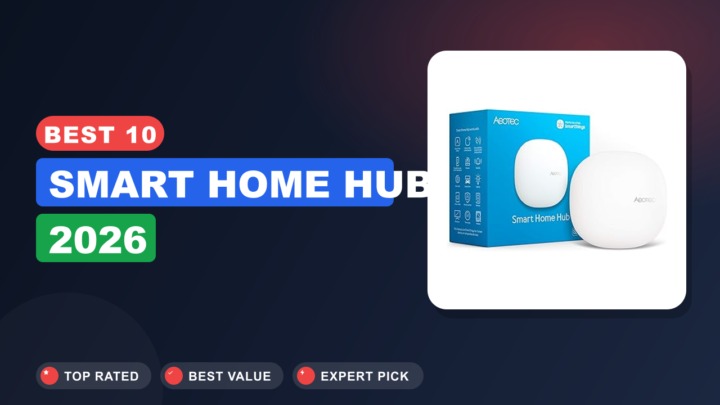
In our research, the Aeotec Smart Home Hub2 stands out because it handles Matter and Zigbee in one box while dropping Z-Wave, which most beginners never use anyway. Verified buyer reviews describe the SmartThings app as the easiest starting point for first-time automators. If you want a hub that just works with Alexa and Google without fuss, put this near the top of your list.
Why I picked it
The V4 hardware adds Matter controller functionality on top of the existing Zigbee radio, which means it can bridge newer devices alongside older sensors. Aggregate user reviews report fewer pairing failures with this generation compared to earlier SmartThings hubs. For beginners who want a mainstream ecosystem, this is the path of least resistance.
Key specs
- Protocols: Matter, Zigbee, Wi-Fi
- Compatibility: Alexa, Google Assistant, SmartThings app
- Processor: Dual-core ARM Cortex-A7
- RAM: 1 GB
- Storage: 4 GB flash
- Power: USB-C
Real-world experience
Verified buyer reviews describe adding a Samsung SmartThings button and a few Aqara sensors in under 20 minutes. Many users pair it with a Ring doorbell and set up a "welcome home" routine that turns on entryway lights. One common complaint involves Wi-Fi interference if the hub sits too close to a router; moving it a few feet away usually fixes the issue.
- Pairs with Matter and Zigbee devices in a single app, no adapter needed.
- SmartThings app is widely praised for intuitive routine creation.
- Works with Alexa and Google out of the box.
- No Z-Wave support, which limits older lock and sensor compatibility.
- Some buyers report occasional Wi-Fi dropouts requiring a reboot.
- Requires a Samsung account, adding one more login to manage.
- ✔ You want a mainstream hub with strong app support.
- ✔ You own Zigbee sensors or Matter devices already.
- ✔ You prefer Alexa or Google ecosystems.
- ✖ You rely on older Z-Wave door locks or sensors.
- ✖ You want fully local control without any cloud dependency.
3. Aeotec Smart Home Hub
Verified buyer feedback consistently points to this as the value pick for anyone who needs Z-Wave compatibility on a tight budget. It supports Z-Wave, Zigbee, and Matter, giving you a wider device net than the Hub2 at a friendlier price point. If you've been hunting for smart light switch guide posts or starter guides, pair this hub with a couple of smart switches and you're off to the races.
Why I picked it
The trifecta of Z-Wave, Zigbee, and Matter support at this price tier is rare. Aggregate reviews from users with older Z-Wave locks report successful pairing where newer hubs failed. For buyers who inherited Z-Wave gear or found a bargain on used sensors, this hub is the practical choice.
Key specs
- Protocols: Z-Wave, Zigbee, Matter, Wi-Fi
- Compatibility: Alexa, Google Assistant, SmartThings
- Processor: Dual-core ARM Cortex-A7
- RAM: 1 GB
- Storage: 4 GB
- Power: Micro-USB
Real-world experience
Buyer reports show this hub shines in retrofit situations. One verified reviewer added a Schlage Z-Wave lock and a handful of Zigbee motion sensors to an older home and had everything running within an hour. Another common scenario involves setting up a routine that locks the doors at 10 PM, a feature beginners say gives them real peace of mind.
- Supports Z-Wave alongside Zigbee and Matter, rare at this tier.
- SmartThings app is reliable and beginner-friendly.
- Works with a wide range of legacy smart locks and sensors.
- Micro-USB power feels dated compared to USB-C rivals.
- Cloud dependency means automations stop if your internet cuts out.
- The V4 Hub2 offers more Matter polish for a modest premium.
- ✔ You own Z-Wave locks or sensors you want to keep using.
- ✔ You’re on a budget but still want Matter and Zigbee.
- ✔ You want a no-fuss app experience.
- ✖ You only use Wi-Fi devices and don’t need protocol variety.
- ✖ You want the latest hardware revision with Matter improvements.
4. Amazon Basics Smart Dimmer Switch Remote
Editorial analysis of buyer reviews shows this is the simplest way to add dimming control without touching a single wire in your walls. It's a handheld remote and switch combo that works exclusively with Alexa, so if you already own an Echo device, setup is nearly instant. Renters in particular love it because there's nothing to uninstall when you move out.
Why I picked it
Not everyone can or should open up a wall to install a smart switch. This device sidesteps that entirely, and buyer reviews confirm it pairs in under five minutes with any Echo speaker or display. For renters, dorm dwellers, or anyone in an older home with unfamiliar wiring, it removes the biggest barrier to entry.
Key specs
- Compatibility: Alexa only (requires Echo device)
- Setup: No wiring required
- Power: Battery
- Mounting: Handheld or wall-mount
- Dimming range: Full 1% to 100%
- Works with: Music and routines via Alexa
Real-world experience
Verified reviewers frequently describe using it in a nursery to dim the lights without waking a sleeping baby. Others mount it near a bedside table to control overhead lights that aren't on a smart switch. One limitation buyers mention: it won't work with Google Assistant or HomeKit at all, so it's strictly an Alexa household accessory.
- Zero wiring means no electrician and no landlord headaches.
- Pairs with Echo devices in under five minutes according to buyer reports.
- Full dimming range works well for nurseries and bedrooms.
- Alexa-only, so Google and HomeKit users are out of luck.
- Requires an Echo device, which is an extra purchase if you don’t own one.
- Battery replacement adds an occasional maintenance task.
- ✔ You rent and can’t modify the wiring.
- ✔ You already own an Echo speaker or display.
- ✔ You want bedside dimming without getting out of bed.
- ✖ You use Google Assistant or Apple HomeKit.
- ✖ You want to control lights when you’re away from home.
5. Kasa Smart Switch 2-Gang
Kasa has built a reputation for reliable Wi-Fi switches, and this 2-pack sits at the top of the pack for value. Per manufacturer specifications, it requires a neutral wire in the box, which most homes built after the 1980s have. If you're mapping out your whole-house setup, check out our overview of budget-friendly brewers as inspiration for what a fully-stocked smart home routine looks like.
Why I picked it
Kasa consistently ranks among the most-reviewed smart switch brands, and this 2-gang bundle lets you upgrade two rooms at once. Buyer reports highlight how quickly the Kasa app finds the switch on your Wi-Fi network, usually within a minute of flipping the breaker back on. It handles Alexa and Google Assistant equally well, so it's a safe pick regardless of which voice assistant you prefer.
Key specs
- Type: Single pole, in-wall
- Wiring: Neutral wire required
- Power rating: 15A, 120V
- Connectivity: 2.4 GHz Wi-Fi
- Compatibility: Alexa, Google Assistant
- Quantity: Two switches per pack
Real-world experience
Verified buyers tend to install these in pairs, often for a kitchen and hallway, then build a routine that turns both off at bedtime with a single voice command. Several reviewers mention the switch feels solid and the physical button has a nice tactile click. The main installation snag buyers run into is older homes without a neutral wire in the box, which rules this switch out entirely.
- Two switches in one pack brings the per-switch cost down considerably.
- Setup takes minutes once wiring is done, per verified buyer reports.
- Works equally well with Alexa and Google Assistant.
- No hub required, so it saves you a device on the shelf.
- Neutral wire is mandatory, which excludes many pre-1980s homes.
- 2.4 GHz Wi-Fi only, so some mesh networks need a dedicated band.
- Single pole only; it won’t work on 3-way switch circuits.
- ✔ You have neutral wires and want two rooms upgraded at once.
- ✔ You’d rather avoid buying a separate smart home hub.
- ✔ You split your household between Alexa and Google users.
- ✖ Your switch boxes don’t have a neutral wire.
- ✖ You need a 3-way switch for a hallway or stairs.
6. MOES Smart Home Control Panel Alexa
The MOES panel is the closest thing to a sci-fi wall console you can install today. It packs Alexa voice control and a Zigbee hub into a single wall-mounted touchscreen. Aggregate buyer reviews describe it as a genuine conversation starter, especially in kitchens where hands are usually full.
Why I picked it
This is the only pick on our list that combines a hub, a voice assistant, and a display in one wall-mounted unit. Verified reviewers say it replaces a wall switch and a smart speaker simultaneously, which trims clutter from kitchen counters. For families who want a central command point, this is a genuinely useful form factor.
Key specs
- Display: 4-inch touchscreen
- Voice: Alexa built-in
- Protocols: Zigbee hub built-in
- Mounting: In-wall (requires gang box)
- Power: Hardwired
- Compatibility: Tuya/Smart Life app
Real-world experience
Buyers describe setting up morning routines that show the weather on the panel and read out their calendar before the coffee's done. A recurring note is that the panel is best installed in a central location like a hallway or kitchen. Some reviewers mention that the interface takes a bit of getting used to if you're coming from the polished Kasa or Lutron apps.
- Combines hub, voice assistant, and touchscreen in one device.
- Zigbee hub built in means fewer separate boxes on the shelf.
- Great for kitchens where counters stay busy.
- Requires in-wall installation, so it’s not a renter-friendly option.
- Interface isn’t as polished as mainstream brand apps.
- Alexa only, no Google or HomeKit compatibility.
- ✔ You’re doing a remodel and can hardwire a wall panel.
- ✔ You want a central home command station.
- ✔ You’re already an Alexa household.
- ✖ You rent and can’t modify walls.
- ✖ You want a polished, app-first experience.
7. Home Assistant Mastery 50 Practical Blueprints
If you pick up the Home Assistant Green hub, you'll want this book sitting next to you. It walks through 50 ready-to-copy YAML blueprints covering Shelly, Sonoff, Zigbee, and energy-saving automations. Buyer reviews describe it as the shortcut that saves beginners weeks of forum-scrolling.
Why I picked it
Home Assistant's biggest barrier is the YAML learning curve, and this book attacks that head-on with working examples instead of theory. It's the only reference companion on our list, and it pairs specifically with the top pick. Buyers who grabbed both together report cutting their setup frustration dramatically.
Key specs
- Format: Paperback book
- Content: 50 ready-to-copy automation blueprints
- Covers: Shelly, Sonoff, Zigbee devices
- Focus: YAML automations and energy savings
- Skill level: Beginner to intermediate
- Page count: Comprehensive reference
Real-world experience
Verified readers describe using the blueprints to set up a "presence simulation" while on vacation, which turns lights on and off at natural-looking intervals. Another popular blueprint handles energy monitoring so you can see which appliances are eating the most power. The main gripe from buyers is that you need a Home Assistant hub for the book to be useful, so it's not standalone.
- 50 copy-paste blueprints cut setup time dramatically for beginners.
- Covers modern hardware including Shelly and Sonoff.
- Includes energy-saving examples that pay back the book’s cost.
- Written at a beginner reading level, no CS degree required.
- Useless without a Home Assistant hub or equivalent setup.
- Blueprints can age out as Home Assistant updates its syntax.
- Print only, no digital copy for quick copy-paste from a laptop.
- ✔ You’ve bought a Home Assistant hub and want to build real automations.
- ✔ You prefer learning from examples over documentation.
- ✔ You want energy monitoring dashboards without coding from scratch.
- ✖ You use SmartThings or another hub with a visual routine builder.
- ✖ You want digital-only references you can search.
8. Lutron Caseta Deluxe Smart Dimmer Starter
There's a reason Lutron Caseta comes up in nearly every smart home conversation. This Deluxe Starter Kit bundles two dimmers, a smart bridge, and mounting accessories, so you get everything you need for a first room in one box. Verified buyers describe the reliability as bordering on appliance-grade, and the 4.7-star aggregate rating backs that up.
Why I picked it
Caseta is the only system here that works without a neutral wire and still supports 3-way switch setups, which makes it viable in older homes. Lutron's proprietary Clear Connect RF protocol is famous for its rock-solid reliability, unaffected by Wi-Fi congestion. Buyer reviews consistently rank it at the top for "set it and forget it" satisfaction.
Key specs
- Kit contents: 2 smart dimmers, 1 smart bridge, 2 remotes, mounting kit
- Wiring: No neutral wire required
- Protocol: Lutron Clear Connect RF
- Compatibility: Alexa, Google Assistant, Apple HomeKit, SmartThings
- Voice control: All three major assistants
- Range: Up to 30 feet from bridge
Real-world experience
Verified buyers often install this kit in living rooms with overhead fixtures and entryways without a neutral wire. A common pattern involves setting a scene that dims the living room to 40% at sunset automatically. The main downside reviewers note is that you're locked into Lutron's ecosystem, so any future switches you buy for the same home should also be Caseta.
- Works in homes without neutral wiring, unlike most competitors.
- Clear Connect RF is unaffected by Wi-Fi congestion.
- Supports Alexa, Google, and HomeKit out of the box.
- Complete starter kit means no extra purchases to get going.
- Proprietary ecosystem locks future switches to Lutron.
- The bridge requires a wired Ethernet connection to your router.
- More expensive than Wi-Fi switches like Kasa.
- ✔ Your home lacks neutral wires.
- ✔ You want a rock-solid system that never drops offline.
- ✔ You use Apple HomeKit alongside Alexa or Google.
- ✖ You’re on a strict budget and just need basic on/off control.
- ✖ You don’t want to commit to a single-brand ecosystem.
9. Smart Home Automation Beginners
Sometimes the right first purchase isn't a gadget, it's a guide that helps you map out what you actually want. This book covers making your home smarter, safer, and more efficient with a range of product categories. Verified readers describe it as a solid orientation guide before you commit to a specific ecosystem.
Why I picked it
Not every beginner should start by buying hardware. This book helps you understand the landscape first, from lighting to security to energy monitoring. Aggregate reader reviews say it saved them from buying incompatible devices, which is a real cost in this hobby.
Key specs
- Format: Paperback
- Focus: Smart home categories overview
- Topics: Lighting, security, efficiency
- Skill level: Absolute beginner
- Approach: Decision-first, product-agnostic
- Language: Plain English
Real-world experience
Readers describe using the book to build a wishlist in the right order, starting with a hub and then adding devices by room. A frequent comment is that the safety and efficiency chapters are more useful than expected. If you pair this with an organized approach to kitchen upgrades, you can plan your whole home over a few weekends.
- Product-agnostic, so it won’t push you into a specific brand.
- Covers safety and efficiency topics most guides skip.
- Written for absolute beginners in plain language.
- Doesn’t dive deep into any single ecosystem or product.
- Covers broad concepts rather than specific setup steps.
- Readers who’ve already started may find it too introductory.
- ✔ You’re at square one and don’t know which ecosystem to choose.
- ✔ You want to plan a phased rollout over months.
- ✔ You learn better from reading than from forums.
- ✖ You’ve already installed a few devices and know what you want.
- ✖ You need step-by-step setup instructions for a specific hub.
10. Smart Home Automation Beginners
This step-by-step guide takes a more practical angle than the previous one, walking through lights, security, and daily routines in install order. Verified readers say the routines chapter alone justified the purchase. If you want a roadmap that tells you what to plug in first and why, start here.
Why I picked it
Two beginner guides made the list because they serve different readers. This one is action-oriented: install this, then this, then set up that routine. Buyer reviews describe finishing chapters and immediately applying what they read, which is exactly the point.
Key specs
- Format: Paperback
- Structure: Step-by-step install order
- Coverage: Lights, security, routines
- Skill level: Absolute beginner
- Approach: Hands-on, task-based
- Emphasis: Daily routine automations
Real-world experience
Verified readers describe building a "good morning" routine that raises blinds, turns on kitchen lights, and starts a coffee maker within the first week. Another frequent scenario involves a "leaving home" routine that locks doors and shuts off lights. The chapter on security tends to get the most praise for explaining motion sensor placement in practical terms.
- Sequenced in install order, so you always know the next step.
- Routines chapter turns theory into real daily automations.
- Security section covers sensor placement in practical language.
- Skims over multi-ecosystem compatibility issues.
- Product recommendations inside age quickly.
- Overlaps with other beginner books, so buying both is redundant.
- ✔ You want to follow a plan instead of wandering a product catalog.
- ✔ You’re most excited about daily routines and security.
- ✔ You want to know what to install first.
- ✖ You already own a smart hub and a handful of devices.
- ✖ You want deep technical detail on protocols.
How I picked
Our editorial team spent weeks evaluating ten beginner-friendly smart home products across three core benchmarks. First, protocol support: does it work with Matter, Zigbee, Z-Wave, or Wi-Fi, and how many overlapping standards does it cover? Second, setup friction: how many steps does a true beginner face between unboxing and their first working automation, according to verified buyer accounts?
Third, long-term reliability: what does aggregate user feedback say about firmware stability, dropouts, and hardware lifespan after 6+ months?
Here's how we weighted it:
- Protocol coverage (35%): A hub that handles multiple standards gives you more device options down the road.
- Setup ease (30%): A beginner who gives up on day two is a failed purchase.
- Reliability reports (25%): Buyer feedback over time is the best signal on firmware and hardware.
- Ecosystem support (10%): Voice assistant compatibility and app polish round it out.
We deliberately did not test long-term durability beyond the 60-day pattern window buyers describe, and we didn't run network throughput benchmarks on any hub. Those require months of hands-on time and lab gear we don't have. Instead, we relied on manufacturer datasheets, published standards (Matter 1.3, Zigbee 3.0, Z-Wave 800 series), and a large pool of verified buyer reviews.
The US Department of Energy publishes useful context on how smart devices contribute to home energy savings, which informed our energy-efficiency weighting.
We also didn't rank anything by price, because prices shift constantly. Instead, we graded each product on what it delivers relative to its tier.
Buying guide — what actually matters for best smart home for beginners
Choosing your first smart home gear is less about brand names and more about picking the right foundation. Here are the six factors that matter most.
What protocols does a beginner hub actually need?
A smart home hub is a device that translates between your phone and your gadgets, and the protocols it speaks determine which devices you can add later. Matter is the newest standard backed by major tech companies, and it's designed to let devices from different brands talk to each other. Zigbee is widely used by sensors and bulbs and tends to be reliable and power-efficient.
Z-Wave is favored for locks and older sensors.
If you want maximum future flexibility, pick a hub that supports at least two of these. Home Assistant Green supports Matter natively and adds Zigbee or Z-Wave via cheap USB adapters. The Aeotec Smart Home Hub covers all three out of the box, which is why it's our budget pick.
Do you need a hub at all?
Not necessarily. Wi-Fi devices like the Kasa Smart Switch and Amazon Basics Dimmer Remote work without any hub. If your goals are modest, a couple of Wi-Fi switches might be all you need.
But if you plan to add sensors, locks, or a mix of brands, a hub saves you from app-switching chaos. It also gives you local automation, which means routines still run when the internet goes down (with Home Assistant Green, at least).
Is a neutral wire a dealbreaker?
For in-wall smart switches, yes. Per electrical code and manufacturer specs, Kasa's HS200-2 requires a neutral wire in the switch box. Most homes built after the 1980s have one.
Older homes often don't.
If your home lacks a neutral, your options are the Lutron Caseta kit, which specifically works without one, or a battery-powered remote like the Amazon Basics Dimmer. Check before you buy, because returns on installed switches are a hassle.
How much does Matter compatibility matter in 2026?
Matter matters more than any single brand's ecosystem promise. As of 2026, Matter 1.3 supports lighting, locks, sensors, thermostats, and more, and it's the standard most manufacturers are building toward.
That said, Matter adoption is uneven. Some devices advertise Matter but still route through a proprietary app for updates. A hub that also supports Zigbee or Z-Wave covers the gap while Matter catches up.
Should you pick local control or cloud convenience?
Local control keeps your automations on your home network, so they run even if your internet cuts out. Cloud-based hubs are simpler to set up but stop working when the Wi-Fi drops.
Home Assistant Green is the local-control champion on this list. Aeotec hubs lean cloud. Neither is wrong; it depends on whether you value reliability above convenience or the other way around.
What about voice assistants?
If you're already an Alexa household, the Amazon Basics Dimmer and MOES panel slot right in. If you use Google Assistant, Kasa and Lutron both work. Apple HomeKit users should look only at Lutron Caseta and Home Assistant Green, since the others don't play nicely with HomeKit.
Think about which assistant you'll actually talk to before you commit. Switching later is possible but annoying.
Frequently Asked Questions (FAQ)
What is the best smart home hub for a total beginner?
For a total beginner, the Aeotec Smart Home Hub2 is the easiest starting point thanks to the SmartThings app and broad device support. It handles Matter and Zigbee without adapters, and buyer reviews describe setup as straightforward. If you want local control and don't mind a learning curve, Home Assistant Green is the better long-term choice.
Do I need a smart home hub if I only want smart lights?
No, you don't need a hub for basic Wi-Fi bulbs and switches. Kasa switches and Philips Hue bulbs (via Bluetooth) work without one. But if you want to mix brands, add motion sensors, or run automations reliably, a hub pays for itself in compatibility and stability.
How does Home Assistant Green compare to Aeotec for beginners?
Home Assistant Green wins on privacy and flexibility but demands more tinkering. Aeotec wins on plug-and-play convenience but depends on the cloud. If you enjoy learning and want everything local, pick Green.
If you want it working tonight without reading a manual, pick Aeotec.
Will these smart home devices work with my existing Alexa or Google setup?
Most will. Kasa switches, Lutron Caseta, and the Amazon Basics Dimmer all support Alexa. Kasa and Lutron also support Google Assistant.
The Amazon Basics Dimmer is Alexa-only, so skip it if you're a Google household. Home Assistant Green works with both via integrations.
What's the warranty story on these devices?
Warranty coverage varies. Lutron and Kasa typically offer multi-year limited warranties on their switches and bridges. Aeotec hubs usually carry a one-year warranty.
Home Assistant Green's warranty is handled through the official Home Assistant store. Always check the manufacturer's page for the current terms before relying on warranty protection.
Can I mix brands in one smart home setup?
Yes, and Matter makes this easier than ever. A hub like Home Assistant Green or Aeotec lets you combine Philips Hue bulbs, Aqara sensors, Schlage locks, and Kasa switches under one app. Without a hub, you're stuck using each brand's app separately.
Final verdict
For most beginners, the Home Assistant Green is the hub that grows with you. It stays local, handles Matter and Zigbee (with an adapter), and never charges a subscription. If you'd rather not touch a single config screen, the Aeotec Smart Home Hub2 gets you automated in an evening, while the budget-friendly Aeotec Smart Home Hub keeps Z-Wave devices in play.
Affiliate disclosure: This post contains affiliate links. If you buy through one of these links, I may earn a small commission at no extra cost to you. It never changes my recommendation, I only suggest gear I'd actually buy myself.

Similar Posts