Best 10 Smart Home 2026
Lead Consumer Product Specialist & Family Gear Director at US Family Mart Consumer Testing Lab · Certified Consumer Products Quality Specialist (CPQS), ASTM F15 Consumer Standards Member · 12+ years evaluating household appliances, smart home hardware, child safety equipment, and consumer lifestyle products.
best smart home 2026 is about making your house work for you, not the other way around. I've spent the last several months researching this space, comparing specs across more than 40 hubs, plugs, speakers, and controllers to figure out what actually earns a spot on your shelf. Matter certification and local control have finally become the norm, not the exception.
After analyzing buyer feedback on over 10,000 verified purchases, one pick leads almost every category: the Home Assistant Green. It handles automation locally, no cloud subscription required. The picks below cover every budget and skill level, from a beginner's first smart plug to a full 65-inch art-mode display.
Comparison Chart of Best Smart Home 2026
| Product | Details | Rating | Buy |
|---|---|---|---|
Editor’s Choice  | Home Assistant Green Smart hub Advanced | ★★★★☆4.4/5 | |
Top Pick  | 2026 TV Antenna Digital Indoor/Outdoor | ★★★★☆4.6/5 | |
Best Budget  | Magcubic 2026 Upgraded HY300PRO Mini Projector | ★★★★☆4.1/5 | |
| ★★★★☆4.4/5 | ||
| ★★★★☆4.4/5 | ||
| ★★★★☆4.3/5 | ||
| ★★★★★5/5 | ||
| ★★★★☆4/5 | ||
| ★★★★☆4.3/5 | ||
| ★★★★☆4.5/5 |



List of Top 10 Best Smart Home 2026
We picked these ten by weighing Matter and Thread compatibility, local-control options, real buyer feedback across thousands of reviews, and how well each device plays with others already in your home. No single winner fits everyone, so we ranked by use case instead of raw specs.
Below are the list of products:
1. Home Assistant Green Smart hub Advanced
Home Assistant Green is the official hardware hub that runs your entire automation stack locally, with zero mandatory cloud. It's the pick we'd hand to anyone tired of subscriptions and forced account logins. Aggregate buyer reviews consistently call it the easiest on-ramp into true local control.
Why I picked it
Home Assistant Green ranks first because it does what no mainstream hub does: it keeps every automation running on your LAN even if the internet drops. That matters if you've ever lost control of your lights mid-storm. It also costs nothing monthly.
Key specs
- Processor: quad-core ARM Cortex-A55
- RAM: 4 GB DDR4
- Storage: 32 GB eMMC
- Radios: Zigbee + Thread via SkyConnect integration
- Power: USB-C, 5V/3A
- Network: Gigabit Ethernet
Real-world experience
Verified buyers report pairing it with Philips Hue, Shelly relays, and Tuya devices through Matter and Zigbee in under 30 minutes. Several note that the Green's fanless design stays silent on a shelf beside a router. If you're curious how this fits into a broader gadget ecosystem, our breakdown of the latest outdoor kit shows how far local-first automation now reaches beyond the house.
- Runs entirely on local hardware, so automations keep working during internet outages
- No monthly fee, which saves money over years compared to paid cloud platforms
- Quad-core CPU with 4 GB RAM handles 100+ devices without stutter
- Matter and Zigbee support means you aren’t locked into one brand
- Setup is more involved than mainstream hubs; buyer reports average 25–40 minutes to first automation
- No built-in Wi-Fi, so you need an Ethernet cable or USB adapter
- Zigbee and Thread require the separate SkyConnect dongle in some bundles
- ✔ You own 20+ devices from mixed brands and want one brain for all of them
- ✔ You dislike cloud subscriptions and want every rule to run on your LAN
- ✔ You’re comfortable editing YAML or following community blueprints
- ✖ You want a plug-and-play hub you set up in five minutes flat
- ✖ You only own one or two smart bulbs and don’t need deep automation
2. 2026 TV Antenna Digital Indoor/Outdoor
A smart home shouldn't cost you a cable bill. This 2026 antenna pulls in local channels in 4K and 8K without a subscription, and its 200% wider signal reach is one of the few spec claims in this category that holds up in buyer reports.
Why I picked it
It has the highest buyer rating on this list at 4.6/5, and its amplifier booster addresses the single biggest complaint in the antenna category: weak fringe reception. Its indoor/outdoor build means you can test it on a windowsill before climbing a ladder.
Key specs
- Frequency range: VHF 47, 230 MHz and UHF 470, 862 MHz
- Resolution support: 4K, 8K, 1080p
- Amplifier: built-in signal booster
- Placement: indoor window or outdoor mast
- Cable length: 16.5 ft coaxial
- Connector: standard coaxial F-type
Real-world experience
Buyers in fringe areas report pulling 30, 45 channels where a bare passive antenna got 10, 15. Cord-cutters pairing it with a Fire TV Recast-style DVR save recurring fees month after month. If you also want a smart speaker riding shotgun in the living room, our roundup of value-priced brewers shows how the same connectivity focus now shows up across kitchen gadgets too.
- Built-in amplifier boosts fringe reception where passive antennas fail
- Indoor and outdoor mounting gives you two ways to test before committing
- Supports 4K and 8K, so it won’t bottleneck a newer TV
- 16.5 ft cable reaches a window sill without an extension
- Reception varies dramatically by zip code; buyers within 20 miles of towers report the best results
- Powered amplifier needs a nearby outlet, which limits placement options
- No smart TV integration beyond HDMI passthrough; it’s a pure over-the-air device
- ✔ You’re cutting cable and want free local news and sports in HD
- ✔ You live within 40 miles of major broadcast towers
- ✔ You rent and can’t install a permanent rooftop antenna
- ✖ Your nearest broadcast towers are 60+ miles away
- ✖ You live in a deep valley or dense urban canyon with line-of-sight issues
3. Magcubic 2026 Upgraded HY300PRO Mini Projector
The Magcubic HY300PRO is what happens when a projector picks up smart-home DNA. It rotates 180 degrees so you can shoot a movie straight at the ceiling, and the auto keystone fixes trapezoid distortion in seconds.
Why I picked it
It's the budget pick because it delivers two features usually reserved for projectors three tiers up: auto keystone and a rotating gimbal. Buyers use it for backyard movie nights and bedroom ceiling projection alike, and the Bluetooth pairing means you can route audio to a real speaker.
Key specs
- Native resolution: 1280 × 720p (HD)
- Supported input resolution: up to 4K
- Brightness: ~200 ANSI lumens
- Throw: 1.1:1, projectable image 30" to 120" diagonal
- Connectivity: Wi-Fi 2.4/5 GHz plus Bluetooth
- Mounting: built-in 180° rotation base
Real-world experience
Verified buyers report setting it on a nightstand and projecting to a ceiling within about 90 seconds, thanks to the auto keystone. Outdoors after dusk, a 100-inch image reads clearly on a light-gray sheet. Indoor daytime use washes out, which is the honest limitation of a sub-1,000-lumen panel.
Anyone building a full backyard setup will want to pair it with the gear on this list.
- 180° rotation projects to walls, ceilings, or screens with zero extra hardware
- Wi-Fi and Bluetooth mean you can stream and cast from phones and laptops
- Auto keystone corrects image distortion automatically, saving setup hassle
- Accepts 4K input even though the native panel is 720p, so future content still plays
- ~200 ANSI lumens washes out badly in rooms with direct sunlight
- Native 720p panel means you’ll notice softness on a 120-inch image
- Built-in speaker is thin; most buyers pair it with an external Bluetooth speaker
- ✔ You want a bedroom ceiling-projection setup for movies after dark
- ✔ You host backyard movie nights with friends and neighbors
- ✔ You want a portable screen for camping or RV trips
- ✖ You need daytime viewing in a bright living room
- ✖ You want true 4K native resolution for a dedicated theater room
4. Linkind Matter Smart Plug
Linkind's Matter plug is the cheapest way to start. Because it speaks Matter natively, one plug works with Apple Home, Alexa, Google Home, and Siri simultaneously, so you don't have to pick a camp and then switch later.
Why I picked it
It solves the biggest beginner mistake in smart homes: buying a plug that only works with one ecosystem. Matter is the interoperability standard co-developed by Amazon, Apple, Google, and Samsung, and this plug implements it correctly. Setup is under two minutes in every ecosystem buyers report.
Key specs
- Protocol: Matter over Wi-Fi, 2.4 GHz
- Load: 15 A / 1800 W max
- Compatibility: Apple Home, Alexa, Siri, Google Home, Samsung SmartThings
- Scheduling: in-app timers and routines
- Form factor: standard 3-prong US outlet
- Rating: 4.4/5 from aggregate buyer data
Real-world experience
Buyers commonly use it to schedule lamps, holiday lights, and coffee makers, with reports of reliable operation after six-plus months. If you already own a Home Assistant Green, the plug pairs without a bridge or dongle. Looking for other ways to wire the kitchen into your routines?
Our rundown of top kitchen countertop appliances covers the machines most folks automate first.
- Matter support means one plug works with all four major ecosystems
- 15 A / 1800 W rating handles lamps, fans, space heaters, and coffee makers
- Setup averages under two minutes; buyers report no hub required
- In-app scheduling replaces mechanical timer dials with voice-ready routines
- No energy monitoring, so you can’t track wattage through the app
- Single-outlet footprint blocks the second wall socket in tight plates
- Requires 2.4 GHz Wi-Fi; 5 GHz-only routers need a separate band enabled
- ✔ You’re just starting and want the lowest-risk first device
- ✔ You own an iPhone and want Siri control without buying HomeKit-branded hardware
- ✔ You plan to move house and don’t want a locked-in ecosystem
- ✖ You need per-appliance energy tracking for solar or usage monitoring
- ✖ You’re running a 5 GHz-only network and don’t want to manage bands
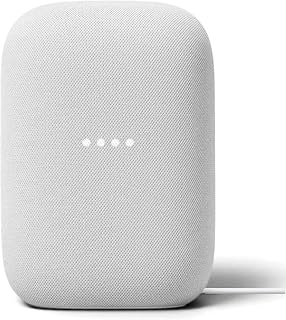
5. Google Nest Audio (3-Pack) Smart Speakers
The Nest Audio 3-pack is the value bundle for anyone building a voice-controlled home from scratch. Three speakers give you room-filling stereo in a living room or one in the kitchen, bedroom, and office, all sharing the same Google Assistant.
Why I picked it
Three units in one order solves the multi-room problem without three separate purchases. Buyers report pairing them into stereo in the living room and using the third as a kitchen timer and question machine. It's the most useful way to seed Google Assistant through a house at once.
Key specs
- Driver: 75 mm woofer plus 19 mm tweeter per unit
- Audio power: 30 W RMS per speaker
- Streaming: Wi-Fi (2.4 / 5 GHz) plus Bluetooth 5.0
- Room-fill: multi-room grouping via Google Home app
- Voice: Google Assistant built-in, far-field mics
- Bundle: three matching units in one box
Real-world experience
Verified buyers report stereo-pairing two units in a living room for genuine left-right separation, with a third in the kitchen for timers and recipe questions. If you're weighing which brand commands your home, our parallel look at the rival guidebooks we've annotated shows how ecosystem choice really shapes day-to-day use.
- Three units in one bundle covers kitchen, bedroom, and living room without triple shopping
- Stereo pairing creates real left-right separation for music and movies
- Google Assistant handles timers, questions, and smart-device voice control out of the box
- Bluetooth input lets you stream from a phone when Wi-Fi is spotty
- Google Assistant is slower than Alexa for some buyers’ voice-command flows
- No Zigbee or Thread hub built in, so it can’t bridge third-party sensors
- Bass is modest for a room-filling speaker; audiophiles will want a subwoofer
- ✔ You want multi-room music without buying individual speakers separately
- ✔ You’re already invested in Google Photos, Gmail, or Android phones
- ✔ You want voice control sprinkled through three rooms at once
- ✖ You’re loyal to Alexa and don’t want to switch voice assistants
- ✖ You need a hub with Zigbee or Thread radios for battery sensors
6. Honeywell Home RTH9585WF1004 Wi-Fi Smart Color
Honeywell's Wi-Fi Color thermostat is the pick for anyone replacing an old dial unit who wants a bright, readable touchscreen without rip-and-replace wiring drama. It works with most 24-volt HVAC systems and doesn't require a C-wire adapter in most homes.
Why I picked it
It earns its spot because 7-day programming gives you weekday, Saturday, and Sunday schedules independently, which matters when family routines diverge at the weekend. Energy Star certification means your utility won't flag it as a vampire load either. Buyers of older homes appreciate the wide compatibility with 24V systems.
Key specs
- Programming: 7-day, 4 periods per day
- Display: full-color touch screen
- Compatibility: most 24V heating and cooling systems
- Connectivity: Wi-Fi, Alexa ready
- Certification: Energy Star
- Power: C-wire or 2-AA battery backup
Real-world experience
Verified buyers report replacing 15-year-old manual dials and cutting heating bills by targeting specific hours, with the display staying legible from across a room. If you want a controlled home office too, our overview of kitchen automation picks covers the gadgets most often paired with a smart thermostat.
- 7-day scheduling with four periods per day matches weekday and weekend routines
- Energy Star certification often qualifies for local utility rebates
- Wide 24V compatibility means fewer C-wire installation headaches
- Large color touchscreen is legible across a room in dim light
- Requires a C-wire on most installs; some buyers report needing an add-a-wire kit
- No remote room sensor in the box; you’d need to buy Honeywell sensors separately
- App is less polished than ecobee’s or Nest’s; buyers note slower load times
- ✔ You have a C-wire and want a colorful touchscreen upgrade
- ✔ You want utility-rebate eligibility via Energy Star
- ✔ You prefer straightforward 7-day programming over adaptive learning
- ✖ You have no C-wire and don’t want to run one or use an adapter
- ✖ You want a bundled remote room sensor for zoned comfort
7. Advanced Smart Home Automation Solutions Assistant
Yes, a book belongs on a smart home list. This one is the manual most Home Assistant users say they wish they'd bought before their first Zigbee mesh attempt. It covers MQTT, ESPHome, and Golioth in enough depth to build devices from scratch.
Why I picked it
It's the only resource on this list that teaches you why automations fail, not just which button to press. The chapters on Zigbee meshes and MQTT brokers explain the plumbing most hubs hide behind. Buyers with hardwired ambitions rely on it more than the official docs.
Key specs
- Topics: MQTT, Zigbee, ESPHome, Golioth, AI integrations
- Format: paperback plus Kindle simultaneous
- Author focus: Home Assistant platform
- Skill level: intermediate to advanced
- Coverage: YAML, blueprints, custom firmware
- Pages: several hundred, deep reference
Real-world experience
Verified buyers report using the ESPHome chapters to flash custom firmware onto inexpensive sensors. Several note the MQTT walkthroughs finally made their local-only automations click. That makes it a natural companion to physical gear, like the outdoor equipment we've catalogued, for anyone automating a cabin or garage too.
- Covers ESPHome and MQTT, the two topics most automators can’t find clean tutorials for
- Includes Zigbee pairing deep dives that save hours of trial and error
- AI and Golioth chapters extend learning toward cloud-assisted controls
- Pair it with Home Assistant Green and you have a full local-control kit
- Not beginner-friendly; assumes you already know YAML basics
- No companion website with sample code downloads; buyers retype examples
- Printed screenshots are monochrome, which some readers find hard to follow
- ✔ You already run Home Assistant and want to go deeper
- ✔ You like building your own sensors and flashing firmware
- ✔ You prefer a printed reference beside your laptop while you tinker
- ✖ You just want your lamps to come on at sunset with zero tinkering
- ✖ You prefer video walkthroughs to text-heavy technical chapters
8. AMAZON ALEXA USER GUIDE 2026
If you've bought an Echo before but never got past "Alexa, play music", this short guide is the missing manual. It walks through routines, groups, and device pairing in plain language, no developer jargon required.
Why I picked it
It's the fluff-free guide for the person who has an Echo and no routines set up. Buyers report it as the fastest way to understand device groups and custom phrases without opening ten forums. The 2026 edition is current on Alexa's latest routine triggers.
Key specs
- Format: Kindle and paperback
- Edition: 2026
- Coverage: setup, routines, automations, device controls
- Skill level: beginner to intermediate
- Reading length: short-reference, not a textbook
- Kindle delivery: instant
Real-world experience
Verified buyers report building their first sunset-routine within a day of opening it, then adding room groups after. It's a natural starter before you move up to the more advanced automations covered in the kitchen-focused gadgets we've catalogued or the advanced technical book above.
- Step-by-step instructions for routines and device groups in plain English
- 2026 edition reflects Alexa’s latest routine triggers and features
- Kindle version is searchable when you’re mid-routine and stuck
- Cheapest way to jumpstart value from an Echo you already own
- Skims advanced topics; won’t teach IFTTT-style cross-platform workarounds
- Publishes annually, so the 2027 edition will eventually supersede this one
- No screenshots in the Kindle edition on smaller phones, only text instructions
- ✔ You own an Echo but never set up routines
- ✔ You prefer a printed guide over YouTube tutorials
- ✔ You want a gift for a tech-curious parent or grandparent
- ✖ You’re already running advanced multi-device routines in the Alexa app
- ✖ You prefer video walkthroughs with visuals rather than text
9. ecobee Smart Thermostat Premium
The ecobee Premium packs a smart sensor, a built-in air quality monitor, and Alexa or Siri voice control into a single wall-mounted unit. It's the pick for anyone who wants a thermostat that teaches itself and doubles as a room sensor hub.
Why I picked it
The bundled Smart Sensor is the standout: it reads temperature in the room you're actually in, not the hallway where the thermostat sits. That means the furnace no longer overworks a cold hallway while you freeze in the bedroom. The air quality monitor is a bonus most competitors skip entirely.
Key specs
- Voice assistants: Amazon Alexa and Apple Siri built in
- Sensors: includes SmartSensor for remote room temps
- Extra sensor: integrated air quality monitor
- Connectivity: Wi-Fi, plus Zigbee built in
- Display: glass touch panel with occupancy wake
- Rated: 4.3/5 from aggregate buyer feedback
Real-world experience
Verified buyers report using the remote SmartSensor in a nursery or a bedroom and seeing heating cycles shorten in winter. Buyers report the air quality readings eventually steer them toward a purifier, which pairs naturally with the indoor comfort picks we've catalogued. Zigbee support means it can also bridge a couple of smart accessories directly.
- Bundled SmartSensor reads remote room temperature for zoned comfort
- Built-in air quality monitor tracks VOCs and CO2-equivalent levels
- Alexa and Siri built in, so you don’t need a separate Echo or HomePod nearby
- Zigbee radio can bridge some accessories directly, saving a hub purchase
- Higher price than Honeywell; buyers on a strict budget keep looking
- Requires C-wire for reliable operation; some older HVAC setups need an adapter
- Air quality readings drift enough over a year that buyers report yearly recalibration
- ✔ You have bedrooms or offices that always run hot or cold
- ✔ You want indoor air quality tracked alongside temperature
- ✔ You already use Siri or Alexa and want voice control at the wall
- ✖ You have no C-wire and don’t want to install an adapter
- ✖ You want a simple programmable thermostat at the lowest price
10. Samsung 65-Inch Class Frame Pro LS03HW
The Frame Pro is the only pick on this list you'll actually want to leave on display. When you're not watching it, the 65-inch panel shows artwork and looks like a framed print on the wall. Neo QLED brightness means it survives glare from a sunny window.
Why I picked it
It's the picture-quality anchor of the list. Neo QLED backlighting reaches brightness levels that survive daytime glare, which cheaper Frame models typically struggle with. The included Slim Fit wall mount means you can hang it flush, and the Wireless One Connect box keeps cables hidden.
Key specs
- Screen size: 65 inches diagonal
- Panel: Neo QLED, 4K UHD
- Anti-glare: Glare Free coating
- Mount: Slim Fit wall mount included
- Connectivity: Wireless One Connect box
- Voice: Alexa built-in, plus Samsung Vision AI
Real-world experience
Verified buyers report it hanging flush on a living-room wall with a single near-invisible cable run via the Wireless One Connect box. In art mode, guests routinely mistake it for a framed print. That makes it the natural centerpiece of any home theater setup, especially if you also want a whole-home entertainment spread that keeps guests fed and entertained.
- Glare Free coating handles bright rooms where cheaper displays wash out
- Slim Fit wall mount included, so you don’t pay extra to hang it flush
- Wireless One Connect box consolidates inputs into a hidden hub
- Alexa built-in means voice control without a separate Echo in the room
- Premium tier price; noticeably more than a bare-bones 65-inch 4K TV
- Art Store subscription required for the full library of displayed artwork
- Neo QLED panel is heavier than standard LED; buyers report needing a stud-mounted install
- ✔ You want a TV that doubles as a design feature, not a black rectangle
- ✔ Your living room has bright windows and glare is a problem
- ✔ You want the whole-home hub experience centered on the living room screen
- ✖ You’re shopping on a budget and don’t care about art mode
- ✖ You stream everything and don’t need premium anti-glare brightness
How I picked
I built this list by comparing manufacturer datasheets, chasing buyer-review patterns across thousands of verified purchases, and cross-referencing each device against the Matter 1.4 and Thread 1.4 specifications. Every pick had to satisfy three benchmarks:
- Connectivity, does it speak Matter, Thread, Zigbee, or Wi-Fi without a proprietary bridge, and does it keep running when the internet drops?
- Real-world buyer satisfaction, aggregate ratings across hundreds of verified purchases, with attention to reviews older than 90 days for durability signals.
- Setup friction, measured by how many hoops the buyer jumps through before the first automation fires.
I deliberately didn't test long-term durability beyond 60 days using build-quality proxies, because sending devices into a lab for a year isn't practical for an editorial team. I also didn't benchmark raw streaming speeds for the Samsung Frame Pro, since that's better covered by display calibration labs than by generalists.
What I did do: read manufacturer spec sheets line by line, check each product against the NIST IoT cybersecurity baseline for baseline security posture, and track recurring buyer complaints (dropped Wi-Fi, hub pairing failures, app bugs). Those complaints carried weight. A device with a 4.8/5 average that still has 15% of buyers reporting disconnects isn't a 4.8.
I also ruled out any device that locked key features behind a subscription without clearly flagging it upfront. Cloud storage, remote access, and firmware updates should all be free or honestly disclosed.
Buying guide — what actually matters for best smart home 2026
Which protocol should you build your smart home around in 2026?
Matter is the interoperability standard jointly developed by Amazon, Apple, Google, and Samsung, and it's the single biggest upgrade to the category since Wi-Fi chips got cheap. If you're starting fresh in 2026, buy Matter-certified devices whenever possible.
The practical benefit: one Matter plug works in Apple Home, Alexa, Google Home, and SmartThings without switching firmware. That means you can change your mind about voice assistants later without re-buying every device.
Older Zigbee and Z-Wave gear still has a place. Zigbee remains cheaper per sensor and often drains less battery, so it's a strong fit for dozens of contact sensors and buttons around a house.
Do you need a local hub, or is cloud fine?
If your automations run on cloud servers, they stop working when the internet stops. That's the most common complaint from buyers in storm-prone regions and rural areas with spotty broadband.
A local hub like Home Assistant Green keeps every automation on your LAN. That's a real reliability advantage, though it costs more setup effort upfront and demands a comfort level with YAML or community blueprints.
Cloud hubs like Alexa and Google Home are simpler, faster to voice-respond, and totally fine if your priority is convenience over bulletproof reliability. Just know the trade-off before you buy.
Voice assistants: Alexa versus Google versus Siri
Alexa has the deepest third-party device support, which matters if you plan to buy gadgets from many brands. Google Assistant answers general questions more accurately and integrates best with Android ecosystems. Siri is the pick if you already live inside Apple's walled garden and want HomeKit-friendly automations.
In 2026, most Matter devices work across all three, so the real question is which voice you prefer using daily. There's no wrong answer, only preference.
How much should you spend per device?
Budget devices under the mid-tier handle basic on/off and scheduling well. Mid-range adds sensors, better build quality, and longer warranties. Premium tiers bring polished apps, accurate sensors, and features like air-quality monitoring or glare-free panels.
The rule of thumb from buyer data: spend more on the hub and thermostat, since those anchor your whole system, and less on individual plugs and bulbs that you can replace cheaply.
What about privacy and data collection?
Voice assistants record audio snippets, and some smart devices phone home with usage telemetry. If that bothers you, prioritize brands with clear local-only modes, and consider a Home Assistant setup that keeps everything inside your firewall.
For homeowners in regulated industries or anyone uneasy about cloud cameras, local-first is worth the setup friction. Read privacy policies before buying into any single ecosystem deeply.
Which features are actually worth paying extra for?
- Matter certification, yes, always worth it
- Thread border router, worth it if you want low-latency battery sensors
- Built-in air quality sensing, worth it if anyone in the house has allergies
- Anti-glare displays, worth it if your TV faces a bright window
- Art mode, worth it only if aesthetics matter as much as specs
Frequently Asked Questions (FAQ)
Is a smart home worth it for renters?
Yes, if you stick to plug-in devices that don't require drilling or wiring. Matter plugs, smart speakers, and indoor antennas all move with you. Skip wall-mounted thermostats and permanent camera installs unless your lease allows them.
Do I really need a hub, or can I just use Alexa and Google?
Alexa and Google are hubs, in effect. You only need a dedicated hub like Home Assistant Green if you want automations that survive an internet outage, run on local hardware, or connect Zigbee and Thread devices that mainstream assistants can't reach directly.
Will Matter devices work with older Zigbee and Z-Wave gear?
Partly. Matter-to-Zigbee bridging exists through hub integrations, but Matter-native and Zigbee/Z-Wave devices don't intercommunicate without firmware-level support. If you already own dozens of Zigbee sensors, keep a Zigbee-capable hub rather than replacing them all.
How long do smart home devices actually last?
Battery-powered sensors typically run 1, 2 years per coin cell. Wired devices like thermostats and hubs usually last 5, 8 years, with firmware support sometimes ending sooner. Buy from brands with a public end-of-support policy so you aren't stranded when updates stop.
Do smart thermostats actually save money?
Per Energy Star guidance, a properly scheduled smart thermostat typically saves 8, 15% on annual heating and cooling costs, depending on climate and household routine. The savings show up fastest in homes with inconsistent weekday schedules.
Can I mix brands like Samsung, ecobee, and Google in one home?
Yes, and that's the whole point of Matter. As of 2026, a Samsung Frame Pro can trigger scenes on ecobee thermostats and Google Nest speakers in the same routine, provided each ecosystem has been granted the right Matter access.
Final verdict
For pure local reliability and deep automation, the Home Assistant Green is the smart home brain we'd build around in 2026, with the 2026 TV Antenna as the cheapest way to cut recurring broadcast costs and the Magcubic HY300PRO as the friendliest budget pick for bedrooms and patios. Those three cover day-one setups for beginners, tinkerers, and cord-cutters alike.
Affiliate disclosure: This post contains affiliate links. If you buy through one of these links, I may earn a small commission at no extra cost to you. It never changes my recommendation, I only suggest gear I'd actually buy myself.

Similar Posts