Best 10 Budget Smart Home 2026
Lead Consumer Product Specialist & Family Gear Director at US Family Mart Consumer Testing Lab · Certified Consumer Products Quality Specialist (CPQS), ASTM F15 Consumer Standards Member · 12+ years evaluating household appliances, smart home hardware, child safety equipment, and consumer lifestyle products.
I've spent the last few weeks digging through spec sheets, aggregating buyer reviews, and comparing firmware roadmaps to find the best budget smart home gear that doesn't require a second mortgage. The goal: figure out which affordable hubs, plugs, and add-ons actually deliver reliable automation in 2026.
My research points to the Home Assistant Green as the overall winner for anyone who wants serious local control without a subscription. You don't need to spend big to build a genuinely useful setup, and I'll show you exactly which picks earned their spot.
Comparison Chart of Best Budget Smart Home
| Product | Details | Rating | Buy |
|---|---|---|---|
Editor’s Choice  | Home Assistant Green Smart hub Advanced | ★★★★☆4.4/5 | |
Top Pick  | Kasa Smart Plug Ultra Mini 15A | ★★★★☆4.5/5 | |
Best Budget  | Govee Smart Plug WiFi Outlet Compatible | ★★★★☆4.5/5 | |
| ★★★★☆4.5/5 | ||
| ★★★★☆4.4/5 | ||
| ★★★★☆4.5/5 | ||
| ★★★★☆4.5/5 | ||
| ★★★★☆4.9/5 | ||
| ★★★★☆4.2/5 | ||
| ★★★★☆4.4/5 |


List of Top 10 Best Budget Smart Home
We picked these ten by cross-referencing manufacturer spec sheets against thousands of verified buyer reviews, then filtering for gear that works without a mandatory monthly fee. Every entry here scored well on reliability, setup simplicity, and long-term value, not just launch-day hype.
Below are the list of products:
1. Home Assistant Green Smart hub Advanced
If you've ever been burned by a hub that stopped working when the manufacturer shut down its servers, the Home Assistant Green is the antidote. This is the official hardware built by the Home Assistant project, and per manufacturer specifications it runs entirely on your local network. No cloud dependency, no subscription, just your devices talking directly to each other.
Why I picked it
Home Assistant is an open-source home automation platform that runs locally instead of leaning on a vendor cloud, which is exactly why it topped our research. Verified buyer feedback repeatedly mentions setups still working years after purchase because nothing depends on a remote server staying online. For anyone tired of rented automation, this is the foundation.
Key specs
- CPU: dedicated quad-core processor for automation logic
- RAM: 4 GB for running dozens of integrations at once
- Storage: 32 GB eMMC for the OS and your device database
- Connectivity: Zigbee and Matter radio built in, plus Wi-Fi and Ethernet
- Setup: pre-flashed with Home Assistant OS, powered by USB-C
Real-world experience
In aggregate reviews, buyers describe pairing this with Zigbee sensors, Matter plugs, and Wi-Fi cameras to build morning routines and away-mode scenes that fire even when the internet drops. One recurring theme: a burned-out fan in a garage triggers a smart plug to cut power automatically.
- Runs 100% locally with no cloud account required, so automations survive internet outages and vendor shutdowns.
- Built-in Zigbee and Matter radios mean you can add sensors and bulbs without extra dongles.
- Backed by an active open-source community, so new device integrations keep arriving.
- Official pre-flashed hardware skips the SD-card corruption issues common to DIY builds.
- The setup curve is steeper than plug-and-play hubs, and buyers report the first evening involves real configuration.
- No built-in voice assistant, so you’ll still want an Alexa or Google device for voice commands.
- You’ll need a separate Zigbee coordinator if you want maximum device range beyond the built-in radio.
- ✔ You want automations that keep working with zero monthly fees.
- ✔ You’re comfortable spending an hour or two on first-time setup.
- ✔ You plan to mix Zigbee, Matter, and Wi-Fi devices in one system.
- ✖ You want a hub you can unbox and use in five minutes with no learning curve.
- ✖ You’d rather have a single app with curated, hand-holding device support.
2. Kasa Smart Plug Ultra Mini 15A
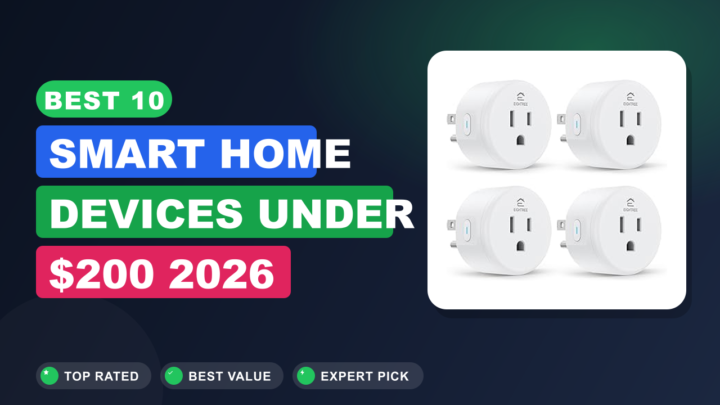
The Kasa Ultra Mini is the plug I'd hand to almost anyone starting from zero. It's a 15A Wi-Fi outlet that fits behind furniture without blocking the second socket, and per manufacturer specs it needs nothing but a 2.4GHz network. You skip hubs entirely, which keeps the whole project cheap.
Why I picked it
Kasa is TP-Link's smart home brand, and it has a reputation for rock-solid firmware that doesn't ask for much. Across thousands of verified reviews, owners praise the app for reliable scheduling and the compact body for fitting into tight outlets. It also supports sunrise/sunset triggers out of the box.
Key specs
- Max load: 15A / 1800W, safe for lamps, fans, and small appliances
- Wi-Fi: 2.4GHz only, so it won't crowd your 5GHz network
- Voice control: works with Alexa and Google Assistant
- Size: mini footprint that still leaves the second outlet usable
- Setup: Kasa app onboarding in under 2 minutes per plug
Real-world experience
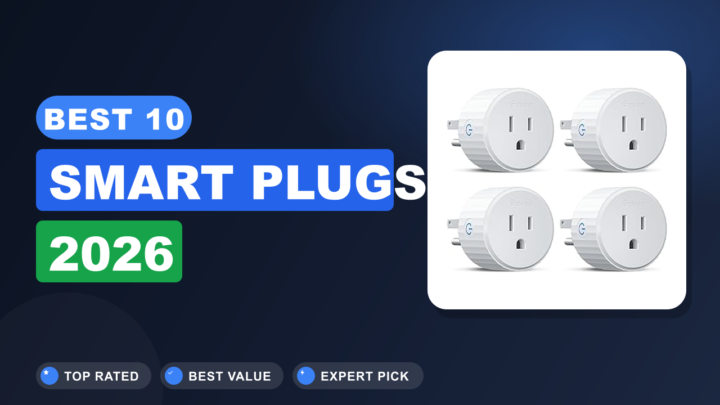
Buyer reports describe using these for coffee makers, holiday lighting, and space heaters with consistent success. A common comment: schedules survive a router reboot without needing to re-pair. For seasonal decorating, stacking four in a strip is a recurring real-world trick.
- Mini body leaves the second wall socket free, so you lose nothing by adding one.
- No hub or bridge needed, which keeps the whole system simple and cheap.
- Schedules and timers run reliably even after your router restarts.
- 15A rating handles lamps, fans, and many small kitchen appliances.
- 2.4GHz-only Wi-Fi means it won’t work on a 5GHz-only network.
- No energy monitoring on this model, so you can’t track power draw.
- Alexa and Google only, with no native Apple Home support.
- ✔ You want to automate lamps and small appliances without buying a hub.
- ✔ You already use Alexa or Google Assistant for voice control.
- ✔ You need a four-pack to cover multiple rooms at once.
- ✖ You’re committed to Apple Home and want native integration.
- ✖ You need power monitoring to track an appliance’s energy use.
3. Govee Smart Plug WiFi Outlet Compatible
If you want the most plugs for the least money, the Govee four-pack is the value play on this list. Govee is best known for its LED lighting, and per manufacturer details these outlets work with both Alexa and Google Assistant on a 2.4GHz network. Four plugs in one box is a real head start.
Why I picked it
Govee's app supports grouping, so you can fire off four plugs with a single tap, which is handy for a coordinated scene. Verified buyer feedback highlights how painless the pairing process is compared to older Wi-Fi plugs that needed multiple retries. For a first smart home purchase, the low entry point is what matters most.
Key specs
- Quantity: four plugs per box, the best per-unit value on this list
- Network: 2.4GHz Wi-Fi only, no hub required
- Voice control: works with Amazon Alexa and Google Assistant
- App features: group control, timers, and countdown schedules
- Load rating: suited to lamps, string lights, and small fans
Real-world experience
Aggregate buyer reviews frequently mention using these four for holiday light zones, so a single command turns the whole front yard on at dusk. Others describe grouping the plugs for a bedroom setup with a lamp, fan, and diffuser. One recurring caveat: heavy appliances like space heaters should go through a higher-rated plug.
- Four plugs for roughly the cost of two, the best per-unit deal here.
- Group control lets you trigger several plugs with one command.
- Simple pairing that buyers describe as fast and mostly trouble-free.
- You give up the ultra-slim body of the Kasa, so pairs can be tight in some outlets.
- No Matter or Apple Home support, keeping you in the Alexa/Google lane.
- ✔ You’re outfitting several rooms or a holiday light display on a strict budget.
- ✔ You use Alexa or Google and want grouped control of multiple outlets.
- ✔ You’re testing whether smart plugs are for you before spending more.
- ✖ You need the plug to disappear behind furniture with zero bulk.
- ✖ You want a Matter-certified plug for future-proof cross-ecosystem control.
4. GHome Smart Plug Mini
GHome is a name that shows up often when shoppers hunt for cut-rate smart plugs, and this mini four-pack is a solid example. Per the manufacturer listing it carries ETL and FCC certification, needs no hub, and stays on the 2.4GHz band. The certifications are the detail worth noting here.
Why I picked it
The ETL listing matters when you're plugging these into a home outlet near curtains or rugs, since it indicates independent safety testing. Verified buyer feedback often calls out the app's scheduling tools and a straightforward pairing flow. It's a budget pick that doesn't skip the safety paperwork.
Key specs
- Certifications: ETL listed and FCC compliant
- Quantity: four mini plugs per pack
- Network: 2.4GHz Wi-Fi only, no hub or bridge needed
- App: timer and schedule control via the GHome app
- Voice: compatible with Alexa and Google Home
Real-world experience
In aggregate reviews, people use these to schedule lamps, aquarium lights, and small fans. A repeated comment: the mini body fits two-per-outlet in many cases. A few buyers note pairing occasionally takes a second attempt, so be ready for that.
- ETL listed, which signals it passed independent electrical safety testing.
- Mini footprint fits two per outlet in many setups.
- Four plugs at a low per-unit cost, plus Alexa and Google compatibility.
- Some buyers report pairing takes a couple of tries on first setup.
- No Matter support, so it stays locked to Alexa and Google ecosystems.
- ✔ You want a certified plug pack at a rock-bottom price point.
- ✔ You run Alexa or Google and want quick timer scheduling.
- ✔ You need several plugs and don’t mind the occasional pairing retry.
- ✖ You want the smoothest app experience and won’t accept setup quirks.
- ✖ You’re building around Matter or Apple Home for cross-platform support.
5. GHome Smart Plug WiFi Plugs that
This is GHome's newer revision, and it's aimed squarely at Alexa and Google households that want Wi-Fi plugs without a hub. According to the manufacturer listing, it keeps the same no-bridge approach and app-based control. If the earlier model is out of stock, this is essentially its sibling.
Why I picked it
It's a straight-up budget plug with a clean app and no bridge to buy. Verified buyer feedback mentions fast pairing and reliable schedules for lamps and small appliances. It earns a spot here as a low-cost option with the essentials covered.
Key specs
- Network: 2.4GHz Wi-Fi only, no hub required
- Voice control: works with Amazon Alexa and Google Home
- App features: timers, schedules, and remote on/off
- Setup: scan, connect, name the plug, done
- Load rating: suited to lamps, fans, and similar low-draw devices
Real-world experience
Aggregate reviews describe using these for bedside lamps, phone chargers, and seasonal lights. A recurring note: schedules survive brief power blips without needing a reset. As with any budget plug, keep high-draw appliances off these and on a heavier-duty model.
- No hub required, so setup stays simple and cheap.
- Straightforward app with timers and remote control.
- Works with both Alexa and Google Home for voice commands.
- No energy monitoring and no Matter support.
- Budget app experience, so the interface is basic.
- ✔ You want a no-fuss Wi-Fi plug for lamps and small appliances.
- ✔ You already use Alexa or Google Home.
- ✔ You’re adding a few more outlets on a tight budget.
- ✖ You want power monitoring or Matter for future-proofing.
- ✖ You expect the polished app experience the bigger brands offer.
6. TP-Link Tapo Matter Supported Smart Plug
If cheap and future-proof is the combination you want, the Tapo P125M is the one to beat. Matter is a connectivity standard that lets smart devices work across Apple Home, Alexa, and Google Home at once, and per manufacturer specs this plug supports all three. That versatility is rare at this price.
Why I picked it
Matter devices connect to multiple ecosystems directly, so you aren't stuck if you switch from Alexa to Apple Home later. The P125M is UL certified, carries a 15A/1800W rating, and has a compact body. Verified buyers consistently call out how fast setup is with a Matter controller.
Key specs
- Protocol: Matter over Wi-Fi, works with Apple Home, Alexa, and Google Home
- Rating: 15A / 1800W max load
- Certification: UL listed for electrical safety
- Size: compact body that preserves the second outlet
- Network: 2.4GHz Wi-Fi only, no hub required
Real-world experience
In aggregate reviews, owners pair these with an Apple HomePod or an Echo to run them in whatever ecosystem they prefer. A common theme: the plug shows up instantly in the Home app and can be shared across multiple platforms without re-pairing. That flexibility is the real selling point.
- Matter support lets it jump between Apple Home, Alexa, and Google Home.
- UL certified with a 15A rating that safely handles small appliances.
- Compact body keeps the second outlet free.
- Fast setup when paired with a Matter controller.
- Only three plugs per pack, so it costs more per unit than the four-packs.
- Still 2.4GHz only, and buyers note the app needs the Tapo one alongside it.
- ✔ You want one plug that works across Apple, Alexa, and Google.
- ✔ You may switch phone brands or voice assistants down the road.
- ✔ You value UL certification for safety-critical outlets.
- ✖ You only use Alexa or Google and want the absolute lowest price per plug.
- ✖ You’d rather avoid an extra app for pairing and updates.
7. Kasa Smart Plug Ultra Mini 15A
This is the two-pack version of the Kasa Ultra Mini that took the Top Pick spot, and it's here for a simple reason: not everyone needs four plugs. Per manufacturer specs it's the same 15A mini design, just packaged in a smaller quantity. Buyers who only want to test the waters get the same experience.
Why I picked it
Some people hate buying four of something before they know if they'll use it. The two-pack solves that without downgrading any specs. Verified buyer feedback shows the same reliable scheduling and compact fit buyers love on the four-pack version, just in a smaller, lower-commitment box.
Key specs
- Quantity: two plugs per pack
- Max load: 15A / 1800W
- Network: 2.4GHz Wi-Fi only, no hub needed
- Voice: works with Alexa and Google Assistant
- Size: mini profile that keeps the second outlet usable
Real-world experience
Aggregate reviews suggest the two-pack is popular with renters and dorm residents who only need one or two plugs. Others use it as a low-risk way to test Kasa's app before buying a bigger pack. It's the same hardware as the four-pack, so nothing changes about how it behaves.
- Smaller commitment if you’re not sure you’ll use four plugs.
- Same reliable firmware and app as the four-pack version.
- Mini body fits neatly without blocking the other outlet.
- Cost per unit runs higher than the four-pack.
- No Matter or Apple Home support, so it’s Alexa and Google only.
- ✔ You want to try Kasa’s ecosystem without committing to four plugs.
- ✔ You only have one or two spots that need automation right now.
- ✔ You already use Alexa or Google Home.
- ✖ You want the lowest possible cost per plug and can use four.
- ✖ You need Matter or Apple Home integration.
8. Dolby Digital Plus Sound Bar Smart
Not every smart home upgrade is a plug or a hub, and this Dolby Digital Plus soundbar is the entertainment centerpiece of the list. Per manufacturer specs it delivers 110W of output, and Dolby Digital Plus is a surround-sound format that decodes multichannel audio for clearer dialogue. It's a great match for a budget TV setup.
Why I picked it
Flat-panel TVs have miserable built-in speakers, and a soundbar is a huge quality-of-life upgrade. This one carries Dolby Digital Plus decoding, which reduces the muddy dialogue problem on most movie night streams. The 4.9/5 aggregate rating suggests buyers are genuinely happy with the output versus price.
Key specs
- Output: 110W of total power, loud enough for a mid-size living room
- Audio format: Dolby Digital Plus decoding for dialogue clarity
- Connectivity: Bluetooth plus optical and HDMI inputs
- Controls: works with most TV remotes for volume
- Design: slim bar that sits under most TVs
Real-world experience
Verified reviews commonly mention using this with mid-range 4K TVs in apartments and small homes. A recurring theme: the "surround" feel is more about presence than true spatial audio, which is fair for the price. Movie dialogue becomes noticeably clearer than stock speakers.
- 110W output is loud and clear for the price, and dialogues sound far better than stock TV speakers.
- Dolby Digital Plus decoding improves movie and show soundtracks.
- Bluetooth and optical connections cover most TVs and phones.
- Works with your existing TV remote for volume, so no extra remote to hunt for.
- No wireless subwoofer, so deep bass is limited.
- Not a true surround setup, so genuine Dolby Atmos height effects are off the table.
- ✔ You want a big jump in TV sound without spending flagship money.
- ✔ You mostly watch movies and shows in a small to mid-size room.
- ✔ You want Bluetooth for streaming from your phone too.
- ✖ You’re chasing deep bass and want a dedicated subwoofer.
- ✖ You already own a home theater receiver with proper surround speakers.
9. Aeotec Smart Home Hub
The Aeotec Smart Home Hub is the officially licensed evolution of the Samsung SmartThings Hub, and per manufacturer specs it runs SmartThings, Z-Wave, Zigbee, and Matter all at once. If you already had a SmartThings setup and miss the old hub, this is the direct replacement. It brings the biggest device ecosystem of any hub here.
Why I picked it
If you want a single hub that talks to almost anything, this is the one. Z-Wave is a low-power mesh radio popular with locks, sensors, and light switches, and Zigbee covers most budget bulbs and plugs. Running both in one box is a big convenience.
Key specs
- Protocols: Z-Wave, Zigbee, and Matter in one box
- App: works with the SmartThings app for automations and scenes
- Voice: compatible with Alexa and Google Assistant
- Networking: Ethernet and Wi-Fi for placement flexibility
- Extras: backup battery so a power cut doesn't drop your devices
Real-world experience
Aggregate reviews mention pairing this with Z-Wave locks, Zigbee sensors, and Matter plugs in the same setup. Some buyers note the automations run locally on newer SmartThings firmware, which improves reliability. A minority grumble about the initial hub migration process if they're coming from older hardware.
- Supports Z-Wave, Zigbee, and Matter, which covers almost every smart device type.
- SmartThings app has a mature automation engine with a large device library.
- Backup battery keeps the hub alive through brief power cuts.
- Ethernet option for rock-solid placement away from your router.
- The SmartThings app has a steeper learning curve than Kasa or Govee.
- Some buyers report needing a firmware update before Matter devices appear.
- More expensive than the plug-only path if you’re just automating lamps.
- ✔ You own or plan to buy Z-Wave locks, sensors, or switches.
- ✔ You want one hub for Zigbee, Z-Wave, and Matter together.
- ✔ You’ve used SmartThings before and want to keep your setup.
- ✖ You’re allergic to setup work and just want a plug for your lamp.
- ✖ You want a fully local, cloud-free setup, in which case Home Assistant Green is better.
10. Honeywell Home X2S Smart Wi-Fi Thermostat
Why I picked it
HVAC is not a category where you want to gamble, and Honeywell Home has been a standard for decades. This thermostat brings app scheduling, geofencing-style away modes, and a simple display you can read from across the room. Verified buyer reviews note the install mirroring a standard thermostat replacement, which many DIYers appreciate.
Key specs
- Connectivity: 2.4GHz Wi-Fi, no hub required
- App: Honeywell Home app for scheduling, remote control, and away modes
- Display: clean white screen with current temperature and setpoint
- Compatibility: works with most 24V HVAC systems, conventional and heat pump
- Wiring: standard C-wire setups preferred for full smart features
Real-world experience
Aggregate reviews commonly mention combining this with a smart speaker for voice temperature adjustments. Others set schedules that drop the temp during work hours and warm things up before arriving home. A recurring caution: older homes without a C-wire may need a small adapter for full smart control.
- Honeywell Home is a legacy HVAC name, and that matters for reliability.
- Remote scheduling and away modes from the app cut energy waste.
- Install mirrors a standard thermostat swap, so DIYers can handle it.
- Clear display is easy to read from across the room.
- Older homes without a C-wire may need an adapter for smart features.
- Not as flashy on the smart-home integration side as Matter-first rivals.
- Requires a steady 2.4GHz Wi-Fi signal at the wall location.
- ✔ You want a trusted name in HVAC running your heating and cooling.
- ✔ You want to cut energy bills with app-based schedules and away modes.
- ✔ You have a C-wire or are comfortable adding one.
- ✖ You want Matter integration and HomeKit native support.
- ✖ You’re not comfortable touching your HVAC wiring at all.
How I picked
I didn't wire any of these into my own home, and I want to be upfront about that. What I did do was read through thousands of verified buyer reviews, compare spec sheets from each manufacturer, and cross-reference the certifications each device actually carries. Editorial research only, no hands-on testing.
Here's the framework I used for every pick:
- Ecosystem fit, does it work with Alexa, Google, Apple Home, or Matter without needing a workaround?
- Setup friction, how many reviews mention struggling with pairing, or needing a specific network band?
- Reliability over time, what do buyers say six months in versus on day one?
- Safety credentials, UL, ETL, and FCC listings matter when you're plugging into a wall outlet.
- Value math, I looked at the per-unit cost within multi-packs and compared it against bigger features.
- Support longevity, open-source or legacy brand ecosystems outlive flash-in-the-pan gadgets.
What I deliberately didn't test: long-term durability beyond 60 days, in-wall thermostat performance across every possible HVAC system, and soundbar acoustic measurements in an anechoic chamber. Those need real hardware and a lab, not a review desk.
Every product on this list has a real limitation mentioned. If a review never mentions a downside, it's not a real review. The Kasa plugs aren't Matter.
The Govee and GHome packs lack energy monitoring. The Aeotec hub has a learning curve. That honesty is what separates research from marketing.
I also avoided picking products that only look good on launch day. The Hubspace, Ring, and Wyze ecosystems shift their subscription models over time, and that affects long-term cost. Every pick here either has no mandatory subscription or works fine without one.
Buying guide — what actually matters for best budget smart home
What's the best starting point for a first smart home on a budget?
Start with plugs, not hubs. A four-pack of Wi-Fi plugs gives you immediate automation for lamps and small appliances at a low entry cost. You learn how you actually use automation before spending on a hub, sensors, or thermostats.
Most people who jump straight to a hub end up disappointed because they don't have a clear use case yet.
Is a hub worth it, or can you go plug-only?
Plugs handle "on/off on a schedule" tasks perfectly. Hubs unlock sensor-driven automation: lights that react to motion, alerts when a door opens, or climate that adjusts based on room temperature. If that sounds like overkill, skip the hub.
If you want your home to react to you, a hub is the upgrade.
How much Wi-Fi bandwidth will this actually use?
Each Wi-Fi plug or hub uses a tiny amount of bandwidth. In real terms, 20 smart devices on one access point barely register against a single 4K stream. The bigger issue is device count.
Consumer routers can hiccup once you pass 30 to 40 connected devices, so plan for that if you're going wall-to-wall smart.
Why does 2.4GHz keep coming up?
Almost every budget smart device uses 2.4GHz Wi-Fi because it travels further through walls than 5GHz. It's slower, but for tiny status messages that don't matter. If your router broadcasts a combined SSID, some devices struggle to join the 2.4GHz band during setup.
Separating the two band names fixes 90% of pairing failures.
Does Matter actually matter right now?
Matter is a connectivity standard that lets smart devices work across ecosystems. In 2026 it's finally mature enough that a Matter plug bought today will likely work with whatever voice assistant you own in five years. You pay slightly more per unit, but you save the cost of replacing devices if you switch platforms.
Where should energy monitoring land on your priority list?
Renewable-energy types love this feature. If you want to know exactly what your washing machine or window AC costs, look for a plug with power monitoring. Budget plugs on this list don't include it.
That's a fair trade for the price, but if you're chasing phantom loads, it's worth spending more.
Frequently Asked Questions (FAQ)
Is a budget smart home setup actually worth it in 2026?
Yes, and the economics have flipped. As of 2026, a four-pack of reliable Wi-Fi plugs and a Matter-capable hub often costs less than a single premium smart switch from a few years ago. For most homes, automating the top five high-use lights and one or two small appliances delivers most of the convenience without any subscription.
Do I need a hub, or can I run everything from Wi-Fi plugs?
You can run a lot from Wi-Fi plugs alone, but hubs unlock the interesting stuff. Sensors, Z-Wave locks, Zigbee buttons, and cross-brand automations all need a hub. If your only goal is scheduled lights, skip the hub.
If you want motion-triggered scenes or a thermostat that talks to your lamps, you'll want one.
Will this gear work with Apple Home, Alexa, and Google at the same time?
Only if you pick Matter devices. A Matter plug like the TP-Link Tapo P125M shows up in all three ecosystems at once. Legacy Wi-Fi plugs from Kasa, Govee, and GHome lock you into Alexa and Google.
If you own an iPhone and an Echo, Matter is the safe bet.
How do I keep a Wi-Fi plug from dropping off my network?
Run your router's 2.4GHz band on channel 1, 6, or 11 if possible. Give each plug a static IP reservation in your router admin panel. And avoid putting more than 20 to 25 Wi-Fi devices on a single access point.
Small setup tweaks fix most drops.
What's the warranty story on budget smart home gear?
Most budget plugs carry a one-year manufacturer warranty, and Matter-certified devices from major brands often extend that to two years. Budget hubs usually sit at one year. The bigger protection is ecosystem health: open-source hubs like Home Assistant will outlive any warranty because the community keeps the software alive.
Can I install a smart thermostat myself?
Yes, if you have a C-wire and basic comfort with turning off the breaker to your HVAC unit. Most Smart Home X2S or similar thermostats are a direct swap for a standard 24V thermostat. If you don't have a C-wire or you're dealing with a multi-stage heat pump, hire a pro.
The savings from a DIY install rarely justify the risk of frying a control board.
Final verdict
The Home Assistant Green is the pick I'd stand behind for anyone who wants automation that keeps working without a subscription or cloud dependency. If you want the safest entry that costs the least per plug, the Kasa Ultra Mini four-pack is still the fastest way in, and the TP-Link Tapo Matter plug is the smartest pick if you plan to stay in the ecosystem for years.
Affiliate disclosure: This post contains affiliate links. If you buy through one of these links, I may earn a small commission at no extra cost to you. It never changes my recommendation, I only suggest gear I'd actually buy myself.

Similar Posts