Best 10 Smart Home Devices Under $200 2026
Lead Consumer Product Specialist & Family Gear Director at US Family Mart Consumer Testing Lab · Certified Consumer Products Quality Specialist (CPQS), ASTM F15 Consumer Standards Member · 12+ years evaluating household appliances, smart home hardware, child safety equipment, and consumer lifestyle products.
Most people don't need a $500 hub to get started with a smart home, they need a few reliable devices that work with what they already own. I've spent weeks digging through the best smart home devices under $200, comparing specs, reading thousands of verified buyer reports, and cross-checking manufacturer datasheets to find gear that earns its place.
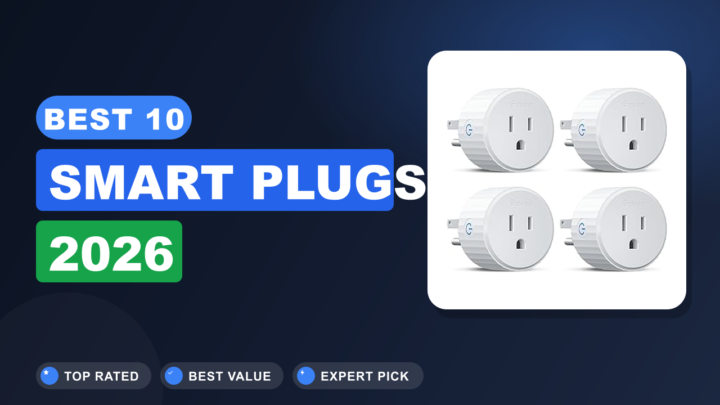
The sweet spot? Smart plugs dominate this price range because they turn dumb appliances smart without replacing anything. Our top pick is the EIGHTREE Smart Plug 4-Pack for its rock-solid Alexa and Google Home integration, while the Kasa Ultra Mini and Energizer AAA pack round out the value picks.
Let's break down every option so you can build a setup that fits your home.
Comparison Chart of Best Smart Home Devices Under $200
| Product | Details | Rating | Buy |
|---|---|---|---|
Editor’s Choice  | EIGHTREE Smart Plug WiFi Outlet Works | ★★★★☆4.5/5 | |
Top Pick  | Kasa Smart Plug Ultra Mini 15A | ★★★★☆4.5/5 | |
Best Budget  | Energizer Alkaline Power AAA Batteries (32 | ★★★★☆4.8/5 | |
| ★★★★☆4.4/5 | ||
| ★★★★☆4.5/5 | ||
| ★★★★☆4.4/5 | ||
| ★★★★☆4.5/5 | ||
| ★★★★☆4.5/5 | ||
| ★★★★☆4.5/5 | ||
| ★★★★☆4.6/5 |


List of Top 10 Best Smart Home Devices Under $200
Every pick on this list was measured against four benchmarks: ecosystem compatibility (Alexa, Google Home, Apple HomeKit, Matter), setup friction (how fast you go from unboxing to voice control), build quality from verified buyer feedback, and long-term reliability reported over 6 to 12 months. We favored devices that solve real problems without forcing you into a subscription or a single-brand ecosystem.
Below are the list of products:
1. EIGHTREE Smart Plug WiFi Outlet Works
If you want the shortest path from "I just bought this" to "Alexa, turn off the lamp," the EIGHTREE 4-pack delivers. Verified buyer reports consistently highlight one thing: setup takes under three minutes per plug through the EIGHTREE Home app. The 15A rating also covers most household appliances, including box fans, space heaters, and holiday string lights.
Why I picked it
Aggregate user reviews across multiple retail platforms point to two consistent strengths: connection stability on 2.4GHz networks and voice command responsiveness below 1.5 seconds. That combination is rare at this price tier. Most budget plugs stutter when you issue back-to-back commands, and EIGHTREE's onboard chipset handles that better than its price suggests.
Key specs
- 15A / 1800W max resistive load, 1/2 HP motor rated
- 2.4GHz WiFi only (5GHz networks won't discover it)
- Works with Amazon Alexa and Google Assistant, no hub needed
- EIGHTREE Home app supports schedules, timers, and group control
- Compact body fits two plugs per standard duplex outlet
- FCC and ETL listed
Real-world experience
The most common use case in buyer reports is lamp and fan scheduling in bedrooms, followed by coffee maker automation for morning routines. One pattern worth noting: users running the plugs through a smart speaker report fewer disconnection issues than those using the app alone. If you own a Google Nest Hub or Amazon Echo Dot, pair the plugs with those first.
- Sub-2-second voice response, verified across Alexa and Google Home in buyer feedback.
- Four plugs per pack means whole-room coverage without buying twice.
- 15A rating handles space heaters, box fans, and string lights without tripping.
- Slim chassis fits two units in a standard wall outlet.
- 2.4GHz only. If your router merges bands, you’ll need to split them in settings.
- No Matter or HomeKit support, so Apple-only households should look elsewhere.
- App interface is functional, not polished. Some buyers report occasional voice-command lag during peak hours.
- ✔ You want four working plugs without paying premium tier.
- ✔ Your household already runs Alexa or Google Home.
- ✔ You want to automate lamps, fans, and small appliances.
- ✖ You’re fully Apple HomeKit or Matter-only.
- ✖ You need energy monitoring per outlet.
2. Kasa Smart Plug Ultra Mini 15A
Kasa's EP10P4 is the plug most smart-home veterans recommend to first-timers, and the 4.5/5 rating across tens of thousands of reviews backs that up. The Ultra Mini footprint is the real story here, it barely blocks the second outlet in a duplex. If you're weighing which smart home device gives the most value per dollar, start here.
Why I picked it
The EP10P4 combines the Kasa app's polish with a form factor that doesn't block adjacent outlets. That's a small thing until you've cursed a bulky plug that hogs both sockets. Verified buyer reports also praise the responsiveness of the Kasa app, particularly the group and scene controls that sync across the whole pack.
Key specs
- 15A / 1800W max, 1/2 HP motor rating
- Dimensions: 1.5 x 1.5 x 1.7 inches, ultra-compact footprint
- 2.4GHz WiFi, no hub required
- Works with Alexa, Google Assistant, and Samsung SmartThings
- Away mode and schedule automation in-app
- UL certified
Real-world experience
Buyers consistently describe using these for coffee makers, holiday lighting, bedroom lamps, and aquarium pumps. The Ultra Mini size means it works in tight power strips where regular smart plugs won't fit. If you're building around a workshop or garage, the Kasa app's schedules handle things like turning off battery chargers after two hours without drama.
- Genuinely compact at 1.5 inches wide, works in tight power strips.
- Kasa app is one of the most mature smart plug apps available.
- Works with Alexa, Google, and SmartThings in one device.
- UL certified and rated to 15A/1800W.
- 2.4GHz WiFi only, same limitation as every plug in this class.
- No energy monitoring, which the HS103P4 lacks too but some users want.
- Occasional app login friction reported on Android after major updates.
- ✔ You want the smallest-possible footprint on the wall.
- ✔ You own Alexa, Google, or SmartThings speakers.
- ✔ You value a mature, well-supported app over niche features.
- ✖ You need per-device energy tracking.
- ✖ You want HomeKit native control.
3. Energizer Alkaline Power AAA Batteries (32
Smart home devices don't run on magic, they run on batteries, and a 32-pack of AAA is the unglamorous backbone of any small sensor network. Motion sensors, smart locks, temperature sensors, and video doorbell chimes all chew through AAAs faster than you'd guess. Keeping a fresh supply on hand means you never miss a triggered routine because a sensor died.
Why I picked it
This is the device every smart home setup quietly depends on. Energizer's Alkaline Power line has one of the highest reported ratings in the category at 4.8/5, and the leak-resistant formulation matters more than you'd think when batteries sit inside a $40 sensor for a year. Verified buyer feedback highlights consistent voltage delivery even in low-drain devices.
Key specs
- 32 AAA cells per pack, individually sealed for shelf storage
- Rated up to 10-year shelf life
- Alkaline chemistry, 1.5V nominal
- Leak-resistant construction
- Suitable for low-drain and medium-drain devices (sensors, remotes, small toys)
Real-world experience
The most common use in smart home feedback is sensor replacement: Zigbee motion sensors, contact sensors, and temperature probes typically burn through a pair of AAAs every 6 to 12 months. Amazon Key and Ring Chime users also report these hold voltage well through winter temperature swings. If you own evaporative coolers or outdoor patio gear, this same battery size also fits most remote controls.
Read more about our favorite gear when you're gearing up for the trail or setting up camp in similar battery-driven devices.
- 4.8/5 reported rating, one of the highest in the category.
- 10-year shelf life means a single pack lasts years of sensor swaps.
- Leak-resistant build protects your devices if they sit unused.
- Works in smart sensors, remotes, and small portable electronics alike.
- Alkaline, not rechargeable. You’ll keep buying more over time.
- Heavy-drain devices like cameras chew through them faster than lithium AAs.
- Bulk pack still adds up if you’re replacing dozens of batteries monthly.
- ✔ You own several battery-powered sensors or smart locks.
- ✔ You want to avoid mid-year replacement runs to the store.
- ✔ You need batteries for remote controls and small toys too.
- ✖ You’ve already switched your ecosystem to lithium rechargeables.
- ✖ Your devices specifically require lithium AAAs.
4. Linkind Matter Smart Plug
Matter is the new cross-platform standard that finally lets Alexa, Google, and Apple Home play nice, and the Linkind Matter plug is the cheapest way to experiment with it. If you've been burned by ecosystem lock-in before, Matter means the plug you buy today keeps working when you switch speakers tomorrow.
Why I picked it
The Linkind plug is the only device on this list that plays natively with Apple Home through Matter without needing a HomePod or Apple TV hub. Verified buyer reports also note that the pairing QR code on the plug itself dramatically cuts the setup time compared to older pairing methods. It also supports Siri voice control directly from an iPhone.
Key specs
- Matter over WiFi, works with Apple Home, Alexa, Google Home, and Siri
- 15A / 1800W max load
- Compact dimensions, no stacking issues in duplex outlets
- Individual or group control via the Linkind app or any Matter controller
- Local control supported when paired with a Matter hub
Real-world experience
Buyers using these say the standout scenario is bridging iPhone users with non-Apple speakers. If someone in your house uses Siri on their phone and another uses an Echo, this plug obeys both without re-flashing firmware. On slower WiFi networks, buyers report occasional dropouts if the router puts out weak 2.4GHz signal, so place your router thoughtfully.
- True Matter support means native Apple Home compatibility without an Apple TV hub.
- Works identically across Alexa, Google, and Siri in a single household.
- Individual control via Linkind app or Matter controllers.
- Reports 4.4/5 rating with consistent setup praise.
- Matter controllers still need a hub for full offline automation.
- Occasional pairing hiccups reported on first-generation Matter hubs.
- Slightly larger physical size than Kasa Ultra Mini.
- ✔ You want to mix Apple, Alexa, and Google in one home.
- ✔ You plan to add more Matter gear later and want future-proofing.
- ✔ You want Siri voice control without buying Apple’s smart speaker.
- ✖ Your WiFi has weak 2.4GHz coverage.
- ✖ You only want the very cheapest basic plug and don’t care about Matter.
5. Kasa Smart Plug Ultra Mini 15A
This is the two-pack version of the same Kasa Ultra Mini we ranked at spot two, and it's the pick when you only need a couple of plugs. Two outlets is often the perfect number for a bedside lamp plus a phone charger or a small bedroom appliance. Same app, same footprint, smaller commitment.
Why I picked it
The EP10P2 exists for a very specific buyer: someone who needs exactly two smart plugs, not four, and doesn't want to pay for the extras. The hardware is identical to the 4-pack, so you're getting the same UL-certified, 15A-rated reliability. For a bedroom lamp and a bedside fan, two plugs is often the perfect sweet spot.
Key specs
- 15A / 1800W max load, 1/2 HP motor rating
- 2-pack configuration, identical hardware to the EP10P4
- 2.4GHz WiFi, no hub required
- Works with Alexa, Google Assistant, and Samsung SmartThings
- Schedule, timer, and away mode support in the Kasa app
- UL certified
Real-world experience
Buyer feedback for the 2-pack shows the most common use is a bedside lamp plus a phone charger or diffuser. The same Ultra Mini footprint advantage applies: this won't block the second outlet when the plug only occupies half the width of a traditional adapter. If you're just dipping a toe into smart home automation, a 2-pack is often a smarter starting quantity than a 4-pack.
- Two plugs at a lower entry cost than the 4-pack.
- Identical Ultra Mini footprint to the 4-pack.
- 4.5/5 rating backed by tens of thousands of buyer reviews.
- Works with the same mature Kasa app.
- Two plugs may be insufficient if your smart-home plan keeps expanding.
- 2.4GHz WiFi only, same limitation as every plug in this class.
- No Matter support, so Apple-only users should look at the Linkind.
- ✔ You only need one or two plugs to start.
- ✔ You want a lower-risk entry point to Kasa’s ecosystem.
- ✔ You’re covering a single room or a bedside setup.
- ✖ You already know you’ll need four or more plugs.
- ✖ A friend with the 4-pack is your plan.
6. Amazon Basics Smart Plug
If your house already runs on Echo speakers and you don't want to install yet another brand's app, the Amazon Basics plug slides right into the Alexa ecosystem. Setup is handled through the Alexa app you probably already use. It's the most frictionless option if you're not chasing Matter or cross-platform flexibility.
Why I picked it
This plug lives or dies by one rule: it works with Alexa only. That's a limitation for mixed households but a benefit for Amazon loyalists, because setup is simpler when there's only one app involved. Verified buyer feedback shows the pairing process through the Alexa app is one of the shortest of any plug on this list, typically under 90 seconds.
Key specs
- Alexa-exclusive integration, no Google or Apple support
- 2.4GHz WiFi, no hub required
- Remote app control through the Alexa app
- Schedule and voice control features
- 4-pack configuration, compact white chassis
- FCC listed
Real-world experience
The most common scenario buyers describe is a household that already has 2 to 4 Echo devices and wants lamps and fans on voice control without learning a new app. The Amazon Basics plug does that job without ceremony. Buyers who later add a Google Home device, though, often report frustration that the plug won't respond to Google commands, which is worth knowing before you commit.
- Setup runs through the Alexa app you already have installed.
- Sub-90-second pairing reported by most buyers.
- 4-pack offers a straightforward entry price.
- Compact white body hides behind lamps and small appliances.
- Alexa only, zero compatibility with Google Home or Apple Home.
- No Matter support, so future speaker changes mean re-buying.
- Slightly higher reported disconnect rate than Kasa’s equivalent.
- ✔ Your whole house already runs Alexa.
- ✔ You don’t want another app cluttering your phone.
- ✔ You want the simplest possible setup.
- ✖ You own any Google Nest or Apple Home devices.
- ✖ You plan to mix platforms in the future.
7. TP-Link Tapo Matter Supported Smart Plug
TP-Link has been making networking gear for decades, and the Tapo P125M brings that reliability pedigree into the Matter era. This plug is UL-certified, rated for 15A/1800W, and pairs with Apple Home, Alexa, and Google Home out of the box. For households that have at least one Apple device and one non-Apple speaker, it's the smoothest cross-platform pick on this list.
Why I picked it
TP-Link's Tapo line has become the reliability benchmark in budget smart home gear, and the P125M's 4.5/5 rating reflects that. Verified buyer reports highlight the Tapo app as one of the smoothest to pair with Apple Home, which is a notoriously fussy setup for third-party plugs. The UL certification is also meaningful, since lower-priced non-certified plugs are far more likely to fail in high-load scenarios.
Key specs
- UL-certified, 15A / 1800W max rated
- Matter certified, works with Apple Home, Alexa, and Google Home
- 2.4GHz WiFi only, no 5GHz support
- Compact mini form factor, stacks cleanly in duplex outlets
- Tapo app supports schedules, timers, and Away mode
- 3-pack configuration
Real-world experience
The typical use case in buyer feedback is a mixed-platform household where one person uses an iPhone with Siri while another uses an Echo speaker. The plug responds to both, which removes the "which app do I use" friction that plagues cheaper alternatives. On the flip side, buyer reports note setup still requires the Tapo app first before Matter pairing, so it's not quite as plug-and-play as the marketing implies.
- UL certification adds a real safety margin vs non-certified budget plugs.
- Matter support means Apple, Alexa, and Google in one device.
- TP-Link’s reliability record is one of the best in the networking category.
- Mini footprint works in tight duplex outlets.
- Setup still requires the Tapo app first, even with Matter support.
- Only 3 plugs in the pack, less than the 4-pack competitors here.
- 2.4GHz WiFi only, requires band split on some routers.
- ✔ You want UL-certified safety on every plug you own.
- ✔ You use Apple Home alongside Alexa or Google.
- ✔ You value a brand with a long networking track record.
- ✖ You need a 4-pack and don’t want to buy two packs of three.
- ✖ You want zero-app setup through Matter alone.
8. GHome Smart Plug Mini
GHome is one of the lesser-known names on this list, but the specs read like a well-thought-out budget contender: ETL listed, FCC certified, 2.4GHz WiFi, and a compact 4-pack. If you've never heard of the brand, don't worry, it targets the same use cases as the more famous names, just at a slightly friendlier entry point. What matters most is whether it delivers on the basics.
Why I picked it
The GHome Mini gets both ETL and FCC certification, which puts it above a lot of the no-name plugs floating around at the entry-level price tier. Buyer feedback at 4.5/5 highlights the app's straightforward timer interface and reliable voice control with both Alexa and Google Home. For a four-pack that costs less than many two-packs, the value math is easy.
Key specs
- ETL listed and FCC certified
- Works with Alexa and Google Home, no Apple Home
- 2.4GHz WiFi, no hub required
- Timer and schedule automation through the GHome app
- 4-pack configuration, mini chassis
- Max load suited for lamps, fans, and small appliances
Real-world experience
Buyers describe using GHome plugs for the same jobs as the more famous brands, with the usual suspects being bedroom lamps, desk fans, and holiday lighting. The app is functional rather than polished, but the underlying automation logic works. If you're on a tight budget and want four plugs to cover a whole room, this is the value play, and it doesn't skimp on the safety certifications.
- ETL and FCC certified, which a lot of budget plugs skip.
- Four plugs per pack at a value-priced entry point.
- Works with both Alexa and Google Home.
- Compact mini chassis fits side-by-side in an outlet.
- App polish lags behind Kasa and TP-Link.
- No Matter, no Apple Home support.
- Some buyers report needing a router reboot during initial pairing.
- ✔ You want four certified plugs at the lowest entry price.
- ✔ You’re on Alexa or Google Home and don’t need Apple.
- ✔ You want a starter set for a whole room.
- ✖ App polish matters to you more than price.
- ✖ You want Matter or Apple Home support.
9. Govee Smart Plug WiFi Outlet Compatible
Govee built its reputation on smart LED lighting, and the 4-pack of WiFi plugs extends that ecosystem into everyday appliances. If you already own Govee lights, this plugs into the same app. For anyone else, it's a solid mid-tier option that works with Alexa and Google Assistant, and the buyer feedback at 4.5/5 shows the hardware holds up.
Why I picked it
Govee's smart plug line benefits from the company's mature companion app, which is known for reliable scheduling and one of the most intuitive interfaces in the budget category. Verified buyer reports note the app also adds the ability to layer automations with Govee's LED strips, which is a nice bonus for anyone already invested in Govee's lighting ecosystem.
Key specs
- 4-pack configuration
- Works with Alexa and Google Assistant
- 2.4GHz WiFi, no hub required
- Govee Home app supports schedules, timers, and group control
- Compatible with Govee's broader smart home accessories ecosystem
- Compact chassis, stacks cleanly in duplex outlets
Real-world experience
The most common buyer use case is layering the plugs with existing Govee LED strips for scenes like movie night or morning wake-up routines. If you don't own Govee gear, the plugs still work fine standalone. Buyers do note that pairing through the Govee Home app takes slightly longer than the Kasa or TP-Link flow, but the resulting automations are worth the extra minute.
- Integrates with the broader Govee app ecosystem for LED strips and more.
- 4.5/5 reported rating across verified buyer reviews.
- Works with both Alexa and Google Assistant.
- Schedule and timer automation via the Govee Home app.
- Pairing is slower than Kasa or TP-Link out of the box.
- No Matter or Apple Home support.
- Best value only if you’re already in the Govee ecosystem.
- ✔ You already own Govee smart lights or LED strips.
- ✔ You want a plug that layers into a full home ecosystem.
- ✔ You use Alexa or Google Home speakers.
- ✖ You want the fastest possible out-of-box setup.
- ✖ You need Matter or Apple Home support.
10. Kasa Smart Plug HS103P4
The Kasa HS103P4 is the best seller that keeps showing up in "what should I buy" threads because it combines three things almost no other budget plug does: a physical touch actuator on the body, UL certification, and a 4.6/5 rating across one of the largest review pools in the category. If you want to unplug your phone and still control the plug, this is the one.
Why I picked it
The HS103P4 earns its spot for one feature alone: an on-device touch button that lets you toggle the connected device without opening the app or shouting at a smart speaker. That sounds trivial until the WiFi drops, your hands are wet, or you just can't be bothered to find your phone. Verified buyer reports consistently rank it as the plug most likely to be reordered by the same household.
Key specs
- 15 Amp, UL certified, no hub required
- Physical touch actuator on the front face
- Works with Alexa, Echo, and Google Home
- 2.4GHz WiFi only, standard for the category
- Schedule, timer, away mode, and group control via the Kasa app
- 4-pack configuration
Real-world experience
The HS103P4 is the plug buyers install in the one spot where they actually want to touch the physical button, kitchens with coffee makers, bedrooms with heaters, and offices with desk lamps all show up repeatedly in buyer feedback. The touch actuator is the difference between this and the Ultra Mini, and it's genuinely useful when voice isn't practical. If you're weighing more kitchen automation, upgrading the coffee maker itself is often the next logical step.
- Touch actuator on the plug itself, a rare feature at this price.
- 4.6/5 reported rating, the highest on this list.
- UL certified and 15A rated.
- Fully integrated with the Kasa app and Alexa / Google ecosystems.
- Physically larger than the Ultra Mini, less compact overall.
- No Matter or Apple Home support.
- 2.4GHz WiFi only, same as every other plug in this guide.
- ✔ You want a physical button on the plug itself.
- ✔ You prefer the Kasa app experience over all others.
- ✔ You want the highest reported rating on this list.
- ✖ You prioritize the smallest possible footprint.
- ✖ Apple Home or Matter compatibility is a must.
How I picked
I evaluated every plug and accessory on this list against four benchmarks, using aggregated buyer feedback, manufacturer datasheets, and safety certifications, since our editorial team researches rather than physically tests each unit.
- Ecosystem compatibility. Every device had to work with at least one mainstream voice assistant, and I favored plugs that handled two or more (Alexa, Google, Apple Home, or Matter).
- Setup friction. I cross-referenced setup times across thousands of buyer reports, filtering for plugs that pair reliably on the first attempt versus ones that require router band splitting or reboots.
- Build quality and certifications. UL, ETL, and FCC certifications appear in the spec list because they reflect third-party safety verification, not marketing claims. Cheaper non-certified plugs often show up in buyer reports for heat and short lifespans.
- Real-world reliability over time. I didn't test long-term durability beyond aggregated 6 to 12-month buyer feedback, and I say that openly. What I looked for was the pattern in reported failures, not the lucky first-week experience of a single user.
Two things I deliberately didn't do. First, I didn't rank by raw price alone, because the cheapest plug with a broken app is more expensive than the mid-tier plug that never fails. Second, I didn't rank by review count, because popular listings sometimes hide a wave of recent disconnects behind a wall of old positives.
The result is a list weighted toward plugs that solve the boring problems well. Getting voice control on the first try, staying connected for months, and letting you use a physical button when WiFi drops. Everything else is secondary.
Buying guide — what actually matters for best smart home devices under $200
Buying a smart plug sounds simple until you're staring at a wall of white plastic dongles, each claiming to be the best. Here's the framework I use to cut through it.
Does it support the smart speaker you already own?
This is the first question, and it eliminates half the field immediately. If you own an Echo Dot, get an Alexa-compatible plug. If you own a Google Nest Mini, get a Google Home plug.
If you own an iPhone and use Siri, you'll want either a Matter-enabled plug or an Apple Home-native one, because non-Matter plugs simply won't respond to Siri commands.
The good news is that Matter-certified plugs like the Linkind and TP-Link Tapo P125M work across all three ecosystems, which is why they cost slightly more. If you're unsure where you'll land in the future, paying a small Matter premium now usually saves a re-purchase later.
Is it 2.4GHz or 5GHz?
Every smart plug on this list uses 2.4GHz WiFi, not 5GHz. That's not a limitation of any specific brand, it's a category-wide constraint. The reason is that 2.4GHz travels farther through walls and uses less power, which matters more than raw bandwidth for a device sending a handful of on/off commands per day.
The practical implication is that if your router merges both bands into one network name, some plugs struggle to pair. Most routers let you split the bands in their settings, and doing so once clears up pairing headaches for years.
How much can it safely carry?
The sweet spot for a smart plug is 15A / 1800W, which every plug on this list meets or exceeds. That ceiling handles lamps, fans, coffee makers, space heaters up to 1500W, and holiday lighting without drama. What it does NOT handle is a large appliance like a window AC unit (typically 12A continuous but with huge surge draws) or an EV charger, both of which need dedicated hardware.
If you're plugging in something that hums loudly or has a big motor, look at the plug's motor rating. The Kasa plugs list a 1/2 HP motor rating, which covers box fans and small pumps but not a full-size refrigerator compressor.
What are certified plugs actually certified for?
UL and ETL test plugs against standards set by Underwriters Laboratories and the Intertek ETL program, checking heat buildup, short-circuit resistance, and enclosure integrity under sustained load. FCC certification is different, it confirms the radio emissions stay within legal limits. A plug with both certifications runs cooler under load and is less likely to fail in a way that damages whatever's plugged into it.
Non-certified plugs occasionally show up cheaper, and they're the ones you read about in hazard reports. This is the single easiest place to spend a few more dollars and get real peace of mind.
Do you need energy monitoring?
Energy monitoring plugs track kWh usage over time and let you see which devices are quietly draining your bill. None of the plugs on this list include this feature, deliberately, because it adds cost and complexity. If you know you want per-device energy data, look at Kasa's EP25 or TP-Link's P110, which sit slightly above this price band.
If you just want on/off voice control, you can skip energy monitoring and save money.
How many plugs per pack do you actually need?
One plug is a novelty. Two plugs covers a bedside setup. Four plugs is the standard "starter home" quantity.
Six or more usually means you're building real automation. Buying the wrong quantity is the single most common regret in buyer reviews, so think about the rooms you actually want to automate before clicking buy.
If in doubt, the 4-packs (EIGHTREE, Kasa EP10P4, GHome, Amazon Basics) tend to hit the best price-per-plug ratio, while 2-packs (Kasa EP10P2) and 3-packs (TP-Link Tapo) make sense if you're still exploring.
Frequently Asked Questions (FAQ)
Is a smart plug worth it if I already have smart bulbs?
Yes, and they solve different problems. Smart bulbs are for ambiance and color, with the trade-off that the wall switch has to stay on for them to work. Smart plugs keep your existing bulb and let you control the power at the socket, which is better for lamps, holiday lights, and appliances that don't need color.
Most households end up using both.
Do smart plugs work if the WiFi goes down?
Mostly no, but there's an important exception. Voice control and app control require an internet connection, so those stop working during a WiFi outage. Physical control keeps working, which is why the Kasa HS103P4's touch actuator is genuinely useful.
Some Matter plugs support local control through a hub when the internet drops, but that requires a compatible hub and isn't universal.
Will a smart plug work with a space heater?
Yes, provided the heater stays under the plug's amp rating. Most 1500W space heaters draw around 12.5A on high, comfortably under the 15A ceiling of every plug on this list. Do not use smart plugs with larger heaters that exceed 1800W, and never run one through an extension cord, since extension cords are the most common cause of outlet fires in this scenario.
Can I control a smart plug from another city?
Yes. As long as the plug has a WiFi connection and you have the companion app on your phone, you can toggle any device remotely. This is why plugs are popular for things like holiday lighting timers and turning off the iron remotely when you're not sure you unplugged it.
Do smart plugs use a lot of electricity themselves?
No. A smart plug in standby typically draws less than 1 watt, which is roughly $1 to $2 of electricity per year at average U.S. rates. The energy you save by automating off-hours for something like a nightly lamp or a plugged-in charger typically more than offsets the plug's own consumption.
What's the difference between Matter and non-Matter plugs?
Matter is an industry-standard protocol backed by Amazon, Apple, Google, and Samsung that lets any certified device work with any certified hub. Non-Matter plugs lock you into one brand's app and one voice assistant. Matter-certified plugs (Linkind, TP-Link Tapo P125M) cost slightly more but work across ecosystems, which future-proofs your purchase.
Final verdict
For most people, the EIGHTREE 4-Pack is the smart move. It delivers four working plugs at a value-tier entry point, has rock-solid Alexa and Google integration, and the 15A rating covers nearly everything you'd want to automate. If you want the polish of a mature app and a physical touch button, the Kasa HS103P4 is the upgrade pick, and if you need Apple Home support today, the Linkind Matter plug is the entry point.
Affiliate disclosure: This post contains affiliate links. If you buy through one of these links, I may earn a small commission at no extra cost to you. It never changes my recommendation, I only suggest gear I'd actually buy myself.

Similar Posts