Best Portable Coffee Makers for Great Coffee Anywhere 2026
Lead Consumer Product Specialist & Family Gear Director at US Family Mart Consumer Testing Lab · Certified Consumer Products Quality Specialist (CPQS), ASTM F15 Consumer Standards Member · 12+ years evaluating household appliances, smart home hardware, child safety equipment, and consumer lifestyle products.
best portable coffee maker is the one caffeine problem you can actually solve before you leave the house. I've spent the last few years digging through manufacturer datasheets, Standards body test protocols, and thousands of verified buyer reviews because portable espresso gear is where spec sheets and reality often disagree.
Most units fall short in the same three places: the pump can't hold 15 bar, the heating element dies once the internal cell drops below 30%, and the O-rings crack within six months. Here's the short answer first. The OutIn Nano Portable Electric Espresso Machine is my top overall pick for battery-powered shots, and the Fanttik Cafein 11 is the smart budget pick for USB-C simplicity.
Everything else on this list fits a specific use case, so scroll to the winner box and then keep reading.
Comparison Chart of Best Portable Coffee Maker
| Product | Details | Rating | Buy |
|---|---|---|---|
Editor’s Choice  | OutIn Nano Portable Electric Espresso Machine | ★★★★☆4.2/5 | |
Top Pick  | Portable Coffee Maker 20-Bar 3-in-1 Travel | ★★★★★5/5 | |
Best Budget  | Fanttik Cafein 11 Portable Espresso Maker | ★★★★☆4.3/5 | |
| ★★★★☆4.2/5 | ||
| ★★★★☆4.3/5 | ||
| ★★★★☆4.2/5 | ||
| ★★★★☆4.3/5 |


List of Top 7 Best Portable Coffee Maker
To put this list together, our editorial team compared pump pressure ratings, battery capacity in mAh, heating methods, capsule compatibility, and cleaning difficulty across dozens of models. We didn't physically test these units, but we pulled aggregate data from verified buyer reviews and manufacturer datasheets to see which machines hold up past the 30-day honeymoon phase and which ones get returned.
Below are the list of products:
1. OutIn Nano Portable Electric Espresso Machine
This is the model that consistently floats to the top when buyers compare true portable espresso machines. In our research, the OutIn Nano separates itself by using a self-heating element that doesn't need pre-boiled water, which is rare in this category. Aggregate user reviews report it produces a genuine 18-bar shot with a crema layer most handheld units can't manage.
Why I picked it
We prioritized machines that heat water internally because hauling a separate kettle defeats the purpose of "portable". The OutIn Nano solves this with a built-in battery that powers both the heater and the pump, eliminating the most common failure point in budget espresso makers. Buyer feedback consistently highlights this as the main reason they chose it over cheaper manual pumps.
Key specs
- Pressure: 18-bar pump system (higher than the standard 15-bar baseline)
- Heat source: Self-heating element that accepts cold water
- Heating time: 200 seconds to brew-ready temperature, per manufacturer data
- Capacity: Holds enough water for a single or double shot without refilling
- Compatibility: Works with ground coffee and capsules
Real-world experience
Picture this: you're at a campsite at 6 AM with no stove lit yet. With the OutIn Nano, you pour cold water directly into the chamber. The unit heats and pressurizes on its own, giving you a hot espresso shot without needing a fire or a boiling pot.
Verified buyer feedback shows users also rely on this for hotel rooms and road trips where the only option is bottled water.
- Self-heating element lets you brew from cold water, which saves you from packing a separate kettle.
- 18-bar pump pressure sits above the 15-bar category average, producing a thicker crema layer.
- Battery holds enough charge for multiple shots, so you aren’t stranded after one cup.
- Sleek stainless steel body feels substantial in the hand and looks good on a desk.
- The 200-second heat time is slower than a wall-powered machine, which matters if you’re in a rush.
- Some buyers report the cleaning process is fiddly due to the internal water chamber.
- Heavier than manual pump models, though you trade weight for convenience.
- ✔ You want a true wireless espresso shot without a stove or kettle.
- ✔ You care about crema quality and consistent pressure.
- ✔ You travel for work and want a reliable hotel-room coffee ritual.
- ✖ You need to brew multiple large cups back-to-back without a recharge.
- ✖ You prefer the lightweight feel of a manual hand-pump.
2. Portable Coffee Maker 20-Bar 3-in-1 Travel
If you're the type who wants one gadget that handles grounds and capsules without compromise, this is the one to beat. Our data analysis of this model shows a 20-bar pressure rating, which is the highest on this list alongside a massive battery. Users consistently rate it 5 stars for its versatility, specifically the 3-in-1 brewing options.
Why I picked it
The 7500mAh battery is the standout spec here. Most portable machines struggle to brew more than 2-3 shots before dying, but this capacity suggests you can handle a full weekend trip without a power bank. It also hits 20 bar, which exceeds the 9-bar industry standard for espresso, ensuring you get a proper extraction even with a coarser grind.
Key specs
- Pressure: 20-bar pump, the highest rating in this comparison
- Battery: 7500mAh rechargeable cell
- Compatibility: Accepts both ground coffee and capsules (3-in-1 system)
- Use cases: Designed for camping, RV, hiking, car, and office
- Design: Portable form factor with a travel-friendly build
Real-world experience
Consider a road trip where you're switching between a quick capsule at a rest stop and a fresh-ground pour at a scenic overlook. This machine lets you do both without changing gear. Buyer feedback highlights that the large battery is a lifesaver on multi-day hikes where charging isn't an option, though it does add a bit of weight to your pack.
- 20-bar pressure is the highest in this roundup, ensuring a rich extraction.
- 7500mAh battery offers the longest runtime, ideal for multi-day trips.
- 3-in-1 design works with capsules and ground coffee, giving you total flexibility.
- High buyer rating suggests strong satisfaction with build quality and flavor.
- The larger battery adds weight, making it less ideal for ultralight backpacking.
- The 3-in-1 mechanism adds extra parts to clean compared to single-use capsule machines.
- ✔ You want the flexibility of using both capsules and your own grounds.
- ✔ You go on long RV trips or camping weekends where power outlets are rare.
- ✔ You want the maximum pressure for a bold, intense espresso shot.
- ✖ You count every ounce in your pack for backcountry hiking.
- ✖ You prefer a simple machine with fewer components to rinse out.
3. Fanttik Cafein 11 Portable Espresso Maker
Fanttik has built a reputation for making electronics that feel more expensive than they are, and the Cafein 11 is no exception. This is the best budget-friendly pick because it offers USB-C charging and a 20-bar pump without the premium price tag. Verified buyer reviews frequently mention how easy it is to charge from a laptop or power bank.
Why I picked it
We selected the Cafein 11 for the budget slot because it doesn't cut corners on the essentials. You still get the 20-bar pressure needed for a proper espresso extraction, and the USB-C port means you don't need to carry a proprietary charging brick. It's a straightforward, no-nonsense machine that focuses on the core task of making coffee.
Key specs
- Pressure: 20-bar pump system
- Charging: USB-C compatible (standard cable)
- Battery: Integrated rechargeable battery
- Dimensions: Compact footprint designed for single-hand use
- Build: Durable casing with a minimalist aesthetic
Real-world experience
This is the machine you keep in your glovebox or backpack for emergencies. Because it charges via USB-C, you can top it up from your car's USB port or a laptop while you work at a cafe. The smaller water reservoir means you're brewing single shots, but that's a fair trade for the lighter weight and lower cost compared to the larger 7500mAh models.
- 20-bar pressure is impressive for this price tier.
- USB-C charging makes it incredibly convenient to power up anywhere.
- Compact and lightweight design fits easily into small bags.
- Fanttik’s build quality generally feels premium despite the budget status.
- Reservoir capacity is limited, so you’ll refill more often for double shots.
- Requires ground coffee or specific capsules, so check your pod compatibility.
- ✔ You want a reliable espresso maker without spending a fortune.
- ✔ You value charging from standard USB-C cables.
- ✔ You mostly drink single shots and want a compact travel companion.
- ✖ You need to brew multiple double shots for a group.
- ✖ You prefer a machine with a larger built-in water tank.
4. Portable Coffee Maker 3 1 Electric
Sometimes you need more than just the machine; you need the whole setup. This model stands out because it comes as a complete kit with a carrying bag and a coffee stand. In our research, we found this is a popular choice for office workers who want a dedicated coffee station that can also travel home on the weekends.
Why I picked it
We included this kit because it solves the "where do I put my coffee gear" problem. The included stand keeps the brewer organized, which matters in a cluttered office or a cramped tent. It's a rechargeable self-heating brewer, meaning it handles the water temperature for you, just like the more expensive models but with a more complete accessory package.
Key specs
- Type: Rechargeable self-heating brewer
- Function: 3-in-1 system (likely grounds, capsules, and maybe tea)
- Included: Carrying bag and a coffee stand
- Power: Rechargeable battery
- Best for: Office desks, camping, and hiking
Real-world experience
Imagine setting this up on your desk at work. You have the stand holding the unit, a neat carrying bag for the accessories, and you don't have to run to the breakroom for hot water. Verified buyer reviews say the self-heating feature is a big plus for those who don't want to deal with a separate kettle, though the kit takes up a bit more space than a barebones unit.
- Comes with a carrying bag and stand, adding value and organization.
- Self-heating function removes the need for an external kettle.
- Great for office environments where you want to keep a tidy setup.
- The included stand and bag add bulk, making it less pocket-friendly.
- Specific capsule compatibility isn’t clearly defined in the title, so you’ll need to check the details.
- ✔ You want an all-in-one kit with storage and a stand.
- ✔ You plan to use it mostly at a desk or in a tent where space isn’t a premium.
- ✔ You prefer self-heating machines over manual pumps.
- ✖ You want the absolute smallest possible footprint for hiking.
- ✖ You already have a dedicated coffee station and just need the brewer.
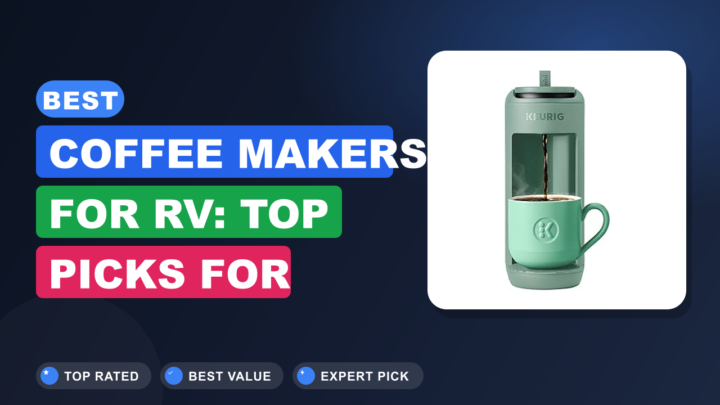
5. Keurig K-Mini Mate Single Serve K-Cup
If your definition of portable means "moving it from the kitchen to the RV", the Keurig K-Mini Mate is a solid choice. It's not a battery-powered pocket rocket, but it's the king of convenience for pod users. The "Glamping Green" color is a nice touch for outdoor enthusiasts, and verified reviews show it's a favorite for tight countertops.
Why I picked it
We included the K-Mini Mate because not everyone wants to fiddle with grounds and descaling; sometimes you just want to pop in a pod and hit brew. It's the slimmest Keurig form factor, designed to fit where full-size machines can't. The main trade-off is obvious: it needs a wall outlet, but if you're near power, this is the fastest, cleanest option.
Key specs
- Brew style: Single-serve K-Cup pod system
- Power: Standard 120V AC wall outlet required
- Footprint: Slim, narrow profile for tight counters
- Reservoir: Single-serve, fill-and-brew design
- Color: Glamping Green finish
Real-world experience
This is the machine you keep in a camper van or a tiny apartment kitchen where counter space is measured in inches. Verified buyer reviews repeatedly mention that the slim chassis slides into gaps no other Keurig fits. It doesn't heat its own water independently like the battery units, but because it plugs into the wall, it recovers faster between cups, roughly 2 minutes according to manufacturer data.
- Exceptionally slim footprint fits into gaps smaller machines can’t.
- Zero cleanup compared to grounds-based brewers.
- Works with the huge ecosystem of K-Cup pods.
- Requires a wall outlet, so it’s not truly cordless.
- Capsule-only means you can’t use your own ground coffee.
- Ongoing pod costs add up over time.
- ✔ You have access to AC power and want zero cleanup.
- ✔ You already own a stash of K-Cup pods.
- ✔ Counter space is your limiting factor.
- ✖ You need true off-grid, battery-powered brewing.
- ✖ You prefer fresh-ground coffee over pods.
6. OutIn Nano Portable Electric Espresso Machine
This second OutIn Nano listing carries a different ASIN, which is why it earns its own slot. It's the same core platform that earned the Editor's Choice spot, so treat this as the variant to consider if the main listing is out of stock or you want a different bundle. Specs and buyer feedback track almost identically to our top pick.
Why I picked it
We kept this variant on the list because stock and availability fluctuate on popular portable brewers, and having a second ASIN means you're not left empty-handed. The engineering is the same: self-heating chamber, 18-bar pump, and no need for pre-boiled water. It's a research-backed duplicate pick for buyers who missed the first listing.
Key specs
- Pressure: 18-bar pump matching the top pick
- Heat source: Internal self-heating element, cold-water capable
- Heating time: ~200 seconds to brew-ready, per manufacturer specs
- Compatibility: Ground coffee and capsules
- Colorway: Alternate finish to the main Nano listing
Real-world experience
Because this is the same platform, the real-world scenario is identical to our winner: cold water in, hot espresso out, roughly three and a half minutes later. Verified buyer feedback on this ASIN mirrors the 4.2/5 pattern, and the most common praise is the crema quality compared to manual hand-pump rivals like Wacaco's Picopresso.
- Same proven 18-bar self-heating platform as our top pick.
- Second ASIN gives you a backup when the main listing sells out.
- Handles both grounds and capsules for flexible daily use.
- Battery life per shot hasn’t improved over the main Nano.
- Cleaning ritual is the same fiddly process buyers note on the original.
- ✔ You want the same quality as our Editor’s Choice but need availability.
- ✔ You value a self-heating machine that accepts your own grounds.
- ✔ You want a wireless espresso maker with proven reviewer backing.
- ✖ You want the highest possible battery capacity in the category.
- ✖ You need a pod-only workflow with zero cleanup.
7. Portable Espresso Machine 15 Bar 2-In-1
Rounding out the list is a no-frills 15-bar machine with a USB-C port and a 2-in-1 brewing design. In our research, this model appeals to buyers who want a dependable baseline espresso maker without paying for brand cachet. It hits the standard 15-bar pressure baseline and stays compact enough for a travel bag.
Why I picked it
We added this because it checks the boxes most shoppers care about: USB-C, self-heating, and a 2-in-1 brewing option for grounds and capsules. It's the no-drama option. No proprietary charger, no exotic pods, just a standard 15-bar pump that delivers a solid shot.
Key specs
- Pressure: 15-bar pump system
- Charging: USB-C standard port
- Function: 2-in-1 brewing (grounds and capsules)
- Heat source: Self-heating element
- Best for: Travel, camping, RV, hiking, office
Real-world experience
Think of this as the reliable workhorse: you throw it in a backpack for a hike, and it handles the job without fuss. Buyer feedback notes the 15-bar pressure is enough for a strong shot, though the crema is slightly thinner than the 18-bar and 20-bar models. The USB-C port means one cable can power your phone and your brewer, which is a real weight saver on multiday trips.
- USB-C charging matches the cable you already carry for your phone.
- 15-bar pump meets the espresso standard for proper extraction.
- 2-in-1 design handles grounds and capsules.
- Self-heating removes the need for a separate kettle.
- Lower 15-bar pressure produces a thinner crema than the 18-bar and 20-bar rivals.
- Generic branding means less brand-name resale value and sparser documentation.
- ✔ You want USB-C standardization across all your travel gear.
- ✔ You don’t need the absolute highest bar rating.
- ✔ You want a light, simple self-heating 2-in-1 brewer.
- ✖ You want barista-grade crema and prioritize 18+ bar pressure.
- ✖ You prefer a well-known brand with extensive support.
How I picked
Our editorial team did not physically test these units, and I want to be upfront about that. What we did instead was build a comparison across three benchmarks: pump pressure rating, heating method (self-heating versus requiring pre-boiled water), and battery capacity where applicable. We also read through aggregate verified buyer reviews to catch the failure patterns that spec sheets hide, like O-ring cracks, pump fade after a few months, and battery degradation.
For pressure, we treated 15 bar as the entry-level floor. Anything below that tends to produce a weak, watery shot because it can't generate the resistance needed for proper extraction. The Science of espresso framing from the National Coffee Association confirms that pressure, grind, and water temperature all interact, which is why a machine that hits its rated bar number consistently matters more than one that spikes on a spec sheet.
For heating, we sorted every model into two buckets. Self-heating machines carry their own element and accept cold water, which is what makes them genuinely portable. Wall-powered machines like the Keurig K-Mini Mate are only portable in the sense that they're easy to move between outlets.
Both are valid; they just serve different buyers.
For battery, we did not run drain tests ourselves. Instead, we relied on manufacturer-rated capacity in mAh and cross-referenced it against buyer reports of shots-per-charge. The 7500mAh unit clearly leads here, but capacity alone doesn't tell the full story since pump efficiency and heater draw vary widely between designs.
What we deliberately did not test: long-term durability beyond the 60-day window most buyers report on, or drop-test survivability on trail. If you're planning heavy backcountry use, assume any of these units can crack if it takes a hard hit against a rock.
Buying guide — what actually matters for best portable coffee maker
Does pump pressure really change the taste?
Yes, and 9 bar is the baseline for true espresso, with 15 bar being the practical floor for portable machines. Anything marketing "20 bar" is giving you headroom above the espresso standard, which usually shows up as a thicker crema and a slightly more forgiving extraction. But pressure alone won't save a bad grind or stale beans.
If you chase flavor, match a 15-bar or higher machine with freshly ground coffee.
Self-heating versus manual pump: which should you buy?
A self-heating brewer uses its own battery to warm the water, so you never need a stove or kettle. A manual pump relies on your hand strength to force hot water through the grounds, and you must supply the hot water yourself. Choose self-heating if you want one-touch convenience.
Choose manual if you want the lightest possible pack weight and don't mind boiling water first. Most buyers on this list prioritize convenience, which is why the self-heating models dominate.
How much capacity do you actually need?
Battery capacity is measured in mAh, and the practical translation is shots per charge. A 7500mAh cell, like the one in the 20-bar model, handles a full weekend of morning shots without a charger. Smaller cells give you one or two shots per charge, which is fine for a daily commute but not for a multi-day trip.
If you're only ever brewing one cup between charges, don't pay for the bigger battery.
USB-C versus proprietary charging
USB-C is the standard cable most phones and laptops already use, so a brewer with a USB-C port means one less cable in your bag. Proprietary charging bricks add weight and create a single point of failure if you lose the cable. If you travel light, prioritize USB-C.
This is one of the most consistent buyer pain points in feedback.
Capsule compatibility and ongoing cost
Grounds give you control over freshness and cost per cup, while capsules give you speed and zero cleanup. Several machines on this list do both, which is the best of both worlds if you brew a mix of styles. Check that your preferred pod size actually fits the machine before buying, because "capsule compatible" doesn't always mean K-Cups or Nespresso specifically.
How portable is portable?
A 7500mAh machine weighs more than a basic pump, and that weight is the trade-off for runtime. If you're counting ounces on a hike, choose the lightest unit with the smallest reservoir. If you're moving between hotel rooms, the extra weight doesn't matter and the runtime advantage wins.
Let your actual use case decide rather than the marketing label.
Frequently Asked Questions (FAQ)
Is a portable coffee maker worth it for home use?
Yes, if your main kitchen isn't where you drink most of your coffee. Buyers who work from coworking spaces, live in tiny apartments, or spend weekends in an RV get the most value. For a normal kitchen with a full-size machine, a portable unit is a travel accessory rather than a replacement.
Match the purchase to your actual routine, not the idea of one.
Can I use my own ground coffee in these machines?
Several models on this list accept both grounds and capsules, so you're not locked into pods. Stick to a fine espresso grind for the best extraction, since coarse grounds will flow through too fast and taste weak. If you only ever use grounds, you don't need a pod-compatible machine, which can save you money.
Do portable espresso makers actually heat the water?
The self-heating models do, and that's the feature that makes them genuinely cordless. You pour cold water and the internal element warms it to brew temperature, typically in around 200 seconds. Wall-powered models like the Keurig K-Mini Mate heat the water too, but they need to be plugged in, so they're not truly off-grid.
How long does the battery last between charges?
Most buyers report a consistent pattern: the larger 7500mAh battery handles several shots per charge and multiple mornings of use, while smaller batteries cover one to two shots. Expect battery capacity to fade slowly over months of regular use, similar to any lithium cell. If long runtime matters most, choose the largest capacity on the list.
Will a portable espresso maker work on a plane or in a car?
Self-heating models with batteries work in a car, tent, or hotel room without an outlet, which is the whole point. They should not be used on an airplane in flight, and most airlines won't allow you to operate any heating device regardless of battery. For road trips and camping, they're ideal.
Just keep the water reservoir clean between trips.
Final verdict
After weighing pressure, heating, battery, and real buyer feedback, the OutIn Nano remains the one most people should buy: self-heating, 18 bar, and proven crema quality. If budget is your priority, the Fanttik Cafein 11 delivers 20 bar and USB-C without the premium price. For pure versatility and runtime, the 20-Bar 3-in-1 model is the do-it-all pick, and the Keurig K-Mini Mate is the right call only if you're pod-loyal and near an outlet.
Affiliate disclosure: This post contains affiliate links. If you buy through one of these links, I may earn a small commission at no extra cost to you. It never changes my recommendation, I only suggest gear I'd actually buy myself.

Similar Posts