How to Choose a Stroller: A Parent’s Buying Guide 2026
Lead Consumer Product Specialist & Family Gear Director at US Family Mart Consumer Testing Lab · Certified Consumer Products Quality Specialist (CPQS), ASTM F15 Consumer Standards Member · 12+ years evaluating household appliances, smart home hardware, child safety equipment, and consumer lifestyle products.
A stroller should match your day, not the other way around. If you drive everywhere, the fold and the trunk space decide everything. If you ride buses, subways, or walk up three flights with groceries in one hand, weight and steering matter more than a fancy canopy.
Most parents get this backwards. They start with the feature list, then try to make their life fit the stroller.
The result: a $700 jogger that won't fit behind the third row, or a featherweight umbrella that rattles to pieces on cobblestones. Manufacturer specifications matter here because they define the actual limits. Per ASTM F833, every stroller sold in the US must meet standard safety and durability requirements, but that doesn't mean every model fits every lifestyle.
The trick is knowing how to choose a stroller by working backward from your real routine.
how to choose a stroller
Choose a stroller by matching five conditions to your daily life. Those are terrain, car trunk size, number of kids, home storage, and budget. Pick a stroller type that fits all five.
Then verify car seat compatibility, weight capacity, and safety certification before buying. If one condition fails, that stroller is wrong for you, no matter how good the reviews are.
Start With Your Actual Day, Not the Stroller Aisle
Walk through a typical Tuesday. Do you load a baby into a car seat three times, or do you push to the corner store? Do you take the subway to daycare, or park in a garage?
Those two days demand completely different strollers.
Most buying guides rank products and skip this step. That's why so many strollers end up on resale sites with nine months of use. The model wasn't bad.
It just didn't fit the buyer's routine.
Start by writing down your week. Commutes, errands, walks, and the places you'll physically lift the stroller. Fold type, wheel size, and total weight all flow from those answers.
The three questions that eliminate 90% of the market
Answer these before you browse a single listing. They cut the field fast.
- Where does the stroller sleep at night? If it's a hallway closet, you need a compact fold. If it's the garage, you have room for a full-size chassis.
- How do you get it into the car? One hand, two hands, or a lift-and-shove into an SUV? A 28 lb full-size is a different job than a 14 lb travel stroller.
- What surface are you pushing on most? Sidewalks and smooth floors play nicely with small wheels. Gravel, grass, and beach sand need air-filled tires and real suspension.
If your answers point in different directions, that's normal. Most families buy one stroller that handles 80% of trips, then add a cheap second option for edge cases.
Why the "best stroller" lists keep failing you
Roundups rank strollers in a vacuum. They compare specs to specs, not specs to your trunk. Aggregate user reviews on retail sites are more honest about the tradeoffs, but they still can't tell you whether a 24 lb chassis fits under your building's door frame.
Use roundups for research, not decisions. They're good for spotting patterns. Which brands have repeated complaints about brake failure?
Which models report wobble after six months? That's useful signal. The final pick still has to run through your five conditions.
The Five Conditions That Decide Everything
Treat this like a decision tree. Each condition is a filter. If a stroller fails one filter, it's off the list.
| Condition | What it filters out | Why it matters |
|---|---|---|
| Terrain | Small wheels, no suspension | Wheels under 6 inches struggle on gravel and grass |
| Car trunk | Full-size and doubles | Fixed dimensions, no workaround |
| Number of kids | Singles, unless convertible | Buying twice costs more |
| Home storage | Bulky frames, wide footprints | Folding radius is a hard limit |
| Budget | Premium modulars, joggers | Sets the ceiling before features seduce you |
Run the filters in that order. Terrain and trunk narrow the field the fastest.
Where you live and how you move
Urban living cuts hard toward lightweight and compact. If you walk a lot and use transit, a compact folding stroller under 17 lbs makes the difference between a smooth trip and a wrestling match. Small wheels are fine on smooth sidewalks.
They'll fail on cobblestones.
Suburban and rural families can go heavier. A full-size with 8-inch wheels and front suspension handles cracked concrete, mulch paths, and parking lots with ease. You have trunk space and a driveway.
Weight matters less than durability.
Climate plays a role too. If you live somewhere with six months of rain, look for a canopy with a large coverage area. Check that the model accepts a rain cover.
Footmuffs and weather shields are sold separately, so check the accessory line before you buy.
Your car, your trunk, and your doorway
Measure your trunk opening and the interior height before you shop. Not the cargo volume number on the spec sheet. The actual gap between the latch and the seat back.
A typical midsize sedan trunk opening is around 15 to 17 inches tall. A full-size stroller folded often lands at 14 to 16 inches, so it barely fits. Crossovers and SUVs with liftgates give you more headroom, sometimes 22 inches or more.
Minivans are easy mode.
Standard interior door width in a US home is 32 inches. Standard exterior door is 36 inches. Any stroller wider than 30 inches is going to scrape through tight hallways.
Doubles hit this limit constantly.
How many kids, now and later
If you have two kids under three, plan for a double from day one. A convertible single-to-double stroller costs more upfront but saves you a second purchase six months later. A dedicated double is heavier and harder to fold, but the second seat is designed properly instead of bolted on.
If you have one kid and might have another, a convertible is a smart hedge. Just verify the second-seat weight limit. Some convertibles cap the lower seat at 35 lbs, which a toddler outgrows fast.
Side-by-side doubles are easier to maneuver but wider than most doorways. Tandem doubles are narrower but harder to steer. There's no perfect answer.
Test both if you can.
Your storage space at home
Measure your entryway, closet, or garage corner. A folded stroller needs roughly a 2-foot by 2-foot square to stand, plus clearance to slide in and out.
If you live in a small apartment, a self-standing fold is worth the premium. A stroller that falls over every time you set it down will end up permanently in the hallway, blocking foot traffic.
Wall hooks and ceiling hoists are options for garages. They're not practical in rental apartments with drywall and no studs. Confirm your mounting options before you count on vertical storage.
Your budget, split into needs vs. nice-to-haves
Set a hard ceiling. Then split your list into what you truly need and what's a bonus.
Needs: safe harness, working brake, appropriate wheels, fits your car, fits your storage. That's it.
Nice-to-haves: reversible seat, one-hand fold, huge basket, parent console, leatherette handlebar. These are real conveniences, but they're not baseline requirements.
A $250 stroller that fits your life beats a $900 stroller that fights it. Aggregate buyer feedback shows the number one reason for returns isn't quality. It's "doesn't fit my car" or "too heavy to lift."
Stroller Types, Decoded by When You'd Actually Pick One
Every stroller category exists because a specific family type needed it. Learn the type, learn who it's for.
| Type | Typical weight | Best for | Skip if |
|---|---|---|---|
| Full-size | 20 to 30 lb | Suburban daily use, newborns | You live in a walk-up or use transit |
| Lightweight / umbrella | 10 to 16 lb | Quick trips, older toddlers, travel backups | You need a flat recline for a newborn |
| Compact folding | 13 to 18 lb | Urban parents, frequent flyers | You push on rough terrain daily |
| Travel system | 20 to 30 lb + car seat | Newborn parents who drive often | You use public transit heavily |
| Jogging | 22 to 30 lb | Runners, trail walkers | You need a compact fold |
| All-terrain | 22 to 30 lb | Gravel, grass, uneven paths | You have limited trunk space |
| Double (side-by-side) | 28 to 40 lb | Twins, Irish twins | Doorways under 30 inches |
| Double (tandem) | 28 to 40 lb | Narrow doorways | Tight turns and crowded aisles |
| Wagon stroller | 30 to 45 lb | Older toddlers, beach, festivals | You need a car seat click-in |
| Convertible single-to-double | 24 to 32 lb | Growing families | You need the lightest possible setup |
| Car seat carrier frame | 10 to 15 lb | First 6 to 9 months | Your baby has outgrown the infant seat |
Full-size, lightweight, and compact folders
Full-size strollers are the workhorses. Larger wheels, bigger baskets, better suspension, and usually a flat recline for newborns. They're heavy and bulky, and that's the trade.
Lightweight or umbrella strollers are for short trips and older toddlers. Simple fold, low weight, minimal storage. Most don't recline flat, so they're not newborn-friendly.
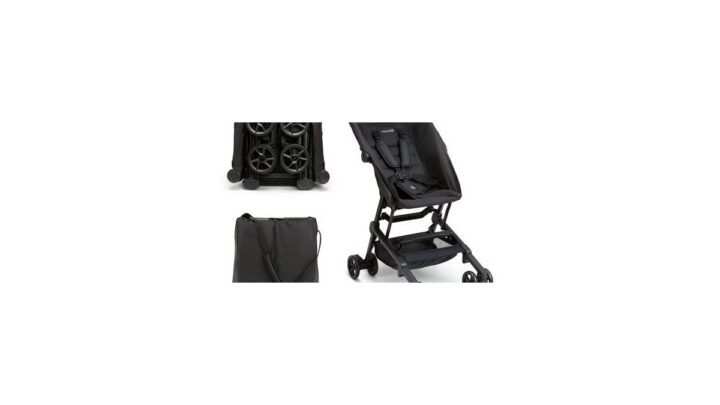
Compact folding strollers sit in between. They fold small enough to fit in an overhead bin on some airlines and still give you a decent recline. They're the go-to choice for city parents and anyone who flies often.
If travel is a big part of your year, our guide to the top-rated travel options breaks down what actually survives gate-check.
Travel systems and car seat carriers
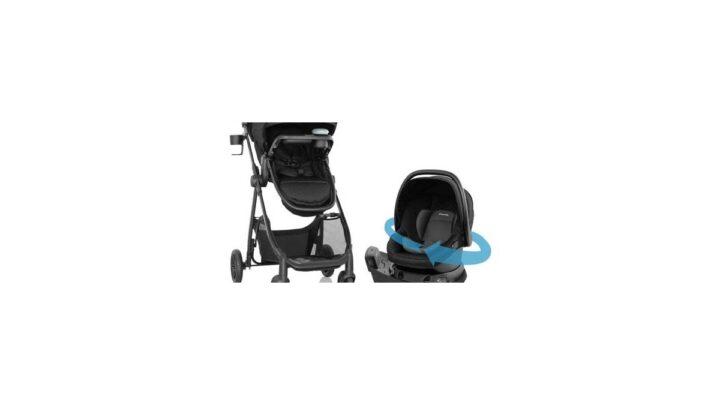
A travel system pairs a stroller with an infant car seat. The seat clicks into the stroller frame, so you can move a sleeping baby without waking them. This is genuinely useful in the first six months.
The catch: car seats aren't designed for extended stroller use. The American Academy of Pediatrics recommends limiting time in a car seat outside the car, especially for newborns. Use the click-in for errands.
Don't make it the daily bassinet.
A stroller frame is a stripped-down version of the same idea. It holds only the car seat, no seat unit. It's light, cheap, and perfect if you plan to switch to a full stroller once your baby outgrows the infant seat.
Joggers, all-terrain, and three-wheelers
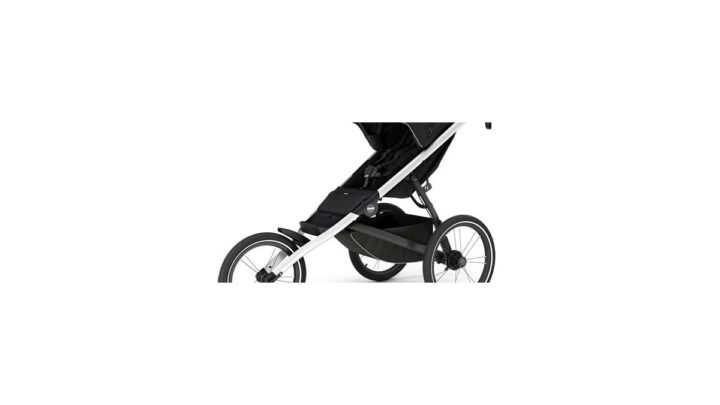
Jogging strollers have a fixed or lockable front wheel, large air-filled tires, and a hand brake. The fixed front wheel is more stable at running speed. The downside is that it's annoying to steer in tight spaces.
All-terrain strollers look similar but often have a swivel front wheel that locks. They handle gravel and grass better than standard strollers without being built for running. If you walk trails but don't run, this is the better pick.
Per the American Academy of Pediatrics, you shouldn't jog with a baby until they're at least 6 months old and have strong head control. Check with your pediatrician before starting.
Doubles, convertibles, and wagon strollers
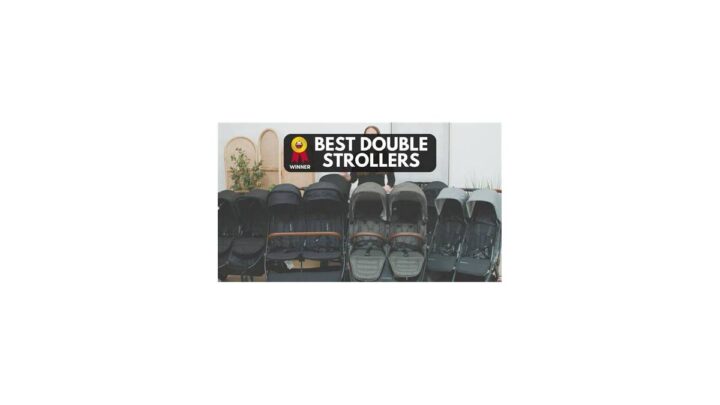
Side-by-side doubles are easy to load and give each kid their own space. They're wide, sometimes 30 to 32 inches. That's wider than a standard doorway.
Tandem doubles stack front to back. They fit through narrow doors but are long, which makes turns in crowded aisles tricky. Test the steering with actual weight in both seats before committing.
Wagon strollers are the newer category. They're great for toddlers who want to climb in and out. They don't accept infant car seats.
They're also heavy, often 30 lbs or more, so trunk space matters.
Convertible single-to-doubles start as a single and add a second seat later. They're the smartest buy for a family planning a second child within two years.
The Features That Matter vs. the Ones That Just Sell
Every stroller has a feature list a mile long. Most of it is marketing. Here's what actually changes your day.
Fold type and why one-hand fold changes your day
If you're holding a baby or a toddler's hand, a one-hand fold is worth real money. A two-hand fold means setting the baby down somewhere safe first. That's not always possible.
Self-standing folds matter for apartments and small entryways. Test them if you can. Some "self-standing" claims only work when the stroller is empty.
Compact folds are different from fast folds. A stroller can fold small but take 30 seconds to do it. Look for both if you're flying.
Weight, folded dimensions, and lift-into-trunk reality
Pay attention to the weight difference between the chassis alone and the stroller with the seat attached. Marketing often quotes the lighter number.
A 20 lb stroller sounds manageable until you're lifting it into a tall SUV while holding a baby. Anything over 25 lbs gets old fast. Under 18 lbs is comfortable for most people.
Folded dimensions matter more than weight in tight trunks. A 16 lb stroller that folds to 30 inches long may not fit anywhere useful. Check the L x W x H numbers, in inches, against your actual trunk.
Wheels and suspension: solid, foam, or air-filled
Wheel type drives how the stroller feels on the ground.
- Solid plastic wheels: light, cheap, never flat, but bumpy on anything but smooth floors.
- EVA foam wheels: middle ground, no punctures, moderate shock absorption.
- Air-filled (pneumatic) wheels: smoothest ride, best for rough terrain, but they can go flat and need occasional inflation.
Bigger wheels roll over cracks and curbs better. A 10 to 12 inch rear wheel beats a 6 inch one on uneven pavement. Suspension adds another layer of comfort.
Front-only is common. All-wheel is better but heavier.
Seat recline, orientation, and canopy coverage
Newborns need a near-flat recline, around 170 degrees. Check the actual recline angle. Some strollers claim "flat" but only hit 150 degrees.
Reversible seats let you face your baby toward you or away. Parent-facing is nice in the first year for bonding and monitoring. Forward-facing is more interesting for toddlers.
Canopy coverage matters more than most parents expect. Look for a canopy that extends well past the seat top, ideally with a UPF rating. A peek-a-boo window helps you check on a sleeping baby.
Harness, brake, and basket — the quiet dealbreakers
The 5-point harness is non-negotiable for infants and toddlers. Padded straps and a magnetic or easy-click buckle make daily use far less annoying.
The brake has to be easy to engage and disengage. Test it with one foot and with two hands full. A sticky brake is a safety problem, not just an inconvenience.
Basket capacity is often advertised as a weight limit, usually 5 to 25 lbs. But the usable space is what matters. A basket that's blocked when the seat reclines isn't a 20 lb basket in practice.
Match Your Car Seat Before You Fall in Love With a Stroller
This is where most parents get burned. They buy a stroller, then discover their infant car seat doesn't fit without a $60 adapter that's out of stock.
Adapters are brand-specific and sometimes model-specific. A Graco car seat adapter doesn't fit a Chicco car seat. Even within the same brand, adapters vary by stroller model.
Adapter compatibility by brand
Check the manufacturer's compatibility chart before you buy. Not a listing on a resale site, not a comment thread. The official chart on the stroller brand's site.
Most major brands publish compatibility matrices. Common pairings include Graco car seats with Graco strollers, Chicco with Chicco, Britax with Britax, and UPPAbaby with select Chicco and Maxi-Cosi seats. Cross-brand compatibility usually exists but varies.
If your car seat is older or a niche brand, assume no adapter exists. In that case, plan on a stroller with a bassinet or lie-flat seat instead.
When a travel system beats a modular stroller
A travel system is the easy path when you're buying a car seat and stroller at the same time. The box includes both pieces. They fit together by design.
The price is usually lower than buying separately.
A modular stroller costs more and requires you to buy a compatible car seat or adapter. The payoff is a nicer stroller long-term. Once your baby grows out of the infant seat, the modular stroller keeps working with its own seat unit.
If you already own an infant car seat and you're happy with it, look for a stroller that accepts the matching adapter. If you're starting fresh, a travel system is often the simplest entry point.
For families who want a second stroller for travel or grandma's house, a cheap umbrella is fine. It doesn't need to accept a car seat. If you're kitting out a home gym for the postpartum months, the same logic applies: pick the right equipment for the space you actually have.
Walk Through the Decision Tree: Your Situation, Your Shortlist
Think of this as a flowchart. Each lifestyle block points to a specific stroller type. Find yourself, then move down.
Urban walk-up, transit rider, small apartment
If you climb stairs daily and hop on buses or subways, weight and fold size dominate. Target under 17 lbs. Target a fold that stands on its own and fits a coat closet.
Compact folding strollers are the default answer here.
Small wheels are fine on smooth sidewalks and station floors. Skip air-filled tires. They add weight and puncture risk for no benefit in the city.
A one-hand fold is worth the premium. You'll use it four times a day. Compact dimensions matter more than big suspension.
Suburban driver with a big trunk and a driveway
If you park in a garage and drive everywhere, go full-size or travel system. Your trunk can handle 25 to 30 lbs. Your driveway handles a self-standing frame.
Prioritize a large storage basket, a big canopy, and a flat recline for newborns. One-hand fold is nice. It isn't essential when you're folding on flat pavement next to your car.
If you want a second stroller for quick errands, pick up a cheap umbrella. It can live in the trunk and save the full-size one from wear.
Frequent flyer with gate-check and overhead-bin needs
If you fly more than four times a year, buy a travel stroller specifically. Look for under 15 lbs and a folded size under 22 inches to fit overhead bins on most major airlines.
A self-standing fold matters at security and the gate. So does a carry strap or shoulder sling. A travel bag is worth buying.
Gate-check damages happen, and a bag protects the frame.
Confirm your specific airline's carry-on dimensions before you fly. They vary. Some accept 22 x 14 x 9 inches.
Others are stricter.
Runner, hiker, or gravel-path parent
If you run or hike weekly, pick a jogging or all-terrain stroller with air-filled tires and a lockable front wheel. Expect 22 to 30 lbs. Expect a bulky fold.
Accept both.
Wait until your baby is at least 6 months old and has head control before any jogging use. The American Academy of Pediatrics is clear on this. Confirm with your pediatrician.
If you mostly walk gravel but don't run, an all-terrain with swivel wheels is easier to steer. Reserve the fixed-wheel jogger for actual running.
Growing family adding a second rider
If baby number two arrives within two years of the first, plan for a double now. A convertible single-to-double is the smartest long-term buy. It starts as a single and grows.
Side-by-side doubles suit twins or kids who want their own space. Tandems suit narrow doorways and tight stores. Try both if you can.
Steering feels completely different under weight.
Watch the second-seat weight and height limits. Some convertibles cap the lower seat at 35 lbs. Measure your toddler's growth before committing.
Try-Before-You-Buy: What to Test in the Store
Online specs can't tell you everything. Ten minutes in a store with a weighted bag answers more than an hour of reading. Bring a 20 lb weight or ask the staff if they have one.
Fold it, lift it, push it — with weight in the seat
Start with the fold. Do it twice. Once calmly, once while pretending to hold a phone in one hand.
If it fights you, it'll fight you every day.
Next, lift the folded stroller to chest height. That's what you'll do loading it into a car. If it feels awkward, the weight distribution is wrong, even if the lb number looks fine.
Push it with weight in the seat. Turn a tight circle. Push over a threshold or a bump.
Note how the front wheels respond. Watch for shimmy or wobble in the frame.
The five-minute harness, brake, and recline check
The harness has to buckle easily with one hand. Buckle and unbuckle it three times. If the buckle jams or the straps twist, that's a daily headache.
Test the brake. Engage and release it with one foot, then again with two hands full. A sticky brake is a safety issue, not just an annoyance.
Recline the seat fully and return it upright. Check the recline mechanism by hand. Listen for plastic creaking.
Look for anything binding.
Last, check the basket. Load it with a diaper bag and grab the handlebar. If the stroller tips back easily, that's a real-world tip-over risk.
What It Really Costs (and Where the Money Goes)
Stroller prices span a massive range. As of 2026, the market breaks into three rough bands. Know what each one actually buys you.
| Band | Price range | What you get | Where it cuts corners |
|---|---|---|---|
| Budget | $80 to $200 | Safe basics, simple fold, small wheels | Thinner fabrics, limited warranty, plastic parts |
| Mid-range | $200 to $500 | Better suspension, one-hand fold, adapter options | Some features are cosmetic |
| Premium | $500 to $1,500+ | Modular seats, all-terrain wheels, extended warranty | Diminishing returns past $900 |
Where cheap strollers cut corners
Budget strollers usually skimp on three things: wheels, fabrics, and warranty coverage. Solid plastic wheels don't puncture but they transfer every bump to the frame. Fabrics thin out fast and fade in sunlight.
Warranty periods are short, often 90 days to one year. Replacement parts are sometimes unavailable. This isn't a dealbreaker for a $100 backup stroller.
It is a dealbreaker if you need it daily for three years.
That said, a $150 stroller that fits your life beats a $700 one that doesn't. Price is not the same as fit.
When secondhand makes sense — and when it doesn't
Secondhand is smart when you're buying a mid-range or premium stroller with a known model history. You can save 40 to 60% off retail for a lightly used unit. Check that the model is still supported for parts.
Skip secondhand when you can't verify the manufacture date. Newer models have updated safety features. Older ones may predate current ASTM F833 revisions.
Always run the model and brand through the CPSC recall database before buying used. That step takes 30 seconds. It catches serious issues.
If you're building out a home gym for the postpartum months at the same time, secondhand offsets add up fast. The budget-friendly equipment picks we look for follow the same logic: buy what you'll actually use, not what looks nicest.
Mistakes That Cost Parents Money and Sanity
Every mistake here shows up in resale listings with a "used once" note. Learn them before you spend.
Buying for the newborn phase only
The newborn phase lasts three to four months. The stroller needs to work until your kid is 3 or 4 years old, roughly 40 to 50 lbs. Buying a stroller that only suits a newborn means replacing it in under a year.
If the stroller you love is newborn-focused, confirm it converts to a toddler seat. If it doesn't, it's a short-term tool with a long-term cost.
Skipping the trunk and doorway measurements
Guessing is expensive. Measure your trunk's interior height, width, and depth. Measure your front and back doors.
Measure your elevator opening if you have one.
Aggregate buyer feedback shows this is the number one real-world regret. Strollers get returned because they don't fit a specific car, not because the stroller is badly made.
Ten minutes with a tape measure prevents a return, a restocking fee, and a stressed first week with a newborn.
Trusting the basket size on the box
A "20 lb basket" sounds generous. Then you load it and the stroller tips back. Or the basket fills and you can't recline the seat.
The listed capacity is a maximum, not a recommendation. Baskets work best under 10 lbs for handling stability. Anything heavier changes the center of gravity.
Hanging a heavy diaper bag on the handlebar is worse. This is a real tip-over risk with a child inside. Use the basket, not the bar.
Ignoring the return policy and warranty
Return windows range from 14 days to 90 days. Some retailers charge restocking fees up to 15%. Read the terms before you buy, especially if you're not testing in person.
Warranty coverage varies wildly. Premium brands often cover 2 to 3 years on the frame. Budget brands cover 90 days, sometimes less.
Keep the receipt. Register the stroller.
Some warranties are void if you bought from an unauthorized seller. Check the brand's authorized retailer list if you're shopping on a marketplace.
Overbuying features you'll never use
Reversible seats, motorized folds, Bluetooth speakers, app-connected tracking. All real features in 2026. All easy to pay for and never use.
If the feature doesn't change your daily routine, skip it. A $900 stroller with ten features you use once is a worse buy than a $400 one with the four you actually need.
Safety, Standards, and Recall Checks You Can't Skip
Safety isn't a feature you upgrade into. It's a floor every stroller has to meet. The US Consumer Product Safety Commission (CPSC) sets mandatory requirements for carriages and strollers under federal law.
That's the baseline. Everything above it is extra.
Always verify the stroller meets current CPSC requirements before purchase. New models do. Older used models may predate recent revisions.
That's a risk with hand-me-downs and resale listings.
JPMA certification and ASTM F833 explained simply
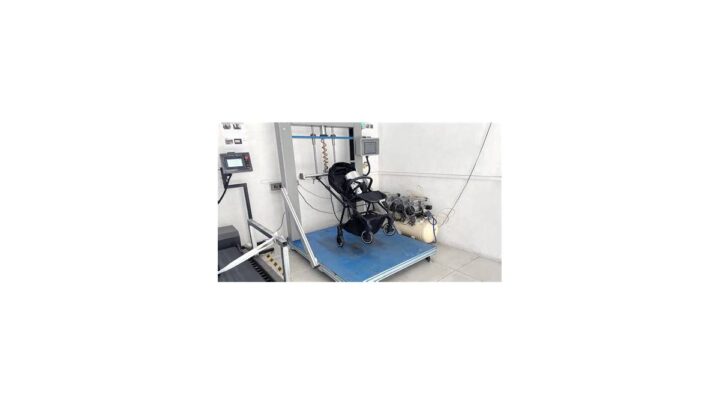
ASTM F833 is the voluntary standard that covers stroller safety performance. It tests things like stability, restraint strength, wheel durability, and parking brake effectiveness. A stroller that passes ASTM F833 has been pushed, pulled, and dropped in test conditions.
JPMA certification (Juvenile Products Manufacturers Association) is an independent verification that a model meets the applicable ASTM standard. It's a useful shortcut when comparing brands. Look for the JPMA seal or verify on JPMA's website.
These aren't a guarantee against every accident. They're proof the stroller passed a defined safety test regime. Two strollers can both pass and still feel very different to use.
CPSC recalls and how to register your stroller
Register your stroller with the manufacturer as soon as you buy it. Registration is the fastest way to get a recall notice. Without it, you're relying on news coverage to catch a problem.
Check the CPSC recall database at cpsc.gov before buying used. Search by brand and model. A recall might affect the brake, the hinge, the seat fabric, or the frame.
It matters.
If you buy used and the seller can't confirm the manufacture date, skip the deal. Recalled models are common in the secondhand market. Verification is quick.
Handlebar tip-over, unsupervised sleep, and brake habits
Handlebar tip-over is the most common stroller injury pattern. It happens when you hang a heavy bag on the handlebar, especially with an empty seat. The stroller flips backward.
The child can hit their head.
Rule one: never hang bags on the handlebar. Use the under-seat basket. Rule two: always set the parking brake, even on flat ground.
Wheels can roll in the time it takes to grab a coffee.
Rule three: don't use a stroller as a sleep surface. The American Academy of Pediatrics recommends babies sleep on a firm, flat surface designed for sleep. Car seats and stroller seats don't count.
If a baby falls asleep in the car seat, transfer them to a bassinet or crib as soon as practical.
When stroller use crosses into a real safety problem
Some situations need a different tool entirely. If your baby has reflux, breathing issues, or a positional condition, ask your pediatrician before extended stroller or car seat use. Flat recline helps, but a medical opinion beats guessing.
If a stroller starts to wobble, drift, or the brake feels soft, stop using it and inspect. Loose bolts, cracked plastic, and fraying harness straps are fixable if caught early. Continued use is how accidents happen.
Maintenance and Long-Term Ownership
A stroller that lasts three years isn't luck. It's upkeep. Most breakdowns trace back to two things: dirt in the wheels and loose fasteners.
You don't need a toolkit. You need ten minutes a month and a soft brush. That's it.
Weekly and monthly upkeep that prevents 80% of breakdowns
Wipe the frame with a damp cloth once a week. Clean the wheels with a soft brush to clear grit from the axle area. Grit wears the axle down and causes wobble over time.
Check the brake engagement once a week. It should click into place with light pressure and release instantly. If it feels soft or sticky, inspect the brake cable or mechanism.
Once a month, tighten visible bolts and screws. Focus on the handlebar mounts, wheel hubs, and seat attachment points. These work loose from vibration.
Every three months, wash the seat fabric and canopy per the manufacturer's instructions. Most are removable. Some are machine-washable on cold.
Follow the care label exactly.
Replacement parts, fabrics, and warranty claims
Common wear items are tires, harness straps, canopies, and brake cables. Premium brands sell replacement parts directly. Mid-range brands sometimes do, sometimes don't.
Budget brands rarely do.
If a part fails within the warranty window, contact the manufacturer with your receipt and registration number. Most brands ship replacement parts free within warranty. Some cover the frame for 2 to 3 years.
Air-filled tires can be patched or replaced. Foam and solid wheels generally need to be replaced as a full set. Check your model's support page before assuming a part is gone.
When to repair vs. when to replace
Repair if the damage is limited to a part you can buy. A single wheel, a canopy, a harness strap. A stroller with a good frame and one broken wheel is worth fixing.
Replace if the frame is bent or cracked. If the fold mechanism fails repeatedly, or the seat attachment point is compromised. Frame failures can't be repaired safely.
Replace if the stroller is over 6 years old. Plastics degrade. Safety standards move forward.
Even a well-cared-for stroller loses structural integrity over time.
Real Scenarios: Three Parents, Three Very Different Picks
Theory is easy. Here's how the decision tree plays out in three common situations. None of these are sponsor picks.
They're the natural outcome of the filters.
City walk-up with a 4-month-old
Maya lives on the third floor of a walk-up in Brooklyn. She takes the subway twice a week and walks everywhere else. Trunk space is a non-issue because she doesn't own a car.
Her filters: under 17 lbs, one-hand fold, self-standing, fits a coat closet. Car seat compatibility matters, but only for the drive to her parents' place once a month.
The pick: a compact folding stroller in the 13 to 16 lb range with a car seat adapter. She skipped the all-terrain features and the reversible seat. Neither would survive the stairs anyway.
Total spend landed around $450 in 2026 pricing. A $1,100 premium modular stroller would have solved nothing different in her situation.
Suburban family expecting baby number two
Daniel and Priya live in a Texas suburb. Two cars, one toddler at 28 lbs, second baby due in three months. Their first stroller was a lightweight model that stopped working once the toddler hit 25 lbs.
Their filters: convertible single-to-double, 8-inch or larger wheels, big basket, car seat compatible for the newborn seat they still own.
The pick: a convertible single-to-double in the $600 to $900 range. Second seat complicates the fold, so they tested it in-store with weight in both seats. The 30-inch width fit their minivan's middle row lock-offs.
They kept the old lightweight stroller as a trunk backup. It works fine for quick errands with just the toddler.
Frequent flyer who needs a one-bag solution
Sam flies twice a month for work and takes the baby on two of those trips. He needed a stroller that fits an overhead bin on a domestic carrier. He's already had one stroller damaged at gate-check.
His filters: under 15 lbs, folded size under 22 x 14 x 9 inches, self-standing fold, carry strap.
The pick: a compact travel stroller that fit those dimensions on all four major US carriers. He bought a padded travel bag as a backup for the return leg. The bag adds 1.5 lbs but protects the frame.
Total spend landed around $380. The full-size stroller stayed home. It never would have survived a four-flight month.
If Sam also needed a home gym setup for his postpartum fitness plan, he'd apply the same rule: pick what fits the space, not what looks best. That's the logic behind our picks for a tight home setup too.
Quick Decision Guide: Pick Your Path in 60 Seconds
Answer six questions. Follow the branches. You'll land on a stroller type and price band in under a minute.
Question 1: What surface do you push on most?
- Smooth sidewalks and indoor floors → small wheels, no suspension needed
- Concrete, mulch paths, cracked pavement → 8-inch or larger wheels, front suspension
- Gravel, grass, trails, sand → air-filled tires, all-terrain or jogger
Question 2: Do you lift the stroller into a car daily?
- Yes, more than twice a day → target under 18 lbs
- Yes, once a day → up to 22 lbs is fine
- No, or rarely → up to 30 lbs works
Question 3: What's your trunk opening height?
- Under 15 inches → compact fold only
- 15 to 20 inches → most full-size strollers fit
- 20 inches or more → anything goes, including doubles
Question 4: How many kids will ride in the next two years?
- One → single stroller
- Two under three → convertible or double from day one
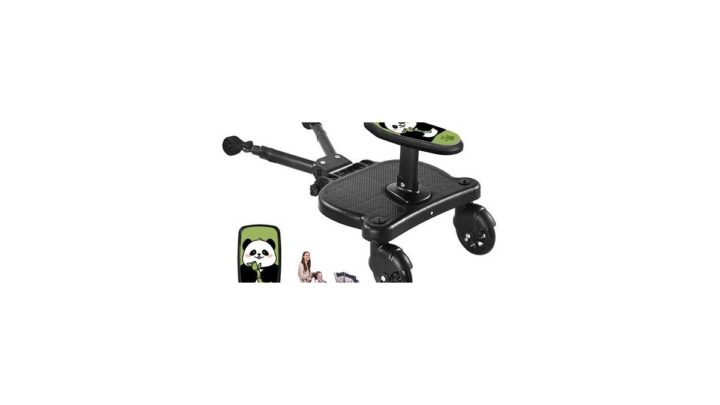
- Two with a big age gap → single plus riding board
Question 5: Where does the stroller live at night?
- Entryway closet → must fold small and self-stand
- Hallway → must have a narrow footprint
- Garage or utility room → no size restriction
Question 6: What's your hard budget ceiling?
- Under $200 → budget band, prioritize safety over features
- $200 to $500 → mid-range, best value zone
- Over $500 → premium band, focus on fit not features
Once you land on a type, check three final things. Car seat adapter compatibility. CPSC recall history for that model.
The return policy and warranty terms.
That's the whole decision. Everything else is marketing.
Frequently Asked Questions
Is a travel system or a modular stroller better for a newborn?
A travel system is better when you want a single purchase and frequent car transfers. A modular stroller is better when you want one stroller that lasts past the infant seat phase. If you own a compatible infant car seat already, a modular with an adapter is usually the smarter long-term buy.
How much should I actually spend on a stroller?
Spend $200 to $500 for the best value zone in 2026. Budget strollers under $200 work if you only need a backup or short-term option. Premium strollers over $500 add durability and modular features, but returns diminish fast past $900.
Fit matters more than price.
Can I use a stroller as a sleep surface?
No. The American Academy of Pediatrics recommends babies sleep on a firm, flat surface designed for sleep, like a bassinet or crib. Stroller seats and car seats aren't sleep surfaces.
If a baby falls asleep in the seat, transfer them as soon as practical to a proper sleep surface.
Do I need a double stroller for a toddler and a newborn?
Only if both kids will ride at the same time regularly. A convertible single-to-double is the best hedge if you're unsure. It starts as a single and adds a second seat later.
If your toddler already walks most places, a single with a riding board is lighter and cheaper.
What's the lightest stroller that still reclines flat?
Lightweight compact strollers in the 13 to 16 lb range often recline to near-flat (around 170 degrees). True flat recline is rare on anything under 20 lbs. If newborn sleep in the stroller matters, verify the actual recline angle in the manufacturer specs, not the marketing copy.
How do I check if a stroller has been recalled?
Search the model and brand on cpsc.gov. It's free, takes 30 seconds, and covers all US recalls. Register your stroller with the manufacturer after purchase for automatic recall notices.
Skip any used stroller where the seller can't confirm the model year.

Similar Posts