When Can a Baby Go in a Jogging Stroller? 2026
Lead Consumer Product Specialist & Family Gear Director at US Family Mart Consumer Testing Lab · Certified Consumer Products Quality Specialist (CPQS), ASTM F15 Consumer Standards Member · 12+ years evaluating household appliances, smart home hardware, child safety equipment, and consumer lifestyle products.
When can a baby go in a jogging stroller? Most parents hear "6 months" and treat it like a finish line. In reality, that number is a floor set by manufacturers, not a clearance from your pediatrician.
The real trigger is head and neck control, plus a stroller that reclines enough to protect a newborn's airway. Per ASTM F833, the stroller safety standard recognized in the US, joggers must meet the same baseline as any carriage. But the standard doesn't tell you when your baby is ready to bounce down a sidewalk at 6 mph.
Here's how to figure that out.
when can a baby go in a jogging stroller
Most babies can ride in a jogging stroller for actual jogging at 6 to 9 months. They need strong head and neck control first. Many manufacturers set 6 months as the minimum age.
Some say 8 or 12 months. Newborns can use a bassinet or car seat attachment, but walking pace only. Never jog with a baby who can't sit supported.
The Short Answer: 6 Months Is a Number, Not a Green Light
Six months is the most common manufacturer minimum for jogging. It's a starting point, not a finish line. Manufacturer specifications from Thule, BOB Gear, and Graco typically list 6 months as the earliest age for jogging use.
Some models list 8 or 12 months depending on seat design.
Head control isn't guaranteed at 6 months, though. Some babies hit it at 4 months. Others take until 7 or 8.
A premature baby may lag behind the calendar by weeks. A baby with low muscle tone may lag more.
That's why pediatric guidance from the American Academy of Pediatrics leans on developmental milestones rather than a hard age. Your pediatrician can confirm whether your baby's neck and trunk strength actually support the vibration and jostling of a jog.
Here's the quick version:
- Walking with a bassinet or car seat: From birth, in a fully reclined position.
- Walking in the jogger's own seat: Once baby has head control, usually 4 to 6 months.
- Jogging: 6 to 9 months for most babies, with pediatrician clearance.
- Trail running or rough terrain: Closer to 12 months, when trunk stability is solid.
Every parent's situation differs. The rest of this guide walks you through the milestones, the risks, and the practical setup so you can make that call with confidence instead of guesswork.
Why This Decision Is Riskier Than It Looks
Jogging strollers are built for speed and terrain. That's what makes them different from a standard stroller. A jogger's larger pneumatic tires and suspension absorb bumps that would rattle a small stroller to pieces.
But those same tires transmit vibration up through the frame and into the seat. A baby's neck is doing all the work to keep the head stable.
Infants under 6 months have disproportionately large heads and weak neck muscles. Shaking forces, even mild ones, can cause whiplash-style motion. That's a genuine injury mechanism.
It's the same category of concern that drives the AAP's warnings about car seat use outside the car.
There's also the positional asphyxia risk. Any time a baby's chin drops toward the chest in a semi-upright seat, the airway can narrow. Car seat adapters used on strollers put babies at an incline that's fine for a short walk and dangerous for a long one.
Add a bumpy run and the risk compounds.
Angela's situation is common. She started running again eight weeks after a straightforward delivery and wanted to bring her 4-month-old along. She'd read the manufacturer's "6 months" line, figured her baby was close enough, and took a slow jog around the block.
Her son's head bobbed for the entire mile.
She stopped after one lap and called her pediatrician the next morning. The verdict was blunt: too soon. Six weeks later, when her son could hold his head steady through tummy time and track objects without wobbling, she started again.
No issues.
The lesson isn't that jogging is dangerous. It's that the timeline is defined by the baby, not the parent's fitness goals. If you're planning to rebuild your routine, our research on low-impact options can help you bridge the gap while you wait for the green light.
Head Control Is the Real Gatekeeper, Not the Calendar
Head control means your baby can hold their head steady, centered, and upright without support. It usually develops between 4 and 6 months. Some babies get there earlier.
Some later.
Here's how to tell it's arrived:
- Tummy time test: Place baby on their tummy. Can they lift the head and turn it side to side without wobbling or dropping?
- Pull-to-sit test: Gently pull baby from lying to sitting by the arms. Does the head come up with the body, or does it lag behind?
- Supported sitting: Sit baby upright with minimal support. Does the head stay centered, or does it flop forward or to one side?
If the head lags on any of these, jogging is off the table. You can still walk with the stroller in a reclined position. That gives you the fresh air and the exercise without the vertical forces.
A second milestone matters for longer runs: trunk stability. That's the ability to sit upright without slumping. It usually shows up between 6 and 9 months.
Without it, even a baby with good head control will slump sideways on a bumpy mile. That puts pressure on the spine and makes breathing harder.
If your baby has head control but not trunk stability, you can jog short, smooth distances on pavement. Skip trails. Keep sessions under 20 minutes.
Check on your baby every few minutes.
When Prematurity Shifts the Timeline
Premature babies often trail their adjusted age by weeks or months on motor milestones. A baby born at 32 weeks may have an adjusted age of 4 months when they're 6 months old by birth date. Their head control may not arrive until closer to 8 or 10 months.
Use adjusted age, not birth age, when you're assessing readiness. Your pediatrician will do this automatically. If you're doing it at home, subtract the weeks early from the current age and work from that.
Walking vs. Jogging: Two Very Different Questions
A jogging stroller can be used long before it's used for jogging. That's the point most parents miss. The design accommodates both activities, but the safety requirements aren't the same.
Walking pace is roughly 2 to 3 mph. Jogging is 5 to 7 mph. Running approaches 8 to 10.
The forces on a baby's neck scale with speed, terrain roughness, and stroller suspension quality.
If You're Walking
- Newborn to 3 months: Use a bassinet attachment or a car seat adapter that keeps baby flat. Walking only, on smooth surfaces.
- 3 to 6 months: Reclined seat position, still walking only. Keep sessions under an hour so baby doesn't spend too long in a container.
- 6 months and up: Upright seat, walking or light jogging if head control is solid.
If You're Jogging
- Under 6 months: Not safe, period. No manufacturer rates a jogging stroller for running at this age.
- 6 to 9 months: Short, slow jogs on smooth pavement. Front wheel locked. Wrist strap on. Pediatrician cleared it.
- 9 to 12 months: Longer jogs, gentle trails with supervision. Baby should be sitting upright without slumping.
- 12 months and up: Full jogging and light trail running. A toddler can self-correct posture and hold the head steady for the duration.
If You're Trail Running
Trail running adds rocks, roots, and uneven grade. The minimum age most manufacturers and pediatricians would endorse is 12 months. Some suggest waiting until 18 months, when a toddler can brace with their arms and communicate discomfort.
The stroller you pick matters here. A fixed-wheel three-wheeler with 16-inch pneumatic tires handles trails far better than a swivel-wheel convertible. If your runs are mostly road, a lockable swivel is more versatile.
Our breakdown of the trade-offs between a dedicated jogger and a travel-friendly model covers the practical differences.
What Your Baby's Age and Stage Actually Allows
Age is a rough proxy. Stage is the real variable. Here's what each developmental window means in practice.
Newborn to 3 Months: Bassinet or Car Seat, Walking Only
At this stage, baby's neck can't stabilize the head. Any bouncing transfers directly to the cervical spine. Use a flat-lying bassinet approved for the stroller, or a car seat adapter that clicks into the frame.
Both options have limits. The bassinet is the safer choice for longer strolls because it keeps baby flat, which supports airway positioning. The car seat is convenient for short trips but shouldn't be used for extended periods.
The AAP has cautioned against using car seats for sleep or prolonged container time outside the car.
Walking pace only. No jogging. No trails.
Keep sessions moderate.
4 to 6 Months: Head Control Arrives, Jogging Usually Doesn't
This is the transition window. Many babies develop head control here, but few have the trunk stability for jogging. You can typically move from bassinet to the stroller's reclined seat once baby can hold their head steady.
Jogging is still premature for most babies at this stage. Pediatricians who clear jogging at 6 months are usually looking for both head control and a minimum of five to six months of age. Some prefer older.
6 to 9 Months: The Typical Jogging Window Opens
This is when most pediatricians and manufacturers agree jogging becomes reasonable. Head control is established. Trunk stability is developing.
Baby can sit supported and often unsupported.
Start slow. Ten to fifteen minutes on smooth pavement. Lock the front wheel.
Attach the wrist strap. Check on baby every few minutes for signs of discomfort, slumping, or head bobbing.
9 to 12 Months and Beyond: Sitting, Bouncing, and Longer Runs
By 9 months, most babies can sit unsupported and hold themselves upright in the stroller seat. That opens the door to longer jogs, gentle trails, and varied terrain.
By 12 months, many toddlers can brace with their arms and shift their weight as needed. They can also signal discomfort, which is a safety feature in itself.
If your baby still slumps or bobs at 12 months, run it by your pediatrician. A referral to a pediatric physical therapist can identify underlying issues. Don't push through it.
The Car Seat Adapter Trap Most Parents Fall Into
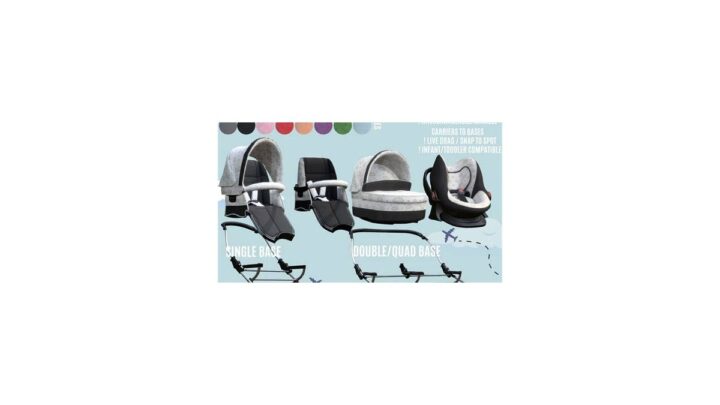
A car seat adapter is a bracket that lets you snap an infant car seat into a stroller frame. It's convenient for the newborn phase and lets you move a sleeping baby from car to stroller without waking them. It is not a jogging solution.
Manufacturer manuals from Chicco, Graco, and UPPAbaby typically state that car seat adapters are for walking use only. Some don't say it clearly. That's where the confusion starts.
Here's the problem. A car seat positions a baby at an incline that's fine for a car ride. Over time, especially on a bumpy run, the baby's head can tip forward and close off the airway.
This is positional asphyxia, and it can happen silently. A baby who looks asleep may be struggling to breathe.
The vibration of running adds a second concern. Even at a slow jog, the forces transmitted through a car seat's rigid shell are higher than a bassinet or the stroller's own seat. A baby's neck absorbs all of it.
Rule of thumb: If you're jogging, the car seat comes out and the stroller seat goes in. If the baby is too young for the stroller seat, the baby is too young to jog with. Walk instead.
How to Know If Your Adapter Is Being Misused
- It's rated for walking but you're moving faster than 3 mph.
- Baby's chin is drifting toward the chest.
- Baby's head is bobbing with each step.
- You can't see baby's face from your running position.
- You're using the adapter on rough terrain.
Any one of those is a stop signal. Pull over, adjust, or go home.
What the Manufacturer's Manual Says vs. What Your Pediatrician Says
Manufacturer minimums are legal and safety floors, not medical clearances. They exist because a company needs a single number that covers most babies in most situations. Your pediatrician knows your baby's specific development.
Here's where the two often diverge:
| Source | What They Tell You | What It Really Means |
|---|---|---|
| Manufacturer manual | "Suitable from 6 months for jogging" | Minimum age. Doesn't mean your baby is ready. |
| Pediatrician | "Let's check head control and trunk strength" | Individual assessment. Trumps the manual. |
| ASTM F833 / EN 1888 | Safety standards for the product itself | The stroller is safe. Not a statement about your baby. |
| JPMA certification | The model passed independent testing | Confirms manufacturing quality. Not developmental readiness. |
If your pediatrician says wait, wait. The manual doesn't know your baby. Neither does the internet.
Postpartum Reality Check: Your Body Has a Vote Too
Baby's readiness is half the equation. Yours is the other half. Running postpartum puts load on a pelvic floor that's still healing and a core that's still reconnecting.
ACOG guidance generally points to a gradual return, often starting around six weeks for uncomplicated deliveries and longer for C-sections.
Many women's health physical therapists recommend waiting closer to 12 weeks before running, regardless of delivery method. That's about your pelvic floor and abdominal wall, not the baby's age.
If you're juggling both timelines, walking with a bassinet for the first three months is often the practical path. It keeps you moving, keeps baby safe, and gives your body time to rebuild. If you want to maintain cardio while you wait, our research on quiet home equipment can bridge the gap between delivery and your first real jog.
A Step-by-Step Checklist Before Your First Jog
There's no perfect first jog. But there's a safer one. Here's the practical sequence.
- Get pediatrician clearance. Say the words "I want to start jogging with the stroller." Ask them to check head control and posture.
- Read the manual for your specific model. Every jogger has its own minimum. BOB Gear, Thule, and Graco all differ slightly.
- Lock the front wheel. Fixed-wheel mode is stable at speed. Unlocked swivels can wobble.
- Attach and adjust the wrist strap. This is the only thing that stops the stroller if you trip.
- Set the seat to the reclined or upright position matching baby's stage. Newborns flat. Older babies upright.
- Tighten the five-point harness. You should not be able to pinch slack at the shoulders.
- Check the tires. Pneumatic tires lose air over time. Low pressure means a bumpier ride.
- Test the brake. Engage it, then push the stroller. It shouldn't move.
- Do a walking lap first. Ten minutes. Watch baby's head and posture.
- Progress to slow jogging. Ten to fifteen minutes on smooth pavement. Stop if baby slumps or fusses.
If anything feels off, stop. A jog that goes badly once can set your confidence back for weeks.
Mistakes to Avoid That Put Babies at Risk
Most jogging stroller injuries aren't from crashes. They're from small, repeated mistakes parents don't realize they're making.
- Jogging with a car seat adapter. The single most common error. Walking only, always.
- Leaving the front wheel unlocked. Wobble at speed can tip the stroller.
- Skipping the wrist strap. Uphill or downhill, the stroller can get away from you.
- Running before head control. No pediatrician would clear a 4-month-old for jogging.
- Using trails before 12 months. Roots and rocks multiply the forces on a baby's neck.
- Long sessions in a reclined seat. Container time adds up. Keep it under an hour for young babies.
- Ignoring a recall. Check the CPSC database before buying used.
- Secondhand strollers without manuals. You won't know the stated age limits or weight capacities.
- Skipping the harness. Even at walking pace, the harness is what keeps baby in the seat.
- Running in extreme heat. Babies overheat faster than adults. Skip humid afternoons.
If you're building out your running kit while you wait for the green light, our research on workout earbuds will keep you moving indoors until your baby is ready.
Jogging Stroller Safety Standards You Should Know
Standards tell you the stroller is safe to sell. They don't tell you your baby is safe to ride. That distinction matters more than most parents realize.
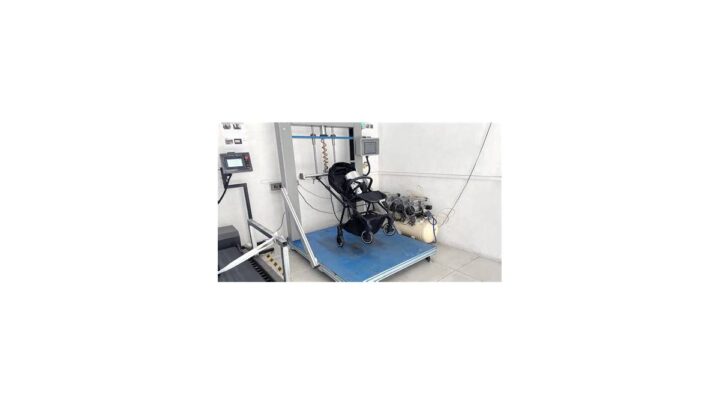
In the US, ASTM F833 is the core performance standard for carriages and strollers. It covers structural integrity, restraint systems, brake performance, and stability on inclines. Every stroller sold in the US should meet it.
JPMA certification is a voluntary layer on top. When you see the JPMA seal, it means the manufacturer submitted the model to independent testing against ASTM F833 and paid for the certification. It's a signal of quality control, not a legal requirement.
In the UK and EU, the equivalent is EN 1888. It's stricter than ASTM F833 in some areas, particularly parking brake strength and harness testing. If you're buying a stroller made for the European market, you're getting a product that meets a higher bar on those specific points.
| Standard | Region | What It Covers | What It Doesn't Cover |
|---|---|---|---|
| ASTM F833 | US | Structure, brakes, harness, stability | Your baby's age or development |
| JPMA | US | Voluntary verification of ASTM F833 | Anything beyond the standard |
| EN 1888 | EU/UK | Stricter brakes and harness testing | Your baby's age or development |
| CPSC | US | Recalls, reporting, enforcement | Pre-market approval |
None of these tell you when your baby is ready. That's a medical question. Head control, trunk stability, and pediatric clearance are what matter.
How to Check for Recalls Before You Buy
The Consumer Product Safety Commission (CPSC) maintains a public recall database. Search your model number before buying new or used. Recalls often involve harness failures, wheel detachments, or brake defects.
Secondhand strollers are the biggest risk. If the previous owner lost the manual, you won't know the stated age limits or weight capacity. You also won't know if a repair was made incorrectly.
Manufacturer sites typically host PDF manuals going back a decade. Thule, BOB Gear, Graco, and Chicco all maintain downloadable archives. Pull the manual for your exact model year.
It's 10 minutes of work that beats a hospital visit.
Picking the Right Setup for Your Baby's Stage
The stroller that fits a 3-month-old is not the stroller that fits a 2-year-old. You don't need two strollers, but you do need one that adapts.
If Baby Is Under 3 Months
Buy a jogging stroller that accepts a bassinet attachment or a car seat adapter. Bassinet is the safer pick for long walks because it keeps baby flat. Car seat adapter works for quick errands.
Skip the stroller's own seat for now. Newborns can't sit in a semi-upright position safely. The seat is for later.
If Baby Is 3 to 6 Months
You can start using the stroller's reclined seat position once head control is solid, usually around 4 to 5 months. Keep runs at walking pace for now. This is a walking stroller that happens to have big wheels.
The bassinet still works for naps on the go. Car seat adapter still works for transfers. Jogging is still off the table.
If Baby Is 6 to 9 Months
Now you're in jogging territory. Lock the front wheel. Attach the wrist strap.
Get pediatrician clearance first. A model with adjustable suspension (like the BOB Gear Alterrain or Thule Urban Glide) absorbs pavement irregularities better than a rigid-frame jogger.
If You Have Two Kids
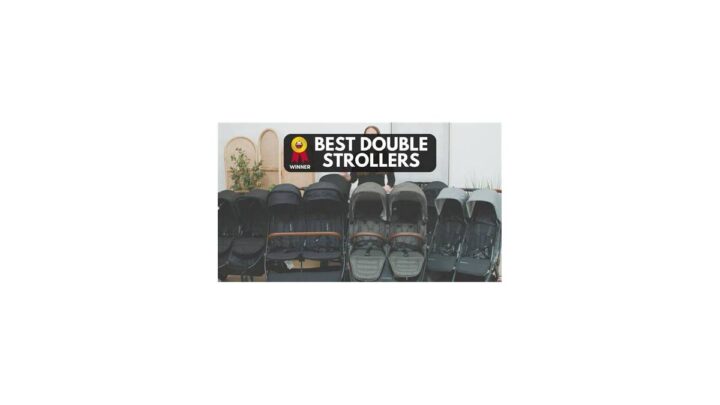
A double jogging stroller handles both ages. The older toddler sits upright. The baby sits reclined.
Side-by-side doubles are wider and harder on narrow paths. Tandem doubles are longer and harder to turn.
For trail running with two kids, a side-by-side with independent suspension is the practical pick. For city sidewalks, a tandem is easier to maneuver.
If Your Runs Are Mostly Trails
Trail running needs bigger tires, a fixed front wheel, and a hand brake. Look for models with 16-inch pneumatic tires or larger. Smaller tires sink into soft dirt and transmit more vibration.
Aggregate reviews on trail-focused joggers from Burley, Thule, and BOB highlight suspension travel and tire width as the two features that matter most. Skip the convertible swivel-wheel models if you're serious about off-road.
If You Want One Stroller for Everything
A lockable swivel-wheel jogger gives you the best of both. Swivel mode for the grocery store. Locked mode for the run.
The trade-off is a slightly heavier frame and a less aggressive geometry than a true fixed-wheel jogger.
Our research on strollers built for travel logistics covers what to prioritize when you need one model to do it all. It's the same logic that applies here: identify the primary use case, then accept the secondary compromises.
What Nobody Tells You About Heat, Cold, and Altitude
Weather changes the equation more than most parents expect. A baby who tolerates a 20-minute jog in mild spring air can struggle badly in July humidity. Heat is the bigger risk of the two.
Babies can't regulate body temperature the way adults do. Their surface area is large relative to their weight, and their sweat glands aren't fully developed. A stroller canopy traps heat underneath it.
Add the radiant heat from pavement and you've built a small greenhouse on wheels.
If the outside temperature is above 85°F, skip the jog. If it's above 75°F with high humidity, keep it under 20 minutes and check on baby constantly. Signs of overheating in an infant include flushed skin, rapid breathing, and unusual fussiness followed by lethargy.
Cold is more forgiving, but not by much. A baby in a stroller isn't generating heat the way you are. They're sitting still while you run.
Layer them accordingly. A bunting bag or footmuff rated for the temperature is more effective than blankets that slip off.
Skip running in ice or snow. The injury risk to you is high, and the fall risk with a stroller is higher. If you must get out, walk.
Leave the jog for another day.
Altitude is the third variable most parents overlook. If you live above 6,000 feet, the air is thinner. Babies adapt, but they adapt slowly.
If you're visiting altitude with an infant, give them 48 hours to adjust before any stroller exercise. Watch for unusual sleepiness or feeding refusal. Those are altitude sickness signals in infants.
How to Tell If Your Baby Is Uncomfortable Mid-Run
Your baby can't tell you what's wrong. You have to read the signals. The earlier you catch discomfort, the easier it is to fix.
Watch for these in order of rising concern:
- Head bobbing with each step. The neck muscles aren't holding up. Slow down or stop.
- Slumping to one side. Trunk stability is failing. The seat may be too reclined or baby is fatigued.
- Chin dropping toward the chest. Airway risk. Pull over immediately and reposition.
- Fussing that escalates. Discomfort, overstimulation, or needing a diaper change.
- Unusual quietness or lethargy. Overheating, exhaustion, or a developing illness. Stop and check.
- Grey or pale skin tone. This is a medical concern. Stop the run and seek care.
If any of those signals appear, pull over. Recline the seat, check the harness, feel baby's neck and back for overheating, and offer a feed or a break. Most issues resolve with a stop and a reset.
If they don't resolve, go home. No mile is worth pushing through a distress signal.
A Note on Nap Disruption
Many parents use stroller runs to sneak in a nap. That's fine for a short stretch. But a baby who falls asleep with the chin dropped toward the chest is at risk for positional asphyxia.
Check the head position every few minutes.
If baby is sleeping deeply, don't extend the run to "let them finish." The seat isn't a safe sleep surface for extended periods. Get home, transfer to a flat crib or bassinet.
Postpartum Return-to-Run: Your Own Timeline
Your baby's readiness is one gate. Yours is the other. ACOG guidance points to a gradual return to exercise starting around six weeks for uncomplicated vaginal delivery.
That's the floor, not the target for running.
Many women's health physical therapists recommend waiting closer to 12 weeks before resuming running. The pelvis and pelvic floor are still remodeling. Ligaments are looser than they were pre-pregnancy.
Running too early can trigger leaking, heaviness, or pelvic pain that lingers for months.
C-section recovery adds surgical healing on top of that. ACOG generally advises six to eight weeks before returning to exercise at all, and often longer before running. Talk to your OB before you lace up.
Here's a rough postpartum running timeline that reflects common clinical guidance:
| Weeks Postpartum | Typical Guidance | Notes |
|---|---|---|
| 0 to 6 | Walking, gentle movement | No running. Focus on breathing and pelvic floor recovery. |
| 6 to 12 | Walking with clearance | Some may begin walk-jog intervals with PT or OB approval. |
| 12 to 16 | Gradual return to running | Start short. Watch for leaking, heaviness, or pain. |
| 16+ | Build mileage | Progress slowly. Address any pelvic floor symptoms with a PT. |
Pelvic floor physical therapy is the single most underused tool for postpartum runners. A PT can assess your breathing pattern, core connection, and pelvic floor strength. Most insurance plans cover it.
It's a 30 to 60 minute appointment that can save you months of frustration.
If you're rebuilding your fitness base while you wait for baby to be ready, our research on full-body equipment you can use at home is worth a look. It's a practical way to maintain strength without pushing your pelvic floor past its current limits.
Stroller Maintenance That Keeps Both of You Safe
A jogging stroller is a mechanical system. Brakes wear. Tires leak.
Harness straps fray. Most failures happen gradually, which gives you time to spot them if you know what to check.
Do a quick pre-run walkaround every time. It takes 30 seconds.
Every run:
- Squeeze each tire. Firm, not squishy.
- Test the brake. Engage and push. It shouldn't move.
- Tug the harness at the shoulders. No slack, no fraying.
- Glance at the wrist strap. Intact, attached, ready.
Monthly:
- Check tire pressure with a gauge. Most jogger tires run 20 to 35 PSI. Check the sidewall for your model's rating.
- Inspect the frame at fold points for cracks or loose bolts.
- Wipe down the seat and canopy. Mildew grows fast in humid climates.
- Check the brake cables for rust.
Seasonally:
- Deep clean the fabric. Most seat covers are removable and machine washable on cold.
- Lubricate the wheel hubs with a light silicone spray, not oil.
- Inspect the folding mechanism. Sand and grit work their way in.
- Verify the manual's storage instructions. Don't store folded in a damp garage.
Pneumatic tires lose about 1 PSI per week naturally. If a tire loses more than that, you have a slow leak and need a patch or a new inner tube. Running on soft tires transmits more vibration to the seat and reduces braking performance.
When to Retire a Stroller
Any frame crack is a stop signal. Welds can fail over time, and a cracked jogger is a fall risk. Recalled models should be returned or destroyed, not resold.
If the brake fails and can't be adjusted, replace the stroller.
If you've used the stroller for multiple kids and thousands of miles, the fabric, tires, and brake cables will show it. Replacing individual parts is fine if the manufacturer still stocks them. When parts get discontinued, that's usually the retirement signal.
When to Call the Pediatrician Instead of Guessing
Some questions don't belong on a blog. If you're unsure about anything developmental, call your pediatrician. That's what they're there for, and the answer is often faster than you'd expect.
Call before your first jog if any of these apply:
- Baby was born premature by more than four weeks.
- Baby has low muscle tone or a diagnosed developmental delay.
- Baby has a congenital neck, spine, or hip condition.
- Baby has had any recent illness, fever, or ear infection.
- You're unsure whether head control is truly established.
- You have any history of positional breathing issues with your baby.
- You're still experiencing significant postpartum symptoms that make pushing a stroller painful.
Call after a run, right away, if you notice:
- Persistent head bobbing that didn't stop when you slowed down.
- Vomiting, unusual drowsiness, or refusal to feed after the run.
- Any change in breathing pattern.
- A fall where the stroller tipped or the baby's head struck something.
- Skin color changes that don't resolve within a few minutes.
Trust your gut. A pediatrician would rather answer a "probably nothing" call than treat a "we waited too long" case. The phone call is free.
The alternative isn't.
If you're looking for ways to stay active while you wait for clearance, our guide to low-impact training options can keep you moving without risking your recovery or your baby's safety.
Frequently Asked Questions
Can a 3-month-old go in a jogging stroller?
Yes, for walking only, in a bassinet or car seat adapter. No jogging. A 3-month-old doesn't have the head control to absorb running vibration.
Even if the stroller is rated for jogging, your baby isn't ready for it yet. Stick to smooth pavement and walking pace.
Can a 4-month-old go in a jogging stroller?
Yes, for walking, and usually in the reclined seat position if head control is solid. Jogging is still premature. Most pediatricians recommend waiting until at least 6 months for jogging, and some prefer 8 or 9 months depending on trunk stability.
How long can a baby stay in a jogging stroller?
Keep sessions under an hour for babies under 6 months. Under 90 minutes for older babies. Container time adds up across the day, and the AAP advises minimizing long stretches in any semi-upright seat.
If baby falls asleep, check that their chin isn't dropping toward the chest.
Do you need a special stroller to jog with a baby?
Yes. Standard strollers aren't built for running speeds. They lack the fixed wheel, the suspension, and the wrist strap that make jogging strollers safe at 6 mph.
A convertible stroller with a lockable swivel wheel works for light jogging. A dedicated fixed-wheel jogger is better for serious running.
Can you jog with a baby in a car seat?
No. Car seat adapters are rated for walking pace only. The incline that protects a baby in a crash puts their airway at risk outside the car.
Vibration from running compounds the problem. If baby is still in a car seat, you're walking, not jogging.
What age can a baby go in a jogging stroller on trails?
Twelve months minimum for gentle trails. Eighteen months is safer for rougher terrain. Trail running multiplies the forces on a baby's neck and spine.
Wait until your toddler can brace with their arms and signal discomfort clearly.
The Decision Guide: Is Your Baby Ready Today?
Run through this checklist. If you can answer yes to every line that applies to your situation, you have your green light. If any line fails, wait and reassess in two to four weeks.
For jogging (not walking):
- Baby is at least 6 months old.
- Baby has solid head control confirmed by tummy time and pull-to-sit tests.
- Baby can sit upright with minimal support and hold the position for several minutes.
- Your pediatrician has cleared jogging specifically.
- Your stroller's manual lists jogging as an approved use for this age.
- You're using the stroller's own seat, not a car seat adapter.
- The front wheel is locked, the wrist strap is attached, and the harness is snug.
- You've tested the route at walking pace and baby showed no discomfort.
For walking (with bassinet or car seat):
- The seat or attachment is fully reclined.
- Baby's chin isn't dropping toward the chest.
- You're on smooth pavement, not trails.
- Session stays under 60 minutes.
- You can see baby's face the entire time.
If you're not sure about any item, err on the side of waiting. There's no prize for jogging at 6 months exactly. There's plenty of downside if you push too early.
When the answer is "not yet," keep moving with what you can do. Walking with a bassinet, building back your own running base on a treadmill or indoor trainer, and preparing your body for the return to real mileage. Our picks for a reliable home setup can make those waiting weeks productive instead of frustrating.

Similar Posts