
Thinking about upgrading your home’s brain for climate control? You’re in the right place! Smart thermostats aren’t just fancy gadgets; they’re genuinely game-changing for managing your energy consumption, boosting comfort, and even saving a pretty penny on those pesky utility bills. But with so many options out there, how do you pick the best one?
That’s where our smart thermostat comparison comes in handy. We’ve done the legwork to break down five of the top contenders on the market, helping you understand their unique strengths, features, and who they’re best suited for. From intelligent learning to seamless smart home integration, let’s dive in and find the perfect temperature maestro for your abode!
Why Go Smart with Your Thermostat?
Before we jump into our detailed smart thermostat comparison, let’s quickly touch on why these devices are a worthwhile investment:
- Energy Savings: Many smart thermostats learn your habits and adjust automatically, leading to significant reductions in your heating and cooling costs.
- Convenience: Control your home’s temperature from anywhere using your smartphone. Forget to turn off the AC? No problem!
- Enhanced Comfort: Features like geofencing and smart sensors ensure your home is always the ideal temperature when you’re there and efficient when you’re not.
- Smart Home Integration: Connects with other smart devices like voice assistants and smart lighting for a truly automated home experience.
- HVAC Monitoring: Some models can even monitor your HVAC system’s health, alerting you to potential issues before they become major problems.
Ready to see who made our list? Let’s get to the reviews!
1. Google Nest Thermostat – Smart Thermostat for Home
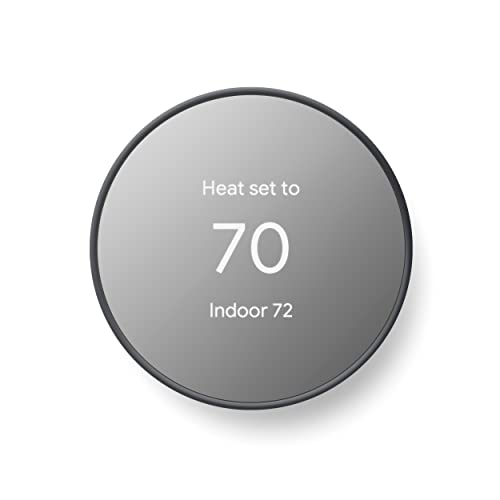
The Google Nest Thermostat is a fantastic entry point into smart home climate control, especially if you’re already integrated into the Google ecosystem. It’s an ENERGY STAR certified device designed with energy savings at its core, intelligently turning itself down when you leave so you’re not wasting energy on an empty house. Plus, its “Savings Finder” actively looks for more ways to tweak your schedule for optimal efficiency, often suggesting changes you wouldn’t have thought of yourself!
Key Features:
– ENERGY STAR certified for energy savings and comfort.
– Wi-Fi (2.4 GHz & 5 GHz) and Bluetooth Low Energy connectivity.
– Designed to work without a C-wire in most homes (C-wire or power accessory needed for some systems).
– Automatically adjusts when you leave to save energy.
– Programmable schedule via the Google Home app (Android/iPhone).
– Remote control from anywhere via phone, laptop, or tablet.
– Savings Finder suggests schedule tweaks for more savings.
– HVAC monitoring sends alerts for potential issues and maintenance reminders.
– Compatible with Google Assistant and all Matter-certified voice assistants.
Pros:
– Strong focus on energy efficiency with intelligent learning and Savings Finder.
– Great integration with Google Home and Matter-certified platforms.
– Flexibility for C-wire installation (often not required).
– HVAC monitoring adds a layer of system protection.
– Sleek, minimalist design.
Cons:
– Some advanced features like “learning” require more initial setup or app interaction compared to older Nest models.
– A C-wire might still be needed for certain complex HVAC systems.
– No physical lock feature to prevent unauthorized temperature changes on the device itself.
User Impressions:
Users often praise the Nest Thermostat for its user-friendly interface in the Google Home app and its genuine impact on reducing energy bills. The remote control functionality and the proactive HVAC monitoring are frequently highlighted as favorite features, making it a solid choice for those seeking simplicity and smart savings.
2. ecobee Smart Thermostat Essential – Energy Star Certified

The ecobee Smart Thermostat Essential offers a straightforward yet powerful way to manage your home’s climate. It boasts impressive energy savings, helping you cut down on heating and cooling costs by up to 23% annually. This thermostat is designed to seamlessly integrate into your daily life, automatically adjusting to your set schedule to ensure comfort when you’re home and efficiency when you’re out. Its color touchscreen makes on-device adjustments a breeze, complementing the robust control offered by the ecobee app.
Key Features:
– Save up to 23% annually on heating and cooling costs.
– Adjusts to your schedule for optimal energy savings and comfort.
– Compatible with 85% of systems (check online compatibility checker).
– Easy temperature changes via color touchscreen or ecobee app.
– Free software upgrades for continuous improvement.
– Energy consumption tracking in the ecobee app.
– Easy DIY installation; Power Extender Kit (PEK) available for C-wire-less homes (sold separately).
– Works with Apple HomeKit, Google Assistant, and Alexa.
– Compatible with most 24 VAC HVAC equipment.
– Built-in eco+ Smart Features: indoor humidity detection, schedule assistant, time of use.
– Optional SmartSensor (2-pack sold separately) for room-specific temperature readings.
Pros:
– Significant potential for energy savings.
– Broad compatibility with smart home ecosystems and HVAC systems.
– User-friendly color touchscreen and app control.
– Eco+ features help optimize comfort and savings.
– Options for C-wire-less installation.
Cons:
– The Power Extender Kit (PEK) for C-wire-less homes is sold separately.
– SmartSensors for multi-room monitoring are also an additional purchase.
– No advanced “learning” like some competitors; relies on schedules and eco+ features.
User Impressions:
Customers appreciate the ecobee Essential for its reliable performance and the tangible energy savings it delivers. The ease of installation and the ability to control it from anywhere are big pluses. Many find the touchscreen intuitive, and the eco+ features add a level of smart management they value.
3. ecobee Smart Thermostat Enhanced – Programmable Wifi
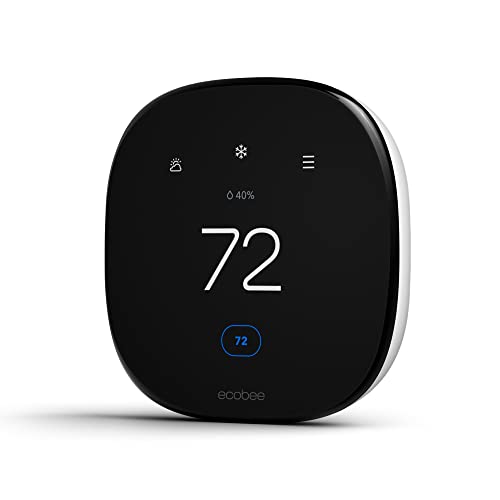
Stepping up from the Essential, the ecobee Smart Thermostat Enhanced takes home comfort and energy efficiency to the next level. This model promises even greater savings, up to 26% annually, thanks to more sophisticated features like preheating or precooling your home before you arrive. It intelligently adjusts the temperature not just based on your presence, but also factoring in humidity, ensuring your home always feels exactly like the temperature you’ve set. Plus, it’s hardwired, meaning no worries about battery replacements and consistent reliability.
Key Features:
– Save up to 26% annually on heating and cooling costs.
– Automatically adjusts temperature when you’re away to save energy.
– Preheats or precools your home for perfect comfort upon arrival.
– Automatically adjusts for humidity, making your home feel true to the set temperature.
– Easy to install and use daily.
– Includes Power Extender Kit for homes without a C-wire.
– Hardwired for reliable operation without batteries.
– Control via smart home platform (Apple HomeKit, Google Assistant, Alexa) and Ecobee app.
– Optional SmartSensor for multi-room temperature measurement (sold separately).
– Compatible with 90% of systems, including more complex HVAC setups (e.g., Heat Pump 3H/2C).
Pros:
– Higher potential for energy savings compared to Essential model.
– Advanced comfort features like preheating/precooling and humidity compensation.
– Power Extender Kit (PEK) is included for C-wire-less installations.
– Hardwired design offers consistent power and reliability.
– Wider compatibility with more complex HVAC systems.
Cons:
– SmartSensor for extended monitoring is still an optional add-on purchase.
– While easy to install, it’s still a DIY task that some might find daunting.
– A higher price point than the Essential model.
User Impressions:
Reviewers highlight the Enhanced model for its superior comfort management, especially the humidity compensation and preheating features. The inclusion of the PEK and the hardwired design are frequently praised for making installation smoother and operation more reliable. Users feel the extra investment is justified for the added features and savings.
4. Amazon Smart Thermostat – Save money and energy

If you’re deeply entrenched in the Alexa ecosystem, the Amazon Smart Thermostat is an absolute no-brainer. This smart device offers an incredibly easy and affordable way to upgrade from a traditional thermostat, promising to help you reduce energy usage with minimal fuss. Built with Honeywell Home Thermostat Technology, it combines Amazon’s smarts with a century of HVAC experience, ensuring reliability. It shines when paired with other Echo devices, allowing you to create personalized comfort zones throughout your home based on temperature readings or even presence detection.
Key Features:
– Easy and affordable smart upgrade from traditional thermostats.
– Create comfort zones using select Echo devices or Amazon Smart Air Quality Monitor.
– Amazon provides information on available energy rebates in your area.
– ENERGY STAR certified, saving an average of $50 on yearly energy bills.
– Alexa can automatically switch between home, away, and sleep temperatures.
– On-the-go control from anywhere with the Alexa app.
– Guided DIY installation through the Alexa app.
– Made with Honeywell Home Thermostat Technology for reliability.
Pros:
– Seamless and deep integration with the Alexa smart home ecosystem.
– Very budget-friendly, making smart climate control accessible.
– Potential for energy rebates further enhances savings.
– Reliable technology backed by Honeywell Home.
– Simple installation process guided by the Alexa app.
Cons:
– Some advanced comfort zone features require additional Echo devices or Amazon Smart Air Quality Monitor.
– Lacks a vibrant display directly on the unit, relying heavily on the app or Alexa voice commands.
– Less emphasis on advanced “learning” algorithms compared to Nest or ecobee.
User Impressions:
Users consistently laud the Amazon Smart Thermostat for its affordability and effortless integration with Alexa. The convenience of voice control and the ability to manage temperatures from the Alexa app are major selling points. Many find it to be a fantastic value, especially for those who already use Amazon’s smart home devices.
5. meross Smart Thermostat for Home, WiFi Thermostat Works
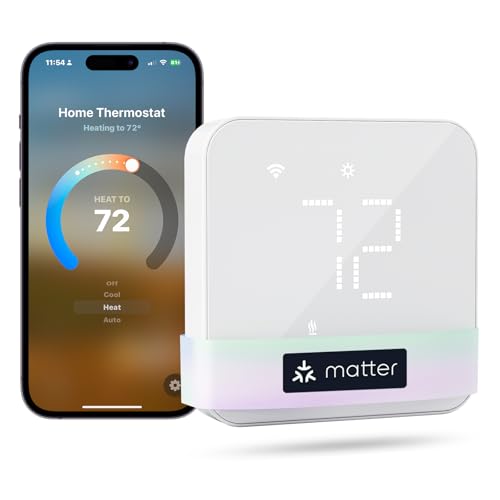
The meross Smart Thermostat for Home is an excellent choice for those seeking robust smart home compatibility, especially with the emerging Matter standard. It’s designed to be broadly compatible with 95% of HVAC systems (excluding electric baseboard heaters) and offers a flexible smart schedule that even works when your Wi-Fi is disconnected – a thoughtful feature for reliability. Beyond just temperature control, meross provides smart alerts for filter life and system malfunctions, giving you peace of mind about your HVAC system’s health.
Key Features:
– Compatible with 95% of HVAC systems (conventional, heating/cooling only, heat pumps; not electric baseboard).
– Requires a C-wire for functionality (meross C-wire adapter available separately if needed).
– Supports 2.4GHz Wi-Fi networks only.
– Professional after-sales support available.
– Smart Schedule for customized heating/cooling routines, functional even without Wi-Fi.
– Matter compatibility for local integration with Apple Home, Amazon Alexa, Google Home, and Samsung SmartThings.
– On-the-go control via the Meross app.
– Energy usage tracking to help save on bills.
– Smart Alerts for filter life, system malfunctions, and long-term operation.
– Designed for easy DIY installation in under 30 minutes.
Pros:
– Excellent broad smart home integration through Matter compatibility.
– Reliable smart scheduling that works even if Wi-Fi drops.
– Provides valuable smart alerts for HVAC system maintenance and issues.
– Comprehensive customer support available.
– Easy DIY installation process.
Cons:
– Requires a C-wire (potential extra purchase if your home lacks one).
– Only supports 2.4GHz Wi-Fi, which can be a limitation for some modern networks.
– Not suitable for electric baseboard heaters.
User Impressions:
Customers are generally very pleased with the meross Smart Thermostat’s wide compatibility across different smart home platforms, especially its Matter integration. The ability to track energy usage and receive system alerts is highly valued. Users find the setup straightforward and the scheduling features dependable, making it a reliable choice for smart climate management.
Final Thoughts on Your Smart Thermostat Comparison
Phew! That was quite the smart thermostat comparison, wasn’t it? Each of these devices brings something unique to the table, and the “best” one really boils down to your specific needs, existing smart home ecosystem, and budget.
- For the Google Home enthusiast focused on maximum energy savings: The Google Nest Thermostat is a clear winner with its intelligent Savings Finder and HVAC monitoring.
- For broad smart home compatibility and advanced comfort with included C-wire solution: The ecobee Smart Thermostat Enhanced offers great value.
- For budget-conscious Alexa users: The Amazon Smart Thermostat provides incredible value and seamless integration.
- For a solid performer with robust features and optional room sensors (and a separate C-wire kit): The ecobee Smart Thermostat Essential is an excellent choice.
- For cutting-edge Matter compatibility and detailed system alerts: The meross Smart Thermostat for Home stands out, especially if you have a C-wire.
No matter which you choose, investing in a smart thermostat is a smart move for enhanced home comfort, energy efficiency, and modern convenience. Happy thermostat hunting!
Frequently Asked Questions (FAQ)
Q1: Do all smart thermostats require a C-wire?
A1: Not all, but many do, or they recommend one for optimal performance. A C-wire (common wire) provides continuous power to the thermostat. Some models, like the Google Nest Thermostat, can often work without one, while others like the meross Smart Thermostat explicitly require it or offer a Power Extender Kit (PEK) as a workaround (like ecobee). Always check your HVAC system’s compatibility before purchasing.
Q2: How much money can I actually save with a smart thermostat?
A2: Savings vary based on your climate, home insulation, local energy costs, and personal habits. However, many manufacturers, like ecobee, claim savings of up to 23-26% annually on heating and cooling costs. ENERGY STAR certified thermostats, such as the Amazon Smart Thermostat, estimate an average savings of $50 per year. These savings accumulate over time, making them a wise investment.
Q3: Can I control my smart thermostat when I’m away from home?
A3: Absolutely! This is one of the main advantages of a smart thermostat. All the models reviewed allow you to control and monitor your home’s temperature from anywhere using their respective mobile apps (e.g., Google Home app, ecobee app, Alexa app, Meross app) on your smartphone, tablet, or even smartwatches.
Q4: Are smart thermostats compatible with my existing HVAC system?
A4: Most smart thermostats are designed to be compatible with a wide range of 24 VAC HVAC systems, including gas, oil, electric, forced air, and heat pumps. However, compatibility can vary, especially for older or more complex systems. It’s crucial to use the online compatibility checkers provided by manufacturers (like Google Nest and ecobee) before making a purchase.
Q5: What is Matter compatibility, and why is it important?
A5: Matter is a new, open-source connectivity standard for smart home devices. It aims to simplify the smart home experience by allowing devices from different manufacturers to work together seamlessly and locally, reducing reliance on cloud services. A Matter-compatible thermostat, like the meross Smart Thermostat, means it can integrate effortlessly with major smart home platforms like Apple Home, Amazon Alexa, Google Home, and Samsung SmartThings without needing multiple apps or complex setups.
Q6: Can I install a smart thermostat myself, or do I need a professional?
A6: Most smart thermostats, including all those in our comparison, are designed for relatively easy DIY installation. They often come with step-by-step instructions in their apps or manuals. If you’re comfortable with basic wiring and following instructions, you can likely do it yourself in under 30-60 minutes. However, if you’re unsure or uncomfortable, especially concerning C-wire installation or complex HVAC systems, it’s always best to consult a qualified HVAC professional.
Q7: Do smart thermostats work with voice assistants like Alexa or Google Assistant?
A7: Yes, all the smart thermostats featured in this comparison offer robust integration with popular voice assistants. The Amazon Smart Thermostat works best with Alexa, while the Google Nest Thermostat excels with Google Assistant. Both ecobee and meross thermostats are compatible with Alexa, Google Assistant, and often Apple HomeKit, providing flexible voice control options for your smart home setup.

