What Stroller Do I Need? A Simple Buying Guide 2026
Lead Consumer Product Specialist & Family Gear Director at US Family Mart Consumer Testing Lab · Certified Consumer Products Quality Specialist (CPQS), ASTM F15 Consumer Standards Member · 12+ years evaluating household appliances, smart home hardware, child safety equipment, and consumer lifestyle products.
Picking a stroller starts with four facts, not forty product pages. How you get around, where you live, how many kids you're hauling, and how tall you are will eliminate most of the market before you read a single review. Get those wrong and you'll buy twice.
Here's the number that trips most parents: a standard US doorway is only about 30 to 32 inches wide. Many side-by-side double strollers are 29 to 33 inches wide, which means some simply don't fit through your front door. So let's figure out what you actually need, one condition at a time.
what stroller do i need
You need a stroller that matches your daily routine, not the one with the longest feature list. Four types cover most families. A full-size stroller suits car-based suburban life.
A compact or travel stroller suits cities and flights. A double suits two kids. A jogger suits runners and rough ground.
The One Question That Eliminates Half the Market
Here's the question nobody asks first, and it's the most important one: how do you physically leave your home every day? Parents obsess over canopy size and cup holders. Meanwhile the real killer is whether the stroller fits in your car trunk, your hallway, and your life at 7 a.m. on a Tuesday.
Answer that honestly and you'll cut the market in half.
Think of it as a decision tree. If you drive everywhere, a heavier full-size stroller with a big basket is fine. If you walk to the subway or bus, weight and fold speed matter more than storage.
If you fly several times a year, a cabin-bin fold becomes non-negotiable.
In our research, the single biggest source of stroller regret isn't quality. It's a category mismatch. A family that buys a 30-pound all-terrain tank for city living ends up leaving it in the hallway and carrying the baby instead.
So before you compare brands, answer these four questions in writing:
- Car, transit, or walking? This sets your weight ceiling and fold priority.
- Apartment, house, or walk-up? This sets your storage and doorway limits.
- One kid, two kids, or planning more? This decides single vs. convertible vs. double.
- Are you tall or short? This filters out strollers with fixed handlebars.
Write your answers down. You'll use them in every section below.
If you're still weighing a lightweight option against a bigger frame, our breakdown of a stroller built for travel covers where each one wins and loses.
Map Your Daily Reality Before You Touch a Spec Sheet
This is the part where you stop browsing and start measuring. Five minutes with a tape measure now saves you from a return later.
How You Get Around: Car, Transit, Walking, or All Three
Your transport mix decides how much stroller you can tolerate. A suburban parent who drives to a parking lot can handle a 25 to 30-pound full-size stroller. A city parent hauling it up subway stairs will hate that same stroller by week two.
Runners and trail walkers need air-filled tires and suspension. Everyone else can stay with foam or solid rubber wheels, which never go flat.
Where You Live: Apartment Hallways vs. Garage and SUV
Measure three things before you buy. These are the measurements that cause real, expensive regret.
- Your doorway width. Standard interior doors are about 30 to 32 inches. Some side-by-side doubles won't clear them.
- Your trunk opening and depth. A folded stroller has a length, width, and height. All three must fit.
- Your storage spot. Hallway, closet floor, or garage wall changes what folded footprint works.
How Many Kids You're Hauling Now and in Two Years
Count the kids, then add the ones coming. If you're expecting a second within two years, a convertible single-to-double often beats buying a dedicated double later. It's one frame instead of two.
If you've got twins or two under two right now, go straight to the double section. Don't try to force a single to do double duty.
Your Body, Your Back, and Your Height
Handlebar height is the most overlooked spec on the box. If you're over about 6 feet, a fixed low bar means you'll stoop and your back will pay. If you're under about 5 foot 3, a high fixed bar means you'll reach up.
Look for an adjustable handlebar with a range that covers your height. Then test the push with a weighted seat if the store will let you.
The Stroller Categories That Actually Matter
There are more marketing names than real categories. Underneath the labels, most strollers fall into eight genuine types. Know these and you can ignore the noise.
Full-Size Strollers
Full-size strollers are the do-everything option. They typically run 20 to 30 pounds, carry up to 50 to 75 pounds of child, and offer full recline, large baskets, and big canopies.
They're best for suburban and car-based families. If you drive to most destinations and have trunk space, this is your category.
The trade-off is weight and folded bulk. Lifting a 28-pound stroller in and out of a trunk daily gets old fast.
Compact and Lightweight Strollers
Compact strollers sit between full-size and umbrella models. They usually weigh 14 to 20 pounds and fold smaller than a full-size without losing the recline or basket.
They're the sweet spot for city parents and frequent drivers alike. You give up some basket volume and canopy size, and you gain a stroller you'll actually pick up.
Umbrella Strollers
Umbrella strollers are the bare minimum. They're light, usually 10 to 14 pounds, and typically have no recline or a partial one.
They suit toddlers who can sit unassisted. They are not newborn-safe, because newborns need a flat or near-flat recline per American Academy of Pediatrics guidance.
Travel Strollers
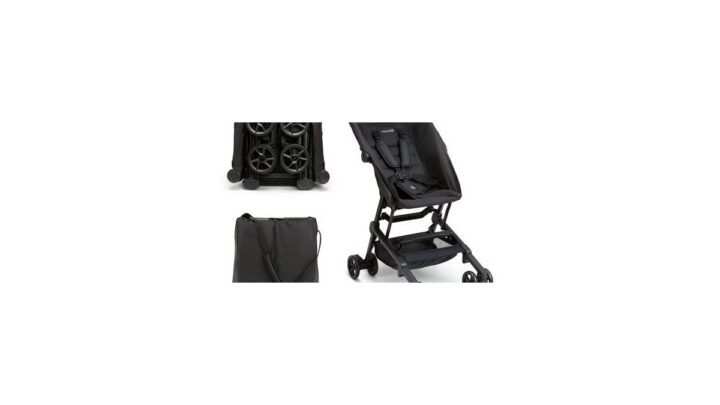
Travel strollers are built to fold into a small, often self-standing package that fits an overhead bin or gate-checks easily. They usually weigh 10 to 17 pounds.
They're best for families who fly regularly. Check your specific airline's carry-on dimensions before you count on the bin.
Jogging and All-Terrain Strollers
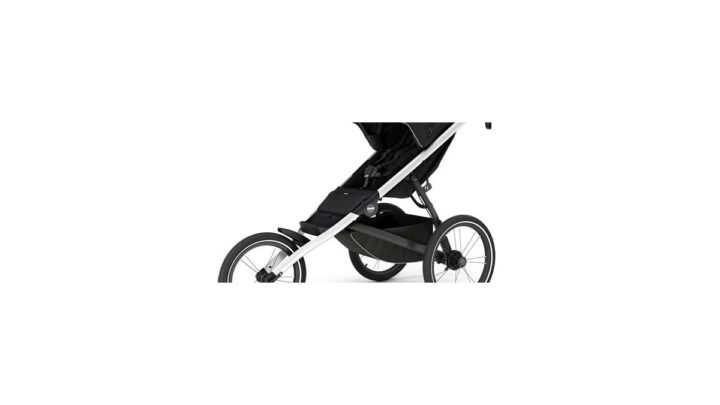
Jogging strollers have three large, air-filled tires and a fixed or lockable front wheel for stability at speed. All-terrain strollers share the tires and suspension but keep a swivel front wheel for everyday use.
They're best for runners, trail walkers, and families on gravel, beach, or snow. They're heavy. Most aren't great for tight aisles.
Double Strollers: Side-by-Side vs. Tandem
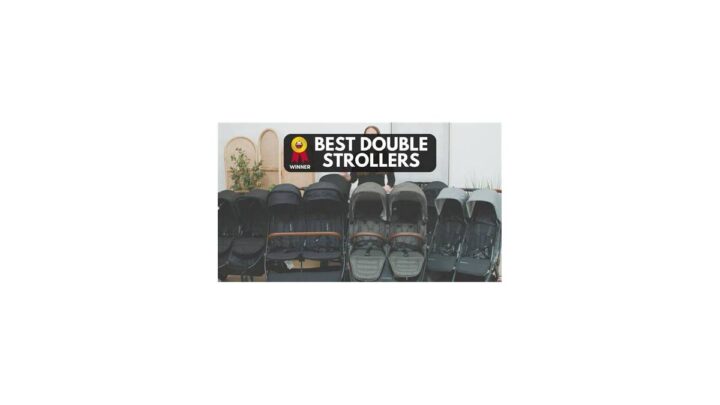
Doubles come in two layouts. Side-by-side puts both kids next to each other and folds flatter, but tends to be wide. Tandem stacks them front to back and stays narrow, but gets long and heavy.
They're best for twins and close-in-age siblings. Pick side-by-side for trunk space. Pick tandem for narrow doorways and transit.
Wagon Strollers
Wagon strollers are pull-or-push hybrids with a low, open cabin. Kids climb in and out themselves, which is a win with a toddler.
They're best for families with a toddler plus a baby, or for park and beach days. They're poor for newborns and often too wide for tight aisles.
Travel Systems and Car Seat Caddies
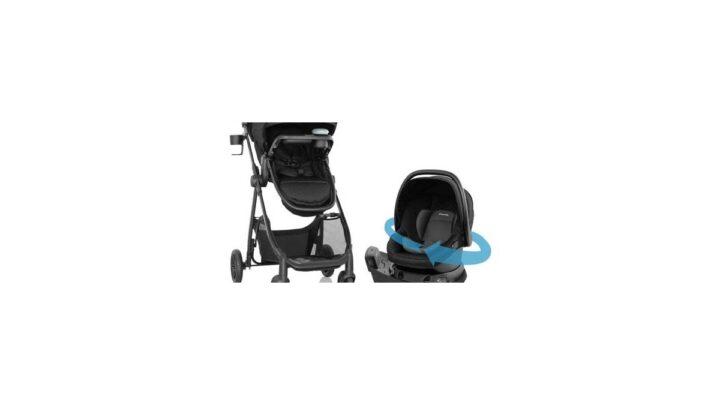
A travel system bundles an infant car seat with a stroller frame or stroller. A caddy is just the frame, cheaper and lighter, meant only for the car seat.
They're best for the newborn phase. The catch: a travel system is often the worst money you'll spend, because the included stroller may not suit you past six months. Buy the car seat and stroller separately if you can.
| Category | Typical Weight | Best For | Main Drawback |
|---|---|---|---|
| Full-size | 20 to 30 lb | Suburban, car-based | Heavy, bulky |
| Compact | 14 to 20 lb | City and car mix | Smaller basket |
| Umbrella | 10 to 14 lb | Toddlers only | No newborn recline |
| Travel | 10 to 17 lb | Frequent flyers | Limited storage |
| Jogging / all-terrain | 22 to 35 lb | Runners, rough ground | Heavy, wide |
| Double | 25 to 40 lb | Twins and siblings | Wide or long |
| Wagon | 30 to 45 lb | Toddler plus baby | Not newborn-safe |
The Features That Change Your Daily Life (and the Ones That Don't)
Most features fall into two piles: the ones you'll touch every day, and the ones you'll forget by month two. Spend your money on the first pile.
Fold Type and Folded Footprint
A one-hand, one-step fold is worth real money if you're alone with a baby. A two-hand, multi-step fold becomes a daily frustration. Every manufacturer lists folded dimensions as length by width by height.
Check all three against your trunk.
Weight: Frame vs. Fully Loaded
The advertised weight is usually the frame only. Add the seat, the basket contents, and the child, and you can double it. A stroller advertised at 18 pounds can feel like 40 once it's loaded.
Weigh the real number in your head before buying.
Wheels, Tires, and Suspension
Wheel size and tire type decide ride quality. Big air-filled tires roll over cobblestones and gravel smoothly and can go flat. Solid rubber and EVA foam never go flat but transmit more vibration.
Suspension softens the bumps your baby feels, which matters most in the newborn months.
Recline Range and Newborn Safety
A stroller is newborn-safe only if the seat reclines flat or near-flat. That's because newborns lack the head and neck control to sit upright safely in a moving stroller. Full-flat recline is the gold standard.
A near-flat recline around 170 degrees works for many infants, but check the manufacturer's stated newborn minimum.
Canopy, Basket, and Handlebar Adjustability
A large, extendable canopy with UPF 50+ fabric blocks sun that a small one misses. A big basket saves you from carrying a diaper bag on your shoulder. An adjustable handlebar keeps both parents comfortable.
These three are daily-touch features, so prioritize them.
Car Seat Compatibility and Adapters
If you want to click an infant car seat into your stroller, you need the exact matching adapter. Adapters are model-specific and occasionally discontinued. Confirm the adapter exists for your car seat brand before you buy the stroller, not after.
Never use a car seat on a stroller in a way the manufacturer hasn't approved.
For parents juggling stroller gear with home workouts, that same "measure before you buy" logic applies to compact exercise gear, where footprint matters just as much as function.
Match Your Situation to the Right Category
Now the decision tree pays off. Find the scenario closest to your life and follow the if/then.
You Live in a City Apartment Without a Car
If you walk, take transit, and climb stairs, then prioritize weight and fold speed. Go compact or travel. Aim under 18 pounds and a one-hand fold.
Skip anything over 25 pounds, no matter how nice it pushes.
You Drive Everywhere and Have a Big Trunk
If most trips start in a garage or parking lot, then a full-size stroller is your best value. You get the big basket, full recline, and large canopy. Weight matters less because you're not lifting it onto a bus.
You Fly Often and Need a Cabin-Bin Fold
If you fly several times a year, then a travel stroller with a self-standing fold is worth the premium. It saves you from gate-check damage and long waits.
Check your airline's carry-on limits before you trust the bin claim. They vary by carrier and aircraft.
You're Expecting Twins or Two Under Two
If you have two kids who both need to ride, then a double is unavoidable. Choose side-by-side for trunk space and folding, or tandem for narrow doorways and transit. Measure your doorway first.
You Walk Trails, Gravel, or Beach
If your daily route leaves pavement, then air-filled tires and real suspension are the priority. Go jogging or all-terrain. Accept the extra weight as the cost of a smoother ride.
You Want One Stroller to Last Through Two Kids
If you're planning a second child within a couple of years, then a convertible single-to-double is often the smart money. It's one frame that grows with your family, though the second seat is usually an added cost.
A Step-by-Step Way to Pick Your Stroller in One Afternoon
You can go from confused to decided in a single focused afternoon. Here's the sequence we'd follow.
- Write your four answers. Transport, home, kid count, height.
- Measure your trunk and doorway. Note the folded dimensions you can accept.
- Set a realistic budget. Include the frame, any adapters, and accessories like a rain cover.
- Pick one category. Use the scenario section above to land on full-size, compact, travel, double, or jogger.
- Shortlist three models. Use real specs, not marketing copy.
- Check car seat compatibility. Confirm the adapter exists for your seat.
- Test fold, push, and lift in person. Nothing beats doing it yourself once.
- Verify the newborn recline. If a newborn will ride, confirm flat or near-flat.
- Check the warranty length. Frame warranties vary from one to three years, and some premium brands offer longer.
- Buy, register, or buy used. If used, confirm the model isn't recalled and parts are still available.
Run those ten steps once and you'll walk out with one stroller instead of three returned ones.
What Strollers Actually Cost and Where the Money Goes
Stroller prices span a huge range, and the jumps don't always track quality. Here's the honest breakdown of what you're paying for at each tier.
| Price Tier | Typical Range | What You Get | Watch For |
|---|---|---|---|
| Budget | $50 to $150 | Umbrella or basic compact | Limited recline, small basket |
| Mid-range | $150 to $400 | Solid compact or full-size | Fewer premium materials |
| Premium | $400 to $900 | Full-feature full-size or travel | Paying for brand cachet |
| Luxury / double | $900 to $1,500+ | Convertibles and premium doubles | Diminishing returns above ~$1,000 |
The money goes mostly into the frame material, the wheels and suspension, the fold mechanism, and the fabric. Aluminum and carbon fiber cost more and weigh less. Air-filled tires and real suspension push the price up but transform ride quality.
Accessories are where budgets quietly blow out. Car seat adapters, bassinets, rain covers, footmuffs, and second seats are often sold separately. Add those to the sticker price before you commit.
If you're a value-focused buyer, it helps to see how cost tiers work in other gear categories. Our look at well-priced equipment that performs shows the same pattern: mid-range usually beats both budget and luxury on value per dollar.
Mistakes Parents Make When Buying Their First Stroller
The pattern in our research is consistent. The same handful of errors show up again and again in return data, one-star reviews, and stroller resale listings. Every one of them is avoidable with five minutes of forethought.
Buying the Travel System Because It's Bundled
Bundles feel like a deal. They rarely are. The included stroller is often a basic model that struggles past the six-month mark, and you've paid a premium for the convenience.
Aggregate reviews repeatedly flag this as the number one early-purchase regret. Buy the car seat you want and the stroller you actually need. Keep them separate.
Skipping the Car Seat Adapter Check
Adapters are model-specific and occasionally discontinued. If you buy the stroller first and the adapter later, you might discover it doesn't exist for your seat.
Confirm the exact adapter for your car seat brand before you swipe your card. A stroller without the right adapter is just a stroller, not a travel system.
Assuming "Reclines" Means "Newborn-Safe"
Many strollers recline. Far fewer recline flat or near-flat. Newborns lack head and neck control, so a partially reclined seat puts them at risk of chin-to-chest positioning that can restrict their airway.
Check the stated recline angle and the manufacturer's minimum age. If the stroller doesn't list a newborn minimum, don't assume your newborn can ride in it.
Ignoring the Loaded Weight
The advertised weight is usually the frame alone. Add the seat, the child, the diaper bag, and the coffee, and a 16-pound stroller becomes 45 pounds on your wrist.
Editorial analysis of buyer feedback suggests loaded weight, not advertised weight, is what people complain about after three months of daily use.
Buying a Double Before Measuring Doorways
This one catches twin parents constantly. A side-by-side double can run 29 to 33 inches wide. A standard interior door is roughly 30 to 32 inches.
Measure your front door, your bathroom door, and any interior door you'll pass through daily. If the number is close, go tandem.
Chasing the Lowest Price on a Discontinued Model
Deep discounts on last-year models look tempting. But discontinued strollers often mean discontinued adapters, bassinets, and replacement parts.
If a model is being cleared out, check that accessories and parts are still available. Otherwise you're buying a stroller with a short service life.
Forgetting the Airline Rules
Airlines set their own carry-on dimensions. A stroller that claims to fit overhead bins on one route may not fit on another.
Always confirm the specific carrier's limits. And read the fine print on gate-check damage liability, which is usually limited.
Stroller Safety, Standards, and Legal Must-Knows
Safety isn't a feature you shop for. It's a baseline you verify. Here's what actually protects your child, backed by standards and clear guidance.
What Standard Covers Strollers in the US?
In the US, strollers are covered by ASTM F833, the Standard Consumer Safety Performance Specification for Carriages and Strollers.
The Consumer Product Safety Commission (CPSC) enforces this and issues recalls. Serious injuries and deaths have prompted multiple mandatory standards over the years. You can check for open recalls on any stroller or car seat at the CPSC recall database.
In Europe, the equivalent is EN 1888, adopted in the UK as BS EN 1888. If you buy a European-brand stroller, look for that mark.
Why Is a Five-Point Harness Non-Negotiable?
Every stroller sold in the US must have a five-point harness. It restrains both shoulders, both hips, and the crotch. That stops a child from sliding out or standing up.
Tighten the harness so you can fit no more than two fingers between the strap and your child's chest. Loose straps are a common, and preventable, failure point.
What's the Biggest Tip-Over Risk?
Hanging a heavy bag on the handlebar is the classic stroller tip-over cause. The stroller's center of gravity shifts backward, and a rear-facing handle makes it worse.
Use the storage basket for bags. That's what it's rated for, and the weight limit is usually printed on the basket or in the manual.
When Should You Never Use a Car Seat on a Stroller?
Never use a car seat on a stroller in a way the manufacturer hasn't approved. And never place a car seat on top of a shopping cart. That's a well-documented cause of infant injuries.
Also, don't leave a baby in a car seat for extended periods outside the car. Car seats are designed for travel, not for sleeping or ongoing containment.
What Are the Must-Follow Rules in Daily Use?
- Always engage the brake when the stroller is parked, even on flat ground.
- Never leave a child unattended, even for a moment.
- Check the child's position so their chin isn't dropping toward their chest.
- Keep the harness snug and the seat angle appropriate for age.
- Inspect wheels, brakes, and the fold mechanism regularly for wear.
How Does Newborn Guidance Shape Your Choice?
The American Academy of Pediatrics advises that infants ride flat or near-flat until they can sit unassisted. That's why full-flat recline matters in the newborn phase.
If you'll use the stroller from day one, make flat recline a hard requirement. If you'll use a compatible infant car seat for the first months, the stroller only needs to be safe once the baby graduates to the seat.
How to Test a Stroller in the Store Without Getting Fooled
A showroom push tells you almost nothing. Here's how to run a real test in the few minutes you have on the floor.
Fold It With One Hand While Holding Something
Simulate holding a baby or a bag. Fold the stroller with one hand. If you can't, you'll learn to resent it.
Watch the fold action. Some strollers collapse in one smooth motion. Others take multiple steps that get clumsy when you're rushed.
Load the Seat Before You Push
An empty stroller always feels smooth. Ask staff if you can place a weighted bag or demo weight in the seat. Then push it.
Now try turning a tight circle. Stability with a load up front is the real test, especially for a two-wheeled or high-seat design.
Test the Brake on the Slightest Slope
A reliable brake engages firmly and releases easily with a foot. Try it several times. Brakes that stick or feel vague are a genuine safety concern, not a minor annoyance.
Lift It the Way You'll Actually Lift It
Lift the folded stroller into a pretend trunk. Do it away from the floor, at trunk height, not down at your feet. That's the lift your back does every day.
If it feels heavy now, imagine it after a long day. Multiply the discomfort by a thousand, and that's the answer.
Check the Recline Lock and Seat Angle
Recline the seat fully and lock it. Rock it. Does it hold position, or does it slip?
Then raise it to upright and confirm it locks there too. A seat that drifts mid-push is a design flaw, not a quirk.
Look at the Fabric and Stitching
Check the seams where the harness anchors. Look at the basket edges and the canopy hinge points. These are the stress areas that fail first.
Manufacturer specs rarely tell you fabric durability. Buyer reviews about strollers that tore within months almost always flag the basket and canopy first.
Care, Maintenance, and Keeping Resale Value
A stroller is a machine. Treat it like one and it lasts through multiple kids. Treat it like furniture and it fails early on someone else's watch.
What Maintenance Does a Stroller Actually Need?
Routine care is simple, but skipping it shortens the stroller's life fast. Here's the short list.
- Wipe the frame with a damp cloth and mild soap. Avoid harsh solvents that dull the finish.
- Brush crumbs out of the fabric seams weekly.
- Check harness straps for fraying or loosened stitching.
- Lubricate the wheel axles and fold joints lightly, per the manual.
- Inspect tires for wear if yours are air-filled.
- Test the brake after every deep clean.
How Do You Keep Air-Filled Tires from Going Flat?
Air-filled tires ride beautifully but need attention. Check pressure monthly with a pump that matches the valve type.
On the trail or at the beach, carry a small hand pump or a spare inner tube. A flat on a jogging stroller is a long walk home otherwise.
If you don't want the maintenance, solid rubber tires never go flat. You'll give up some ride smoothness for that convenience.
How Do You Clean a Stroller Without Ruining It?
Read the fabric care label first. Many seat covers are machine washable on cold, then air-dried. Some are spot-clean only.
For machine-washable covers, remove the harness anchors carefully and note where they attach. For non-washable fabric, use a diluted mild soap and a soft brush, then blot dry.
Never soak the frame. Never put parts in the dishwasher unless the manual says so.
How Do You Keep Resale Value?
Strollers hold value, but condition decides how much. Keep the original manual, the rain cover, the adapters, and any accessories that came in the box.
Store the stroller folded, dry, and out of direct sun. Sunlight fades fabric and cracks plastic. Buyers pay a premium for a complete, well-kept stroller with all the parts.
Premium brands like Bugaboo, UPPAbaby, Nuna, and Cybex tend to hold resale value best. Budget brands drop fast once used.
| Maintenance Task | Frequency | Why It Matters |
|---|---|---|
| Wipe frame and fabric spot-clean | Weekly | Prevents stains setting in |
| Check harness and brake | Monthly | Core safety systems |
| Lubricate axles and fold joints | Every few months | Keeps fold smooth |
| Check tire pressure (air-filled) | Monthly | Prevents flats and wobble |
| Deep clean seat cover | Quarterly | Removes grime, protects fabric |
If you take good care of a stroller, you can resell it for a meaningful chunk of what you paid. That effectively lowers the cost of ownership. Our guide to keeping gear working long term follows the same logic: buy well, maintain it, and it pays you back.
Real Scenarios: Three Families, Three Very Different Picks
Textbook advice only goes so far. Here are three realistic family profiles and the decision each one points to. None of them is a brand recommendation.
They're category calls.
The City Family, Fourth-Floor Walk-Up, No Car
Meet a couple in a walk-up apartment with two subway stops to the pediatrician. No car. They fly twice a year to see family.
Their priority is weight and fold speed. Their pick is a travel or compact stroller around 15 pounds with a one-hand, self-standing fold. Their second pick is a compact stroller with full recline for the newborn months.
They skip full-size and jogging strollers entirely. Those live in the hallway and never come out.
The Suburban Family, Minivan, Big Garage
Now picture a suburban couple with a minivan, a big garage, and a toddler plus a baby on the way. Most trips start in the driveway.
Their priority is capacity and recline. Their pick is a full-size stroller for the toddler now, plus a convertible single-to-double frame for when the baby arrives. They get the big basket, big canopy, and full recline.
They buy a car seat adapter for the newborn phase. Weight doesn't matter much because the stroller lives in the van or the garage.
The Twin Parents, Ground-Floor Apartment, Daily Walks
Last is a couple expecting twins in a ground-floor apartment with narrow interior doors. They walk to a park most days. They drive a compact SUV.
Their priority is width and maneuverability. Their pick is a tandem double to clear doorways, or a narrow side-by-side if the doorways measure wide enough. They measure before they buy.
They test the fold at trunk height. Storage basket and canopy size come next. Every extra inch of width is a daily problem in tight spaces.
Notice the pattern. Each family's answer flows directly from their transport, their home, and their kid count. The stroller is the output, not the starting point.
If you also juggle home fitness gear in a small space, the same size-first thinking shows up in our breakdown of space-saving gym equipment. Measure first, buy second.
| Family Profile | Transport | Home | Priority | Category Aimed At |
|---|---|---|---|---|
| City, no car | Walk, subway | Walk-up | Weight, fold | Travel or compact |
| Suburban, minivan | Car | Garage | Capacity, recline | Full-size or convertible |
| Twin parents | Walk, compact SUV | Ground floor | Narrow width | Tandem double |
Frequently Asked Questions
What stroller do I need for a newborn?
You need a stroller that reclines flat or near-flat, since newborns lack head and neck control. A bassinet-capable stroller or a compatible infant car seat is safest for the first months. Avoid any stroller that sits upright or lacks a stated newborn minimum.
Do I really need two strollers?
Many families end up with two, but you don't have to. A compact stroller with full recline can cover newborn through toddler life. You'd only add a second if your needs diverge sharply, like an everyday full-size plus a lightweight travel stroller for flights.
Is a double stroller worth it for two kids?
It depends on whether both kids will actually ride. If your older child is over roughly four or five and walks most of the time, a single plus a ride-on board often beats a full double. If both are young or twins, a real double is worth it.
How much should I spend on a stroller?
Mid-range, roughly $150 to $400, tends to offer the best value per dollar. Budget strollers skimp on recline, storage, and durability. Premium and luxury models cost more without proportional gains past a point.
Buy well and maintain it to protect resale value.
Can a stroller be too wide?
Yes. A standard interior doorway is about 30 to 32 inches. Any stroller wider than that won't clear it.
Side-by-side doubles are the usual culprits, so measure your doorways before buying one.
When can a baby sit in a regular stroller seat?
A baby can use an upright stroller seat once they have head and neck control and can sit unassisted, which is usually around six months. Before that, use a flat or near-flat recline or a compatible infant car seat. Then the standard seat becomes safe and comfortable.
The Bottom Line: Your Stroller Decision Guide
You now have everything you need to pick a stroller without second-guessing yourself. Here's the whole decision compressed into one place.
The Four Answers That Decide Everything
Your stroller falls out of four facts. If you can answer them, you've already made the call.
- Transport. Car-based picks let you go heavy. Walk and transit picks force you light and fold-friendly.
- Home. A garage and big trunk allow a full-size. A walk-up or tight hallway pushes you compact.
- Kid count. One kid means one seat. Two young kids or twins means a double or convert.
The Quick Decision Matrix
Find your situation. Follow the row across. That's your category.
| Your Situation | Category That Fits | Aim For |
|---|---|---|
| City, no car, stairs, transit | Travel or compact | Under 18 lb, one-hand fold |
| Suburban, big trunk, garage | Full-size | Full recline, big basket |
| Frequent flyer | Travel stroller | Self-standing, cabin-bin size |
| Twins or two under two | Double (tandem or side-by-side) | Fit through your doorways |
| Runner or rough terrain | Jogging or all-terrain | Air-filled tires, suspension |
| Planning a second kid soon | Convertible single-to-double | Second seat available |
| Toddler plus baby | Wagon or double | Easy kid access, big basket |
The Fast Path If You Want a One-Line Answer
If you want the shortest version, here it is. Buy a compact stroller with full recline for a city life. Buy a full-size for a car life.
Buy a double if two kids ride. Buy a travel stroller if you fly. Buy a jogger if you run.
The Three Rules That Never Fail
Three principles cover almost every situation. They're worth repeating because they prevent most regrets.
First, measure before you buy. Trunk, doorway, storage spot. The measurements are the spec that matters.
Second, weight the loaded stroller, not the advertised number. Add seat, child, and bag before you judge.
Third, confirm the car seat adapter exists before you commit. The adapter is the whole point of a travel system.
What to Do Next
You don't need to research for a week. You need one focused afternoon, a tape measure, and a shortlist of three.
Here's the sequence to close this out.
- Write your four answers: transport, home, kid count, height.
- Measure your trunk opening and your narrowest doorway.
- Set a budget that includes adapters and accessories.
- Pick your category from the matrix above.
- Shortlist three models that match the category and fit your measurements.
- Confirm newborn recline if a newborn will ride.
- Confirm the car seat adapter for your seat.
- Test fold, push, and lift in the store.
- Check the warranty length and part availability.
- Buy, register, or buy used with a recall check.
What Matters Most When You're Stuck Between Two
If you're torn between two strollers, the tiebreaker is almost always weight and fold. Those two decide whether you actually use the stroller.
A four-pound difference sounds trivial on paper. Over a year of daily lifting, it isn't. A one-hand fold against a two-hand fold is the difference between a clean exit and a juggling act.
Ride quality and storage come next. Brand and looks come last, though that's where the marketing always points you.
Our research keeps landing on the same conclusion. The best stroller isn't the most expensive or best-reviewed one. It's the one that fits how you actually move through your day.
Buy smart once. Treat it well. It'll carry your kid, then your next kid, and still sell for a decent price when you're done.

Similar Posts