How to Fold a Stroller: Easy Step-by-Step Guide 2026
Lead Consumer Product Specialist & Family Gear Director at US Family Mart Consumer Testing Lab · Certified Consumer Products Quality Specialist (CPQS), ASTM F15 Consumer Standards Member · 12+ years evaluating household appliances, smart home hardware, child safety equipment, and consumer lifestyle products.
how to fold a stroller
Every stroller folds differently, so the correct method depends on your model's mechanism. Look for the fold trigger on the handlebar or frame, release the lock, collapse the seat and canopy, then push the frame down until it clicks.
- Unbuckle the harness before anything else.
- Empty the basket and remove attachments.
- Retract the canopy fully.
- Find the primary lock release.
- Fold the frame in one steady motion.
- Confirm the auto-lock has engaged.
If your model has a two-step fold, hold the secondary release while pushing down. If nothing moves, stop pushing and check for a hidden latch.
Most strollers fold in 2 to 10 seconds once you know the sequence. Forcing a stuck frame is the number one cause of bent hinges.
The problem almost always shows up at the worst moment. You're in an airport queue, the gate agent is calling final boarding, and your stroller won't collapse. Or you're at the back of the car with a sleeping baby in your arms, wrestling with a frame that seems to fight you.
Here's why. Strollers don't share a universal fold. A one-hand umbrella fold works nothing like a two-step travel-system collapse.
Manufacturers design their own sequences, and the differences aren't cosmetic. They're mechanical.
Per ASTM F833, the US safety standard strollers are tested against, every folding mechanism has to survive repeated cycles without failing or creating a pinch hazard. That standard exists because folding is the most safety-sensitive thing you'll do with a stroller. Get it wrong and the frame can spring open, catch a finger, or damage the lock.
So before you pull, push, or twist anything, you need to know which fold type you own. That's where we'll start.
Why Folding a Stroller Trips Up Even Experienced Parents
The frustration isn't about intelligence. It's about design variety. Walk into any baby store and you'll find fold mechanisms that share almost nothing in common.
Some collapse with one hand. Some need two. A few require a two-step sequence where the second step only works if the first is done in the right direction.
Aggregate user reviews across major retailers show the same complaint pattern again and again. Parents say the stroller "won't fold" when the real issue is a step they skipped. Manufacturer manuals confirm it.
Most fold complaints trace back to one of four things.
- The canopy wasn't retracted, so it blocks the frame from closing
- The seat wasn't in the correct recline position
- The basket still had weight in it, jamming the collapse
- A secondary lock or safety latch was still engaged
None of those are mechanical failures. They're sequence errors. And they cost you time, sometimes a bent frame, and occasionally a pinched finger.
The second thing that trips people up is fold anxiety. If you've ever forced a stroller frame, you know the feeling. There's resistance, then a sudden give, then a sound you're not sure you should have heard.
That's usually the moment a hinge pin bends or a plastic latch cracks.
The fix is simple in principle. Never force a fold. If the frame resists, something is still locked, misaligned, or blocked.
Stop. Recheck the prep steps. The stroller will fold when everything is in the right position.
If you're shopping for a stroller because your current one is a nightmare to fold and carry, our guide to the top travel-friendly models covers which ones collapse fastest and smallest.
The 5 Main Stroller Fold Types (and How to Tell Yours Apart)
There are five fold types that cover the vast majority of strollers sold today. Each one has a distinct visual signature. Once you know what to look for, you'll identify yours in about ten seconds.
A diagram of the five types side by side would show you the clearest difference: the shape the frame makes when fully collapsed. An umbrella fold narrows into a long, thin bundle. A book fold folds flat like a closing hardcover.
A one-hand fold collapses compactly around a central joint. Those differences matter because they change your hand positions, your release points, and how the stroller sits when stored.
Here's how to tell which one you own.
Umbrella Fold
An umbrella stroller folds lengthwise, collapsing the frame into a narrow, elongated shape. The visual cue is a scissor-like motion. The two frame rails cross and pull together.
You'll usually find the release on the handlebar, often a trigger or sliding collar. Press it, then push the handlebar forward and down. The frame folds in one continuous motion.
These are the lightest and cheapest strollers. They're also the least padded and the least adjustable. If you want a lightweight option for quick errands, this is the category to compare against.
Book Fold
A book fold collapses the stroller flat, like closing a book. The seat and frame fold together along a central hinge. The folded shape is wide but flat.
The release is typically a lever or button on the handlebar. Some models have a secondary lock near the rear wheels. Press the release, tilt the frame forward, and gravity does most of the work.
Book-fold strollers tend to fold flatter than umbrella types, which helps with trunk space. They're a common choice for full-size strollers with larger seats.
One-Hand Fold
A one-hand fold lets you collapse the stroller with a single hand while holding your child in the other. The mechanism is usually a trigger or button on the handlebar combined with a spring-loaded frame.
The visual cue is a sudden, compact collapse. The frame folds in on itself around a central pivot. Many models stand on their own once folded.
These cost more. But if you're regularly loading a stroller while holding a baby, the convenience is worth the price difference. Aggregate reviews consistently rate one-hand folds as the most-used feature by parents of infants.
3D / Compact Fold
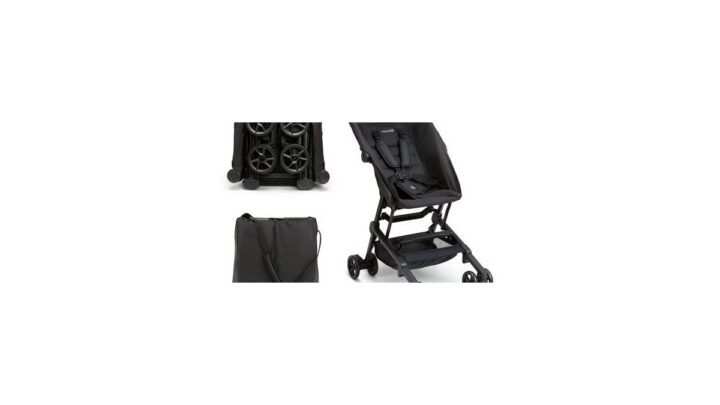
A 3D or compact fold collapses in three dimensions, not just two. The frame folds lengthwise and the sides tuck inward, producing a cube-shaped bundle.
The visual cue is a small, dense package. These are the strollers that fit in overhead bins on planes, usually under 22 inches (56 cm) folded. The trade-off is a higher price and often a smaller seat.
If air travel is a priority, this is the fold type to look for. Our breakdown of the best compact travel options covers which ones meet cabin-size limits.
Two-Step Frame Fold
A two-step fold requires two separate actions in sequence. Typically, you release one lock, then a second. The frame won't move until both are disengaged.
The visual cue is a frame that seems stuck even after you've pressed the obvious release. That's the giveaway. There's a hidden second lock.
These are common on jogging strollers and larger travel systems. The two-step design is a safety feature. It prevents accidental folding while the stroller is in use.
Here's a quick reference.
| Fold type | Release location | Typical folded shape | Best for |
|---|---|---|---|
| Umbrella | Handlebar trigger or collar | Long and narrow | Lightweight daily use |
| Book | Handlebar lever, sometimes rear lock | Wide and flat | Full-size strollers |
| One-hand | Handlebar button | Compact, often self-standing | Parents carrying a baby |
| 3D / compact | Handlebar trigger | Small cube | Air travel |
| Two-step | Two separate locks | Depends on frame | Joggers, travel systems |
How to Tell Your Fold Type If You're Not Sure
If you still can't tell, try this. Pick up the folded stroller and look at its shape. Long and thin means umbrella.
Flat and wide means book. Small and cube-like means compact.
Then count the releases you had to press. One release is a single-step fold. Two releases is a two-step.
If you only needed one hand, you have a one-hand fold.
Write it down or photograph the folded stroller. You'll thank yourself next time you're in a rush.
Before You Fold: The 60-Second Prep That Prevents Most Jams
Most fold failures happen before the fold even starts. The mechanism is fine. The stroller just wasn't prepped.
This step takes under a minute and saves you a bent frame.
Manufacturer manuals across all major brands list the same prep sequence. Follow it in order.
Step 1: Remove the Child
Never fold a stroller with a child in the seat. This isn't a guideline, it's a hard rule. ASTM F833 and EN 1888 both test for frame stability under load, but folding with a child inside defeats the entire safety design.
The frame can pinch, the seat can collapse on a limb, and the stroller can tip.
Lift the child out first. Always.
Step 2: Unbuckle the Harness
A buckled harness holds the seat fabric taut. That tension can stop the seat from collapsing into the frame. Unclip the five-point or three-point harness and let the straps fall loose.
On some models, this matters more than others. If your stroller won't fold flat, a still-buckled harness is a common culprit.
Step 3: Empty the Basket
The under-seat basket is rated for a specific weight, usually 10 to 15 pounds (4.5 to 7 kg). That weight sits low and destabilizes the fold. Worse, a full basket can block the frame from closing.
Take everything out. Diaper bag, groceries, your own handbag. All of it.
Step 4: Retract the Canopy
The sun canopy is the most overlooked prep step. On many strollers, an extended canopy physically blocks the frame from folding. The fabric binds, the frame resists, and you're left wondering why nothing moves.
Pull the canopy fully back to its stowed position. On some models, you may need to fold the canopy fabric down flat first.
Step 5: Adjust the Seat Position
Most strollers have a specific seat position for folding. It's usually fully upright or fully reclined. Check your manual.
A seat caught mid-recline can jam the mechanism.
On reversible seats, the seat also needs to face the correct direction. Many book-fold models only fold with the seat facing forward.
Step 6: Remove Attachments
Bumper bars, cup holders, parent consoles, and car seat adapters all interfere with folding. Most either need to be removed or rotated out of the way.
Travel systems are the worst offenders here. A car seat adapter left on the frame will stop the fold cold. Remove the car seat and the adapter before collapsing.
Step 7: Check for Hidden Locks
Some strollers have a secondary safety latch in addition to the main fold release. It's often near the rear axle or on the side of the frame. If your stroller won't fold and you've done everything else, look for a second lock.
Here's a quick prep checklist you can screenshot.
| Prep step | Why it matters | Time |
|---|---|---|
| Remove child | Safety, non-negotiable | Immediate |
| Unbuckle harness | Releases seat tension | 5 seconds |
| Empty basket | Prevents frame block | 10 seconds |
| Retract canopy | Stops fabric binding | 10 seconds |
| Set seat position | Aligns fold mechanism | 5 seconds |
| Remove attachments | Clears fold path | 15 seconds |
| Check hidden locks | Prevents forced folding | 5 seconds |
Do this prep every time. It becomes muscle memory within a week.
Step-by-Step: How to Fold a Stroller (By Fold Type)
Now for the actual fold. The steps differ by type, so find yours and follow the sequence. The key principle is the same throughout.
Steady pressure, not force. The frame will fold when everything is released correctly.
A short video or diagram of each fold would show one thing all five types share: a single moment where the frame commits and the rest of the motion is gravity-assisted. That's the point where you stop pushing and let the stroller finish the fold itself. Learning to recognize that moment is what makes folding feel effortless.
Folding an Umbrella Stroller
Umbrella folds are the simplest once you know the trigger.
- Stand behind the stroller and grip the handlebar with both hands.
- Locate the release. It's usually a trigger under the handlebar, a sliding collar, or a lever on the side.
- Press or slide the release while keeping your hands on the handlebar.
- Push the handlebar forward and down toward the front wheels.
- The frame will scissor closed. Guide it, don't force it.
- Once fully collapsed, look for the auto-lock or clip the frame latch.
- Lift by the carry strap or handlebar, not the frame tubes.
The whole motion takes about three seconds once you're used to it.
Folding a Book-Fold Stroller
Book folds often use gravity, so positioning matters.
- Engage the brake so the stroller doesn't roll.
- Stand at the handlebar and locate the fold release, usually a lever or button.
- Press the release while tilting the stroller slightly backward onto its rear wheels.
- Push the handlebar forward. The frame folds in half along the central hinge.
- On models with a secondary lock, release it as the frame starts to close.
- Push down until the frame locks flat.
- Stand the folded stroller upright if the model supports it, or lay it flat.
If the frame resists halfway, stop. Check that the seat isn't caught in the hinge.
Folding a One-Hand Stroller
One-hand folds are designed for speed, but the mechanism has a specific feel.
- Hold your child in one arm and grip the handlebar with the other.
- Locate the fold trigger. It's usually a button or lever right under your thumb.
- Press and hold the trigger. Don't release it mid-fold.
- Push the handlebar down in one smooth motion.
- The frame collapses and the auto-lock engages on its own.
- Check that the lock has clicked before you lift the stroller.
If your one-hand stroller doesn't lock automatically, look for a manual latch on the side of the frame.
Folding a Compact / 3D Fold Stroller
These fold in multiple dimensions, so the motion is different.
- Retract the canopy fully. This matters more on compact folds than any other type.
- Press the primary release on the handlebar.
- Push the handlebar down while the frame folds lengthwise.
- As the frame compresses, the sides tuck inward on their own.
- Guide the side panels in if they don't fold automatically.
- Push until the auto-lock engages.
- Confirm the folded package is cube-shaped and locked.
Compact folds sometimes need a small nudge on the side panels. Don't force them. Just guide them inward as the frame closes.
Folding a Travel System
Travel systems add a car seat to the equation, so there's an extra step.
- Remove the infant car seat from the frame first. It never folds with the stroller.
- Remove the car seat adapter if it's a separate piece.
- Follow the fold steps for your frame type, usually a book or two-step fold.
- Some travel systems require you to fold the seat unit separately from the frame.
- Lock both pieces and store them together.
If your travel system has a bassinet attachment, that comes off before folding too. Bassinets never fold with the frame.
Folding a Two-Step Frame Stroller
The name tells you what to expect. Two releases, in order.
- Find the primary lock, usually on the handlebar.
- Release it, but don't push the frame yet.
- Find the secondary lock. It's often near the rear axle or on the side of the frame.
- Release the secondary lock.
- Now push the handlebar down. The frame will fold.
- Lock the frame latch once it's fully collapsed.
If the frame won't move after the first release, you've found your answer. The second lock is still engaged.
Once you've folded your stroller a few times, the sequence becomes automatic. The trick is doing the prep consistently. Skip a step and you'll be back to forcing a frame that doesn't want to move.
The Visual Cues That Tell You the Fold Is Actually Locked
A stroller isn't fully folded until it's locked. Half-folded frames are the leading cause of trunk spring-opens. You lift the stroller, the frame gives, and it unfolds on your arm or in your car.
A close-up photo of a frame lock shows exactly what to look for. There's a small spring-loaded latch that snaps into a notch or over a pin. When it's engaged, the two frame sections sit flush with no gap between them.
Here are the cues that tell you the lock has caught.
Listen for the Click
The click is the most reliable signal. It's a sharp, distinct snap, not a soft thud. If you heard a thud, the latch didn't seat.
Check it.
Some strollers have a quieter click than others. On those models, you can't rely on sound alone.
Feel for the Flush Frame
Run your fingers along the frame joint. If the two tubes meet cleanly with no gap, the lock is seated. If there's a visible gap or the tubes feel loose, the lock hasn't caught.
Look for the Latch Pin
On manual-lock frames, you'll see a pin or clip that slots into a matching hole. It should be fully through the hole, not resting on top of it.
Check the Auto-Lock Indicator
Some modern strollers have a visual indicator, like a red dot that disappears when locked or a green tab that shows. Manufacturer specs on higher-end models increasingly include these. If your stroller has one, trust it.
Test with a Gentle Lift
Lift the stroller slightly by the carry handle. If the frame stays rigid, you're good. If it sags or shifts, the lock isn't engaged.
Set it down and re-fold.
Here's the cue order to check every time.
| Cue | Reliable? | What it tells you |
|---|---|---|
| Click sound | High | Latch seated |
| Flush frame joint | High | No gap, locked |
| Latch pin visible | Medium | Manual lock engaged |
| Indicator tab | High (if present) | Locked state confirmed |
| Gentle lift test | High | Frame is rigid |
If none of those cues are present, your stroller isn't locked. Don't carry it. Don't put it in a trunk.
Re-fold it from the start.
How to Unfold a Stroller Without Forcing the Frame
Unfolding is where most bent hinges actually happen, not folding. The mistake is lifting the handlebar while the fold lock is still holding. Something has to give.
Usually it's the plastic.
The correct sequence is always the same regardless of fold type. Release first, then pull.
Step 1: Set the Stroller Upright
Lay the folded stroller flat on the ground with the wheels down. Trying to unfold a stroller mid-air is asking for a pinch injury or a dropped frame.
Step 2: Release the Auto-Lock
The auto-lock is always the first thing to undo. On most models, it's a clip, a lever, a button, or a push-tab. Find it and disengage it fully before pulling anything.
If you can't find the lock, check the manual or look at the frame where the two tubes meet. The latch is almost always right at that joint.
Step 3: Grip and Pull in One Motion
Grip the handlebar with both hands. Pull upward in one smooth motion. Don't yank.
Don't jerk. Steady pressure.
The frame will open when everything's released. If it resists, stop and look for a second lock or a caught canopy.
Step 4: Push the Seat Down
On book folds and 3D folds, the seat may need a downward push to fully seat into the open position. You'll feel it click or settle into place.
Step 5: Confirm the Frame Is Fully Open
Push down on the seat with the stroller on level ground. If the frame flexes or the seat shifts, it's not fully open. Check for a partially engaged lock.
Step 6: Reattach Accessories
Reinstall the bumper bar, cup holder, or car seat adapter only after the frame is fully open. Attaching them to a partially open frame can damage the mounting points.
One thing to know: some strollers require two hands to unfold but only one to fold. Others are the reverse. That's not a defect.
It's how the mechanism is designed to prevent accidental unfolding.
Common Folding Mistakes (and What They Cost You)
Small mistakes cause big problems over time. Here are the ones our research sees most often in user reviews and manufacturer repair data.
Pushing Instead of Releasing
When the frame resists, some people push harder. That's the wrong instinct. Resistance always means something is still locked, caught, or misaligned.
Push harder and you'll bend the hinge pins or crack a plastic latch.
Folding With the Canopy Up
An extended canopy is a fabric wedge between two frame sections. It'll force the hinge to close on fabric instead of cleanly on itself. Over time, this stretches the canopy and stresses the hinge.
Leaving Weight in the Basket
A loaded basket shifts the center of gravity and blocks the fold path. It also puts lateral stress on the frame during folding. Empty it every time.
Skipping the Harness Unbuckle
A buckled harness holds the seat fabric tight. That tension fights the fold. The seat won't collapse fully, and the frame won't reach the lock.
Ignoring the Secondary Lock
Some strollers have a second lock that's small and easy to miss. Parents force the frame, hear something crack, and blame the stroller. It's usually user error, not a defect.
Folding on Uneven Ground
Fold a stroller on a slope and it can tip mid-fold. The frame lands on one side, bending the hinge or popping a wheel. Always fold on flat, level ground.
Using the Wrong Hand Position
Gripping the frame tubes instead of the handlebar during the fold can catch your fingers in the hinge. Always fold from the handlebar and keep your hands clear of the pivot.
| Mistake | Short-term cost | Long-term cost |
|---|---|---|
| Pushing a stuck frame | Pinched finger | Bent hinge, cracked latch |
| Canopy up | Struggling fold | Stretched fabric, stressed hinge |
| Loaded basket | Frame stops mid-fold | Lateral frame wear |
| Buckled harness | Seat won't collapse | Harness strap distortion |
| Ignoring secondary lock | Forced frame | Broken lock mechanism |
| Sloped ground | Tip-over risk | Warped frame |
| Wrong hand position | Pinch injury | Frame tube damage |
Most of these are avoidable with the 60-second prep. Slow down for those steps and you'll never force a fold again.
If you're noticing recurring damage from folding mistakes, it might be worth comparing your current stroller against models built for heavier use. Our look at durable premium options covers build quality that holds up over years.
Pinch Points, Spring-Opens, and Other Real Safety Risks
Folding a stroller involves moving joints, loaded springs, and metal-on-metal contact. That's a recipe for injury if you're careless. The risks are real, and they're documented.
Per the US Consumer Product Safety Commission, stroller-related injuries send thousands of children to emergency rooms each year. Most injuries involve falls, tip-overs, and entrapment. Folding-related injuries to adults are less commonly tracked but show up consistently in product liability reports.
A close-up of a stroller hinge shows where the danger lives. The pivot joint has two metal plates that move past each other with significant force. A finger caught between them gets crushed, not just pinched.
Here are the specific risks and how to avoid them.
Pinch Points at Hinges
Hinges close with the force of the frame's own weight plus any push you add. Keep fingers, palms, and wrists clear of the pivot area during the fold. Grip the handlebar only.
The most common pinch points are:
- The main central hinge on book folds
- The scissor pivot on umbrella folds
- The side tuck panels on compact folds
- The frame latch on any fold type
Spring-Opens in the Trunk
A half-locked frame stored in a car trunk can spring open when the car moves. The frame expands, hits the trunk lid, and can damage both. Worse, it can hit a hand reaching into the trunk.
Always confirm the lock before storing. Then do a gentle lift test to make sure the frame stays rigid.
Tip-Overs During Folding
Folding on a slope or with weight in the basket shifts the center of gravity. The stroller can tip and land on you or on a nearby child. Fold on flat ground with an empty basket, every time.
Crushed Fingers in the Basket Area
Some strollers have a folding basket or an undercarriage that moves during the fold. Keep hands out of that zone entirely.
Frame Release Under Tension
If a stroller has a loaded spring in the fold mechanism, releasing the lock without controlling the frame can let it snap open fast. Grip the handlebar firmly and let the frame expand slowly.
Child Entrapment Risk
This is the most serious risk. Never fold with a child anywhere near the frame. Even a toddler standing beside the stroller can reach into a closing hinge or get a hand caught in the basket area.
If you have a curious toddler, keep them at arm's length during the fold. Better yet, fold the stroller while another adult watches the child.
Compliance Standards to Know
ASTM F833 in the US and EN 1888 in Europe both cover stroller safety, including folding mechanisms. They test for latch reliability, hinge safety, and stability under load. If you're buying a stroller, check that it meets one of these standards.
You can read the CPSC's stroller safety guidance at cpsc.gov. The agency publishes recall notices and safety alerts specific to stroller models.
If your stroller is recalled for a folding mechanism issue, stop using it immediately. Recalls are rare but they happen, and the fix is usually a free replacement part.
When to Stop Using a Stroller
Stop folding and using the stroller if:
- The lock no longer engages on its own
- The frame visibly bends or warps during folding
- The hinge makes a cracking or grinding sound
- A latch pin has fallen out or gone missing
- The frame springs open unexpectedly even when locked
A damaged stroller isn't safe to use with a child in it. Replace the part or replace the stroller.
Folded Size, Weight, and Trunk Fit: What the Specs Actually Mean
Folded dimensions matter more than the unfolded stroller size for most parents. A stroller that's small when open can be a bulky package when folded. And a full-size stroller can fold tighter than a compact one depending on the mechanism.
Manufacturer specs list folded dimensions as length × width × height. But those numbers don't tell you whether the stroller fits your trunk. Trunk openings are the limiting factor, not trunk volume.
How to Measure Your Trunk Opening
Grab a tape measure and check three things.
- Width of the trunk opening at its narrowest point
- Height clearance from the trunk floor to the lid
- Depth from the front of the trunk to the rear seat
Then compare those to the stroller's folded specs. If the stroller is wider than the opening at any point, it won't fit. Even if the trunk itself is huge.
Why Weight Specs Split Into Two Numbers
You'll see two weight figures on most stroller boxes. One is the stroller's own weight. The other is the folded weight, which sometimes includes the seat, basket, and any integrated accessories.
For carry-on purposes, only the folded weight matters. A stroller that weighs 22 pounds (10 kg) unfolded might weigh 18 pounds (8 kg) folded, or the reverse if the seat detaches.
Compact Fold vs. Small Unfolded Size
These aren't the same thing. Some strollers are small when open but fold into a wide, flat shape. Others are larger when open but compress into a tight cube.
If trunk space is your priority, look for strollers marketed as 3D or compact folds. Our roundup of the most portable designs covers which ones fold smallest in real-world testing.
Typical Folded Size Ranges by Type
Here's a reference table based on aggregate manufacturer specs.
| Fold type | Folded length | Folded width | Folded height | Folded weight |
|---|---|---|---|---|
| Umbrella | 40 to 45 in (100 to 115 cm) | 10 to 14 in (25 to 35 cm) | 10 to 14 in (25 to 35 cm) | 10 to 15 lb (4.5 to 7 kg) |
| Book | 28 to 36 in (70 to 92 cm) | 20 to 26 in (50 to 66 cm) | 10 to 16 in (25 to 40 cm) | 18 to 28 lb (8 to 13 kg) |
| One-hand | 24 to 32 in (60 to 80 cm) | 18 to 24 in (45 to 60 cm) | 12 to 18 in (30 to 45 cm) | 15 to 22 lb (7 to 10 kg) |
| 3D / compact | 18 to 22 in (45 to 56 cm) | 14 to 18 in (35 to 45 cm) | 8 to 12 in (20 to 30 cm) | 12 to 18 lb (5.5 to 8 kg) |
| Two-step | 32 to 40 in (80 to 100 cm) | 22 to 28 in (56 to 71 cm) | 12 to 18 in (30 to 45 cm) | 20 to 30 lb (9 to 14 kg) |
These are ranges. Every model lands somewhere different. Check your specific stroller's spec sheet before assuming it fits anywhere.
Cabin-Approved Fold Sizes
For air travel, the target is usually under 22 inches (56 cm) in length. That's the common cutoff for overhead bin strollers on most major airlines.
That number isn't universal. Some carriers allow larger folds. Some restrict more tightly.
As of 2026, the general rule is that 3D folds under 22 inches usually qualify, while anything longer gets gate-checked. Confirm the exact limit with your airline before you fly.
Trunk Fit Test
Before you buy a stroller, or before a big trip, do this.
- Measure your trunk opening at its narrowest point.
- Note the stroller's folded dimensions from the spec sheet.
- If the folded length exceeds your trunk opening, plan to fold the seat separately or carry it in the cabin.
- Bring a tape measure to the store if you're buying in person. Ask to fold the display model and measure it yourself.
Actual folded dimensions sometimes differ from spec sheet numbers. Wheels, canopies, and seat padding all affect the real folded size.
Storing and Traveling With a Folded Stroller
A folded stroller takes up more room than you'd expect, especially if you're not used to the shape. Where you store it and how you transport it both affect how long the mechanism lasts.
Car Trunk Loading
Lift by the carry handle, not the frame tubes. Frame tubes bend under load, especially at hinge points. The carry handle or strap is designed for the weight.
Place the folded stroller flat with the lock mechanism facing up. That way you can see if it's still locked when you open the trunk. If it's face-down, you won't know until it springs open on you.
For SUVs and hatchbacks, the folded stroller often fits better on its side. Stand it on a rear wheel and lean it against the seat back. Test both positions before you decide.
Air Travel and Gate-Checking
Gate-checking is the most common way to fly with a stroller. You fold it at the gate, hand it to the agent, and collect it at the arrival gate.
A few tips from aggregate traveler feedback.
- Fold it before you reach the gate agent. They're busy and you'll hold up the line.
- Use a stroller travel bag. It protects the frame from baggage handling.
- Label the bag with your name and phone number inside and out.
- Photograph the stroller before you check it, in case of damage.
- If the lock mechanism can be triggered accidentally in transit, tape it shut with painter's tape.
For cabin-approved strollers, confirm the size limit with your specific airline before you fly. Rules change and they're not consistent across carriers.
Small Apartments and Hallway Storage
A self-standing fold is worth its weight in gold if you live in a small space. These strollers stand on their own when folded, so you can tuck them into a corner or against a wall.
If your stroller doesn't self-stand, lean it against a wall or use a stroller hook. Avoid laying it on the floor in a hallway where someone might trip on it.
A folded stroller in a hallway is a trip hazard. Keep it out of walking paths, especially at night. If you have limited floor space, consider a wall-mounted hook rated for the folded weight.
Long-Term Storage
For seasonal storage or between children, store the stroller fully folded in a dry place. Moisture accelerates rust at hinge points.
- Clean the frame with a damp cloth before storing
- Dry it completely, including inside the hinge gaps
- Fold it and lock the latch
- Store it upright if possible, off the floor
- Cover it with a breathable sheet, not plastic
Plastic traps moisture and encourages mold on the fabric. A cotton sheet or a stroller cover works better.
Keeping the Fold Mechanism Working Long-Term
A stroller fold mechanism is a moving part. Moving parts wear. The good news is that a little maintenance goes a long way.
Aggregate repair data shows that most fold failures are preventable with basic care. Sand, grit, and dried food are the top three enemies of a smooth fold.
Clean the Hinges Regularly
Every few weeks, wipe the hinge points with a damp cloth. Get into the gaps where the frame sections meet. Sand and grit act like sandpaper on the pivot pins.
If you live near a beach or in a dusty climate, do this weekly. Sand in a hinge is the fastest way to jam a fold.
Check for Loose or Missing Parts
Every month or so, inspect the fold mechanism. Look for:
- Loose screws or bolts at the hinge
- Missing latch pins or clips
- Cracks in plastic components
- Bent frame tubes
- Worn or frayed auto-lock springs
Any of these means the fold is compromised. Tighten what you can. Replace what you can't.
Lubricate Sparingly
Not all stroller hinges need lubrication. Check your manual first. Some manufacturers specifically warn against it because lubricant attracts grit.
If your manual allows it, use a dry silicone spray, not oil. Oil attracts dust and turns into a grinding paste. Apply very little, and wipe off any excess.
Avoid Overloading
Every stroller has a weight limit. Exceeding it puts strain on the frame, especially at hinge points. A stroller rated for 50 pounds (23 kg) isn't designed to carry 70.
The mechanism will fail faster.
Weight limits include the child plus anything in the basket or hanging from the handlebar. Handlebar weight is a stroller killer. It strains the frame at the fold joint.
Store It Folded, Not Open
When not in use, keep the stroller folded. An unfolded stroller takes up more space, and the frame is more vulnerable to accidental damage.
Folded and locked is the safest state for storage. Just make sure the latch is fully engaged before you walk away.
Replace the Stroller When It's Time
There's a limit to maintenance. If the fold mechanism has been repaired multiple times or the frame is showing fatigue cracks, it's time to replace the stroller.
A stroller with a compromised fold isn't just inconvenient. It's a safety risk. The frame can fail with a child inside.
If you're replacing a stroller and want one built to last, our guide to long-lasting premium strollers covers the materials and mechanisms that hold up under years of daily folding.
When the Fold Breaks: Troubleshooting a Jammed or Stuck Frame
A stuck frame almost always has a cause you can fix. Work through these checks in order. Most fold jams resolve within the first three.
Does the Frame Move At All?
If nothing moves, a lock is still engaged. Somewhere on that stroller is a release you haven't found. Check the handlebar, the side of the frame, and near the rear axle.
Manufacturer manuals confirm that almost every "stuck" stroller case traces back to an unreleased secondary lock. Look for a small lever, push-tab, or clip near the rear wheels or on the side tube.
Does It Move Partway Then Stop?
If the frame folds a few inches and jams, something is blocking the fold path. The usual suspects:
- Extended canopy wedged in the hinge
- Seat fabric caught between frame sections
- Bumper bar still attached
- Cup holder or parent console in the way
- Something in the basket pressing against the frame
Clear whatever's blocking and try again.
Does It Fold But Won't Lock?
This is usually a latch alignment issue. Look at the latch pin. It should seat cleanly in its notch.
If it's bent or misaligned, the lock won't engage.
On some models, the auto-lock spring has lost tension. That's a replaceable part. Check the manufacturer's parts page or contact customer service.
Did Something Snap?
Stop immediately if you heard a crack. A broken hinge pin or cracked plastic latch means the stroller isn't safe to fold or use.
Don't keep trying to force it. A compromised hinge can fail completely with a child inside. Replace the part or replace the stroller.
Is It Grit or Sand?
If the fold feels gritty or grinding, it's debris in the hinge. Clean the hinge gaps with a damp cloth, then a dry cloth. Work the fold back and forth gently to clear any loosened grit.
If the stroller has been to the beach recently, this is the most likely cause.
Is It Rust?
Rust at hinge points locks the mechanism in place. If you see orange or brown residue, the hinge needs cleaning and possibly replacement.
Rust repair is limited. Once a hinge has rusted enough to seize, it usually needs a new part. Prevention is much easier than repair.
Is the Frame Bent?
A bent frame tube prevents the fold from completing. This happens after a drop, a car trunk slam, or a spring-open. Look at the frame from the side.
If any tube isn't straight, the fold geometry is off.
Bent frames can sometimes be straightened by a repair shop. But for most strollers, a bent frame means replacement.
Quick Troubleshooting Table
| Symptom | Likely cause | Fix |
|---|---|---|
| Nothing moves | Secondary lock engaged | Find and release the second lock |
| Folds partway then stops | Canopy, seat, or attachment in the way | Clear the fold path |
| Folds but won't lock | Misaligned latch, weak spring | Realign or replace the latch |
| Grinding feel | Grit or sand in hinge | Clean the hinge gaps |
| Stiff fold | Rust or lack of lubrication | Clean, then apply dry silicone |
| Won't fold straight | Bent frame tube | Professional repair or replacement |
| Sudden crack sound | Broken pin or latch | Stop using, replace part |
When to Call the Manufacturer
If you've checked all of the above and the fold still won't work, contact the manufacturer. Most brands have customer service teams that can walk you through specific models.
Have your model number and purchase date ready. If the stroller is under warranty, the fix is often free. If it's a known issue, some brands issue a repair kit or a replacement.
When to Replace
Replace the stroller if:
- The frame is bent in more than one place
- The hinge mechanism has failed twice
- A critical latch part is discontinued
- The stroller is more than five to seven years old and showing fatigue
- You don't trust the fold to hold
A stroller is a tool that protects your child. Don't gamble on a compromised frame.
FAQs About Folding a Stroller
How long does it take to fold a stroller?
Most strollers fold in 2 to 10 seconds once you know the sequence. One-hand folds are the fastest, typically 2 to 3 seconds. Two-step folds take longest at first, but with practice most parents get them under 10 seconds.
The prep steps add another 20 to 40 seconds until they become habit.
Why won't my stroller fold flat?
A stroller won't fold flat if the canopy is extended, the seat is mid-recline, or an attachment like a bumper bar or cup holder is in the fold path. Some models also require the seat to face a specific direction. Check the prep list first.
If everything's clear, a stuck secondary lock is the next most likely cause.
Can I fold a stroller with the car seat attached?
No. The infant car seat and its adapter must be removed before folding. Folding with the car seat attached can damage the adapter mount and the fold mechanism.
Travel systems are designed for the car seat to click off before the frame collapses.
Do all strollers fit in a car trunk when folded?
No. Folded stroller sizes range from about 18 inches (45 cm) to 45 inches (100 cm) in length. Measure your trunk opening at its narrowest point before assuming a stroller fits.
A compact 3D fold usually fits any trunk. A full-size umbrella or two-step fold may not fit in a small sedan.
How often should I check the fold mechanism?
Inspect the fold mechanism monthly and clean the hinges every few weeks. If you live near a beach or in a dusty area, clean weekly. Check for loose screws, worn latch pins, and frame cracks each time you clean.
Small issues caught early prevent bigger failures.
Can I use lubricant on a stroller hinge?
Only if the manufacturer allows it. Some stroller manuals specifically warn against lubrication because it attracts grit. If yours allows it, use a dry silicone spray, not oil.
Apply very little, and wipe off any excess. Never use WD-40 or similar oil-based products on stroller hinges.
Quick Reference: Match Your Stroller to the Right Fold Sequence
Here's the whole thing on one page. Find your fold type, follow the sequence, and check the lock every time.
| Fold type | Prep focus | Release location | Fold motion | Lock check |
|---|---|---|---|---|
| Umbrella | Retract canopy, unbuckle harness | Handlebar trigger or collar | Push handlebar forward and down | Click sound, flush frame |
| Book | Empty basket, set seat direction | Handlebar lever, maybe rear lock | Tilt back, push forward | Flush joint, latch pin visible |
| One-hand | Free one hand, hold child | Handlebar button | Press and push in one motion | Auto-lock click |
| 3D / compact | Retract canopy fully | Handlebar trigger | Push down, guide side panels | Cube shape, lock engaged |
| Two-step | Find both locks first | Handlebar lock, then second lock | Release both, then push down | Frame rigid on lift test |
| Travel system | Remove car seat and adapter | Frame release | Follow frame type steps | Both pieces locked separately |
The Universal Rules
Regardless of fold type, these rules hold.
- Prep first. Remove child, unbuckle harness, empty basket, retract canopy.
- Never force a stuck frame. Resistance means something's still locked or blocked.
- Grip the handlebar, not the frame tubes, during the fold.
- Confirm the lock before lifting or storing.
- Keep hands clear of hinges and pivot points.
- Fold on flat ground.
- Inspect and clean the mechanism regularly.
The One-Minute Fold Habit
The fastest folder isn't the person with the fanciest stroller. It's the person who does the prep without thinking about it. Unbuckle, clear, retract, release, fold, lock.
Six steps. Once they're habits, folding becomes second nature.
Your stroller will last longer. Your fingers will stay intact. And you'll never be the parent holding up the airport queue again.
If you're in the market for a stroller that's genuinely easy to fold and built to last, our guide to the best compact travel strollers covers models with the smoothest mechanisms and the tightest folds.
One last thing. If your stroller has a fold mechanism failure and it's still under warranty, contact the manufacturer before you do anything else. Most brands will repair or replace the part for free.
And if a stroller is recalled for a folding issue, check the US Consumer Product Safety Commission at cpsc.gov for the details and stop using it immediately.

Similar Posts