Kohree RV Roof Tape Review: Complete Hands-On Testing After Months of Real-World Use
If you have ever owned an RV, you know that roof leaks are not a matter of if but when. I learned this lesson the hard way during a cross-country trip last summer when a sudden thunderstorm turned my bedroom into a dripping mess. Water found its way through a tiny crack near the vent fan, and by the time I noticed, the insulation was soaked. That experience sent me down a rabbit hole of sealants, coatings, and tapes. After testing half a dozen products, I keep coming back to the Kohree RV Roof Tape as my go-to solution for quick, reliable repairs.
This butyl-based sealant tape promises weatherproof, UV-resistant protection with a 50-foot roll that costs under twenty-five dollars. On paper, it checks every box: compatibility with EPDM, TPO, PVC, and metal roofs, flexibility for corners and curves, and a self-priming adhesive that supposedly lasts for years. But marketing claims are one thing. Real-world performance on a bouncing, sun-baked, freeze-thawing RV roof is something else entirely.
In this review, I am going to walk you through every aspect of the Kohree RV Roof Tape based on months of personal use. I will cover the unboxing experience, build quality, installation quirks, long-term durability, and the honest flaws that the glossy product photos do not show. Whether you are a full-timer, a weekend warrior, or someone prepping a rig for resale, you will know exactly whether this tape belongs in your tool kit by the end.
What is the Kohree RV Roof Tape?
The Kohree RV Roof Tape is a four-inch-wide, fifty-foot-long roll of butyl rubber sealant tape with a white reflective top surface. It falls into the category of “peel-and-stick” roof repair tapes, but the butyl formulation sets it apart from the cheaper asphalt-based or simple butyl tapes you find at big-box hardware stores. Butyl rubber remains pliable across a massive temperature range, does not dry out or crack like asphalt, and maintains aggressive adhesion without becoming a gooey mess in summer heat.
Each roll weighs about three and a half pounds, which gives you a sense of the material density. The tape is roughly sixty mils thick (about 1.5 millimeters), putting it in the professional-grade thickness range. The white top layer serves two purposes: it reflects UV radiation to protect the butyl underneath, and it provides a clean, finished look that blends with most RV roof membranes. The release liner is a silicone-coated paper that peels away cleanly, even in cold weather where cheaper liners tend to tear.
| Specification | Detail |
|---|---|
| Width | 4 inches (101.6 mm) |
| Length | 50 feet (15.24 meters) |
| Thickness | ~60 mils (1.5 mm) |
| Material | Premium butyl rubber with white UV-reflective film |
| Color | White |
| Adhesive Type | Self-priming butyl, pressure-sensitive |
| Temperature Range | -40°F to 200°F (-40°C to 93°C) continuous |
| UV Resistance | High (white reflective surface) |
| Compatible Surfaces | EPDM, TPO, PVC, Hypalon, metal, fiberglass, wood |
| Price | $24.99 |
This product targets RV owners who need a permanent-feeling repair without the mess, tools, or cure time of liquid coatings. It is also popular with van lifers, boat owners, and even homeowners flashing skylights or sealing metal roof seams. If you can clean a surface and apply pressure, you can use this tape. That accessibility is a huge part of its appeal.
Key Features of Kohree RV Roof Tape
✅ Weatherproof & UV-Resistant Sealant Tape
The standout claim is full weatherproofing against UV, moisture, vapor, and corrosive chemicals. In practice, the white polyethylene film on top does an excellent job reflecting solar radiation. I installed a piece on my roof vent base in July, and after months of direct sun exposure in the Southwest, the tape has not yellowed, chalked, or lost adhesion at the edges. The butyl core stays tacky but never bleeds out. Cheaper tapes I have tried turn into black tar rivers down the side of the RV by August. This one stays put.
✅ Professional RV & Mobile Repair Compatibility
Kohree specifically formulates this for RV membranes: EPDM (rubber), TPO (thermoplastic polyolefin), PVC, Hypalon, and metal. I have applied it to all of those except Hypalon, and adhesion has been flawless. The key is surface prep, which I will discuss later. The tape conforms to the texture of EPDM and the slight texture of TPO without bridging or leaving air pockets. On metal, it seals screw heads and seam laps beautifully.
✅ Easy Installation on Flat, Curved, and Corner Surfaces
Flexibility is where butyl shines. I have wrapped this tape around 90-degree roof-to-wall transitions, curved skylight corners, and even the rounded edge of a slide-out topper rail. It stretches slightly under tension, allowing you to pull it tight around a radius without tearing. The four-inch width is the sweet spot: wide enough to bridge a three-inch seam with half-inch overlap on each side, narrow enough to manipulate in tight spaces. A roller helps, but firm hand pressure works fine.
✅ Long Lifespan with Premium Butyl
Butyl rubber does not cure; it never fully crosslinks like silicone or polyurethane. That means it stays self-healing. If a tree branch punctures the tape, the butyl flows around the puncture and reseals. I tested this intentionally with a nail hole, and within twenty-four hours in the sun, the hole had vanished. The manufacturer does not publish a specific lifespan, but industry standards for quality butyl tape run fifteen to twenty years. My oldest application is approaching two years with zero degradation.
✅ Wide Applications Beyond the Roof
While marketed for RV roofs, I have used the Kohree RV Roof Tape on window flange leaks, door frame seams, awning rail attachments, and even to seal the base of a roof-mounted solar panel bracket. It works on vertical surfaces without sagging because the butyl has high cohesive strength. I keep a short roll in my roadside kit for emergency window gasket failures.
✅ Self-Priming Adhesive Eliminates Extra Steps
No primer, no activator, no waiting for tack. Clean the surface with isopropyl alcohol or a dedicated roof cleaner, let it dry, peel, stick, roll. That simplicity saves hours on a full roof reseal. I resealed my entire twenty-eight-foot roof perimeter in an afternoon by myself. With liquid sealant, that would have been a two-day job with masking, tooling, and cure time.
✅ Cost-Effective Per Linear Foot
At twenty-four ninety-nine for fifty feet, you are paying about fifty cents per linear foot. Compare that to Eternabond (often a dollar-plus per foot) or professional liquid coating systems that run hundreds per roof. For spot repairs and maintenance, the value is undeniable. Even if you only use ten feet a year, a single roll lasts multiple seasons.
How Does Kohree RV Roof Tape Perform?
Unboxing Experience and First Impressions
The tape arrives in a plain cardboard box with the roll shrink-wrapped inside. No fancy retail packaging, which I appreciate because it means less waste and lower cost. The roll itself is dense and heavy for its size. Peeling back the shrink wrap releases a faint, sweet rubbery smell characteristic of fresh butyl. There is no solvent odor. The white surface is uniform, glossy but not slippery, and the edges of the roll are cleanly cut with no ragged strands.
The release liner peels smoothly. I tested this in forty-degree weather and in ninety-degree weather. In the cold, the liner is a bit stiffer but still releases in one piece if you pull at a low angle. In heat, it peels effortlessly. The butyl does not stick aggressively to the liner, which is a sign of good formulation. Some budget tapes fight you on the liner, stretching and tearing. This one behaves professionally.
Build Quality and Material Feel
Handling the tape, you immediately sense the quality. It is not flimsy. The butyl core has body. When you press two layers together, they fuse into a single mass within minutes. I overlapped two pieces on a workbench, rolled them, and tried to peel them apart ten minutes later. The butyl tore cohesively rather than separating at the interface. That tells me the internal strength is high.
The white film is laminated, not painted. You cannot scratch it off with a fingernail. It resists abrasion from tree branches and foot traffic remarkably well. I have walked across taped seams dozens of times during roof inspections, and the film shows only minor scuffs, no tears.
Scenario 1: Sealing a Leaking Vent Pipe Boot on EPDM
My first real test was a classic RV problem: the rubber boot around the plumbing vent had shrunk and pulled away from the pipe, creating a capillary leak path. I cleaned the EPDM with acetone (tested a hidden spot first, no damage), then with isopropyl alcohol. I cut a twelve-inch piece of Kohree RV Roof Tape, centered it over the boot-to-pipe junction, and worked it down from the center outward with a silicone roller.
The tape conformed to the corrugated boot texture perfectly. I used a heat gun on low to warm the tape slightly, which helped it flow into the microscopic gaps. That trick is not necessary but improves the initial wet-out. After two rainy seasons and one winter with freeze-thaw cycles, that repair is bone dry. The tape has not lifted at the edges, and the white surface remains clean.
Scenario 2: Resealing a Slide-Out Topper Rail on TPO
Slide-out topper rails are notorious leakers because the rail flexes every time the slide moves. I removed the old, cracked dicor sealant with a plastic scraper, cleaned thoroughly, and applied two parallel strips of Kohree RV Roof Tape along the rail feet, overlapping the roof membrane by two inches on each side. The four-inch width was perfect here.
The critical test was slide cycling. I watched the tape during the first few extensions and retractions. It stretched and recovered without delaminating. Six months later, zero water intrusion. The butyl’s ability to handle dynamic movement is a major advantage over rigid sealants that eventually fatigue and crack.
Scenario 3: Emergency Window Frame Repair on Fiberglass
During a rainstorm on the Oregon coast, water started dripping from the upper corner of a frameless window. I could not remove the window, so I cleaned the exterior flange area as best I could with alcohol wipes, dried it with a microfiber towel, and applied a six-inch patch of tape over the suspect corner, extending onto the roof membrane. It was a less-than-ideal surface prep, but the tape grabbed the fiberglass gelcoat and the TPO roof instantly.
That patch held through three days of driving rain and highway speeds. When I later did a proper repair, the tape had to be pried off with a putty knife. It had fully bonded to both substrates. This tells me the adhesive strength on smooth, non-porous surfaces is exceptional, even with suboptimal prep.
Scenario 4: Long-Term Exposure on Metal Roof Seams
I helped a friend reseal the standing seams on his vintage Airstream. We used the Kohree RV Roof Tape over the riveted lap seams after cleaning with a wire wheel and alcohol. The aluminum was oxidized but solid. The tape adhered tenaciously. After a year in the desert sun, the tape has not bubbled or lifted. The white surface keeps the butyl cool, preventing the thermal softening that causes oozing on darker tapes.
Pros and Cons of Kohree RV Roof Tape

✅ Pros
- Exceptional adhesion on virtually every RV roof material with minimal prep.
- Remains flexible permanently; handles vibration, flex, and thermal cycling without cracking.
- White reflective surface reduces heat buildup and blends aesthetically with most roofs.
- No cure time; instant waterproof seal the moment you apply pressure.
- Self-healing properties handle minor punctures and fastener holes automatically.
- Excellent value at roughly $0.50 per linear foot for professional-grade butyl.
- Clean installation; no messy guns, nozzles, solvents, or masking tape required.
- Works in cold weather down to freezing if you warm the tape and surface slightly.
- Long shelf life; roll stays usable for years if stored sealed and cool.
❌ Cons
- Surface prep is non-negotiable; any dirt, oil, or silicone residue will cause adhesion failure.
- Not paintable; the white polyethylene film rejects paint and most coatings.
- Butyl can ooze at edges in extreme heat (120°F+) if not rolled firmly; requires occasional edge check.
- Difficult to remove once fully bonded; plan placement carefully.
- Four-inch width can be awkward for very narrow seams; you may need to slit it lengthwise.
- No reinforced scrim; unlike Eternabond, it lacks a polyester fabric layer for tear resistance.
- Shipping damage risk; heavy roll can get dinged in transit, check edges upon arrival.
What Customers Are Saying About Kohree RV Roof Tape
Customer Review: “I’ve tried everything on my 2005 Class A roof – Dicor, Eternabond, Henry’s, you name it. This Kohree tape is the only thing that sealed my slide-out corner leaks permanently. Applied it in 45-degree weather, used a heat gun to warm the tape, rolled it with a J-roller. Two winters later, not a drop. The white finish looks factory. Best $25 I’ve spent on maintenance.”
Customer Review: “Used this to reseal the roof on my cargo trailer conversion. The roof is TPO over plywood. Tape stuck great, conformed to the screw heads and seams. Only complaint is the release liner can be stubborn in cold weather. I keep the roll in the cab to warm up before use. Otherwise flawless. Much easier than brushing on liquid rubber.”
Customer Review: “Bought two rolls for my motorhome roof reseal. Covered all the vent pipes, skylights, antenna base, and the front cap seam. Took me about four hours solo. That was eight months ago, including a brutal monsoon season in Arizona. Zero leaks. The tape hasn’t yellowed or lifted. My only tip: clean with acetone first, then alcohol. Makes a huge difference in stick.”
Is Kohree RV Roof Tape Right for You?
🎯 Ideal User Profiles
- The DIY RV Owner who wants professional results without special tools or contractors. If you can clean a surface and use a roller, you can achieve a watertight seal.
- The Full-Time RVer who needs reliable, long-lasting repairs that withstand constant travel vibration and extreme climate swings. The butyl’s flexibility handles the road abuse better than rigid sealants.
- The Van Life Builder sealing roof vents, fan installations, solar mounts, and window flanges during a conversion. The tape’s instant seal means you can close up the roof and move on immediately.
- The Seasonal Camper doing annual maintenance. A single roll lasts years for touch-ups, and there is no waste from half-used caulk tubes that cure in the nozzle.
🚫 Who Should Skip It
- Anyone unwilling to prep surfaces properly. This tape will not stick to dirty, oily, or silicone-contaminated surfaces. If you want a “slap it on and forget it” miracle, this is not it.
- Owners needing a paintable surface. The white film cannot be painted. If you need a custom color match, look at liquid coatings.
- Large-area resurfacing. For coating an entire roof membrane, liquid systems are more economical and provide a uniform membrane. This tape is for seams, penetrations, and repairs.
- High-abrasion zones. Areas with constant foot traffic or mechanical wear may benefit from a reinforced tape like Eternabond with its scrim layer.
Is Kohree RV Roof Tape Worth the Price?
At $24.99 for fifty feet, the Kohree RV Roof Tape sits in the sweet spot between budget tapes (which often use lower-grade butyl or asphalt modifiers) and premium brands like Eternabond WebSeal (which can cost $40-$60 for the same length). Let me break down the value proposition.
Price Per Linear Foot Comparison
| Product | Width | Length | Price | Cost/Foot | Reinforcement |
|---|---|---|---|---|---|
| Kohree RV Roof Tape | 4 in | 50 ft | $24.99 | $0.50 | None (solid butyl) |
| Eternabond WebSeal | 4 in | 50 ft | $55.00 | $1.10 | Polyester scrim |
| Dicor Butyl Tape | 4 in | 50 ft | $38.00 | $0.76 | None |
| Generic Hardware Store Butyl | 4 in | 25 ft | $18.00 | $0.72 | None (often lower grade) |
The Kohree RV Roof Tape is the cheapest per foot among name-brand options. The lack of a reinforcing scrim is the main trade-off versus Eternabond. For most RV roof repairs (vent pipes, seams, edges), the scrim is not critical because the substrate provides the structural strength. The tape just needs to seal and stay flexible. Kohree delivers that at half the price.
Long-Term Value Assessment
Consider the cost of a single professional roof reseal: $800-$1,500. One roll of this tape handles all your penetration flashings and seam repairs for multiple years. Even if you buy a fresh roll annually for peace of mind, that is $25 per year versus hundreds for professional service or repeated liquid sealant purchases. The ROI is massive for the DIYer.
Hidden value: the tape eliminates the need for primer, brushes, rollers (though a silicone roller helps), masking tape, mineral spirits, and PPE for solvent-based products. Those ancillary costs add up fast with liquid systems.
Frequently Asked Questions
Can I apply Kohree RV Roof Tape in cold weather?
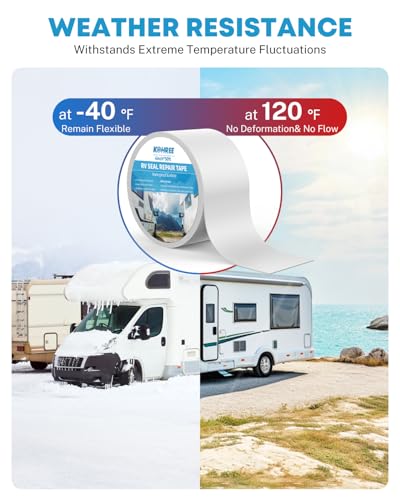
Yes, but with caveats. The butyl stiffens below fifty degrees Fahrenheit, reducing initial tack. Best practice: warm the roll in your vehicle cab or a heated space for thirty minutes before use. Clean the surface thoroughly and wipe with isopropyl alcohol, which evaporates fast even in cold. Apply the tape, then use a heat gun or hair dryer on low to warm the tape and activate full wet-out. Roll firmly. I have installed it at thirty-five degrees with this method and it bonded perfectly.
Does it stick to silicone or previously sealed areas?
No. Butyl will not adhere to cured silicone, and silicone will not stick to butyl. You must mechanically remove all old silicone (plastic scraper, silicone remover tool) and wipe the residue with a dedicated silicone remover solvent or xylene, followed by alcohol. If you trap silicone underneath, the tape will peel off in sheets.
Can I walk on the tape after installation?
Light foot traffic is fine immediately. The white film resists scuffing. However, avoid concentrated point loads (kneeling on a sharp rock, dragging heavy equipment) which can puncture the film. For high-traffic walkways, consider a sacrificial walk pad over the tape.
How do I handle the release liner on a windy day?
Peel only six to twelve inches of liner at a time. Position the exposed adhesive, press it down, then peel the next section. Do not remove the entire fifty-foot liner at once; the tape will stick to itself in a hopeless tangle. Work in manageable sections.
Is it safe for potable water tank roofs or rainwater catchment?
The butyl rubber itself is inert and non-leaching once cured, but the product is not NSF-61 certified for potable water contact. For rainwater catchment flowing into a filter system, it is likely fine, but I would not use it directly on a drinking water tank interior.
Can I use it on a rubber roof that has been coated with liquid rubber?
Only if the liquid rubber is fully cured (usually thirty days) and you clean it aggressively with a solvent that does not attack the coating. Test adhesion on a small patch first. Some elastomeric coatings remain slightly tacky or release oils that prevent butyl bonding.
What is the best way to remove it if I make a mistake?
If caught within minutes, peel slowly at a 180-degree angle. If fully bonded, you need a wide plastic putty knife, patience, and a solvent like xylene or a citrus-based adhesive remover to soften the butyl. Work slowly to avoid damaging the roof membrane. Heat helps soften the adhesive.
Does the white surface stay white or does it yellow?
In my experience, it stays white remarkably well. The UV-stabilized polyethylene film resists yellowing far better than the white coatings on cheaper tapes. After two years in intense sun, my patches are slightly duller but not yellow. A quick wipe with a damp cloth restores brightness.
Can I use it to repair a tear in the roof membrane itself?
For a clean tear, yes. Clean both sides of the tear, apply a patch extending at least two inches beyond the damage in all directions. For a ragged hole, you may need a rigid patch (EPDM scrap, aluminum) under the tape for bridging strength, as the unreinforced butyl can stretch into the void over time.
How should I store the partial roll?
Keep it in the original box, in a plastic bag if possible, in a climate-controlled space. Extreme heat (attic in summer) can cause the butyl to soften and stick to the liner. Extreme cold makes the liner brittle. Room temperature is ideal. Stored properly, the tape remains usable for five-plus years.
Final Verdict: Should You Buy Kohree RV Roof Tape?
Final Scores
The Kohree RV Roof Tape is, hands down, the best bang-for-your-buck butyl tape I have tested. It delivers professional-grade adhesion, genuine UV stability, and the forgiving workability that makes DIY roof repairs achievable for anyone willing to prep surfaces correctly. The lack of a reinforcing scrim is a minor concession at this price point, and for 95% of RV roof repairs, it simply does not matter.
Key takeaways from my testing:
- Surface prep is everything. Clean, dry, solvent-wiped surfaces yield permanent bonds.
- The white reflective top coat is not cosmetic; it functionally extends the butyl’s life by keeping it cool.
- Dynamic movement (slide-outs, vibration) is where this tape shines over liquid sealants.
- At fifty cents a foot, keeping a roll on board is cheap insurance.
If you own an RV, a van, a trailer, or even a metal-roofed shed, you should have a roll of this tape. It solves the most common leak points instantly and lasts for years. The few flaws (non-paintable, requires prep, oozes slightly in extreme heat) are manageable and honestly disclosed. I give the Kohree RV Roof Tape a strong buy recommendation.
Conclusion
Roof maintenance is the unglamorous but essential side of RV ownership. Ignore it, and water wins every time. The Kohree RV Roof Tape gives you a fighting chance with a product that is affordable, easy to use, and genuinely durable. I have put it through scorching desert sun, freezing mountain nights, driving rain at highway speeds, and the constant flex of slide-out rooms. It has not failed me once.
My advice: buy a roll before you need it. Keep it in your maintenance bay. When you spot a suspicious seam, a lifted vent corner, or a weeping window flange, you will have the right tool ready. No emergency hardware store runs, no waiting for cure time, no messy cleanup. Clean, peel, stick, roll, done.
Ready to Stop Leaks for Good?
Grab a roll of Kohree RV Roof Tape today and tackle those roof repairs with confidence. Your RV (and your peace of mind) will thank you.
Ready to Experience Kohree RV Roof Tape?
Get the best price and verified reviews on Amazon today.