Adjustable Dumbbells vs Kettlebells: Which Wins? 2026
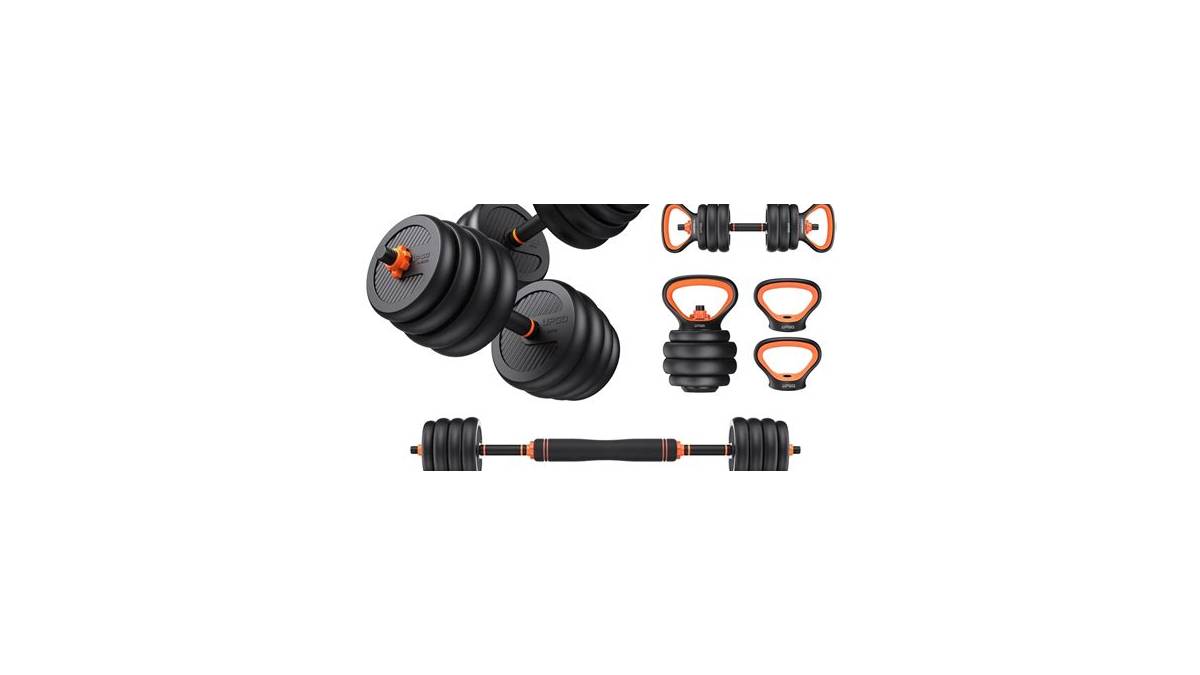
Adjustable dumbbells vs kettlebells is the question that stops most home gym plans cold. Both promise a full-body workout from one corner of a room. Both cost real money.
And only one of them usually fits how you actually train.
Here's the short version up front. Adjustable dumbbells win on progressive overload, exercise variety, and space per pound lifted. Kettlebells win on ballistic power, grip and core conditioning, and durability.
A Bowflex SelectTech 552 pair adjusts from 5 to 52.5 lbs per hand via a single dial, while a standard cast-iron kettlebell has a fixed 35mm handle and no adjustment at all. That single design difference shapes everything that follows.
adjustable dumbbells vs kettlebells
Adjustable dumbbells let you change weight with a dial or pin, replacing a whole rack in one footprint. Kettlebells use a fixed offset load for swings and ballistic work. Pick adjustable dumbbells for muscle-building and variety.
Pick kettlebells for conditioning, grip, and explosive power. Most home gyms benefit from one first, then the other later.
The Real Question Behind "Which Is Better?"
The real question is never "which tool is better." It's "which tool matches the way I train." Those are different questions, and the second one has a clear answer for almost everyone.
A kettlebell is not a heavy dumbbell. It looks similar in a product photo, but the load sits behind your hand, not directly over it. That offset center of gravity is the entire point of the tool.
It's also the reason a beginner can't just grab one and swing.
Adjustable dumbbells solve a different problem. They replace ten or fifteen pairs of fixed dumbbells with one adjustable unit. Dial systems change the load in seconds.
That makes them ideal for pressing, rowing, curling, and any movement where you want smooth, repeatable progression.
So here's the honest framing. If your training revolves around sets, reps, and adding weight over time, adjustable dumbbells are the better fit. If your training revolves around momentum, hip snap, and work capacity, kettlebells pull ahead.
There's also a third answer nobody likes hearing. Buy adjustable dumbbells first, then add one kettlebell later. That sequence covers the widest range of goals for the least money.
How Each Tool Actually Trains Your Body
These two tools load your muscles in fundamentally different ways. Understanding that difference is what turns a spec-sheet comparison into an actual decision.
The Dumbbell Load Path
A dumbbell keeps its mass centered over your hand. Press it overhead and the weight stacks neatly over your wrist, elbow, and shoulder. Curl it and the load travels in a clean vertical arc.
That symmetry makes dumbbells predictable. Your body learns the movement pattern fast. Then you add weight.
Then you add reps. That's the entire strength-building loop, and dumbbells do it better than almost anything else.
The practical payoff is balance. You train each side independently, so a stronger right arm can't hide a weaker left. Pressing, rowing, lunging, and hinging all translate cleanly from a dumbbell to a barbell later.
The Kettlebell Offset Load
A kettlebell's handle sits on top of a round bell. The mass hangs below and behind your grip. Strength coaches call this an offset load, and it's why the tool feels so different.
When you swing a bell, you're not lifting it with your arms. You're driving your hips back and snapping them forward. The bell floats, the arms are just ropes, and your glutes and hamstrings do the actual work.
That same offset load makes a Turkish get-up brutal. You hold the bell overhead while standing up from the floor in stages. Every stabilizer in your shoulder, core, and hip fires to keep the load controlled.
Why Both Build Real Strength
Neither tool is a gimmick. Both are free weights, and both produce measurable strength gains when programmed properly. Research published in the Journal of Strength and Conditioning Research has compared kettlebell swing training to traditional resistance work.
It found similar improvements in strength and power, though kettlebell groups often show better endurance and grip outcomes.
So the choice isn't about which tool works. Both work. The choice is about which movement patterns you'll actually stick with for years.
Adjustable Dumbbells: What You're Really Buying
When you buy adjustable dumbbells, you're buying a mechanism, not just metal. The mechanism is where every real-world complaint lives.
Dial-Based Systems
Dial systems are the most popular category by far. You spin a dial on each end, and internal plates lock into place. Bowflex SelectTech is the best-known example, but ATIVAFIT, NordicTrack iSelect, and several others compete in the same space.
The appeal is speed. Manufacturer specs for the SelectTech 552 show a 5 to 52.5 lb range per dumbbell with adjustments taking a few seconds. That's fast enough to run a drop set without breaking rhythm.
The tradeoff is durability. The plates sit in a plastic housing, and plastic doesn't survive being dropped. Set them down gently after every set.
If you're the type who bails on a heavy press, dial dumbbells are the wrong purchase.
Pin-and-Plate Systems
PowerBlock and Ironmaster Quick-Lock use a different approach. You pull a pin, or twist a collar, and select a block of plates. Build quality on these units is generally heavier than dial systems.
PowerBlock Elite EXP starts at 5 to 50 lbs per hand and expands to 90 lbs with a kit. Ironmaster Quick-Lock starts at 5 to 75 lbs and can climb past 165 lbs. That's the highest ceiling in the category.
These systems are more compact and more durable than dial units. They're also slower to adjust, especially Ironmaster's screw-collar design, which takes 20 to 40 seconds per dumbbell.
The Weight Range Question
Weight range matters more than most buyers realize. A 10 to 90 lb pair looks impressive on the box. But if the useful jumps are 10 lbs apart, you can't fine-tune a bench press.
Look for small increments. Most quality systems step by 2.5 lbs up to around 25 lbs per hand, then move in 5 lb jumps. That granularity is what lets you actually progress week to week.
Table: Adjustable Dumbbell Systems Compared
| System | Type | Weight range (per hand) | Adjustment time | Approx. price |
|---|---|---|---|---|
| Bowflex SelectTech 552 | Dial | 5-52.5 lbs | 3-7 seconds | ~$429/pair |
| Bowflex SelectTech 1090 | Dial | 10-90 lbs | 3-7 seconds | ~$899/pair |
| PowerBlock Elite EXP | Pin | 5-50 lbs (to 90) | 5-10 seconds | ~$379-$600 |
| Ironmaster Quick-Lock | Screw collar | 5-75 lbs (to 165) | 20-40 seconds | ~$700+ |
| REP Fitness adjustable | Dial/pin | 5-50 lbs | 5-10 seconds | ~$350-$450 |
For more on outfitting a compact workout space, our breakdown of small-space home setups covers the storage side of the equation.
Where Adjustable Dumbbells Fall Short
The mechanism is the weak point. Dial systems skip or jam if the dumbbell isn't seated correctly in its cradle. Plate pins bend under heavy use.
Collars loosen mid-set on cheaper adjustable models.
There's also a psychological limit. Because you can't drop them, you'll instinctively hold back on the last hard rep. That's not a small thing in strength training.
Kettlebells: What You're Really Buying
When you buy a kettlebell, you're buying simplicity. There's no mechanism to fail. The only variables are weight, handle diameter, and finish.
Cast Iron vs Competition Steel
Cast iron kettlebells are the classic. Brands like Rogue, Cap Barbell, REP Fitness, and Onnit sell powder-coated versions that resist rust and survive decades of use. Handle diameters typically run 33 to 38mm.
Competition kettlebells, sometimes called sport bells, are a different animal. They're steel, uniform in size regardless of weight, and standardized with a 35mm handle. Color-coding follows weight: 8 kg, 12 kg, 16 kg, 20 kg, 24 kg, 28 kg, 32 kg, and upward.
If you want to compete in girevoy sport, or kettlebell sport, you'll need competition bells. If you're training for general fitness, cast iron is cheaper and works just as well.
Adjustable Kettlebells
Yes, adjustable kettlebells exist. They're a hybrid: a shell that opens so you can add or remove internal plates. Most top out around 40 lbs, which is fine for swings but too light for serious pressing or squats.
The mechanism adds cost and complexity. Loose collars and rattling plates come up repeatedly in user reviews. If you need multiple bell weights, buying two or three fixed bells is usually the better move.
Table: Kettlebell Weights and Typical Uses
| Kettlebell weight | Best for | Typical user |
|---|---|---|
| 8-12 kg (18-26 lbs) | Goblet squats, halos, light cleans | Beginners, women starting out |
| 16 kg (35 lbs) | Swings, cleans, presses | Most men starting out |
| 20-24 kg (44-53 lbs) | Swings, squats, rows | Intermediate lifters |
| 28-32 kg (62-70 lbs) | Heavy swings, carries | Advanced lifters |
| 36 kg+ (79 lbs+) | Competition, heavy grinds | Kettlebell sport athletes |
Why Kettlebells Last
There's almost nothing to break on a cast-iron bell. Drop it on a rubber mat and it's fine. Leave it in a garage and the powder coat might chip, but the iron underneath holds up.
That durability means a kettlebell from 1970 trains exactly like one bought today. There's a reason they show up in military PT, old-school gyms, and garage setups that outlive their owners.
For a broader look at gear that stands the test of time, our roundup of durable outdoor equipment makes a similar case for buying once.
Side-by-Side: Weight Range, Footprint, Cost, and Durability
This is where the comparison gets concrete. Numbers cut through most of the marketing noise.
The Big Comparison Table
| Feature | Adjustable Dumbbells | Kettlebells |
|---|---|---|
| Weight range per unit | 5-90 lbs typical | 4-100+ lbs fixed |
| Adjustment | Dial, pin, or plate | None (fixed) or screw collar |
| Handle diameter | 28-32mm | 33-38mm (35mm competition) |
| Handle texture | Knurl, chrome, rubber | Powder coat, e-coat, bare steel |
| Load position | Centered over hand | Offset behind hand |
| Footprint | One cradle per dumbbell | Multiplies with each bell |
| Drop-safe | No | Yes |
| Adjustment speed | 3-10 sec (dial), 20-40 sec (screw) | Instant (fixed) |
| Typical price per lb | $1.50-$3.00 | $1.00-$2.50 |
| Lifespan | 3-10 years (mechanism limited) | 20+ years |
| Replacement cost | Full unit if mechanism fails | Rarely needed |
Weight Range: Who Wins
Adjustable dumbbells win on adaptability. A single pair covers dozens of weights. That makes them the better tool for progressive overload, where you add small amounts of weight over weeks.
Kettlebells win on ceiling. A 32 kg bell is a serious piece of equipment, and no adjustable bell on the market gets close to that load with a stable mechanism.
Footprint: Who Wins
Adjustable dumbbells win on space, but not by as wide a margin as the marketing suggests. A pair with a stand takes roughly 20 to 40 square feet, depending on the model.
Kettlebells take up almost nothing individually, but you need multiple bells to progress, and the footprint adds up. Three bells in a garage corner is nothing. Six bells plus a rack starts eating floor.
If you live in an apartment, adjustable dumbbells plus one 16 kg bell is close to the ideal footprint-to-versatility ratio.
Cost: Who Wins
Kettlebells win on price per pound. Cast-iron bells run $1.00 to $2.50 per pound depending on brand and finish.
Adjustable dumbbells run $1.50 to $3.00 per pound, plus shipping. That math flips when you compare sets, though. Buying fixed dumbbells from 5 to 50 lbs in 5 lb increments costs well over $1,000.
An adjustable pair covers the same range for less than half.
Durability: Who Wins
Kettlebells win, and it's not close. Cast iron and steel don't care about drops, sweat, or time. The powder coat might chip.
The bell won't fail.
Adjustable dumbbells have moving parts, plastic housings, and pins that wear. User reviews suggest three to ten years of regular use before something needs attention. How you treat them is the biggest variable.
Noise and Apartment Living
Kettlebells are actually quieter for most movements. Yes, a dropped bell makes a thud. But a well-controlled swing, clean, or press produces almost no noise.
Adjustable dumbbells rattle slightly during fast reps as plates shift in the housing. Worse, dial systems require you to reseat them gently. In a thin-walled apartment, both tools work, but kettlebells demand better form for the same effect.
For apartment-friendly home upgrades that won't annoy the neighbors, our guide to quiet smart-home gadgets is worth a look.
Which One Builds Muscle Faster?
Adjustable dumbbells build muscle faster for most people, and the reason comes down to programming. Muscle growth responds to progressive overload: adding weight or reps over time. Adjustable dumbbells make that easy because you can fine-tune the load in small steps.
Kettlebells build muscle too. A heavy goblet squat, a press, a row, all work the same muscle-building pathways. But the fixed weight jumps are the problem.
Going from a 16 kg bell to a 24 kg bell is a 17.6 lb jump. That's a huge leap for a pressing movement.
You can bridge the gap with technique, tempo, or added reps. It just takes more planning. With adjustable dumbbells, you nudge the dial from 30 to 32.5 lbs and keep going.
Where Kettlebells Surprise People
Kettlebells build more muscle in the posterior chain than most beginners expect. Swings hammer the glutes, hamstrings, and lower back. Farmer's carries torch the traps and grip.
Turkish get-ups hit the entire shoulder complex.
That's real muscle work. It just doesn't look like a traditional bodybuilding program. If your goal is visible size on arms, chest, and shoulders, dumbbells get you there faster.
If your goal is a stronger, more functional body, kettlebells hold their own.
The Honest Answer
If you're chasing size, pick adjustable dumbbells. If you're chasing athleticism, pick kettlebells. If you want both, buy dumbbells first and add a bell later.
That's the sequence that covers the most ground.
Which One Wins for Conditioning and Fat Loss?
Kettlebells win for conditioning and fat loss. The ballistic nature of swings, cleans, and snatches keeps your heart rate elevated in a way that slow dumbbell sets don't match.
A kettlebell swing workout can burn roughly 20 calories per minute at a moderate pace, according to research on kettlebell training. That's comparable to running, and it builds strength at the same time.
Dumbbells Can Condition Too
You're not locked out of conditioning with dumbbells. Dumbbell complexes, where you chain several exercises back to back, spike your heart rate fast. Renegade rows, thrusters, and dumbbell snatches all work.
The difference is efficiency. Kettlebells make conditioning the default. Dumbbells make it something you have to program on purpose.
Which Burns More Calories?
It depends on effort, not the tool. A hard 20-minute kettlebell circuit beats a lazy dumbbell session every time. That said, aggregate research suggests kettlebell training produces slightly higher cardiovascular demand per minute for most people.
If fat loss is your main goal, pick the tool you'll actually use hard. Both work. Consistency wins.
Space, Noise, and Apartment Living
Apartment training is its own category. Thin walls, shared floors, and limited square footage change the decision more than most reviews admit.
Footprint Reality Check
Adjustable dumbbells win here, but only if you factor in progression. A dial system stays one unit forever. Kettlebells force you to buy heavier bells as you get stronger, and each one takes floor space.
- One adjustable dumbbell pair plus a stand: roughly 20 to 40 square feet.
- Three kettlebells in a corner: about 2 to 3 square feet.
- Six kettlebells plus a rack: 10 to 15 square feet and climbing.
- The winning apartment setup: adjustable dumbbells plus one 16 kg bell.
Noise: The Real Story
Kettlebells are quieter for controlled movements. A good swing or clean makes almost no sound. A drop onto a hardwood floor does, though, and that's the noise complaint waiting to happen.
Adjustable dumbbells rattle a bit during fast reps. It's not loud, but it's consistent. Dial units also require careful reseating, which most people forget when they're tired.
Floor Protection
Buy rubber mats regardless of which tool you choose. A 3/4-inch rubber tile protects your floor and deadens sound. It also gives you a stable base for kettlebell work, which matters more than most people realize.
For apartment-dwellers upgrading their space, our picks for practical apartment tech include a few items that pair well with a compact gym setup.
The Learning Curve: Technique and Injury Risk
Kettlebells have a steeper learning curve, and the consequences of bad form are worse. That's the blunt truth.
Dumbbells Are Forgiving
Dumbbell movements are intuitive. Press, row, curl, squat. You've seen them a thousand times.
A beginner can pick up a dumbbell and train safely on day one.
That low barrier to entry is a real advantage. It means fewer wasted weeks learning technique and more time under load.
Kettlebells Demand Coaching
Kettlebell swings, cleans, snatches, and Turkish get-ups all require coaching or careful study. A bad swing rounds your lower back under load. A bad clean bangs the bell into your wrist.
A bad snatch can tweak your shoulder.
The payoff is worth it. Once the technique clicks, kettlebell training is one of the most efficient ways to build power and conditioning. But plan on spending two to four weeks learning the basics before you add real weight.
Injury Risk by Movement
- Swings: lower back strain from rounding. Fix: hip hinge, not squat.
- Cleans: wrist bruising from poor rack position. Fix: learn the hook grip and rotation.
- Snatches: shoulder impingement from muscling the bell up. Fix: drive with hips, guide with arm.
- Turkish get-ups: shoulder instability if the bell drifts. Fix: keep wrist stacked over shoulder.
- Presses: elbow flare. Fix: pause at the rack and press straight up.
When to Hire a Coach
Hire a coach if you're new to kettlebells and want to learn snatches or get-ups. Two or three sessions will save you months of bad habits. You can find certified instructors through the International Kettlebell and Fitness Federation or the World Kettlebell Sport Federation.
For dumbbells, coaching is optional. A basic program and a mirror will get you 90 percent of the way there.
Best For Your Situation: A Decision Guide
Here's the if-then logic. Find your situation and follow the branch.
If You Want to Build Muscle
If you're chasing size on arms, chest, back, or shoulders, buy adjustable dumbbells. You need progressive overload and exercise variety, and dumbbells deliver both.
If You Want to Get Athletic
If you're chasing power, conditioning, and a stronger core, buy kettlebells. Start with a 16 kg bell for men or an 8 to 12 kg bell for women.
If You Live in a Small Apartment
If floor space is tight, buy adjustable dumbbells first. Add one kettlebell later if you want conditioning work. That combo covers the most ground in the least space.
If You Have a Garage or Basement
If you have room, buy both. A heavy kettlebell and a solid adjustable dumbbell pair will cover every training goal you're likely to have for the next ten years.
If You're a Beginner
If you've never trained with free weights, start with adjustable dumbbells. The learning curve is shorter, the injury risk is lower, and the strength carryover is enormous.
If You've Trained for Years
If you already know how to hinge, press, and squat, go straight to kettlebells. The technique barrier is behind you, and the conditioning payoff is bigger.
Table: Quick Decision Matrix
| Your situation | Best choice | Why |
|---|---|---|
| Want muscle size | Adjustable dumbbells | Fine weight increments, exercise variety |
| Want conditioning | Kettlebells | Ballistic work, high cardio demand |
| Small apartment | Adjustable dumbbells first | Footprint efficiency, easy progression |
| Home gym with space | Both, dumbbells first | Covers every training goal |
| Complete beginner | Adjustable dumbbells | Shorter learning curve, lower risk |
| Experienced lifter | Kettlebells | Technique barrier already passed |
| Budget under $400 | Kettlebells | Price per pound is lower |
| Budget over $700 | Adjustable dumbbells | Better long-term value per pound lifted |
Mistakes That Cost You Money (and Your Back)
Most people make at least one of these mistakes. Skipping them saves cash, time, and pain.
Buying a Kettlebell That's Too Heavy
The classic first mistake. A 24 kg bell feels fine in the store. It feels dangerous on rep three of your first set of swings.
Start with 16 kg for men, 8 to 12 kg for women.
Buying a Dumbbell Set With Bad Increments
If the jumps are 10 lbs or more, you can't progress smoothly. Look for 2.5 lb steps up to 25 lbs per hand, then 5 lb jumps after that.
Dropping Adjustable Dumbbells
This kills dial systems. Internal plates crack, pins bend, and housings shatter. If you like to push to failure and bail, buy fixed dumbbells or kettlebells instead.
Skipping the Warm-Up
Ballistic kettlebell work on cold hips and shoulders is asking for trouble. Do five minutes of hip hinges, shoulder circles, and light swings before your working sets.
Swinging With Your Arms
The swing is a hip hinge, not a front raise. If your arms are doing the work, you're risking your lower back. Learn the movement on a light bell first.
Ignoring Grip Fatigue
Thick kettlebell handles tire your grip fast. If your fingers are opening mid-swing, put the bell down. Chalk helps, but stopping is safer.
Buying Cheap Adjustable Kettlebells
The mechanism on budget adjustable kettlebells has a bad reputation. Loose collars, rattling plates, and stuck adjustments show up constantly in user feedback. Buy a fixed bell instead.
Never Progressing Past One Bell
You'll outgrow a 16 kg bell in months for swings. Plan to buy a heavier bell, or accept that you're training for endurance, not power.
Training Through Pain
Sharp pain is not a sign of progress. Stop, rest, and check your form. If it lingers, see a physiotherapist.
No kettlebell workout is worth a shoulder injury.
Ignoring Ceiling Height
Overhead presses and Turkish get-ups need clearance. Measure your ceiling first. If you're under 8 feet, keep the overhead work outside or switch to dumbbells.
Costs, Long-Term Value, and Upgrade Paths
Let's talk money. The sticker price isn't the whole story. What matters is cost per year of useful training.
Table: Ten-Year Cost Comparison
| Setup | Upfront cost | Ten-year cost | Notes |
|---|---|---|---|
| Adjustable dumbbells (5-52.5 lbs) | ~$429 | ~$429-$600 | Replacement possible after 7-10 years |
| Adjustable dumbbells (5-90 lbs) | ~$899 | ~$899-$1,200 | Heavy duty, longer lifespan |
| Kettlebells (16 + 24 + 32 kg) | ~$300-$500 | ~$500 | Bells last decades, add more over time |
| Fixed dumbbells (5-50 lbs, 5 lb steps) | $1,000+ | $1,000+ | Bulky, expensive, but built to last |
| Kettlebell set + one adjustable dumbbell pair | ~$800 | ~$850-$1,100 | Highest versatility |
Upgrade Paths
If you start with adjustable dumbbells, the upgrade path is simple. Add heavier plates, or move to a heavier adjustable system. Some brands sell expansion kits that extend the weight range.
If you start with kettlebells, plan to buy a heavier bell every six to twelve months. That's the natural progression. Most people end up with three bells over time: a light one for technique, a medium one for swings and presses, and a heavy one for carries and deadlifts.
What Holds Value
Cast-iron kettlebells hold value remarkably well. Used 16 kg bells regularly sell for close to retail on the secondhand market. Adjustable dumbbells hold less value because the mechanism can wear, and buyers worry about that.
If resale matters, kettlebells win. If budget flexibility matters, adjustable dumbbells offer more ways to scale up without replacing your whole setup.
Shipping and Hidden Costs
Kettlebells are heavy, and shipping reflects that. Expect $30 to $80 in shipping for a single cast-iron bell, more for larger sizes. Some retailers offer free shipping, but the price is usually baked into the unit cost.
Adjustable dumbbells ship as a single box, so shipping is often free or cheap. That gap can save you $50 to $100 on a smaller order.
Maintenance and Making Either Last
Both tools reward a little care. Neither is fragile. Here's what actually matters.
Adjustable Dumbbell Care
- Set them down gently. Never drop them, even from a few inches.
- Reseat the dial in the cradle after every set.
- Wipe the plates with a dry cloth every few weeks to prevent dust buildup.
- Inspect pins and collars monthly for bends or looseness.
- Keep them out of damp garages if the plates are bare steel.
- Replace worn pins early. A $10 part beats a $400 replacement.
Kettlebell Care
- Wipe the handle after every session to remove sweat and chalk.
- Oil a cast-iron bell lightly once or twice a year if the finish wears.
- Store bells on a rack or mat, not directly on concrete.
- Check for chips in the powder coat. Touch up with enamel if needed.
- Inspect competition bells for cracks at the handle weld. Rare, but worth a glance.
Rubber Mats and Storage
A 3/4-inch rubber mat protects your floor, deadens noise, and gives you a stable platform. For adjustable dumbbells, a stand keeps the cradles clean and prevents pin damage from floor grit.
For kettlebells, a small rack keeps them off the floor and easier to grab. Even a wooden pallet works if you're on a budget.
When to Replace
Replace adjustable dumbbells when the mechanism skips, jams, or fails to lock. Replace kettlebells almost never. Chipped powder coat is cosmetic.
A cracked handle weld on a cheap bell is the one real failure point, andthat's worth inspecting before you load it overhead.
If you spot a crack on a handle weld, stop using that bell. Cast iron and steel failure is rare, but it happens on low-cost imports with poor quality control.
Rust is the other long-term concern. Bare steel plates and unpainted kettlebell handles can rust in humid garages or basements. A light coat of oil twice a year solves it.
So does storing your gear on a mat or rack instead of bare concrete.
Building a Simple Maintenance Routine
You don't need a checklist. A few habits cover almost everything:
- Wipe handles and grips after every session. Sweat and chalk are corrosive over time.
- Inspect pins, collars, and dial mechanisms once a month. Two minutes catches most failures before they happen.
- Keep a small bottle of 3-in-1 oil and a dry cloth nearby. Rust prevention takes seconds.
- Store gear off the floor. Concrete wicks moisture into metal.
- Replace worn parts early. Cheap pins and collars protect expensive housings.
Treat your gear like a long-term investment and it will outlast most other things you buy for your home gym.
Frequently Asked Questions
Are adjustable dumbbells or kettlebells better for beginners?
Adjustable dumbbells are better for beginners. They're easier to learn, safer to fail on, and offer finer weight increments for steady progress. Kettlebells demand technique that takes weeks to build.
Start with dumbbells, then add a bell once your hinge and press patterns feel solid.
Can I build muscle with just kettlebells?
Yes, you can build muscle with kettlebells. Swings, goblet squats, presses, and rows all create hypertrophy when you train hard enough. The limitation is weight jumps.
Going from 16 kg to 24 kg is a 17.6 lb leap, so progression takes more planning than with adjustable dumbbells.
How much space do adjustable dumbbells and kettlebells need?
Adjustable dumbbells with a stand need roughly 20 to 40 square feet. A single kettlebell takes about 1 square foot, but you'll need multiple bells to progress. Three bells plus a rack fit in 10 to 15 square feet.
For small apartments, one dumbbell pair and one 16 kg bell is the sweet spot.
What's the best kettlebell weight to start with?
Men should start with a 16 kg (35 lb) kettlebell for swings, cleans, and presses. Women should start with 8 to 12 kg (18 to 26 lbs). Light enough to learn technique, heavy enough to build real strength.
Buy a heavier bell in six months once the form is automatic.
Can I drop adjustable dumbbells?
No, never drop adjustable dumbbells. Dial systems have plastic housings and internal plates that crack or bend on impact. Pin-and-plate systems survive a bit more abuse, but they're not built for dropping either.
If you like to train to failure and bail, buy fixed dumbbells or kettlebells instead.
Do kettlebells build more muscle than dumbbells?
Not more, but different. Kettlebells build more posterior chain and grip strength. Dumbbells build more symmetrical pressing and curling strength.
For raw size gains, dumbbells edge ahead because progressive overload is easier. For athleticism and work capacity, kettlebells usually win.
Which is cheaper over ten years?
It depends on how you count. A quality adjustable dumbbell pair costs less than a full fixed dumbbell set, but the mechanism may fail before ten years. Kettlebells last decades, but you'll keep buying heavier bells.
A dumbbell pair plus three kettlebells over ten years costs roughly $800 to $1,100 combined, which is the most versatile middle ground.
Can I use kettlebells for bodybuilding-style training?
Yes, but with limits. Kettlebells work for rows, presses, squats, and curls, and you can run traditional rep schemes. The problem is weight increments.
Fixed bells jump in 4 kg or 8 kg steps, which is too coarse for fine-tuning isolation work. Use dumbbells for isolation and kettlebells for compound and ballistic work.

Similar Posts