Bowflex vs PowerBlock Dumbbells: Which Is Right? 2026
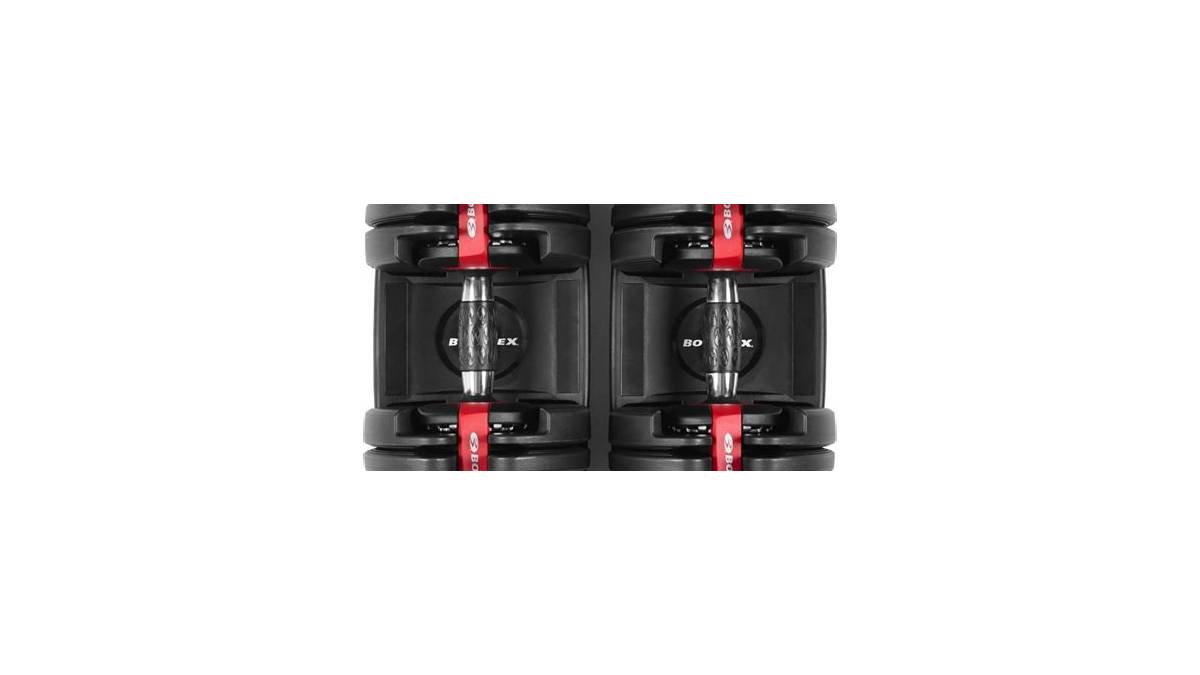
In our research comparing home strength-training setups, one question keeps coming up more than any other: bowflex vs powerblock dumbbells, which one actually belongs in your garage or apartment? Both replace an entire rack with a single pair you can adjust in seconds, and both cost far less than buying fixed dumbbells across the same weight range. But they solve the same problem in two very different ways.
Manufacturer specifications tell the story fast. The Bowflex SelectTech 552 covers 5 to 52.5 lbs per dumbbell with a dial mechanism, while the PowerBlock Elite EXP starts at 5 to 50 lbs and expands to 70 or 90 lbs with add-on kits. That single difference in how weight adds up shapes everything else: handle feel, durability, drop-set ability, and who each set is really built for.
Here's what our research shows you need to know before you buy either one as of 2026.
bowflex vs powerblock dumbbells
Bowflex SelectTech dumbbells use a dial to select weight, and are best for beginners and space-saving home gyms. PowerBlock dumbbells use a pin-and-selector system, expand to heavier loads, and last longer under hard training. Pick Bowflex for smooth adjustments.
Pick PowerBlock for serious strength work. Neither can be dropped safely.
Why This Comparison Actually Matters
This isn't a brand-fanboy debate. It's a decision about your training, your space, and your wallet over the next five to ten years. Pick the wrong one and you'll either outgrow the weight range in a year or fight an awkward handle on every rep.
Adjustable dumbbells solve a real problem. A full rack of fixed hex dumbbells from 5 to 50 lbs takes up an entire wall and costs well north of $1,000. A single pair that adjusts replaces all of it in about two square feet of floor space.
That tradeoff is why this category exists, and why both Bowflex and PowerBlock dominate it.
The stakes are real in a few specific ways. Bowflex units are largely built from plastic and composite internals, which means they don't handle dropped loads. PowerBlock units are steel-heavy and tolerate more abuse, but their cage handle changes your wrist position on curls and overhead work.
Neither is a wrong answer. They're calibrated for different lifters.
If you're outfitting a spare corner of an apartment, the footprint and noise profile matter more than max load. If you're building a garage gym and plan to row, press, and curl heavy for years, expandability and steel construction matter more than a smooth dial. Everything below hangs off that fork in the road.
If you're also setting up the rest of the space around your training corner, some of our coverage on making a small apartment smarter pairs well with a compact gym build.
The Core Difference: Dial-a-Weight vs Pin Selector
The adjustment mechanism is the single biggest differentiator between these two brands. It determines how fast you can change loads, how precise your weight jumps are, and how the dumbbell feels in your hand.
How the Bowflex SelectTech Dial Works
You turn a dial on each end of the dumbbell to the weight you want. The internal plates engage or disengage based on the dial position. Set it to 25, lift the handle, and only the plates that make up 25 lbs come up with it.
The system is genuinely elegant for beginners. There's no pin to lose, no cradle alignment to fuss over, and no chance of picking up the wrong plate. Bowflex SelectTech 552 users report adjustment takes about three to five seconds per dumbbell once you're used to it.
The tradeoff is precision at the low end and gap size at the high end. The 552 jumps in 2.5 lb increments up to 25 lbs, then jumps in 5 lb increments from 25 to 52.5. Above 25 lbs, you lose the fine gradation, which matters if you're microloading presses.
How PowerBlock's Pin System Works
PowerBlock dumbbells use a magnetic pin you pull and reinsert to select weight. The plates stack inside a cage-style frame, and the pin locks the plates you want to lift. Change takes about the same time as the dial once you've built the muscle memory.
The pin system gives you tighter weight jumps on most models and better expandability. PowerBlock Elite EXP goes from 5 to 50 lbs, then each add-on kit adds 20 lbs of range. The Pro and Urethane series go higher with proportionally more expensive kits.
The pin can be fiddly under fatigue. If you're mid-workout and hands are sweaty, seating the pin correctly takes a beat longer than turning a dial. That's a small friction point, but a real one for high-rep training.
What That Difference Means Mid-Set
The practical fallout is drop-sets. Bowflex's dial mechanism isn't designed for quick changes mid-set, and the plates need to be fully reseated in the cradle each time. PowerBlock's pin is faster to change, but you still can't safely do a true drop-set the way you can with two or three pairs of fixed dumbbells.
For supersets and circuit training, both work fine. Change weight between exercises, not between reps. If drop-sets are central to your program, neither adjustable dumbbell replaces having fixed pairs on hand.
Bowflex SelectTech Lineup: 552, 1090, and What Each One Gives You
Bowflex sells two main consumer adjustable dumbbell models, plus a few variations that mostly change color or packaging. The two worth knowing are the 552 and the 1090.
Bowflex SelectTech 552
The 552 is the entry point and the best-selling model in the lineup. It covers 5 to 52.5 lbs per dumbbell, which is enough for most beginner and intermediate lifters on isolation work and light-to-moderate pressing.
- Weight range: 5 to 52.5 lbs per dumbbell
- Increments: 2.5 lbs up to 25 lbs, then 5 lbs up to 52.5
- Adjustment: dial on each end
- Handle: straight with medium knurling
- Length: about 16 inches at the heaviest setting
- Warranty: 2 years (limited)
- Price range: roughly $400 to $500 per pair as of 2026
The 552's length is the most common complaint. At heavier settings the dumbbell is long, which makes close-grip movements like concentration curls or tricep extensions awkward for shorter-armed lifters.
Bowflex SelectTech 1090
The 1090 is the heavier sibling. It goes from 10 to 90 lbs per dumbbell in 5 lb increments, using the same dial system.
- Weight range: 10 to 90 lbs per dumbbell
- Increments: 5 lbs
- Adjustment: dial on each end
- Handle: straight, wider grip
- Length: longer than the 552 at max load
- Warranty: 2 years (limited)
- Price range: roughly $600 to $800 per pair as of 2026
The 1090 solves the weight-range problem but keeps the dial mechanism's limitations. It's still not a drop-safe dumbbell, and the plastic internals are the same design. If you're planning to train heavy for a decade, this is where the durability question starts to matter.
What Bowflex Doesn't Sell
Bowflex doesn't offer expansion kits for either model. Whatever max weight you buy is what you're stuck with. That's a meaningful difference from PowerBlock, and it's the single biggest reason lifters who plan to progress past 50 lbs often skip Bowflex entirely.
PowerBlock Lineup: Sport, Elite, Pro, and the Urethane Tier
PowerBlock's catalog is broader, and the differences between tiers are mostly about build materials and max load. Four models cover almost everyone shopping this category.
PowerBlock Sport
The Sport series is the budget entry. Weight range typically starts around 5 to 25 lbs per dumbbell and tops out lower than the Elite. Adjustments use the same pin system.
- Weight range: roughly 5 to 25 lbs depending on model
- Increments: 2.5 to 3 lbs
- Handle: straight or cage depending on SKU
- Warranty: shorter than Elite
- Price range: entry-level, often under $300
The Sport is best for light home training, physical therapy, or as a starting set for someone who's never lifted before. It's not the set you buy if you plan to goblet-squat 60 lbs next year.
PowerBlock Elite EXP
The Elite EXP is the sweet spot and the direct competitor to the Bowflex 552. It starts at 5 to 50 lbs per dumbbell and expands to 70 and then 90 lbs with add-on kits.
- Weight range: 5 to 50 lbs, expandable to 90 lbs
- Increments: 2.5 to 5 lbs depending on range
- Adjustment: magnetic pin
- Handle: cage design (steel)
- Warranty: 5 years for most residential use
- Price range: roughly $350 to $500 for the base pair as of 2026
Expansion kits run around $150 to $250 per stage, so a fully kitted Elite EXP at 90 lbs per side sits in the same ballpark as the Bowflex 1090, but with a stronger steel chassis and a longer warranty.
PowerBlock Pro and Pro EXP
The Pro line is the serious-lifter tier. It uses more steel, thicker plates, and heavier max loads. It's the model you see in commercial or semi-commercial setups.
- Weight range: often 5 to 50 lbs expandable to 90 lbs per dumbbell, some SKUs higher
- Build: heavier steel, larger cage
- Warranty: 5 to 10 years depending on series
- Price range: typically $600 to $1,000+ per pair
PowerBlock Urethane Series
Urethane-coated plates are quieter and protect floors better than bare metal or plastic. The Urethane series is the premium tier, priced accordingly.
- Weight range: similar to Pro models
- Build: urethane-coated plates
- Noise: quieter on drops and racking
- Warranty: typically 5 to 10 years
- Price range: often $800 to $1,200+ per pair
Above the Elite tier, PowerBlock's pricing climbs fast. If your max load is 50 lbs, the Elite EXP is where most home lifters should stop looking.
Side-by-Side Spec Comparison
Here's the direct head-to-head between the two best-selling models most buyers actually compare: the Bowflex SelectTech 552 and the PowerBlock Elite EXP.
| Spec | Bowflex SelectTech 552 | PowerBlock Elite EXP |
|---|---|---|
| Weight range (per dumbbell) | 5 to 52.5 lbs | 5 to 50 lbs (expandable to 90) |
| Weight increments | 2.5 lbs up to 25, then 5 lbs | 2.5 to 5 lbs |
| Adjustment method | Dial | Magnetic pin |
| Handle style | Straight | Cage |
| Primary material | Composite / plastic shell | Steel frame, composite shell |
| Dumbbell length (max load) | ~16 inches | ~12 inches |
| Expansion available | No | Yes (70 lb, 90 lb kits) |
| Warranty | 2 years limited | 5 years (residential) |
| Typical price (pair) | $400 to $500 | $350 to $500 |
| Drop-safe | No | No |
| Best for | Beginners, smooth dial feel | Progressing lifters, longer lifespan |
Handle Shape and Why It Matters
The Bowflex handle is a straight bar. That feels natural for presses, rows, and curls because it mimics a fixed dumbbell. The PowerBlock cage handle surrounds your hand, which some lifters love and some hate.
The cage forces a fixed wrist angle on certain movements. Overhead presses and bicep curls are the two lifts where users most often report the cage feels awkward. It also makes it harder to grip for lifters with larger hands or wrist issues.
Dumbbell Length at Max Load
Bowflex 552 runs around 16 inches at max weight. PowerBlock Elite runs around 12 inches. On the surface that's four inches.
In practice it's the difference between clearing your thigh on a seated curl and banging into it.
Shorter arms or tighter training spaces favor PowerBlock. Longer arms and larger frames often prefer the Bowflex, which mimics the length feel of a standard fixed dumbbell at light-to-mid loads. If you're kitting out a compact apartment gym and every inch counts, our notes on space-saving smart gadgets overlap with the same math you're doing here.
Warranty and Build Reality
Bowflex covers the 552 and 1090 for 2 years against manufacturing defects. PowerBlock covers the Elite EXP for 5 years for residential use. Neither warranty covers damage from dropping the dumbbell, which is the single most common failure mode for both brands.
Aggregate reviews across major retailers show a consistent pattern. Bowflex units tend to develop dial or plate-engagement issues after 2 to 4 years of regular use, often just past the warranty window. PowerBlock units tend to hold up longer, with fewer complaints about the selector mechanism itself and more about the cage handle feel.
Footprint and Storage
Both brands ship with plastic cradles that hold each dumbbell. The Bowflex cradle is wider to accommodate the longer dumbbell. The PowerBlock cradle is narrower and taller.
Neither brand's stock cradle is designed to double as a stand. If you want the dumbbells at hip height, you're buying a stand or building a shelf. That's an extra $50 to $200 depending on what you choose, and it applies to both brands equally.
Pricing: What You Actually Pay in 2026
Prices move around with sales, so treat these as realistic ranges rather than fixed numbers. Manufacturer sales around Black Friday and New Year consistently drop prices by 10 to 20 percent.
| Model | Typical Price (Pair) | Sale Price Range | Notes |
|---|---|---|---|
| Bowflex SelectTech 552 | $400 to $500 | $300 to $400 | Best-selling baseline |
| Bowflex SelectTech 1090 | $600 to $800 | $500 to $650 | Heavier but no expansion |
| PowerBlock Sport | $200 to $300 | $150 to $250 | Entry tier |
| PowerBlock Elite EXP | $350 to $500 | $300 to $400 | Best value tier |
| PowerBlock Elite + 70 lb kit | $500 to $700 | $450 to $600 | Mid-tier expansion |
| PowerBlock Elite + 90 lb kit | $650 to $850 | $550 to $750 | Heaviest home tier |
| PowerBlock Pro | $600 to $1,000 | varies | Semi-commercial |
| PowerBlock Urethane | $800 to $1,200 | varies | Premium, quiet |
The value verdict on price is close. A Bowflex 552 and a PowerBlock Elite EXP cost roughly the same at retail. The Elite wins on cost-per-year once you factor in the 5-year warranty and expandability, assuming you actually use the expansion.
If you never plan to lift past 50 lbs per dumbbell, the price comparison is basically a wash. Buy the one whose handle and adjustment feel better to you. If you do plan to progress, the math tilts hard toward PowerBlock.
Bowflex Pros and Cons for Real Home Lifters
The 552 and 1090 have two very different reputations depending on the training volume they're subjected to. Here's what our research shows after sifting through manufacturer documentation and aggregate buyer feedback.
What Bowflex Gets Right
The dial system is the friendliest adjustment method in the category. There's no pin to seat, no plate alignment to check, and no metal-on-metal clanking when you rack the dumbbell.
- Fast, precise dial changes with no loose parts
- Straight handle feels like a standard fixed dumbbell
- Smooth plates don't rattle during pressing or rowing
- Strong ergonomics for beginner isolation work
- Clean storage with stock cradles
- Widely available at big-box retailers
If you're coming from adjustable dumbbells with screw-on collars, the SelectTech feels like stepping into the future by comparison. It's the set most beginners are happiest with for the first six months.
Where Bowflex Falls Short
Durability is the recurring theme in long-term buyer reports. The internal plate selector is composite, and after two to four years of regular use, common failure points start showing up.
- Dial jams or skips weights after repeated use
- Plate engagement can fail mid-lift, forcing a re-seat
- Above 25 lbs, increments jump in 5 lb steps
- The 16-inch length at max load feels awkward for close-grip moves
- No expansion kits available on any model
- 2-year warranty outlasted by many failures
The 552's weight gap above 25 lbs is a real programming problem. If you're microloading shoulder presses from 25 to 27.5, the dial skips right past it. You either jump by 5 lbs or grab a lighter fixed dumbbell for the finisher.
What Breaks Most Often
Aggregate reviews point to the same three failure modes on both Bowflex models.
- The dial mechanism loses alignment after repeated weight changes over 30 lbs
- The plastic endcaps can crack if the dumbbell is set down hard on a rack or concrete
- The cradle clips break after extended use, letting the dumbbell roll
None of those are abuse cases. They're wear from normal training. That matters if you're buying the set expecting a decade of garage-gym duty.
Who Bowflex Is Genuinely Best For
If your max working weight stays under 40 lbs per dumbbell and you change weights often, the 552 is a joy. That covers most beginners, most physical-therapy users, and anyone doing high-rep hypertrophy work.
If you're progressing past 50 lbs per side, want a longer-lifespan unit, or plan to drop the dumbbell between sets (don't, by the way), look at PowerBlock instead. The Bowflex is a fitness tool, not a powerlifting one.
PowerBlock Pros and Cons for Real Home Lifters
PowerBlock trades smooth polish for steel and expandability. The user base skews toward lifters who plan their training years ahead rather than the next six months.
What PowerBlock Gets Right
The Elite EXP is the value king of this category. Five to 50 lbs base, expandable to 70 and then 90 lbs, with a 5-year residential warranty at roughly the same price as the Bowflex 552.
- Steel cage frame holds up better than plastic internals
- Expandable to 90 lbs per dumbbell with add-on kits
- Shorter overall length (about 12 inches) than Bowflex
- Magnetic pin mechanism is robust and rarely fails
- Better resale value in the used market
- 5-year warranty on Elite, 10 years on some Pro SKUs
The shorter length is a bigger deal than the spec sheet suggests. Twelve inches clears your thigh on a seated curl. Sixteen inches often doesn't, and that shows up as a mid-set form breakdown.
Where PowerBlock Falls Short
The cage handle is the most common complaint in buyer feedback, and it's not a small one for certain lifters.
- Cage handle forces a fixed wrist angle on curls and overhead presses
- Cage can feel cramped for larger hands or thick wrists
- Pin can be fiddly with sweaty hands mid-workout
- Metallic clank during high-rep sets drives some apartment neighbors nuts
- Urethane tier that solves the noise issue costs roughly double
- Base cradles aren't great stands, same as Bowflex
For lifters who've trained exclusively with straight-handle fixed dumbbells, the transition to a cage takes a couple of weeks. Some never fully adapt. Others prefer it once the muscle memory sets in.
What Breaks Most Often
PowerBlock's failure complaints are a shorter list than Bowflex's, which is a meaningful signal.
- Pin lost or bent (rare, but a hard-to-source replacement)
- Composite shell on Elite models can crack under dropped loads
- Add-on kit plates occasionally arrive with slight finish defects
- Cradle clips wear out on the older Elite models
The pin is magnetic and sits in a housing, so losing it takes effort. If it does happen, PowerBlock sells replacements directly through the manufacturer site.
Who PowerBlock Is Genuinely Best For
If you're a progressing lifter who wants one pair to grow with you, the Elite EXP is the obvious pick. If you train heavy and want minimal noise complaints, the Urethane series is worth the premium.
If you mainly do light dumbbell circuits, physical therapy, or you want the smoothest adjustment experience for a beginner, the PowerBlock's cage handle friction may not be worth the durability upside. The Bowflex wins on feel for that audience.
Who Each Set Is Actually Built For
Here's where the decision actually lands. Run through these conditionals and one brand usually wins on the first or second check.
Bowflex Is the Better Fit If
- Your max working weight is under 40 lbs per dumbbell
- You value a smooth, straight handle over steel construction
- You change weights many times per session and want zero friction
- The set is going in an apartment or spare room
- You want a beginner-friendly intro to loaded training
- You're comfortable replacing the set in 3 to 5 years
- You don't plan to progress past 50 lbs per side
The 552 specifically is the set most first-time home lifters are happiest with. It's forgiving, it adjusts fast, and it doesn't ask you to learn a new mechanism.
PowerBlock Is the Better Fit If
- You're an intermediate or advanced lifter
- You plan to progress past 50 lbs per dumbbell
- You want one purchase to last a decade
- You train in a garage or basement where noise isn't a concern
- You're OK with a cage handle after a short adjustment period
- You care about resale value down the road
- You want the option to buy expansion kits later
The Elite EXP is where most progressing lifters should land. Add the 70 lb kit when the base gets light, and the 90 lb kit if you're pressing heavy. That stretches the same pair across years of training.
If You're Split Down the Middle
If your training sits somewhere in between, high-rep accessory work but no pressing over 50 lbs, the tiebreaker is handle preference. Buy the one whose handle you'd rather grip for the next three years.
If you can't test either in person, order from a retailer with a generous return window. Both brands offer 30-day trial periods through most major sellers. Use the return window aggressively.
A dumbbell that feels wrong in your hand on day one will feel wrong on day 300.
When You Should Skip Both
Adjustable dumbbells aren't for everyone. Consider skipping them entirely if any of these apply.
- You do Olympic lifts with dumbbells and need to drop them
- You need micro-loading below 5 lb increments
- You want a matched fixed pair for competition-style training
- You need dumbbells heavier than 90 lbs per side
- You want factory drop-test certification
For those cases, loadable Olympic dumbbells with bumper plates, or investing in a rack of fixed hex dumbbells, is the smarter path. If you already have a garage gym routine going, some of our notes on equipping a well-rounded setup share the same long-view buying logic.
Mistakes to Avoid Before You Buy Either One
These are the errors we see most often in buyer feedback and return data. Every one of them costs you money, time, or both.
Buying for Your Current Strength, Not Your Future Strength
The single biggest mistake is buying the max weight you can lift today instead of what you'll lift in a year. A lifter whose 10-rep press is 30 lbs today will likely be pressing 45 to 50 lbs within 12 months of consistent training.
If you're even remotely serious about progressive overload, put your money above your current ceiling. The PowerBlock Elite EXP's expandability exists precisely for this reason.
Planning to Drop Them
Neither brand survives dropped loads. The internal selector on a Bowflex can fail on the first hard drop. PowerBlock Elite's composite shell cracks.
Pro and Urethane tiers resist more, but the warranty still excludes abuse.
If your training style involves dropping dumbbells between sets, buy fixed rubber hex dumbbells instead. Adjustable dumbbells are a different tool for a different job.
Ignoring Handle Preference
Handle feel is the most under-weighted factor in buying decisions. The cage on PowerBlock is a dealbreaker for some and a preference for others. Bowflex's straight handle is more universally liked but comes with the durability tradeoffs.
There's no spec sheet solution for this. Read buyer reviews from lifters with a similar hand size and training style, and weight their feedback heavily.
Assuming the Cradle Is a Stand
Both brands ship with storage cradles. Neither cradle brings the dumbbells up to hip height. If you want a stand, plan to spend an extra $50 to $200 on a third-party stand or build a shelf.
Skipping this planning detail means storing dumbbells on the floor for the first weeks, which is rough on your back and worse for your training habit.
Buying the Wrong PowerBlock Tier
PowerBlock's lineup confuses first-time buyers. The Sport tier is much lighter than the Elite. If you're shopping PowerBlock and see a low price, check the max weight.
The Sport tops out around 25 lbs per dumbbell, not 50.
Match the model to your actual load range before checking out. The Sport is great for a specific buyer but a return-waiting-to-happen for anyone planning to press heavy.
Forgetting the Resale Angle
If you might sell the set in two years, PowerBlock holds value better. Bowflex's larger consumer base means more supply of used units, which pushes resale prices down. That's a real dollar difference of $100 to $250 depending on model and condition.
Safety, Handling, and What Voids Your Warranty
Neither brand belongs in the drop-safe category. That's not a small caveat, it's the single most important thing to know before you load either one heavy.
The Golden Rule: Never Drop Them
Manufacturer documentation for both Bowflex and PowerBlock explicitly warns against dropping the dumbbells. The internal selector mechanisms aren't designed to absorb impact. Dropping them, even once, can permanently damage the plate engagement system.
Bowflex's composite internals are the most vulnerable. PowerBlock's steel frame resists more, but the selector pin and composite shell aren't immune. Neither failure is covered by warranty because both are classified as abuse.
Weight Selector Checklist Before Every Lift
Both brands require the selector to be fully seated before you lift. Skipping this step is how most it-fell-apart-mid-rep complaints happen.
- Confirm the dial or pin is locked at the desired weight
- Give the dumbbell a small lift and shake in the cradle
- Listen for any rattle that suggests a loose plate
- Re-seat if anything feels off before you pull it up
This takes three seconds and prevents the most common user-error failure.
Grip and Form Considerations
The cage handle on PowerBlock changes your wrist angle on several movements. Always warm up with lighter loads before diving into heavy sets, especially if you're new to cage-style dumbbells.
Bowflex's straight handle keeps your usual wrist position, but the extra length at heavy settings can tempt rounding your upper back on bent-over rows. Watch for that as load increases.
Warranty Fine Print
Both warranties are limited. Neither covers dropped dumbbells, cosmetic damage from normal wear, commercial gym use (Bowflex caps at residential), or damage from using the dumbbells for anything other than intended lifting.
Keep your purchase receipt. Both brands require proof of purchase for any warranty claim.
Children and Pin or Dial Parts
The magnetic pin on PowerBlock and the dial knobs on Bowflex are both choking hazards for small children. If you have young kids, store the dumbbells on a high shelf or in a locked room.
The pin especially is easy to remove and small enough to swallow. PowerBlock's documentation flags this explicitly, and any parent or caregiver should treat it as a priority.
Consumer Safety Recalls
If you're buying a used set, check the CPSC recall database before finalizing. Both manufacturers have issued recall notices on specific SKUs in past years because of handle detachment and pin failure issues. A quick search by model number takes two minutes and could save you a serious injury.
Maintenance and Long-Term Ownership
Adjustable dumbbells need more attention than fixed plates. The selector mechanism is doing real work every session, and it wears differently than a solid dumbbell.
Routine Cleaning
Wipe down the handle and dial or pin housing after every session. Sweat and chalk build up inside the mechanism and can cause the selector to bind.
- Bowflex dial: use a dry microfiber cloth, never solvents
- PowerBlock pin: pull, wipe, reinsert, and check for magnetic debris
- Cradle clips: check monthly for cracks or looseness
Skip this and the selector will start to feel gritty within a few months. Aggregate reports show that cleaning habits alone extend the useful life of the mechanism by a noticeable margin.
Lubrication and Mechanism Care
Bowflex doesn't recommend any user-applied lubricant on the dial mechanism. PowerBlock recommends a small amount of dry silicone on the pin track if it starts to bind. Don't use oil-based lubricants on either, since they attract dust.
If the selector starts skipping weights, stop using that setting until you've diagnosed the issue. Continuing to lift on a skipping setting accelerates wear on the internals.
Add-On Kits and Expansion
Only PowerBlock offers expansion kits. The kits are model-specific, so make sure the SKU matches your base dumbbell before buying.
- Elite EXP 70 lb kit adds roughly 20 lbs per dumbbell
- Elite EXP 90 lb kit adds another roughly 20 lbs per dumbbell
- Pro and Urethane kits are separate SKUs
Install takes about 10 minutes per dumbbell. There's no special tool and the instructions are clear. Once installed, the base dumbbell remains functional, and the extension plates only engage at higher settings.
Replacement Parts and Repair
Bowflex sells some replacement parts through their official site, but selection is limited. The dial mechanism itself is not user-replaceable. If the selector fails out of warranty, the dumbbell is effectively done.
PowerBlock sells replacement pins, cradle clips, and some hardware. The steel frame is essentially lifetime-grade. Most repairs are cosmetic or pin-related, which means the useful life is genuinely longer than Bowflex's.
Resale Reality
Used Bowflex 552s typically sell for 40 to 60 percent of retail. Used PowerBlock Elite EXP sets sell for 55 to 75 percent of retail, and expandable models with kits often hold even more.
If resale matters, PowerBlock is the better long-term asset. Bowflex is the better beginner buy if you might upgrade in two years and don't want to pay the PowerBlock premium up front.
Storage and Longevity
Store dumbbells in their cradles, on a stable surface, at room temperature. Extreme heat softens Bowflex's plastic shell and can warp the dial housing. Freezing temperatures make both selectors stiff.
If you're in a non-climate-controlled garage, expect the mechanism to feel tighter in winter. Don't force a stiff selector. Let the dumbbell warm up to room temperature before use.
Real Scenarios: What Each Set Looks Like in Actual Training
Abstract specs only get you so far. Here's how the decision plays out across five common training setups we see in buyer feedback and program design.
Scenario 1: First-Time Home Lifter in a One-Bedroom Apartment
You're starting a beginner program. Bench press with dumbbells, rows, curls, and shoulder presses. Max expected load in year one: 35 to 40 lbs per dumbbell.
The Bowflex SelectTech 552 wins here. It's a shade over two square feet of footprint, adjusts in seconds, and the straight handle is beginner-friendly. The quieter operation matters in an apartment with thin walls.
PowerBlock would also work, but the metallic clank during high-rep sets is a real neighbor consideration. If you're on a top floor with quiet hours, the noise profile is a genuine dealbreaker.
Scenario 2: Intermediate Lifter Building a Garage Gym
Two years of training. You're pressing 60 to 70 lbs for reps and rowing 70 plus. You want one set that grows with you.
The PowerBlock Elite EXP with the 70 lb kit is the obvious answer. Base covers 5 to 50 lbs. The 70 lb kit adds another 20 per side.
The 90 lb kit stretches the same pair for years.
Bowflex 1090 also covers 10 to 90 lbs, but the plastic internals and 2-year warranty are the same as the 552. If you're training heavy, the PowerBlock's steel frame is meaningfully better over a decade.
Scenario 3: Physical Therapy and Rehab Use
Weekly PT for a shoulder or knee issue. Loads stay under 25 lbs. You need precise increments to progress safely.
Bowflex 552's 2.5 lb jumps below 25 lbs are ideal for this. Every small step in load is available. The dial is easy to turn one-handed, which matters if one arm is compromised.
PowerBlock Sport could work too, priced lower. But Sport's increments and range are narrower than the Elite, and the pin mechanism is slightly harder to operate with a weak grip.
Scenario 4: Advanced Lifter With Drop-Set Focus
You're doing heavy drop-sets on lateral raises, curls, and rear delts. You need to strip weight fast between reps.
Neither brand is designed for true drop-sets. This is the one scenario where adjustable dumbbells genuinely fail compared to fixed dumbbells. If drop-sets are core to your program, buy three pairs of fixed dumbbells at 15, 20, and 25 lbs and skip adjustables entirely.
If you insist on adjustables for the primary sets, PowerBlock's pin is slightly faster than the Bowflex dial for mid-session changes. But it's not a drop-set tool. Don't pretend otherwise.
Scenario 5: Senior Strength Training
Light-to-moderate loads, joint-safe movements, and a strong preference for stability and precision. Loads stay between 5 and 25 lbs.
Bowflex 552 is the safer pick here. The dial is intuitive for users who don't want to learn a new mechanism. The straight handle matches what most seniors have used at a gym or PT clinic.
PowerBlock's cage handle takes adjustment for users with wrist or grip issues. For seniors who are new to strength training, the Bowflex learning curve is shorter.
Frequently Asked Questions
Are Bowflex or PowerBlock dumbbells better for beginners?
Bowflex is better for most beginners. The dial is intuitive, the handle feels familiar, and the 2.5 lb increments below 25 lbs support safe progression. PowerBlock works too, but the cage handle takes a week or two to adapt to.
If you've never trained with dumbbells, start with the SelectTech 552.
Can you drop Bowflex or PowerBlock dumbbells?
No. Manufacturer docs for both brands explicitly warn against dropping. The internal selector mechanism is not designed to absorb impact.
A single hard drop can permanently damage the plate engagement system. Neither brand's warranty covers drop damage. Buy fixed rubber hex dumbbells if your training involves dropping.
Do PowerBlock dumbbells expand to heavier weights than Bowflex?
Yes. PowerBlock Elite EXP starts at 5 to 50 lbs and expands to 70 and then 90 lbs per dumbbell with add-on kits. Bowflex does not sell expansion kits for any model.
The 552 tops out at 52.5 lbs. The 1090 tops out at 90 lbs. If you want to grow with one pair, PowerBlock is the expandable option.
Is Bowflex SelectTech 552 worth it in 2026?
Yes, if your working weight stays under 40 lbs per dumbbell and you value fast, smooth adjustment. It's the friendliest adjustable dumbbell for beginners. Just understand the tradeoffs: composite internals, a 2-year warranty, and no expansion path.
If you plan to progress past 50 lbs, spend the same money on a PowerBlock Elite EXP.
How long do Bowflex and PowerBlock dumbbells last?
Aggregate buyer reports suggest Bowflex SelectTech sets typically last 3 to 5 years of regular home use before dial or plate issues appear. PowerBlock Elite sets commonly run 7 to 10 plus years with occasional pin or cradle-clip replacement. Steel construction and a 5-year warranty make PowerBlock the longer-lived option.
Proper storage and routine cleaning extend both.
Which is quieter, Bowflex or PowerBlock?
Bowflex is quieter in most home settings. The composite plates and plastic shell dampen sound during reps. PowerBlock Elite's steel plates create more metallic clank, especially during high-rep sets or when racking.
If noise is a problem, PowerBlock's Urethane series solves it but at roughly double the Elite price.
Final Verdict: Pick This If, Pick That If
The comparison doesn't end with a single winner. It ends with a fork, and both sides have a real buyer.
Pick the Bowflex SelectTech 552 if you're a beginner, if your max working weight stays under 40 lbs, if you want the smoothest dial and straight handle in the category, and if you don't plan to progress past 50 lbs per dumbbell. It's also the right pick for physical therapy, senior training, and anyone in an apartment where noise matters.
Pick the PowerBlock Elite EXP if you're a progressing lifter, if you want one pair to grow past 70 or 90 lbs, if you value the 5-year warranty and steel construction, and if you're training in a garage or basement where metallic clank is fine. It's also the better pick if you care about resale value and don't want to buy again in three years.
A few quick tiebreakers if you're still on the fence.
- Tight budget, entry-level needs: Bowflex 552
- Same budget, longer-term view: PowerBlock Elite EXP
- Above 50 lbs per side: PowerBlock
- Physical therapy and precise low-end increments: Bowflex 552
- Heavy garage training with progressive overload: PowerBlock
- Apartment with strict noise rules: Bowflex (or PowerBlock Urethane)
The honest answer is that neither is a bad set. The wrong pick is buying the one that fits someone else's training instead of your own. Match the tool to how you'll actually lift over the next three years, not how you lift this month.
If you're still filling out the rest of your home setup, some of our notes on gadgets that earn their footprint share the same logic: buy for the long view, not the impulse buy. And if you want tighter product comparisons around the home gym, smart home, and kitchen gear that actually gets used daily, browse the rest of our tested buying guides for the same research-first approach we've applied here.

Similar Posts