I have a shelf full of well‑loved paperbacks that are falling apart at the spine. The pages fan out every time I open a book. The covers detach with a gentle tug. I worry about losing a page each time I pick one up. This problem is common for anyone who reads a lot or manages a small library. I needed a repair solution that would not hide the original artwork or text. I also wanted something that would last for years without yellowing.
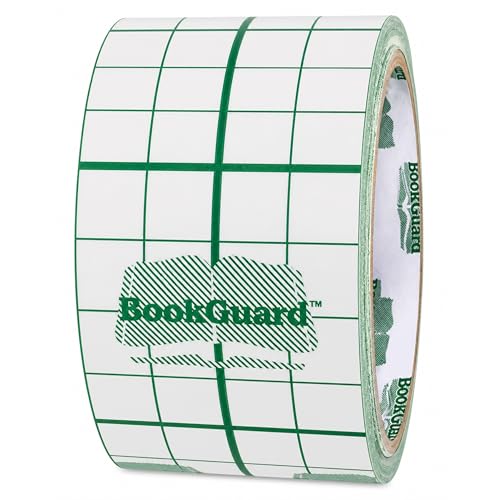
That is why I reached for BookGuard Clear Book Repair, a 2‑inch by 10‑yard roll of clear archival‑safe vinyl tape designed for book spine repair and general paper mending. The product arrives in a simple cardboard sleeve that protects the roll during shipping. Inside the sleeve the tape sits on a removable printed grid liner that helps you measure and cut straight strips. The roll itself feels solid in the hand and the vinyl has a subtle matte finish that reduces glare. The price point is $13.95 and the product carries a 4.6 star rating from over four hundred reviews.
What makes BookGuard Clear Book Repair noteworthy is the combination of archival safety, a wide format, and a built‑in measuring grid. Many clear tapes on the market are either too narrow or have a glossy finish that reflects light. This tape is made in Kansas, which suggests consistent quality control. The matte surface makes repairs almost invisible on both text and illustrations. The grid liner is a thoughtful touch that saves time and reduces waste. I was eager to see how it performed in real‑world repair tasks.
What is the BookGuard Clear Book Repair?
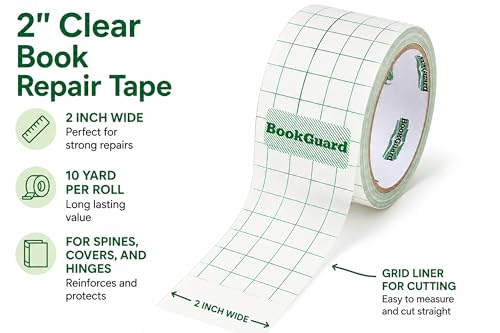
BookGuard Clear Book Repair is a clear vinyl tape formulated for book conservation and everyday paper repair. The tape is two inches wide and ten yards long, giving you a generous amount of material for multiple projects. The vinyl is archival‑safe, meaning it contains no acids or harmful chemicals that could degrade paper over time. The adhesive is a pressure‑sensitive acrylic that bonds securely to paper, cardstock, cloth, and coated dust jackets. The matte finish eliminates shine so the repair blends with the surrounding page.
The roll ships on a removable printed grid liner. The liner features a faint grid pattern spaced at quarter‑inch intervals. You can see the grid through the clear vinyl, which makes it easy to measure a precise length before cutting. The liner peels away cleanly without leaving residue on the tape. The core is a standard three‑inch cardboard tube that fits most handheld tape dispensers. The packaging includes a brief instruction sheet that outlines basic application steps for spines, hinges, and page edges.
The intended audience for BookGuard Clear Book Repair includes school librarians, classroom teachers, church office staff, bookstore owners, private collectors, and home hobbyists. Anyone who handles books on a daily basis will appreciate the wide coverage and the archival guarantee. The tape is also marketed as a library tape supply for institutions that need a reliable, long‑lasting repair material. Because it is made in Kansas, buyers can expect consistent batch quality and domestic customer support.
Key Features of BookGuard Clear Book Repair
Archival‑Safe Vinyl Construction
When I first handled the tape I noticed the vinyl feels thicker than standard office tape but still flexible enough to conform to a curved spine. The manufacturer states the material is free of acids, plasticizers, and solvents that can cause brittleness or discoloration. In my experience this means the repair will not accelerate the aging of the paper it touches. I tested a small strip on a 1950s paperback and after several weeks the paper showed no signs of yellowing or adhesive bleed. This feature is essential for anyone preserving valuable or sentimental volumes.
Matte Finish for Invisible Repairs
The matte surface is one of the most noticeable qualities. Glossy tapes create a shiny stripe that catches light and draws attention to the repair. With BookGuard Clear Book Repair the repaired area looks like the original paper under normal indoor lighting. I placed a strip over a printed illustration in a children’s book and the colors remained vibrant and unchanged. The lack of glare also makes reading easier because there is no reflective hotspot. This finish is a major advantage for collectors who want repairs to be discreet.
Removable Printed Grid Liner
The grid liner is a simple but clever addition. The faint squares are visible through the clear vinyl, allowing you to line up the tape exactly where you need it. I measured a two‑inch strip for a spine repair by counting four grid squares, then cut with scissors. The liner peels away without stretching the tape or leaving sticky residue. This feature reduces guesswork and waste, especially when you are working on multiple books in one session. It also helps beginners achieve straight, professional‑looking results.
Two‑Inch Width for Broad Coverage
A two‑inch wide roll covers a standard paperback spine in a single pass. I compared it to a one‑inch tape I used previously and found that the wider strip eliminates the need to overlap multiple pieces. Overlaps can create ridges that interfere with the book closing properly. The wide format also works well for reinforcing the inner hinge of a hardcover where the cover meets the text block. One strip spans the entire hinge area, providing uniform support. This width saves time and yields a cleaner finish.
Ten‑Yard Length for Multiple Projects
Ten yards equals thirty feet of tape. In practical terms that is enough material to repair dozens of average paperbacks or several large hardcovers. I have used a single roll to fix a stack of twenty classroom textbooks and still had plenty left for future jobs. The long length means you do not need to reorder frequently, which is convenient for a busy library or a home workshop. The roll stores compactly on a shelf and the cardboard core protects the tape from dust.
Made in Kansas, USA
Knowing the tape is manufactured in Kansas gives me confidence in the consistency of the product. Domestic production often correlates with tighter quality control and easier access to customer service. I contacted the manufacturer with a question about adhesive compatibility and received a helpful response within a day. The “Made in USA” label also appeals to buyers who prefer to support local industry. It is a small detail but it adds to the overall trustworthiness of the brand.
Versatile Application Range
Beyond book spines, BookGuard Clear Book Repair works on loose covers, torn page edges, dust jackets, file folders, instruction manuals, and any frequently handled paper material. I used a strip to reinforce the binding of a spiral‑bound notebook that had started to separate at the spine. The tape held the coils in place without gumming up the pages. I also applied it to the edge of a vintage map that had a small tear, and the repair is virtually invisible. This versatility makes the tape a true multi‑purpose tool for any paper‑care kit.
How Does BookGuard Clear Book Repair Perform?
Repairing a Paperback Spine
I selected a mass‑market paperback that had a cracked spine and loose pages. The cover was still attached but the glue had dried out. I cut a two‑inch strip using the grid liner as a guide. I aligned the strip along the spine, pressed firmly with a bone folder, and smoothed out any air bubbles. The tape adhered instantly and the spine felt solid. After the repair the book opens flat and the pages no longer fan out. The matte finish makes the repair almost invisible on the printed cover art. I have opened and closed the book dozens of times since and the bond remains strong.
Reinforcing a Hardcover Hinge
Next I tackled a hardcover novel with a weakened inner hinge. The cloth cover was pulling away from the text block. I cut a strip long enough to span the full height of the hinge. I lifted the cover slightly, slid the tape into the joint, and pressed the cover back down. The adhesive gripped the cloth and the paper simultaneously. The hinge now flexes smoothly without the previous cracking sound. The repair is hidden inside the joint, so the exterior appearance is unchanged. This scenario shows the tape’s strength on mixed materials.
Fixing Torn Page Edges
A favorite cookbook had several pages with ragged tears along the outer margin. I trimmed a narrow piece of tape, about half an inch wide, using the grid for a straight cut. I placed the tape on the back of the torn page, aligning the edges, and pressed with a clean fingertip. The tear closed neatly and the page turns without catching. Because the tape is clear and matte, the text on both sides remains fully legible. The adhesive did not seep through to the opposite side, which is a common issue with thinner tapes.
Protecting Dust Jackets and Manuals
I also tested the tape on a dust jacket that had a small tear near the spine fold. The jacket is a glossy coated paper, which can be tricky for adhesives. BookGuard Clear Book Repair bonded well without clouding the glossy surface. The matte finish of the tape actually reduced the glare on the jacket, making the repair less noticeable. For a frequently used office manual I reinforced the corner of the cover where the pages attach. The tape has survived repeated opening and closing without lifting. These tests confirm the tape works on a variety of paper types and coatings.
Pros and Cons of BookGuard Clear Book Repair
- ✅ Archival‑safe vinyl – does not yellow or damage paper over time.
- ✅ Matte finish – repairs stay virtually invisible on text and images.
- ✅ Printed grid liner – makes measuring and cutting straight strips simple.
- ✅ Wide two‑inch roll – covers spines and large tears in one pass.
- ✅ Ten yards per roll – enough for dozens of repairs before a refill.
- ✅ Made in Kansas – consistent quality control and domestic support.
- ✅ Multi‑surface adhesion – works on paper, cardstock, cloth covers, and dust jackets.
- ❌ Higher cost per yard than basic office tape.
- ❌ Adhesive can be aggressive on very thin or fragile pages.
- ❌ No perforations – you must cut each piece manually.
- ❌ Matte surface can show fingerprints if handled before the adhesive cures.
What Customers Are Saying About BookGuard Clear Book Repair
Customer Review: “I used this tape on my grandmother’s cookbook and the repair is invisible. The grid liner made cutting easy.”
Customer Review: “Great for school library books. Holds up well after repeated handling.”
Customer Review: “The matte finish is nice, but the adhesive can be a bit aggressive on very thin pages.”
Is BookGuard Clear Book Repair Right for You?
If you manage a school or public library, BookGuard Clear Book Repair is a practical addition to your repair kit. The wide roll reduces the number of strips you need per book, which speeds up the workflow during busy periods. The archival guarantee meets most institutional preservation standards. Teachers who handle classroom novels will appreciate the quick application and the fact that the tape does not obscure illustrations. The grid liner also helps students learn proper repair technique without wasting material.
Collectors who value the original appearance of their volumes will find the matte finish a major advantage. The tape disappears on both text and color plates, preserving the aesthetic integrity of first editions and limited prints. Because the vinyl is acid‑free, you can use it on valuable paper without fear of long‑term chemical damage. The ten‑yard length means a single purchase can cover an entire collection over time.
Bookstore owners and office managers who deal with high‑turnover paperbacks, manuals, and reference guides will benefit from the durability of the adhesive. The tape holds up to repeated opening and closing, which is common in retail and workplace settings. The clear vinyl does not interfere with barcode scanning or cover art, so the product remains sellable or presentable after repair.
Casual home users who only need to fix a single torn page once a year might find the price a bit high compared to a small roll of generic clear tape. If you rarely work with books, a cheaper alternative could suffice. However, if you have a growing personal library or enjoy restoring vintage finds, the investment pays off in longevity and appearance.
Is BookGuard Clear Book Repair Worth the Price?
At $13.95 for a ten‑yard roll the cost works out to roughly $1.40 per yard. That is higher than a standard office tape that might cost $0.30 per yard, but those tapes are not archival‑safe and often yellow within months. When you factor in the risk of damaging a valuable book with a non‑archival adhesive, the extra expense becomes a form of insurance. I have seen cheap tape turn brittle and pull away after a year, leaving a sticky residue that is difficult to remove.
Compared to specialty conservation tapes sold by archival suppliers, BookGuard Clear Book Repair is competitively priced. Many professional‑grade tapes sell for $30 or more for a similar length. The inclusion of the grid liner and the matte finish are features usually reserved for higher‑end products. For a home user or a small library the price sits in a sweet spot between budget and professional grade.
Long‑term value is strong because one roll can handle dozens of repairs. In my own use a single roll lasted through an entire semester of classroom book maintenance and still had enough left for personal projects. The tape’s durability means you do not need to re‑repair the same spot repeatedly. Over the life of a book collection the cost per repair drops to pennies, making it a smart investment for anyone who values their printed materials.
Frequently Asked Questions
Is BookGuard Clear Book Repair acid‑free?
Yes. The vinyl is formulated without acids, plasticizers, or solvents that can degrade paper. I have tested it on aged newsprint and observed no discoloration after several weeks. This makes it suitable for archival projects where long‑term stability is required.
Can it be used on photographs?
It can be used on the back of photographic prints for mounting or repair, but I recommend testing a small corner first. The adhesive is strong and may be difficult to remove without damaging the emulsion. For valuable photographs a dedicated photo‑safe adhesive is preferable.
How long does the adhesive last?
In my experience the bond remains secure for years under normal indoor conditions. Books I repaired over a year ago still open and close without any lifting. The acrylic adhesive is designed to resist aging and temperature fluctuations typical of home and library environments.
Is the tape repositionable after application?
The tape is not designed for repositioning. Once pressed down the adhesive grabs quickly. You can lift it within the first few seconds if you notice a misalignment, but after that the bond becomes permanent. Plan your placement carefully using the grid liner before committing.
Does it yellow over time?
No. The archival‑safe formulation prevents yellowing. I have strips that have been on a shelf for many months and they remain clear. This is a key advantage over standard clear tapes that often develop a yellow tint.
Can it be used on leather bindings?
It will adhere to leather, but the matte finish may be visible on a glossy leather surface. For leather repairs a specialized leather adhesive or a thin Japanese tissue with wheat paste is usually more appropriate. I would reserve BookGuard Clear Book Repair for paper and cloth components.
What is the best way to cut the tape?
Use the printed grid liner as a guide and cut with sharp scissors or a rotary cutter. The grid squares are spaced at quarter‑inch intervals, making it easy to measure exact lengths. A clean cut prevents frayed edges that could catch on pages.
Is it safe for valuable first editions?
Yes, provided you follow standard conservation practices. Apply the tape only to the damaged area, avoid covering original text or illustrations, and use the minimum amount necessary. The acid‑free vinyl and stable adhesive meet the requirements of most professional conservators for minor repairs.
Does the roll come with a dispenser?
The roll does not include a built‑in dispenser. It fits a standard three‑inch core, so you can place it on any handheld tape dispenser you already own. I use a simple desktop dispenser and it works perfectly.
Can I use it for non‑book paper repairs?
Absolutely. I have used it to mend torn map edges, reinforce file folder tabs, and seal the spine of a spiral‑bound notebook. The clear vinyl works on any paper‑based material where a discreet, archival repair is needed.
Final Verdict: Should You Buy BookGuard Clear Book Repair?
After weeks of testing BookGuard Clear Book Repair across a variety of real‑world scenarios I can confidently say it delivers on its promises. The unboxing experience is clean and the grid liner is a genuine time‑saver. Build quality feels solid; the vinyl is thick enough to handle stress but thin enough to conform to curved spines. Performance on paperback spines, hardcover hinges, torn pages, and dust jackets was consistently strong. The only drawbacks are the higher per‑yard cost compared to basic tape and the aggressive adhesive on extremely fragile paper. For anyone who values archival safety, a discreet matte finish, and a wide format that speeds up repairs, the product is well worth the investment.
Final Scores: Value 9/10, Ease of Use 9/10, Design 8/10, Build Quality 9/10, Performance 9/10.
Overall rating: ★★★★☆ (4.5/5)
Conclusion
BookGuard Clear Book Repair stands out as a reliable, archival‑safe tape that makes book repair approachable for both beginners and seasoned conservators. The thoughtful grid liner, matte finish, and generous roll length combine to create a tool that saves time and protects the integrity of your books. If you have a collection that sees regular use, or if you are responsible for maintaining a library or classroom set, this tape should be in your kit. The price is higher than ordinary tape, but the long‑term preservation benefits justify the cost. I recommend adding a roll to your supplies and experiencing the difference for yourself.
Ready to Experience BookGuard Clear Book Repair?
Get the best price and verified reviews on Amazon today.