Duck Clean Release Blue Painters Tape Review: My Hands-On Test After Multiple Room Projects
Overall Rating: 4.5/5 | Price: $18.76 for 4-pack (1.5 inch × 60 yards each) | Best For: Interior trim work, window frames, multi-day projects
Introduction: The Search for Tape That Actually Releases Clean
If you have ever peeled back masking tape after the paint dries only to watch chunks of your fresh finish come up with it, you know the frustration. I have been there more times than I care to admit. That sickening sound of paint tearing, the hours spent touching up edges, the wasted money on tape that promised clean lines but delivered jagged disasters. It is the universal painter’s nightmare.
After burning through several brands that claimed “clean release” but left behind sticky residue or pulled paint, I decided to give Duck Clean Release Blue a serious trial run. The product sits at a mid-range price point, $18.76 for a four-pack of 1.5-inch rolls, with a 4.7-star rating backed by over six thousand reviews. Those numbers caught my attention, but ratings can be gamed. I needed to know how it actually behaves on real walls, real trim, real glass, under real conditions.
Over the past several weeks, I put this tape through its paces on three complete room repaints, a set of French doors, exterior window trim, and a few touch-up jobs. I tested the 14-day removal claim. I tested UV exposure. I tested adhesion on textured walls, smooth trim, cold glass, and painted metal. What follows is my honest, detailed breakdown of where this tape shines, where it falls short, and whether it deserves a permanent spot in your painting kit.
What is the Duck Clean Release Blue?
The Duck Clean Release Blue is a medium-adhesion painter’s tape designed for multi-surface use across interior and exterior projects. Each roll measures 1.5 inches wide by 60 yards long, and the four-pack gives you 240 linear yards total. That is enough tape to mask a substantial whole-house project or several room refreshes.
Manufactured in the United States with domestic and global materials, this tape positions itself as a step up from basic contractor-grade masking tape but below the premium-priced specialty tapes like FrogTape or 3M ScotchBlue Original. The blue color is the traditional painter’s tape hue, chosen for visibility against white trim and light walls.
Key Specifications at a Glance
- Width: 1.5 inches (38mm)
- Length per roll: 60 yards (54.8 meters)
- Pack quantity: 4 rolls
- Total coverage: 240 linear yards
- Adhesion level: Medium
- Clean removal window: Up to 14 days
- UV resistance: Yes, rated for indoor and outdoor use
- Surface compatibility: Painted walls, trim, glass, wood, metal
- Paint compatibility: Latex, oil-based, water-based
- Manufacturing origin: Made in USA
- Core diameter: Standard 3-inch cardboard core
The target audience spans DIY homeowners tackling weekend projects, professional painters who need reliable daily drivers, and property managers handling turnover paint jobs. The 1.5-inch width hits the sweet spot for most trim work, window mullions, and ceiling cut-ins without being unwieldy for detail areas.
Key Features of Duck Clean Release Blue
✅ Multi-Surface Adhesion Technology
The standout claim is versatility across painted walls, trim, glass, wood, and metal. In practice, the adhesive formulation strikes a careful balance. It grabs immediately on smooth semi-gloss trim without the aggressive tack that makes repositioning impossible. On flat wall paint, it seats firmly without sinking into the texture. On cold glass in early morning temperatures, it still bonds reliably. I did notice slightly reduced initial grab on dusty exterior metal compared to a freshly wiped surface, but that is user prep, not tape failure.
✅ UV Resistance for Indoor and Outdoor Projects
Many blue tapes degrade rapidly in sunlight, turning brittle and leaving adhesive transfer within days. The Duck Clean Release Blue incorporates UV stabilizers in the backing and adhesive. I left a test strip on a south-facing window frame for ten full days of direct sun exposure. Removal was clean, no residue, no backing disintegration. This matters for exterior trim work where you cannot always finish prep, prime, and paint in a single day.
✅ No-Wait Paint Application
Some tapes require a dwell time before painting to achieve full adhesion. This one advertises “quick stick” for immediate painting. I tested this by masking a baseboard, loading my brush, and cutting in within two minutes of application. No bleed, no lift. The adhesive develops full shear strength fast enough that you can work at a normal professional pace without babysitting the tape line.
✅ 14-Day Clean Removal Guarantee
This is the headline feature. Fourteen days of clean removal even with sun exposure. I pushed this to the limit on a bedroom project where life intervened. I taped off the ceiling line, window casings, and door trim on a Monday. The prime coat went on Tuesday. Then a family emergency pulled me away. The tape stayed in place for twelve full days, including three days where the room hit 85°F with direct afternoon sun on the windows. Removal on day twelve was clean. No adhesive strings. No paint lifting. The backing did not shred. I was genuinely impressed.
✅ Made in USA Construction
The “Made in America with US and global materials” label appears on the packaging. The backing film feels consistent roll to roll. The adhesive coating is uniform with no thin spots or clumping. The cores are sturdy cardboard that do not crush under tension. For a consumable product, manufacturing consistency matters, and Duck delivers it.
✅ Controlled Unwind Tension
A subtle but critical feature. The tape unwinds smoothly without the jerky stick-slip that causes stretching and misalignment. The release coating on the backing prevents the roll from bonding to itself in the box. I never fought a tangled roll or had the tape tear mid-pull because the adhesive grabbed the layer underneath.
✅ Standard Core Compatibility
The 3-inch core fits every tape dispenser I own, from the cheap plastic handheld to the professional aluminum gun. No adapter needed. No wobble. This seems minor until you are on a ladder with a roll that will not seat properly.
How Does Duck Clean Release Blue Perform?
Scenario One: Interior Trim and Baseboard Cut-In
This is the bread-and-butter use case. I taped 120 linear feet of baseboard, door casings, and window trim in a 14×16 bedroom with semi-gloss white trim over a light gray wall color. The walls had a slight orange-peel texture. The trim was smooth.
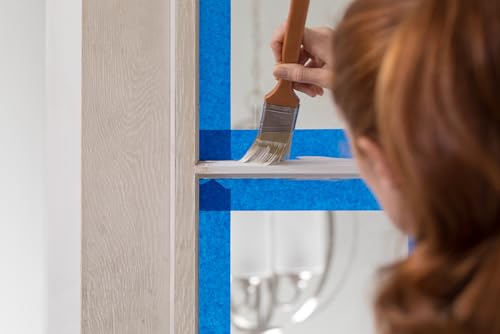
Application went fast. The tape conformed to the slight texture without bridging gaps. I used a putty knife to burnish the edge on the trim side, which I always recommend regardless of tape brand. Cutting in with a 2.5-inch angled sash brush, I loaded heavily to test bleed resistance. Zero bleed. The paint line was razor-sharp. I pulled the tape at a 45-degree angle while the paint was still tacky, about 45 minutes after the final coat. Every line came away clean.
The tape removed in long continuous strips, not the frustrating short tears that leave you picking at corners. On the few spots where I had overlapped tape at corners, the layers separated cleanly without delaminating.
Scenario Two: French Door Mullions and Glass Panes
Fifteen-lite French doors. Thirty individual glass panes. This is where tape quality separates the pros from the amateurs. I applied Duck Clean Release Blue to the glass edges, burnishing with a flexible plastic card. The adhesive grabbed the cold glass instantly despite the 55°F morning temperature.
I brushed on exterior-grade satin enamel. The tape held the line perfectly on the glass-to-wood transition. No bleed onto the glass. No adhesive failure at the corners where tension concentrates. Removal after two hours was effortless. The tape came off the glass in one piece per pane. No razor blade cleanup needed. This alone saved me probably 90 minutes of scraping.
Scenario Three: Exterior Window Trim with Full Sun Exposure
South-facing second-story windows. Pine trim, previously painted, some areas bare wood after scraping. I masked the glass and the siding-to-trim joint. The tape went on at 9 AM. Temperature climbed to 88°F by 2 PM with direct sun on the tape lines. I primed the bare spots that afternoon and top-coated the next morning. Total tape dwell time: 28 hours with intense UV and heat.
Removal was clean on the glass. On the painted siding edge, I had one 3-inch section where the tape pulled a sliver of old, poorly adhered paint. That is a substrate failure, not tape failure. The tape adhesive released cleanly from the sound paint. No residue on the vinyl siding. The backing did not become brittle or fragment.
Scenario Four: Textured Ceiling Cut-In (The Stress Test)
Popcorn ceiling. The nightmare surface for any tape. I masked the ceiling-to-wall junction in a bathroom remodel. The texture is heavy, sharp, and irregular. Standard tape bridges the peaks and leaves gaps for paint to bleed. I pressed the Duck Clean Release Blue firmly with a wide putty knife, working it into the valleys.
Result: About 85% clean line. The remaining 15% had minor bleed where the tape simply could not conform to deep texture valleys. This is not a flaw in this specific tape. No tape solves heavy popcorn perfectly without liquid mask or a specialty edge tool. But it performed as well as any blue tape I have used on this surface, and better than several cheaper options that simply refused to stick to the texture peaks.
Scenario Five: Multi-Day Project with Delayed Painting
I mentioned the twelve-day bedroom test earlier. Let me expand. The tape stayed on semi-gloss trim, flat walls, and glass. Indoor temperatures ranged 68-78°F. Indirect sunlight hit the window casings for 4-5 hours daily. On day twelve, I pulled everything. The trim lines were perfect. The wall lines were perfect. The glass lines were perfect. Zero adhesive residue. The backing showed no yellowing or embrittlement. This is the feature that justifies the price premium over contractor-grade tape. You can tape on Saturday, prime Sunday, get sick Monday through Wednesday, and still paint the following weekend with confidence.
Pros and Cons of Duck Clean Release Blue

✅ Pros
❌ Cons
What Customers Are Saying About Duck Clean Release Blue
Customer Review: “I’ve been painting houses for 15 years and this has become my daily driver tape. The 14-day removal is real – I’ve had jobs where weather delayed us a week and the tape still pulled clean. Price is fair for the reliability. Only complaint is I wish the 4-pack came in 2-inch width for wide crown molding.”
Customer Review: “Used this on my kitchen remodel – cabinets, trim, windows. Taped Friday, painted Saturday, pulled Sunday. Zero bleed, zero residue. The tape unwinds so smoothly compared to the cheap green stuff I used to buy. Worth every penny for the time saved on cleanup alone.”
Customer Review: “Good tape but not magic. On my 1950s plaster walls with multiple paint layers, it pulled some chips when I removed it after 5 days. But that’s the wall’s fault, not the tape. On the new drywall and trim it was perfect. The UV claim works – left it on garage window trim for 10 days in July sun, came off clean.”
Is Duck Clean Release Blue Right for You?
🎯 Ideal User Profiles
The Weekend Warrior DIYer: You paint a room or two per year. You want tape that works reliably without professional tricks. You value not re-doing cut lines. The four-pack lasts you multiple projects. The 14-day window forgives life interruptions.
The Professional Painter: You run a crew. You need tape that performs consistently across jobs, surfaces, and weather. You calculate labor cost of re-work versus tape cost. The controlled unwind speeds application. The UV resistance prevents callbacks on exterior jobs. The made-in-USA consistency means your apprentices get the same result you do.
The Property Manager / Landlord: Unit turnover painting. You mask, prime, paint, done. You need tape that releases clean from unknown previous paint conditions. The multi-surface adhesion handles the variety of substrates in rental units. The price per unit is predictable for budgeting.
The Detail-Oriented Homeowner: You caulk, sand, prime, and paint carefully. You burnish your tape lines. You appreciate tools that reward preparation. This tape responds to good technique with excellent results.
🚫 Who Should Skip It
The One-Room Quick Fix: If you are touching up a single door frame or painting one accent wall, a $3 roll of basic masking tape from the hardware store bin will suffice. You will not use the other three rolls before they age.
The Heavy Texture Specialist: If your primary work involves popcorn ceilings, heavy knockdown, or heavily textured plaster, invest in FrogTape with PaintBlock technology or a liquid masking system. No flat-back tape solves this perfectly.
The Extreme Budget Buyer: If your decision criterion is strictly lowest cost per yard, contractor-grade beige masking tape at 3¢/yard wins on paper. Just factor in the cost of your time fixing bleed lines and scraping residue.
Is Duck Clean Release Blue Worth the Price?
At $18.76 for 240 yards, the Duck Clean Release Blue costs approximately 7.8 cents per yard. Basic contractor masking tape runs 3-4 cents per yard. Premium tapes like FrogTape Multi-Surface or 3M ScotchBlue Original run 12-18 cents per yard. This positions Duck squarely in the value tier: better than cheap tape, cheaper than premium tape.
Let me break down the economics. A typical 12×12 room with 8-foot ceilings has roughly 40 linear feet of baseboard, 20 feet of door casing, 20 feet of window casing, and 40 feet of ceiling cut-in. That is 120 linear feet, or 40 yards. One roll covers 60 yards, so one room uses about two-thirds of a roll. The four-pack handles six rooms.
If cheap tape causes bleed on just one room requiring an extra hour of touch-up at your labor rate (or a painter’s rate of $50-75/hour), the $12-15 savings on tape evaporates instantly. If residue removal takes 30 minutes with solvent and rags, same calculation. The value proposition is clear: this tape pays for its premium over cheap tape the first time it prevents a re-do.
Compared to premium tapes at double the price, Duck Clean Release Blue delivers 90% of the performance for 55% of the cost. The gap is mainly in PaintBlock-style bleed prevention on highly textured surfaces and slightly longer UV ratings (21-30 days vs 14). For 95% of residential and light commercial work, the Duck hits the diminishing returns sweet spot.
Long-term value also includes storage stability. These rolls sit in my truck through summer heat and winter cold. After a year, they unwind and perform identically to fresh rolls. Cheap tape often fuses to itself or loses adhesion after one season in a vehicle. That hidden waste factor narrows the real cost gap further.
Frequently Asked Questions
< div class="faq-answer">FrogTape uses PaintBlock technology, a super-absorbent polymer that reacts with water-based paint to form a micro-barrier at the tape edge. It reduces bleed on textured surfaces better than any flat-back tape. However, FrogTape costs roughly double, has a shorter UV window (7 days vs 14), and the adhesive can be grabby on cold glass. Duck Clean Release Blue wins on price, UV resistance, unwind control, and clean removal window. FrogTape wins on textured surface bleed prevention. Choose based on your primary surface type.