Featured image for this comprehensive guide about nutrition information
Image source: nutrition-malin.fr
<h1>Essential Nutrition Information Everyone Should Know</h1>
<p>In an age overflowing with dietary fads, conflicting advice, and an endless stream of health trends, it can feel overwhelming to discern what truly constitutes healthy eating. Many of us navigate our daily lives bombarded by advertisements for processed foods, while simultaneously trying to keep up with the latest superfood craze. This constant bombardment can leave even the most well-intentioned individuals confused about fundamental <strong>nutrition information</strong>.</p>
<p>Yet, understanding basic <strong>nutrition information</strong> isn’t just about weight management; it’s about empowering yourself to make choices that profoundly impact your energy levels, mood, cognitive function, and long-term health. A solid grasp of what your body needs to thrive can be the most powerful tool in preventing chronic diseases, boosting your immune system, and enhancing your overall quality of life. Think of your body as a high-performance machine – it requires the right fuel and maintenance to operate at its best.</p>
<p>This comprehensive guide aims to cut through the noise, providing you with clear, actionable, and science-backed <strong>nutrition information</strong>. We’ll explore the fundamental components of a healthy diet, show you how to interpret food labels, debunk common myths, and equip you with practical strategies to integrate better eating habits into your daily routine. By the end of this post, you’ll have a deeper appreciation for the food you eat and the knowledge to make informed decisions that nourish your body from the inside out.</p>
<h2>The Foundation: Understanding Macronutrients</h2>
<p>Macronutrients are the main components of food that your body needs in large amounts to provide energy, build and repair tissues, and support essential bodily functions. There are three primary macronutrients: carbohydrates, proteins, and fats. Each plays a distinct yet crucial role in your health, and understanding their functions is key to a balanced diet and essential <strong>nutrition information</strong>.</p>
<h3>Carbohydrates: Fuel for Life</h3>
<p>Often misunderstood, carbohydrates are your body’s primary source of energy. They are broken down into glucose, which fuels your brain, muscles, and central nervous system. Not all carbs are created equal, however. We distinguish between complex carbohydrates and simple carbohydrates.</p>
<ul>
<li><strong>Complex Carbohydrates:</strong> Found in whole grains (oats, brown rice, quinoa), legumes (beans, lentils), and vegetables (broccoli, spinach). These are digested slowly, providing a steady release of energy, fiber, and essential nutrients. They help stabilize blood sugar levels and promote satiety.</li>
<li><strong>Simple Carbohydrates:</strong> Found in refined sugars (table sugar, high-fructose corn syrup), sweets, soda, and white bread. These are rapidly digested, leading to quick spikes in blood sugar and often a subsequent crash. They generally offer little nutritional value beyond calories.</li>
</ul>
<p><strong>Actionable Tip:</strong> Prioritize complex carbohydrates for sustained energy and better overall health. Aim for whole grains, fruits, and vegetables over highly processed options.</p>
<h3>Proteins: The Body’s Builders</h3>
<p>Proteins are vital for virtually every function in your body. They are the building blocks of muscles, organs, skin, and hormones, and play a critical role in repairing tissues, creating enzymes, and supporting immune function. Proteins are made up of amino acids, some of which are “essential” – meaning your body cannot produce them and you must obtain them through your diet.</p>
<ul>
<li><strong>Sources:</strong> Lean meats, poultry, fish, eggs, dairy products, legumes, nuts, seeds, and tofu. Animal sources typically provide “complete” proteins (all essential amino acids), while plant sources often need to be combined to achieve a complete profile over the course of a day.</li>
</ul>
<p><strong>Actionable Tip:</strong> Include a source of lean protein with every meal to support muscle maintenance, satiety, and metabolic health. For vegetarians and vegans, ensure a diverse intake of plant proteins to cover all essential amino acids.</p>
<h3>Fats: Essential for Function</h3>
<p>Despite their often-negative reputation, dietary fats are essential for many bodily functions. They provide concentrated energy, help absorb fat-soluble vitamins (A, D, E, K), protect organs, insulate the body, and are crucial for hormone production and brain health. Understanding healthy fats is a critical piece of <strong>nutrition information</strong>.</p>
<ul>
<li><strong>Healthy Fats (Unsaturated):</strong> Monounsaturated (found in olive oil, avocados, nuts) and polyunsaturated (found in fatty fish like salmon, flaxseeds, walnuts, and sunflower oil). These fats can improve cholesterol levels and reduce the risk of heart disease.</li>
<li><strong>Unhealthy Fats (Saturated & Trans):</strong> Saturated fats (found in red meat, butter, full-fat dairy) should be consumed in moderation. Trans fats (often found in processed foods, baked goods) are industrially produced and highly detrimental to heart health, and should be avoided as much as possible.</li>
</ul>
<p><strong>Actionable Tip:</strong> Replace unhealthy fats with healthier options. Cook with olive oil, snack on nuts and seeds, and incorporate fatty fish into your diet a few times a week.</p>
<h2>Micronutrients: Small but Mighty</h2>
<p>While macronutrients provide energy, micronutrients are the vitamins and minerals your body needs in smaller amounts to perform a vast array of physiological functions. They are essential for metabolism, immune function, nerve function, bone health, and much more. A deficiency in even one micronutrient can have significant health consequences, highlighting the importance of comprehensive <strong>nutrition information</strong>.</p>
<h3>Vitamins: Orchestrators of Health</h3>
<p>Vitamins are organic compounds vital for normal growth and metabolism. They are categorized into two groups:</p>
<ul>
<li><strong>Fat-Soluble Vitamins (A, D, E, K):</strong> Stored in the body’s fatty tissues and liver. They are absorbed more easily when consumed with fat.
<ul>
<li><strong>Vitamin A:</strong> Vision, immune function, skin health (carrots, sweet potatoes, liver).</li>
<li><strong>Vitamin D:</strong> Bone health, immune system (sunlight, fatty fish, fortified dairy).</li>
<li><strong>Vitamin E:</strong> Antioxidant, skin health (nuts, seeds, leafy greens).</li>
<li><strong>Vitamin K:</strong> Blood clotting, bone health (leafy greens, broccoli).</li>
</ul>
</li>
<li><strong>Water-Soluble Vitamins (B-complex and C):</strong> Not stored in the body and need to be replenished regularly.
<ul>
<li><strong>Vitamin C:</strong> Immune system, collagen production (citrus fruits, bell peppers, broccoli).</li>
<li><strong>B Vitamins (B1, B2, B3, B5, B6, B7, B9, B12):</strong> Energy metabolism, nerve function, red blood cell formation (whole grains, meat, eggs, dairy, leafy greens).</li>
</ul>
</li>
</ul>
<h3>Minerals: The Body’s Structural Support</h3>
<p>Minerals are inorganic elements that originate in the earth and water and are absorbed by plants or eaten by animals. They are essential for strong bones, fluid balance, nerve transmission, and many other processes.</p>
<ul>
<li><strong>Major Minerals:</strong> Calcium, phosphorus, magnesium, sodium, potassium, chloride, sulfur. Needed in larger amounts.
<ul>
<li><strong>Calcium:</strong> Bone health, muscle function (dairy, leafy greens, fortified foods).</li>
<li><strong>Potassium:</strong> Fluid balance, blood pressure (bananas, potatoes, spinach).</li>
<li><strong>Magnesium:</strong> Muscle & nerve function, blood sugar control (nuts, seeds, whole grains).</li>
</ul>
</li>
<li><strong>Trace Minerals:</strong> Iron, zinc, iodine, selenium, copper, manganese, fluoride, chromium, molybdenum. Needed in smaller amounts.
<ul>
<li><strong>Iron:</strong> Oxygen transport (red meat, beans, spinach).</li>
<li><strong>Zinc:</strong> Immune function, wound healing (meat, shellfish, legumes).</li>
<li><strong>Iodine:</strong> Thyroid function (iodized salt, seafood).</li>
</ul>
</li>
</ul>
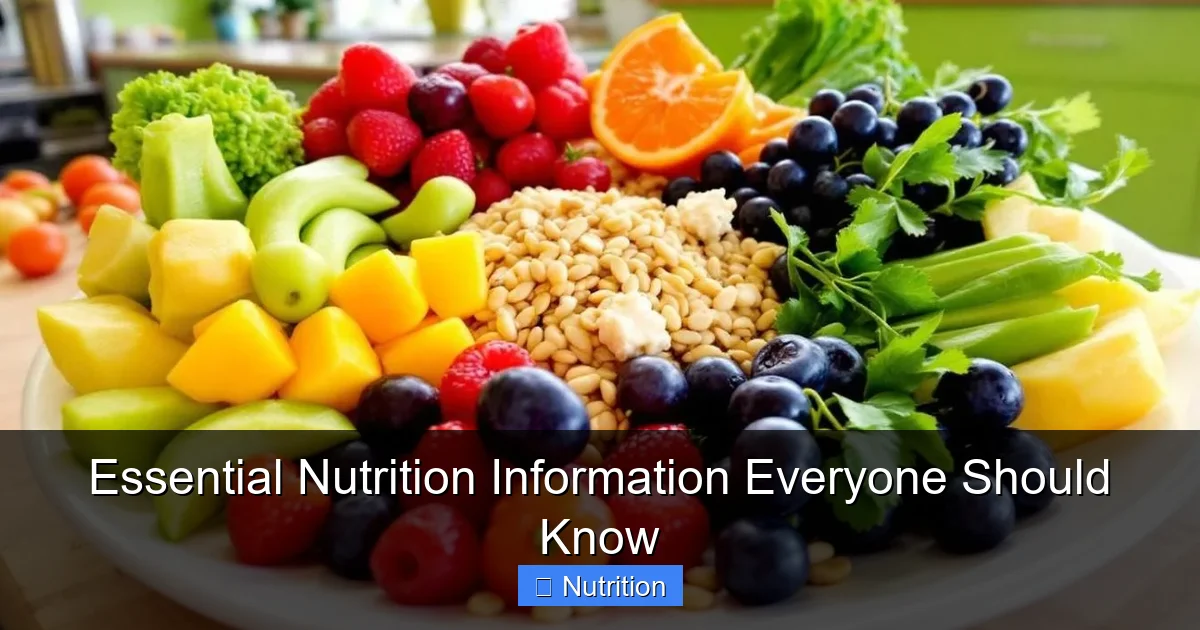
<p><strong>Actionable Tip:</strong> Eat a wide variety of colorful fruits and vegetables, whole grains, and lean proteins to ensure you’re getting a broad spectrum of essential vitamins and minerals. Think “eat the rainbow” for diverse <strong>nutrition information</strong> intake.</p>
<h2>Decoding the Labels: Your Guide to Informed Food Choices</h2>
<p>Understanding food labels is one of the most practical and empowering pieces of <strong>nutrition information</strong> you can acquire. These labels provide a snapshot of a product’s nutritional content, helping you make healthier choices and avoid hidden sugars, unhealthy fats, and excessive sodium. Don’t just glance at the calorie count; delve deeper.</p>
<h3>Key Components of a Nutrition Facts Label</h3>
<ol>
<li><strong>Serving Size and Servings Per Container:</strong> This is the most crucial starting point. All other numbers on the label are based on ONE serving. If you eat two servings, you double all the numbers.</li>
<li><strong>Calories:</strong> Energy content per serving. Useful for calorie awareness, but not the only factor.</li>
<li><strong>Total Fat, Saturated Fat, Trans Fat:</strong> Aim for lower saturated fat and ideally zero trans fat. Prioritize healthy fats (monounsaturated/polyunsaturated) which may not always be explicitly listed but can be inferred.</li>
<li><strong>Cholesterol & Sodium:</strong> High intake can contribute to heart disease and high blood pressure. Many processed foods are surprisingly high in sodium.</li>
<li><strong>Total Carbohydrates, Fiber, Total Sugars, Added Sugars:</strong> Look for higher fiber content (at least 3g per serving is good) and lower added sugars. Added sugars are a major concern in many processed foods and beverages. The FDA recommends limiting added sugars to less than 10% of your daily calories.</li>
<li><strong>Protein:</strong> Essential for satiety and muscle health. Higher is generally better.</li>
<li><strong>Vitamins & Minerals:</strong> The % Daily Value (DV) indicates how much a nutrient in a serving contributes to a total daily diet of 2,000 calories. 5% DV or less is low, 20% DV or more is high. Aim for higher percentages of beneficial nutrients (like fiber, vitamins, minerals) and lower percentages of less desirable ones (like saturated fat, sodium, added sugars).</li>
</ol>
<h3>Ingredient List: What to Look For</h3>
<p>Ingredients are listed in descending order by weight. This means the first few ingredients make up the bulk of the product. Be wary of products where sugar (or its many aliases like high-fructose corn syrup, dextrose, maltose, sucrose) or unhealthy fats (like hydrogenated oils) are among the first few ingredients.</p>
<ul>
<li><strong>Prioritize Whole Foods:</strong> Look for short ingredient lists composed primarily of whole, recognizable foods.</li>
<li><strong>Watch for Additives:</strong> Be mindful of artificial colors, flavors, and preservatives.</li>
</ul>
<p><strong>Actionable Tip:</strong> Spend a few extra seconds reading labels, especially for new products. This small effort yields significant <strong>nutrition information</strong> that empowers healthier choices.</p>
<h2>Beyond the Basics: Hydration, Fiber, and Gut Health</h2>
<p>While macronutrients and micronutrients form the bedrock of good health, other elements are equally vital for optimal functioning. Often overlooked in basic <strong>nutrition information</strong> discussions, proper hydration, adequate fiber intake, and a healthy gut microbiome are crucial for overall well-being.</p>
<h3>The Power of Water</h3>
<p>Water isn’t just a beverage; it’s an essential nutrient. Making up about 60% of your body weight, water plays a role in nearly every bodily function:</p>
<ul>
<li><strong>Regulates Body Temperature:</strong> Through sweating and respiration.</li>
<li><strong>Transports Nutrients:</strong> Carries oxygen and nutrients to cells.</li>
<li><strong>Lubricates Joints:</strong> Helps prevent friction.</li>
<li><strong>Flushes Waste Products:</strong> Via urine and feces.</li>
<li><strong>Aids Digestion:</strong> Helps break down food.</li>
</ul>
<p>Even mild dehydration can lead to fatigue, headaches, decreased cognitive function, and impaired physical performance. The recommendation for daily water intake varies, but generally, men should aim for around 3.7 liters (about 15.5 cups) and women around 2.7 liters (about 11.5 cups) from all beverages and foods.</p>
<p><strong>Actionable Tip:</strong> Carry a reusable water bottle. Start your day with a glass of water. If plain water feels boring, infuse it with fruits or vegetables.</p>
<h3>Fiber: The Digestive Superstar</h3>
<p>Fiber, a type of carbohydrate that your body can’t digest, is incredibly beneficial for your health. It comes in two main forms:</p>
<ul>
<li><strong>Soluble Fiber:</strong> Dissolves in water, forming a gel-like substance. Helps lower cholesterol and blood sugar levels. Found in oats, beans, apples, and citrus fruits.</li>
<li><strong>Insoluble Fiber:</strong> Doesn’t dissolve in water. Adds bulk to stool, promoting regular bowel movements and preventing constipation. Found in whole grains, nuts, seeds, and vegetable skins.</li>
</ul>
<p>Most adults in Western countries fall far short of the recommended 25-38 grams of fiber per day. Adequate fiber intake is linked to reduced risk of heart disease, type 2 diabetes, certain cancers, and improved digestive health.</p>
<p><strong>Actionable Tip:</strong> Gradually increase your fiber intake by incorporating more whole fruits, vegetables, legumes, and whole grains into your diet. Don’t forget to drink plenty of water as you increase fiber.</p>
<h3>Nurturing Your Gut Microbiome</h3>
<p>Your gut is home to trillions of bacteria, fungi, and other microbes collectively known as the gut microbiome. This complex ecosystem plays a profound role in digestion, immune function, nutrient absorption, and even mood. A balanced and diverse microbiome is crucial for overall health.</p>
<ul>
<li><strong>Prebiotics:</strong> Non-digestible fiber compounds that feed beneficial gut bacteria. Found in garlic, onions, leeks, asparagus, bananas, and whole grains.</li>
<li><strong>Probiotics:</strong> Live beneficial bacteria that, when consumed, can improve gut health. Found in fermented foods like yogurt (with live active cultures), kefir, sauerkraut, kimfi, and kombucha.</li>
</ul>
<p><strong>Actionable Tip:</strong> Incorporate fermented foods and plenty of fiber-rich plant foods into your diet to support a healthy gut. Reduce your intake of processed foods, refined sugars, and artificial sweeteners, which can negatively impact gut diversity.</p>
<h2>Separating Fact from Fiction: Common Nutrition Myths and Reliable Sources</h2>
<p>The world of <strong>nutrition information</strong> is rife with misinformation, quick fixes, and sensationalized headlines. It’s easy to fall prey to myths that can derail your health goals or lead to unnecessary dietary restrictions. Learning to critically evaluate sources and debunk common myths is as important as knowing what to eat.</p>
<h3>Popular Nutrition Myths Debunked</h3>
<ul>
<li><strong>Myth 1: Carbs are inherently bad for you.</strong>
<p><em>Reality:</em> As discussed, complex carbohydrates are vital for energy and overall health. The problem lies with refined, processed carbs and excessive sugar, not whole grains, fruits, and vegetables.</p></li>
<li><strong>Myth 2: Eating fat makes you fat.</strong>
<p><em>Reality:</em> While fats are calorie-dense, healthy fats are crucial for satiety, hormone production, and nutrient absorption. Excess calories from any source lead to weight gain. Focusing on healthy fats in moderation is key.</p></li>
<li><strong>Myth 3: Detox diets or cleanses are necessary to “cleanse” your body.</strong>
<p><em>Reality:</em> Your liver and kidneys are incredibly efficient at detoxifying your body naturally. Most detox diets are unproven, unnecessary, and can even be harmful due to extreme calorie restriction or laxative ingredients.</p></li>
<li><strong>Myth 4: Organic food is always healthier.</strong>
<p><em>Reality:</em> Organic foods reduce pesticide exposure and may have some nutritional advantages, but not always significantly. A conventional apple is still far healthier than an organic cookie. Prioritize eating more fruits and vegetables, regardless of whether they’re organic, and consider the “Dirty Dozen” for specific organic choices if budget allows.</p></li>
<li><strong>Myth 5: You need to eat multiple small meals a day to boost metabolism.</strong>
<p><em>Reality:</em> The impact on metabolism is minimal. The total daily calorie intake and nutrient distribution matter more. Eat when you’re hungry and stop when you’re full, whether that’s three meals or five smaller ones.</p></li>
</ul>
<h3>Where to Find Trustworthy Nutrition Information</h3>
<p>With so much conflicting advice online, how do you find accurate <strong>nutrition information</strong>?</p>
<ul>
<li><strong>Registered Dietitian Nutritionists (RDNs):</strong> These are credentialed experts in the field of nutrition. They have extensive education and training and can provide personalized, evidence-based advice.</li>
<li><strong>Government Health Organizations:</strong> Agencies like the Centers for Disease Control and Prevention (CDC), the National Institutes of Health (NIH), and the USDA in the U.S., or their equivalents in other countries (e.g., NHS in the UK, Health Canada), provide evidence-based dietary guidelines and health recommendations.</li>
<li><strong>Professional Associations:</strong> Organizations like the Academy of Nutrition and Dietetics or the American Heart Association offer reliable resources.</li>
<li><strong>Peer-Reviewed Scientific Journals:</strong> For those who want to dive deep, scientific studies are the gold standard, but often require a scientific background to interpret correctly.</li>
</ul>
<p><strong>Actionable Tip:</strong> Be skeptical of sensational claims, quick fixes, and products promising miraculous results. Always cross-reference <strong>nutrition information</strong> with reputable sources, and consult an RDN for personalized advice. For more insights on distinguishing credible science from pseudoscience, check out our post on <a href=”https://usfamilymart.com/nutrition-facts-vs-fiction-what-science-says/”>Nutrition Facts vs Fiction: What Science Says</a>.</p>
<h2>Practical Strategies for Incorporating Healthy Nutrition</h2>
<p>Knowing all the <strong>nutrition information</strong> in the world is only half the battle; the other half is putting it into practice. Here are some actionable strategies to help you build and maintain healthier eating habits without feeling overwhelmed.</p>
<h3>Planning Your Meals</h3>
<p>Meal planning is one of the most effective tools for consistent healthy eating. It reduces impulse buys, saves time, and helps you stay on track.</p>
<ul>
<li><strong>Weekly Menu:</strong> Spend 15-30 minutes each week planning your meals and snacks. This helps ensure you have balanced options available.</li>
<li><strong>Grocery List:</strong> Create a detailed grocery list based on your meal plan. Stick to the list to avoid unhealthy impulse purchases.</li>
<li><strong>Batch Cooking:</strong> Cook larger quantities of staples like whole grains (quinoa, brown rice), roasted vegetables, and lean proteins (chicken breast, beans) at the beginning of the week. This makes quick, healthy meals effortless during busy days.</li>
<li><strong>Healthy Snacking:</strong> Prepare healthy snacks in advance, such as chopped veggies with hummus, fruit, a handful of nuts, or Greek yogurt. This prevents reaching for processed options when hunger strikes.</li>
</ul>
<h3>Mindful Eating Practices</h3>
<p>How you eat is almost as important as what you eat. Mindful eating involves paying attention to your food and your body’s signals.</p>
<ul>
<li><strong>Eat Slowly:</strong> It takes about 20 minutes for your brain to register that your stomach is full. Slowing down allows your body to catch up and can prevent overeating.</li>
<li><strong>Tune In to Hunger and Fullness Cues:</strong> Eat when you’re truly hungry, not just bored or stressed. Stop when you’re comfortably full, not stuffed.</li>
<li><strong>Minimize Distractions:</strong> Turn off the TV, put away your phone, and focus on the flavors, textures, and aromas of your food. This enhances enjoyment and awareness.</li>
</ul>
<h3>Small Changes, Big Impact</h3>
<p>You don’t need to overhaul your entire diet overnight. Small, consistent changes add up.</p>
<ol>
<li><strong>Hydrate First:</strong> Drink a glass of water before each meal.</li>
<li><strong>Add a Vegetable:</strong> Aim to add an extra serving of vegetables to at least one meal each day.</li>
<li><strong>Swap Sugary Drinks:</strong> Replace sodas and sweetened juices with water, unsweetened tea, or sparkling water with a splash of fruit.</li>
<li><strong>Prioritize Whole Grains:</strong> Choose whole-wheat bread, brown rice, or oats instead of white varieties.</li>
<li><strong>Cook More at Home:</strong> Preparing your own meals gives you control over ingredients, portion sizes, and cooking methods. Studies show that adults who cook at home more often tend to have healthier diets.</li>
</ol>
<p><strong>Data Insight:</strong> A study published in the journal <em>Public Health Nutrition</em> found that people who cook at home frequently consume fewer carbohydrates, less sugar, and less fat than those who cook less often.</p>
<h2>Conclusion</h2>
<p>Empowering yourself with accurate <strong>nutrition information</strong> is not just about following a diet; it’s about building a sustainable lifestyle that supports your health, energy, and longevity. By understanding the roles of macronutrients and micronutrients, learning to decipher food labels, prioritizing hydration and gut health, and distinguishing fact from fiction, you gain the confidence to make choices that truly nourish your body.</p>
<p>Remember, a healthy relationship with food is one of balance, enjoyment, and mindful awareness. There’s no single “perfect” diet, but rather a spectrum of nutrient-dense choices that cater to individual needs and preferences. Start small, be consistent, and don’t be afraid to seek guidance from qualified professionals like Registered Dietitian Nutritionists. Your journey toward better health through informed <strong>nutrition information</strong> is a continuous one, and every conscious choice is a step in the right direction. Embrace the power of food, and let it fuel your best life.</p>
Quick Answers to Common Questions
What exactly is “nutrition information” on food labels?
It’s the detailed breakdown of nutrients like calories, fats, carbs, and vitamins in a serving of food. This “nutrition information” helps you understand what you’re eating and how it contributes to your daily diet.
Why should I bother looking at “nutrition information”?
Reading the “nutrition information” empowers you to make healthier choices for yourself and your family. It helps you spot hidden sugars, unhealthy fats, and ensures you’re getting enough essential nutrients.
What’s the most important part of the “nutrition information” to check first?
Always start with the serving size and total calories! This foundational “nutrition information” dictates all other values, so understanding how much you’re truly consuming is absolutely key.
How can “nutrition information” help me reach my health goals?
By comparing the “nutrition information” of different products, you can choose options lower in sodium or added sugars, or higher in fiber and protein. This practical “nutrition information” guides you toward healthier swaps and better overall wellness.
Where can I find reliable “nutrition information” beyond just food labels?
Reputable sources like government health websites (e.g., USDA, WHO), certified dietitians, and educational institutions offer excellent, science-backed “nutrition information.” Always be wary of unverified claims online!
Frequently Asked Questions
What is nutrition information and why is it so important for my health?
Nutrition information refers to data about the nutrients present in food, including their types, quantities, and potential health effects. Understanding this information is crucial because it empowers you to make informed decisions about your diet, helping you choose foods that support your overall health, prevent deficiencies, and manage chronic diseases.
Learn more about nutrition information – Essential Nutrition Information Everyone Should Know
Image source: nutrition-malin.fr
How can I effectively read and understand food labels to make healthier dietary choices?
To understand food labels, start by looking at the serving size and the number of servings per package, as all other values are based on this. Pay close attention to calories, saturated fat, sodium, and added sugars, aiming for lower amounts, while prioritizing higher values for fiber, protein, vitamins, and minerals. For a deeper dive into label reading, explore our guide on <a href=”https://usfamilymart.com/common-nutrition-myths-debunked-by-experts/”>Common Nutrition Myths Debunked by Experts</a>.
What’s the difference between macronutrients and micronutrients, and why are both essential for my body?
Macronutrients, like carbohydrates, proteins, and fats, are needed in large quantities to provide energy and building blocks for the body. Micronutrients, including vitamins and minerals, are required in smaller amounts but are vital for myriad bodily functions, enzyme activity, and overall health. Both categories are crucial for maintaining proper physiological function and preventing disease.
Do different age groups or lifestyles have varying dietary needs that I should be aware of?
Yes, dietary needs vary significantly based on factors like age, gender, activity level, and specific health conditions. For example, growing children need more calories and specific nutrients for development, while older adults might require more calcium and vitamin D for bone health. Athletes, pregnant women, and individuals with chronic diseases also have unique nutritional requirements.
Where can I find reliable nutrition information when searching online?
Look for nutrition information from credible sources such as government health organizations (e.g., USDA, CDC), university extensions, reputable medical institutions (e.g., Mayo Clinic, Harvard Health), and professional dietary associations. Always be cautious of sensational claims, “quick fixes,” or websites promoting specific products without scientific backing.
How can I use general nutrition information to effectively create and maintain a balanced diet for myself?
To apply nutrition information for a balanced diet, focus on incorporating a variety of whole, unprocessed foods from all food groups, including fruits, vegetables, whole grains, lean proteins, and healthy fats. Pay attention to portion sizes and limit intake of added sugars, unhealthy fats, and excessive sodium. For ongoing learning, consider following trusted voices in the field through our curated list of <a href=”https://usfamilymart.com/top-nutrition-influencers-changing-healthy-eating-trends/”>Top Nutrition Influencers Changing Healthy Eating Trends</a>.