
Are you tired of constantly fiddling with your thermostat, or perhaps looking for a smarter way to manage your electric heating bills? You’re in luck! Smart thermostats have revolutionized home climate control, offering convenience, energy savings, and seamless integration with your smart home ecosystem. But if you have electric baseboard, radiant, or fan-forced heating, you’ll need a specific type: a high voltage smart thermostat.
Unlike traditional low-voltage thermostats designed for central HVAC systems, high voltage models handle the higher electrical loads of direct-wired electric heating. This guide will walk you through seven popular smart thermostats, clearly distinguishing between the dedicated high voltage options and other fantastic smart thermostats designed for different heating systems. Let’s dive in and find the ideal solution to keep your home cozy and your wallet happy!
1. Mysa Smart Thermostat LITE for Electric Baseboard Heaters

The Mysa Smart Thermostat LITE is your entry ticket to smart home heating, specifically tailored for electric baseboard and fan-forced heaters. This model brings Mysa’s renowned high voltage compatibility to a more accessible price point without sacrificing core smart features. It’s designed to simplify your home’s energy management, making it a fantastic choice for those looking to upgrade from an old, inefficient thermostat to a modern, app-controlled solution for their direct-wired electric heating.
- Specifically designed for electric baseboard and fan-forced heaters (high voltage)
- App control allows for remote temperature adjustments
- Scheduling features to optimize heating throughout your day
- Energy usage insights to help you save
- Sleek, minimalist design blends into any decor
Pros:
– Affordable entry into Mysa’s high voltage ecosystem
– Easy to use with a user-friendly app interface
– Helps reduce electricity consumption
– Reliable performance for electric heating systems
Cons:
– May lack some advanced features found in premium models (e.g., adaptive display)
– Requires a neutral or second live wire for installation
User Impressions: Users love the Mysa LITE for its straightforward functionality and its ability to finally bring smart control to their electric baseboard heaters. Many highlight the noticeable difference in their energy bills and the convenience of adjusting temperatures from anywhere.
2. meross Smart Thermostat for Electric Baseboard and in-Wall Heaters

The Meross Smart Thermostat is a feature-packed contender in the high voltage smart thermostat arena, offering impressive functionality for electric baseboard, convector, and fan-forced heating systems. This thermostat isn’t just about controlling temperature; it’s a comprehensive energy management tool with robust smart home integrations, making it a standout choice for those seeking maximum control and savings.
- Designed for high voltage systems: 16A, 1920W at 120V, 3840W at 240V
- Wide compatibility with Electric Baseboard, Convector, Fan-Forced Heater, In-Ceiling Radiant
- Easy installation (requires 4+ wires)
- Smart Integrations: Apple Home, Alexa, Google Home, SmartThings
- 7×24 hour smart graphic scheduling for cost savings
- High 1℉ temperature accuracy (41℉-95℉ adjustable range)
- Energy monitoring to track power consumption
- Open Window Detection to pause heating automatically
- Home Automation capabilities to trigger other smart devices
- Summer Mode for cooling control (if system supports it)
- Power-off Memory retains settings during outages
Pros:
– Extremely feature-rich for a high voltage thermostat
– Excellent smart home ecosystem compatibility
– Advanced energy-saving functions like open window detection and monitoring
– High accuracy ensures consistent comfort
– Modern, clean LCD display
Cons:
– Requires 4 or more wires in the electric box for installation
– Some users might find the initial setup of advanced features a bit complex
User Impressions: Customers are generally thrilled with the Meross thermostat’s comprehensive features, especially the energy monitoring and seamless integration with their preferred smart assistants. The precise temperature control and scheduling capabilities are frequently praised for both comfort and cost savings.
3. Mysa Smart Thermostat for Electric Baseboard Heaters 240V

The original Mysa Smart Thermostat for Electric Baseboard Heaters is a premium high voltage smart thermostat known for its elegant design and powerful features. This model takes everything you love about smart home control and applies it directly to your electric heating, offering advanced energy management and a refined user experience. It’s ideal for homeowners with 120-240V electric baseboard or fan-forced heaters who want top-tier performance and style.
- Exclusively works with high/line voltage electric heating systems (120–240V)
- Supports loads up to 1900W at 120V or 3800W at 240V
- Requires at least four wires (neutral or second live wire) for installation
- Sleek, compact design (40% smaller than previous models)
- New Adaptive Display Technology with Sleep and Wake on Approach
- Adaptive Brightness Technology for preferred display brightness
- Smart Integrations: Alexa, Google Assistant, Apple HomeKit
- Quick and easy app-based scheduling
Pros:
– Sophisticated design with advanced display features
– Robust smart home integration with major platforms
– Optimized for high-voltage electric heating systems
– Excellent energy management and scheduling via the app
– Compact footprint for a cleaner look
Cons:
– Strict compatibility requirements (must have specific wiring and high voltage system)
– Premium price point compared to basic smart thermostats
User Impressions: Users rave about the Mysa thermostat’s modern aesthetic and the significant energy savings it provides. The adaptive display and responsive controls are frequently highlighted, along with its seamless integration into smart home setups.
4. ecobee Smart Thermostat Essential

Important Note: While an excellent smart thermostat, the ecobee Smart Thermostat Essential is NOT a high voltage smart thermostat. It is designed for low-voltage central HVAC systems (24 VAC) including gas, oil, electric, dual fuel, heat pump, and boiler systems. It is not compatible with electric baseboard heaters or similar direct-wired high voltage heating.
The ecobee Smart Thermostat Essential focuses on energy efficiency and intuitive control for homes with traditional central heating and cooling. With its intelligent features and smart sensor compatibility, it’s a great choice for saving money and maximizing comfort in homes with compatible low-voltage HVAC systems.
- ENERGY STAR certified, saving up to 23% on heating/cooling costs annually
- Compatible with 85% of low-voltage HVAC systems
- Color touchscreen display and ecobee app control
- Automatically adjusts to schedules for energy saving and comfort
- Easy DIY install; Power Extender Kit (PEK) available for homes without a C-Wire
- Works with Apple HomeKit, Google Assistant, and Alexa
- Add SmartSensors (sold separately) to monitor temperature and occupancy in multiple rooms
- Built-in eco+ Smart Features: humidity detection, schedule assistant, time of use optimization
Pros:
– Significant energy savings for central HVAC systems
– Broad compatibility with common low-voltage heating/cooling setups
– Advanced features like SmartSensors for whole-home comfort
– User-friendly interface and app
– Strong smart home integration
Cons:
– NOT compatible with high voltage electric baseboard, radiant, or fan-forced heaters
– SmartSensors are sold separately
User Impressions: Owners praise the ecobee for its robust energy-saving capabilities and accurate temperature control across different rooms when paired with SmartSensors. Its integration with smart home ecosystems is a consistent highlight for convenience.
5. Google Nest Thermostat
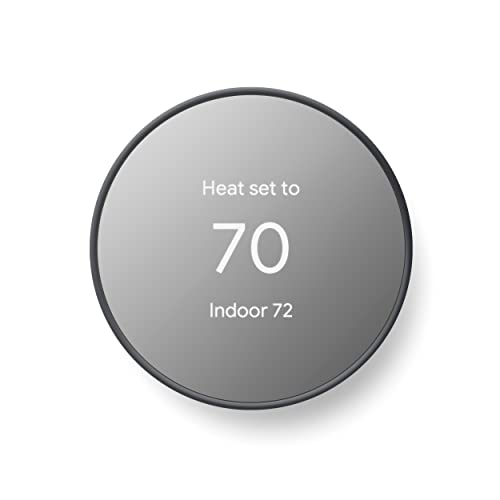
Important Note: Like the ecobee, the Google Nest Thermostat is NOT a high voltage smart thermostat. It is designed for low-voltage (typically 24 VAC) central heating and cooling systems and is not compatible with high voltage electric baseboard heaters or similar direct-wired electric heating.
The Google Nest Thermostat brings sleek design, intuitive control, and Google’s smart intelligence to your home’s central heating and cooling. It’s designed to make saving energy effortless while keeping your home comfortable, all managed through the Google Home app.
- ENERGY STAR certified for energy savings
- Designed to work without a C-wire in most low-voltage homes (C-wire or power accessory needed for some systems)
- Automatically turns itself down when you leave (auto-away)
- Programmable schedule creation in the Google Home app
- Remote control for family members via phone, laptop, or tablet
- Savings Finder suggests tweaks to optimize energy use
- HVAC monitoring alerts you to potential system issues
- Compatible with Google Assistant and Matter-certified voice assistants
Pros:
– Stylish, minimalist design
– Intelligent energy-saving features (auto-away, Savings Finder)
– Seamless integration with the Google ecosystem
– Remote control and HVAC monitoring
– Easy to program and use via the app
Cons:
– NOT compatible with high voltage electric baseboard, radiant, or fan-forced heaters
– C-wire may be required for optimal performance or specific systems
– Lacks the rotating ring interface of older Nest models
User Impressions: Users appreciate the Nest Thermostat’s elegant look and its smart capabilities for learning their schedule and saving energy. The integration with Google Home and the ability to control it remotely are frequently cited as major benefits.
6. Amazon Smart Thermostat

Important Note: The Amazon Smart Thermostat is also NOT a high voltage smart thermostat. It is primarily designed for low-voltage central HVAC systems, offering smart control and energy savings through Alexa. It is not suitable for electric baseboard or other direct-wired high voltage heating.
The Amazon Smart Thermostat offers an affordable and straightforward way to bring smart climate control to your home, especially if you’re already invested in the Alexa ecosystem. It’s a simple upgrade that focuses on ease of use and significant energy savings for traditional heating and cooling systems.
- Smart upgrade from traditional thermostats, designed for low-voltage systems
- Create comfort zones using select Echo devices or Amazon Smart Air Quality Monitor
- ENERGY STAR certified, saving an average of $50 on yearly energy bills
- Automatic Control: Alexa switches between preferred home, away, and sleep temperatures
- On-the-go control via the Alexa app
- Easy DIY installation with guidance from the Alexa app
- Made with Honeywell Home Thermostat Technology
Pros:
– Excellent value for money
– Deep integration with Amazon Alexa for voice and app control
– Simple to install and use
– Proven energy savings
– Ability to create comfort zones with other Amazon devices
Cons:
– NOT compatible with high voltage electric baseboard, radiant, or fan-forced heaters
– Best experience requires an Alexa-enabled device
– Fewer advanced features compared to premium smart thermostats
User Impressions: Customers love the Amazon Smart Thermostat for its low price point and seamless integration with Alexa. Many highlight the ease of installation and the convenience of voice control as key advantages for managing their central heating and cooling.
7. Honeywell Home RTH9600WF Smart Color Thermostat
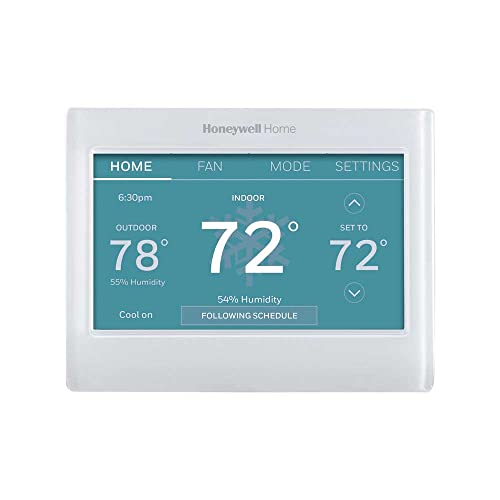
Important Note: This Honeywell Home Smart Color Thermostat explicitly states: “Does NOT work with electric baseboard heat (120-240V). C-WIRE REQUIRED.” Therefore, it is NOT a high voltage smart thermostat. It is designed for low-voltage central heating and cooling systems, including forced air, hot water and steam, and heat pumps.
The Honeywell Home RTH9600WF Smart Color Thermostat combines a vibrant, customizable display with reliable performance and smart home integration for central HVAC systems. It’s a solid choice for homeowners seeking a user-friendly smart thermostat with comprehensive control options and a touch of personalization.
- ENERGY STAR certified for energy savings
- Compatible with most low-voltage central HVAC systems (forced air, hot water, steam, heat pumps)
- Control from anywhere via app or smart home partners (Alexa, Google Assistant, Cortana)
- Customizable color touchscreen display
- On-screen comfort information: indoor/outdoor temp & humidity, daily weather forecast
- C-WIRE REQUIRED for operation
Pros:
– Visually appealing customizable color screen
– Detailed on-screen weather and comfort information
– Broad compatibility with popular smart home platforms
– Reliable performance from a trusted brand
– Good energy-saving features
Cons:
– Explicitly incompatible with high voltage electric baseboard heat (120-240V)
– C-wire is required for installation, which might complicate DIY for some homes
– Might be overkill if you prefer a simpler interface
User Impressions: Users frequently praise the Honeywell Home RTH9600WF for its vibrant, customizable display and the ease of reading information directly from the thermostat. Its strong integration with various smart home systems and reliable performance are also highly valued for controlling central HVAC.
Choosing Your Ideal Smart Thermostat
Deciding on the best smart thermostat largely depends on your home’s heating system. If you have electric baseboard, radiant, or fan-forced heaters, a high voltage smart thermostat like the Mysa or Meross models is what you need. These are specifically engineered to handle the higher electrical load safely and efficiently.
For homes with central heating and cooling (like a furnace and air conditioner), the Ecobee, Nest, Amazon, or Honeywell thermostats are excellent low-voltage options that offer incredible smart features and significant energy savings.
Always double-check your heating system type and wiring before making a purchase to ensure compatibility and a smooth installation process. Whichever you choose, upgrading to a smart thermostat is a step towards a more comfortable, energy-efficient, and connected home!
FAQ Section
Q1: What exactly is a high voltage smart thermostat?
A1: A high voltage smart thermostat is specifically designed to control electric heating systems that draw a higher electrical current, typically between 120V and 240V. This includes electric baseboard heaters, radiant floor heating, and fan-forced electric heaters. They differ from low-voltage thermostats (which usually run on 24V) used for central furnaces and air conditioning units.
Q2: How do I know if my heating system is high voltage?
A2: You likely have a high voltage system if you have electric baseboard heaters, in-floor radiant heating, or stand-alone electric fan-forced heaters. Look for thermostats that directly connect to thick electrical wires, often without a small C-wire or common wire that low-voltage systems use. If you’re unsure, consult an electrician or refer to your heater’s manual.
Q3: Can I install a high voltage smart thermostat myself?
A3: Installation often involves working with household electrical wiring, which can be dangerous if not done correctly. While some DIYers with electrical experience might find it manageable, it’s generally recommended to hire a qualified electrician to ensure safety and proper functionality, especially with high voltage systems.
Q4: What are the main benefits of using a smart thermostat?
A4: Smart thermostats offer numerous benefits, including significant energy savings (often 10-23% annually) through features like scheduling, remote control, and occupancy sensing. They also provide enhanced comfort, seamless smart home integration (voice control, automation), energy usage insights, and convenience of managing your home’s climate from anywhere.
Q5: Do all smart thermostats require a C-wire?
A5: Not all smart thermostats explicitly require a C-wire (common wire), but most low-voltage smart thermostats perform best with one, as it provides continuous power. Some low-voltage models can operate without a C-wire using battery power or a power extender kit (PEK). High voltage smart thermostats, however, typically require specific wiring configurations, often including a neutral wire or a second live wire, which serves a similar continuous power function.
Q6: What’s the difference between high voltage and low voltage thermostats?
A6: The primary difference lies in the voltage they handle and the type of heating system they control. High voltage thermostats manage 120V to 240V systems like electric baseboard heaters, directly switching the high current for heating elements. Low voltage thermostats operate on 24V and control central heating and cooling systems by sending small signals to the HVAC unit’s control board. They are not interchangeable.
Q7: Can a high voltage smart thermostat also control my central air conditioning?
A7: No, a high voltage smart thermostat designed for electric baseboard or radiant heating systems cannot control a central air conditioning unit. Central AC systems operate on low voltage and require a low-voltage thermostat. You would need separate thermostats for each type of system.
Q8: How many high voltage smart thermostats do I need for my home?
A8: You’ll typically need one high voltage smart thermostat for each independently controlled heating zone in your home. If you have multiple rooms with separate electric baseboard heaters, you’ll need a thermostat for each zone you wish to control individually.

